

Monheim Triennale 2025: Captured by art, place and possibility
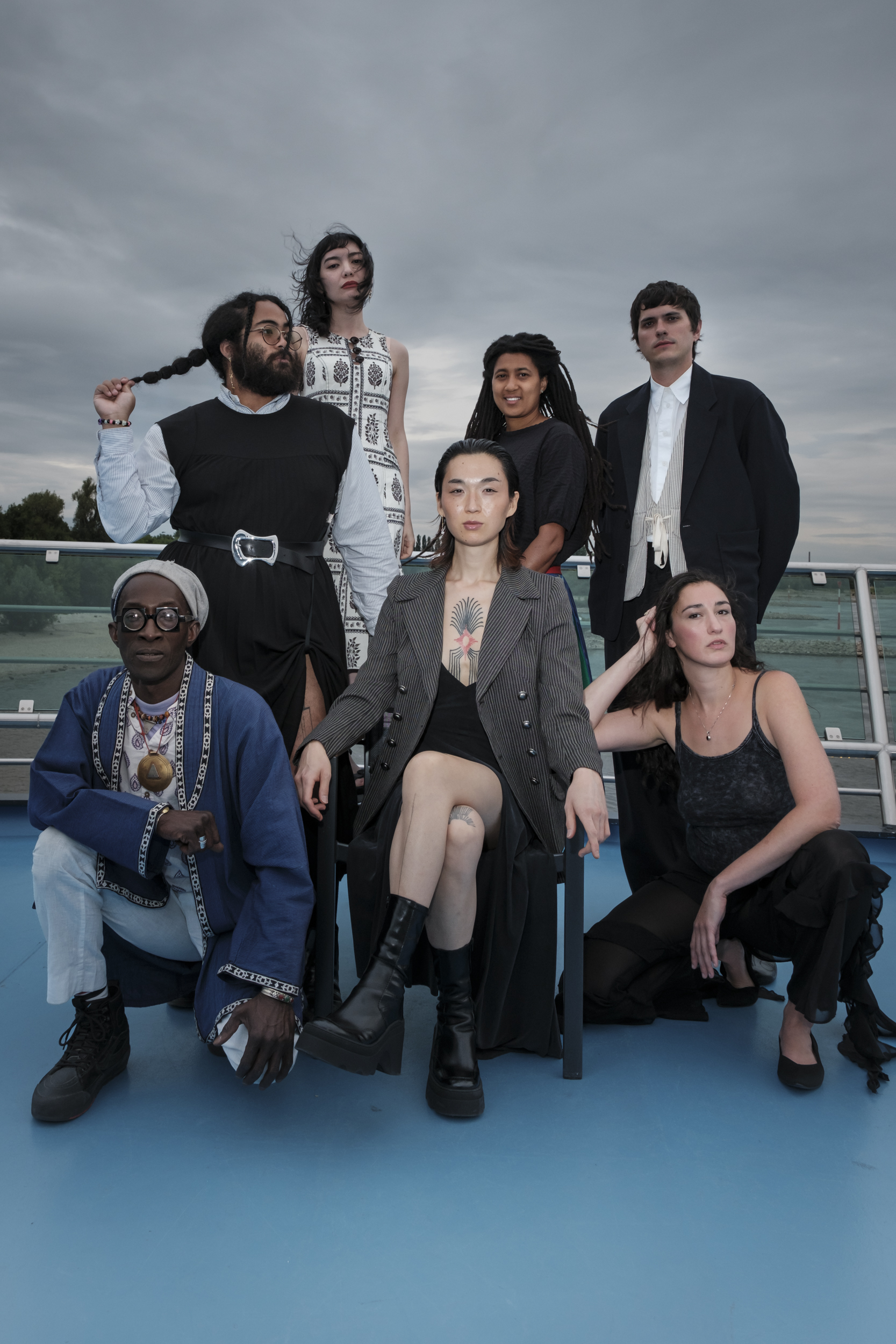
yuniya edi kwon: silver through the grass like nothing – yuniya edi kwon, Darian Donovan Thomas, Joanna Mattrey, Tomeka Reid, Henry Fraser, Dudù Kouate, Nava Dunkelman (Photo: Niclas Weber for Monheim Triennale)
Festival season is once again in full swing! Ten euros for a warm beer (once you’ve made it to the front of the queue). Gurning masses chaotically waiting for a nightbus home. A full schedule of known quantities and opportunities to get a little bit loose. But let’s go somewhere else, mes cheres, somewhere where the ambitions are a little … different.
On the day I arrive, the 1st of July, Monheim Triennale is gearing up for its second full installment, after 2024’s ‘The Prequel’. As before, the event remains one of the foremost opportunities to encounter musical giants, artists who work at the edges of genre, form and experimentation. This year feels different somehow too, there are more attendees from further afield… London… Romania… Hong Kong…
Unlike most musical events you kinda come to Monheim to have your expectations traduced – in the best possible way. The crowd here are deep listeners, politely dedicated to music that’s intent on rewriting rulebooks as it emerges on stage. The artists, who also come from all over the world, are returning after last year’s prequel, this year bringing signature pieces, either recent compositions or pieces written anew for this event. It makes for a heady mix but it also expands the range and number of musicians taking part. Up that voltage!
Providing a blow-by-blow account of a festival this diverse would be a fool’s errand. You could and really should read the Monheim Papers if you want to get a detailed introduction to the amazing performers this year. Instead, here are a few impressions.
We are new the Bohemians
Oren Ambarchi’s signature project ‘Hubris’ (love that title so hard) brought together a phalanx of talented players to the stage, in what I gather was only the 3rd performance of the whole piece. Oren, who looks unflappable at all times, despite the ordered chaos manifesting around him, was joined by two drummers and the whole composition lifted into the air. I gazed left off the boat for a moment and spotted a passing barge, the name “Bohemia” written on its hull. Yet it was pretty clear, even on our stationary vessel, it was we in the room who were really destined for that land where conventions are shunned and enthusiasms run wild.

Monheim Bohemia (Photo: Alex Mayor)
At Monheim Triennale the buildings are also instruments
The old church in Monheim is another secret advantage the festival has, with a small but mighty organ and beautiful geometric blue stained glass windows, reflecting modern patterns over the audience’s faces. Anushka Chkheidze discovered the space last year and hit upon a brilliant idea for her signature piece: why not write for the organ? While more at home typically with keyboards arranged and triggered through software, she worked with an expert in robotics to develop a way of playing the organ electronically. We catch glimpses from a camera mounted high up in the church, as the room floods with the powerful rhythm and melodies of her ‘Intricate Pipes’. The music seems to hug the walls before dancing into the middle of the space that hangs above our heads. It’s utterly transporting and such a wonderful marriage of composition, melody, form and place.
Not knowing is the new knowing
I mean you probably knew that, but really… As someone whose own musical life is mostly spent in far less adventurous realms (you really don’t want to see my Summer Pop Bangers playlist) one of the most brilliant things about Monheim is how it helps you to reset. You abandon the need to know. You listen without prejudice, without the need for knowledge. Very often the shows are about the delectable potential of what a collaboration might produce.
At one point, I’m watching a pretty mesmerising set from Darius Jones (saxophone) and Tyshawn Sorey (drums) – both utterly focused, eyes ahead, on a point somewhere just beyond the audience, synchronised, supporting and complementing each other’s ideas. Incredibly, this is the first time they’ve played together.

Brìghde Chaimbeul (Photo: Niclas Weber for Monheim Triennale)
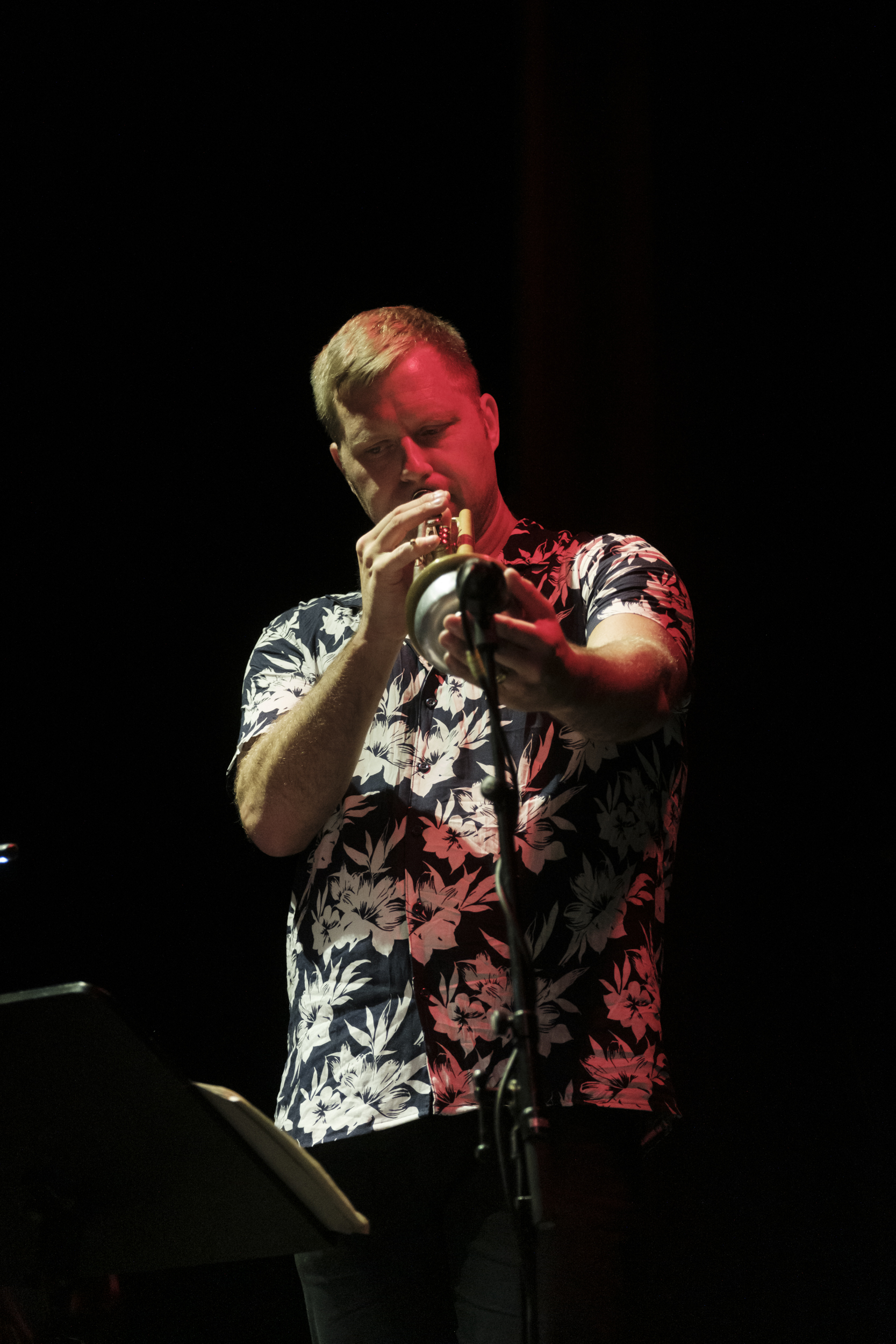
Peter Evans (Photo: Niclas Weber for Monheim Triennale)
On the same stage just hours earlier, Brìghde Chaimbeul (small pipes), Anushka Chkheidze (electronics), Peter Evans (trumpet) pull of a similar feat, in search of something beautifully deft, a kind of landscape of tones, drones and staccato trumpet figures – it’s gentle, but ambitious and quietly moving.

Shahzad Ismaily (Photo: Niclas Weber for Monheim Triennale)
You can be abstract and yet poetic at the same time
A beautiful thing about the artists at Monheim is the strange yet naturalistic coupling of often very abstract musical forms with a desire to articulate the poetic – whether that’s Selendis S.A. Johnson’s retelling of the German revolution through mid-sized big band compositions (which were beautiful and astonishing – an insane talent) or Shahzad Ismaily and Ghayath Almadhoun bringing plaintive cries for peace to the stage. Darius Jones’ solo rendition of a Henry Jimpson tune first recorded in 1948 by Alan Lomax, was as he explained at the end “the sound of man being captured, being captured.” (And poetic as all that, given it July 4th back in a very fractious USA.)

Selendis S. A. Johnson (Photo: Niclas Weber for Monheim Triennale)
Composer and violinist extraordinaire Darian Donovan Thomas, having created a fluttering fabric of harmonics in the town’s little Marienkapelle chapel, pauses playing to gently sing the poetic challenge: “Am I entitled to the land… just because so many of us were tied to the ground?” Minutes later the room is filled with musical motifs quoted from Bjork’s ‘hyperballad’. (This was afternoon one of day one – so I was sure we were off to a great start.)

Darian Donovan Thomas (Photo: Niclas Weber for Monheim Triennale)
Monheim is accidentally Lynchian
This year, the town’s new cultural venue Sojus-7, was complete and fully open. On a quiet riverside street, the hall’s LED backlit letters glow against the blocky brutalist structure. As I first walk up, energetic saxophone playing emanates from within. The surrounding homes’ none-more-wholesome prettiness and ordered gardens frame this moment of howling sonic exploration as the twilight gathered. Somewhere David Lynch was surely smoking appreciatively, gazing at the scene.

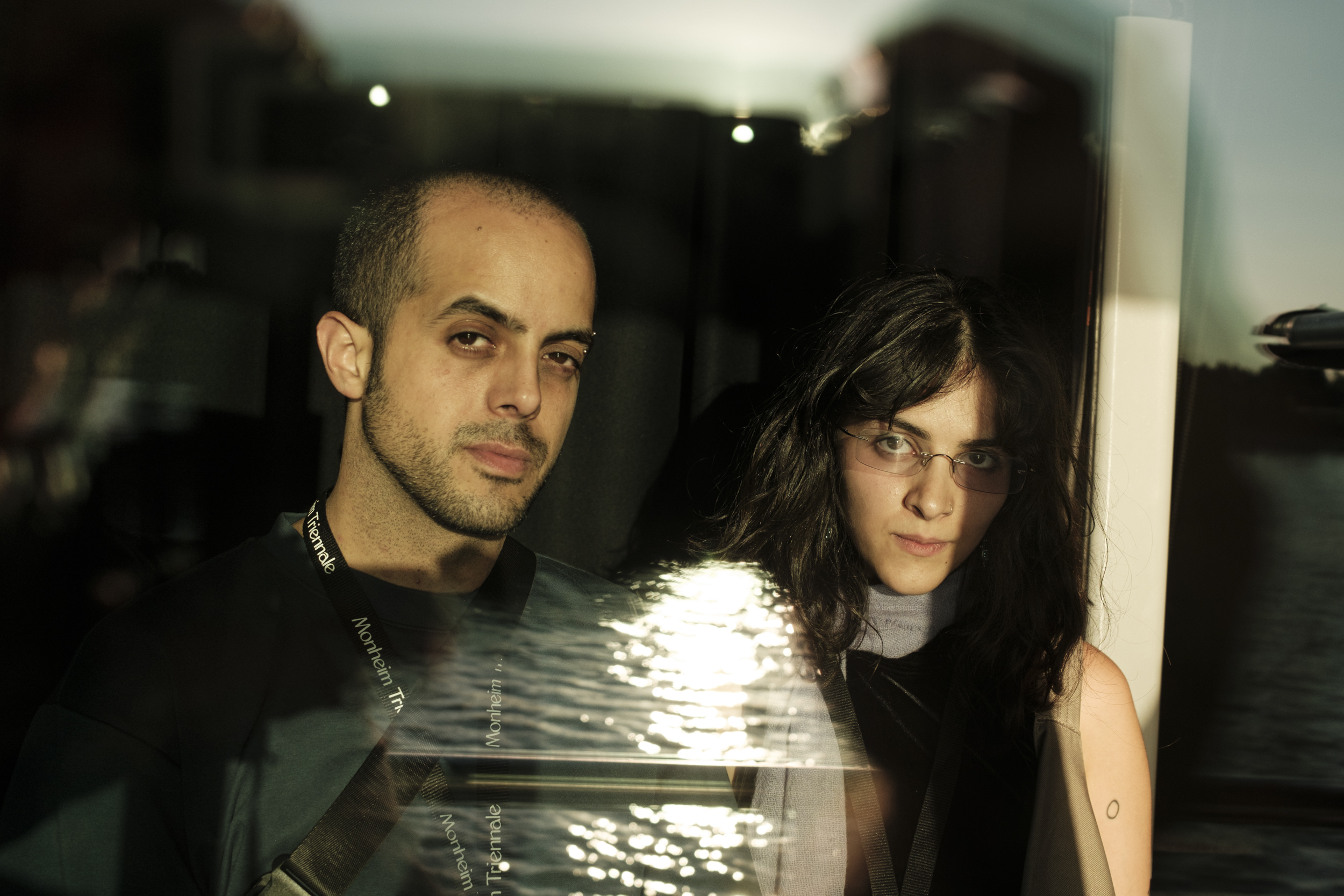
Muquata’a & Fairouz Hasan (Photo: Niclas Weber for Monheim Triennale)
The word adventure is well chosen
Walk anywhere around Monheim the town, and you spot festival posters that declare “Monheim Triennale – the adventure continues”. Somehow that marketing word ‘adventure’ is actually entirely apt. For, are we not all sonic explorers at this thing? Ironically conducting our journey into the wilder thickets of music and artistry, against the background of such a sweet and well-ordered little town? An adventure doesn’t promise an easy time or even a happy ending. We’re here for the boldness, the daring and the thrill of what’s next.

Nava Dunkelman (Photo: Niclas Weber for Monheim Triennale)
A total highlight this year was the afternoon of choral pieces on Saturday. This took two parts: a set of Scottish folk songs sung enthusiastically by a local male voice choir, ably assisted by signature artist Brìghde Chaimbeul and her dancing, circling work on the small pipes. This followed another incredible pairing – Anushka Chkheidz on keys, Achim Tang (roving musical director and double bassist) and another local mixed voice choir, creating a kind of harmonically bewitching and rather elegiac roof-riser of a piece.
These gigs were almost impossible to physically get into. Choir shows have this effect; everybody knows someone in the choir and they came from all over Monheim to find out what their neighbours and family members had been up to. Isn’t community and singing and joy what churches should be for? More of this next year please.
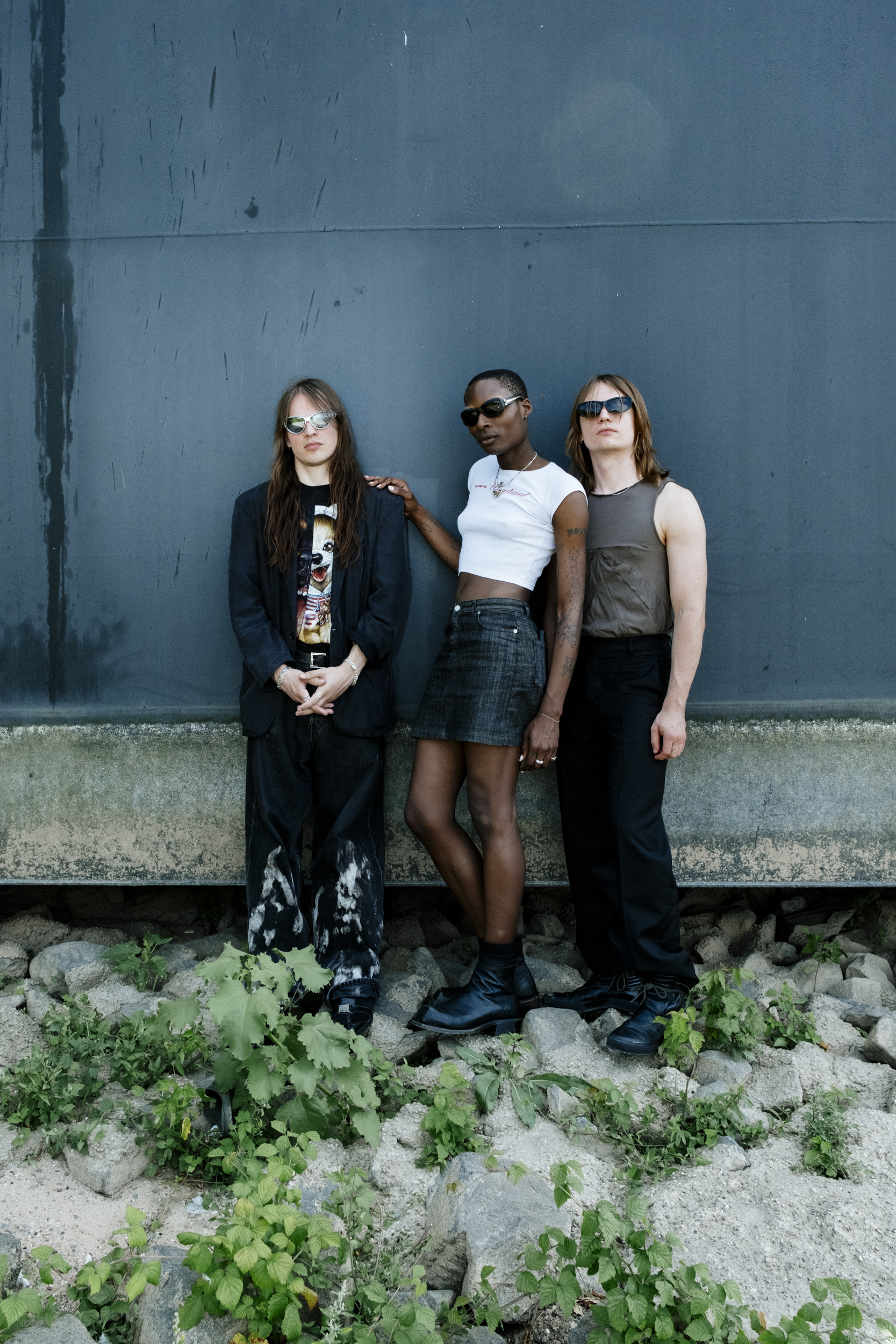
Ludwig Wandinger “Atelic Halo” Ludwig Wandinger, Luka Aron, Yves B. Golden (Photo: Niclas Weber for Monheim Triennale)

Yves B. Golden (Photo: Niclas Weber for Monheim Triennale)
As the festival came to an end I couldn’t help but hope it reappears, bigger and better next year. The event is doing something incredibly valuable. Not just in the way it opens up incredible opportunities for local students and children to perform with inspiring players and composers. Not just for the people and tourists it brings to the town. Letting a town become synonymous with imagination and daring, with collaboration and gathering – that’s pretty special and worth pursuing for years to come.
Photo: Niclas Weber for Monheim Triennale