

“The biggest thing about MF DOOM is that he was authentic in a very fake world.
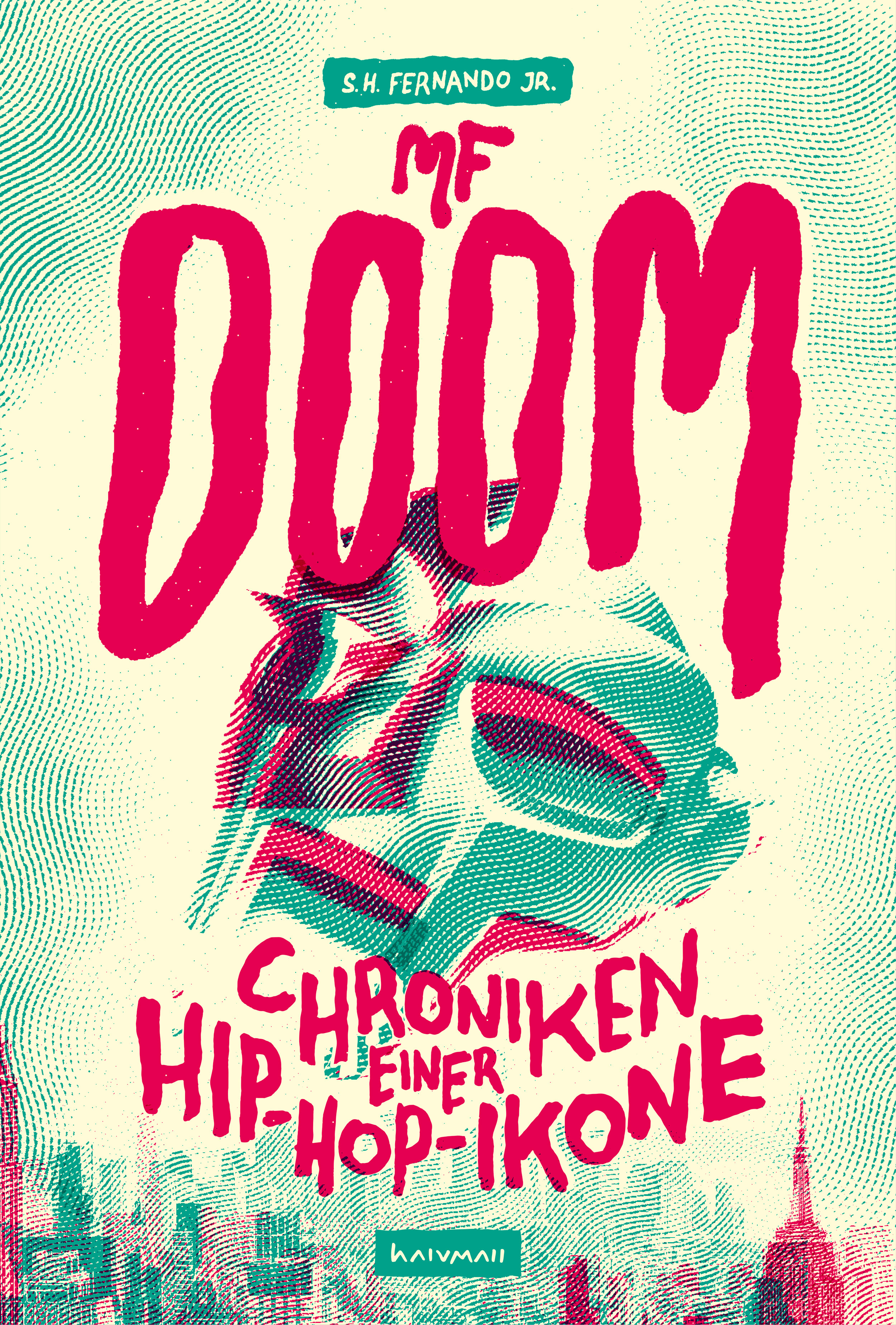 MF DOOM is one of the most enigmatic and brilliant figures in hip-hop – an extraordinary rapper full of contradictions, depth, and quirky humor. The book “MF
DOOM – Chronicles of a Hip-Hop Icon” explores all these facets and ranks among the standout music books of 2025.
In this in-depth interview, Kaput writer Lennart speaks with S.H. Fernando Jr. (aka
SKIZ), the book’s author, and translator Julian Brimmers about the complex world of the masked supervillain. The conversation covers the artist’s unmistakable authenticity, his clear separation of rap career and private life – and much more.
Lennart Brauwers: When and how did you first get in contact with the music of MF DOOM? Maybe we’ll start with you, SKIZ.

SH Fernando Jr (Photo: Cheryl Kinion)
SKIZ: I first knew of MF DOOM back when he was Zev Love X, as part of the group KMD. They came out around ’89 or ’90 with their first album, “Mr. Hood”, and were very much in the same creative lane as other quirky, funny hip-hop acts of the time – like De La Soul or the rest of the Native Tongues Movement. It was a kinder, gentler form of hip-hop than most of the Gangsta Rap. After that, I lost track of them for several years – until 1999, when I heard of this guy MF DOOM. He completely reinvented himself, changed his voice and his whole style. That blew me away.
Julian Brimmers: I vividly remember reading Juice magazine as a teenager – that was the big German rap magazine. There was a review for “Operation: Doomsday” that gave it four crowns – we had crowns, not mics – but the tone felt a bit lukewarm. So I didn’t check it out right away. Then a friend told me I had to come over because he had videotaped something off either MTV or Viva Zwei. They were showing the “?” video back then. That was the first time I saw DOOM. I had no context for it at all. My impression was just that it sounded very raw. I was like, “Who is this guy with the mask and the machete?” It was super weird but also magnetic.
How did the whole book project come about? When did it start, and what was the initial thinking behind it?
SKIZ: I had just finished writing my Wu-Tang book, “From the Streets of Shaolin: The Wu-Tang Saga”. I handed in the manuscript on January 1st, 2021. The night before – New Year’s Eve 2020 – I heard the news that MF DOOM had passed away. And then we found out he’d actually died two months earlier, on Halloween. That really hit me. DOOM was a contemporary of mine – about two years younger – so hearing that a 49-year-old guy had died caught me off guard. I didn’t know him personally, but I’d followed his work for years. Since I had just finished the Wu-Tang book and was looking for my next project, I began researching DOOM. Honestly, I wasn’t sure anyone would want it. I thought DOOM was too underground. I’d kind of been in my own writing bubble, unaware of how huge DOOM’s reach really was. He reminded me a lot of J Dilla – another underground figure who worked with top-tier artists. There was a Dilla book, so I thought, if there’s a Dilla book, there should be a DOOM book.
Julian, how did you get involved?

Julian Brimmers (Photo: Kaspar Achenbach)
Julian Brimmers: I got involved when I received a text from Falk Schacht – the OG German rap journalist. He told me a German publisher was looking for someone to translate the DOOM book. Translations can be tough for small German indie presses. It’s a niche market, and you’re never sure how big the audience will be. But we decided to do it no matter what. DOOM has a crazy fanbase in Germany, and for me, it’s a kind of personal crusade to make books like this accessible to readers who might not be able to get through 300 pages in English. It’s not about being snobby – it’s just that reading a full-length book in English is genuinely hard for a lot of German fans. So we wanted to set an example with this project. It was a real labor of love.
Let’s talk a bit more about the artist MF DOOM himself. On paper, the whole MF DOOM thing seems almost too crazy to be real: He’s one of the most gifted rappers of all time, but he based his persona on a comic book villain, he sampled cartoons and referenced Godzilla… and there’s also something tragic about him. It’s such a wild mix. My big question is: What was it about DOOM that made him able to pull all that together?
SKIZ: I think the biggest thing about DOOM is that he was authentic in a very fake world. We live in an era of fake news, social media – everyone posting fake lives to make others jealous. People can see through that. They can also sense DOOM’s realness. It’s ironic, because he portrayed himself as a comic book character, but to me, he was one of the realest artists out there. He rarely talked directly about himself, but somehow it always felt deeply personal. That’s the fascinating dichotomy with DOOM. He’s this larger-than-life “supervillain,” but when you engage with his lyrics, it feels intimate, almost like he’s talking to you one-on-one. His rhyming style reinforces that. And unlike a lot of rappers who constantly flex and show off their lifestyles, DOOM’s appeal comes from the opposite place. He’s grounded. Even though he doesn’t reveal much about his personal life, when he does drop a small detail about himself or his brother, it hits harder because it’s rare. That authenticity is what connects all these different fanbases.
It’s funny – with him, it feels extremely authentic, but in a way, he also transcends authenticity.
Julian: There’s that phrase, “Sometimes truth is stranger than fiction,” but in his case,
it’s almost the opposite: through fiction, through the mask and persona, he reveals a deeper truth. By hiding behind a character, he gave himself complete freedom to be who he really was – to explore what he genuinely cared about. It’s crazy that it works that way.
One thing I found really interesting in the book is how DOOM portrayed himself as a fictional character, but also as an “everyman,” a kind of working-class hero. How would you describe that ambivalence?
SKIZ: Yeah, it’s fascinating – on one hand, he’s saying “I’m the supervillain,” and on the other, he’s representing the common man. That’s why I spent time in the book describing the Doctor Doom origin story – because there are so many parallels between the comic character and DOOM himself. To me, what makes DOOM special is that he viewed himself as an author. That’s a brilliant way to frame artistry – when you’re an author, you can inhabit any character you want, but each still contains part of you. DOOM was complex, almost schizophrenic creatively – King Geedorah, Viktor Vaughn, MF DOOM – each character expressed a different side of him. By saying “I’m not a rapper, I’m a writer,” he gave himself permission to channel all those aspects of his personality.
Julian: To give just one striking example: On De La Soul’s “Rock Co.Kane Flow” – a song that features DOOM –, he raps in the third person singular. It’s so crazy, because that third-person voice makes his artificiality stand out even more, especially in comparison to the rappers in De La Soul. And in terms of the everyman thing, it’s really nicely written in the book: Rappers already present themselves as larger-than- life, with the luxury lifestyle and everything. DOOM pushed against that by being nerdy, flawed, and not cool enough. It felt like he was saying: Come side with me!
SKIZ: That’s a great way to put it. He made being a nerd cool. Before DOOM, rappers needed swagger, but DOOM went in the complete opposite direction. He had a beer belly, he didn’t wear chains, he wasn’t trying to impress anyone. He created a
mask so he could have two identities: a public persona and a private one. His family life mattered to him – he had five kids, was loyal to his wife, and wanted to protect that space. Fame can be dangerous, especially coming from the hood. So the mask wasn’t just an aesthetic choice; it was a form of self-preservation.
Julian: And just imagine – he became a massive star, with millions of monthly listeners on streaming services, without ever needing to play that fame game. That’s total freedom.
How did it feel to write a book about someone who was so private? Was it difficult to find reliable information?
SKIZ: It was tough. I might’ve underestimated how difficult it would be. As someone who’s written about hip-hop for decades, I thought it’d be easier. But DOOM was extremely private, and his inner circle protected that. Even people close to him – his wife, collaborators, friends – often didn’t want to talk. Luckily, some had done interviews in the past, so I could draw on existing sources. What gave me confidence was that I’d been part of the independent hip-hop scene in the ’90s, so I knew a lot of the people around him – label owners, producers, DJs. I started from the outside and slowly worked my way in. In the end, I interviewed about 50 people connected to DOOM. That helped me fill in the blanks – like what happened when he disappeared in the ’90s, or his time in England. It felt a bit like detective work, honestly. Even though it was hard, it was also a lot of fun – digging up new information about someone as mysterious as DOOM is incredibly rewarding.
After spending so much time researching and writing about DOOM, how much of his real self do you think went into his characters?
Julian: I never met DOOM I can’t remember exactly, but it could be that I was in the same room with him during Red Bull Music Academy 2011. Those were like my first weeks on the job, and I was totally starstruck. But from everything I’ve read and heard, his personality is inseparable from his art. His nerdy interests, his obsessions – they’re the building blocks of his music. My favorite part of SKIZ’s book is how he explores DOOM’s fascination with esoteric and mystical knowledge. That side of him – watching obscure lectures, diving into ancient texts while living in England – becomes the undercurrent of his later work.
SKIZ: Yeah, I agree. I think he put a lot of himself into his characters – that’s why there were so many of them. Each one let him express a different part of his personality, just like a novelist writing multiple characters. I went deep into the Nuwaubian Nation chapter because I think that’s where his fascination with esoteric knowledge really took root. That material – the UFOs, the pyramids – all that found its way into his lyrics. For instance, he name-drops Edward Leedskalnin, the Latvian immigrant who built Coral Castle in Florida, which is a real, mysterious structure. That’s the kind of thing DOOM would study and weave into his rhymes. By the later part of his life, I think he was more interested in studying and researching than in making music. Fans wanted another „Madvillainy”, but DOOM was always about evolution. He reminds me of Miles Davis – always reinventing himself, experimenting. I think he reached a point where music was just one outlet for a much broader curiosity about the world.
One thing I always thought about is that his career almost went parallel to the rest of the hip-hop world. But your book also makes clear how connected he was to so many different people and scenes. How much would you say DOOM’s career is part of the bigger rap story? Or is it more its own thing?
SKIZ: I definitely think it’s part of it. I see DOOM as someone from the golden era whose influence carried into the 21st century. I’d almost put him in the same class as Wu-Tang. There are so many parallels between their stories. Like RZA and GZA, they both had major-label deals when they were young, got dropped, and had to reinvent themselves — same as DOOM. But to me, they were carrying that original
energy from hip-hop’s true school, when it was about creativity, originality, and innovation. So I see DOOM as an ambassador from that original era who bridged it into the next generation. He’s definitely influenced younger rappers — Earl Sweatshirt, Tyler, billy woods, Mach-Hommy — you can hear bits of DOOM in all of them. That’s the continuity I see in his story: the original spark of hip-hop carried forward.
Since humor is such a big part of DOOM’s whole thing — is there a lyric that pops into your head that you think is especially funny?
Julian: I actually have one! I had to look it up — but the funniest thing is when he’d just start name-dropping random things. So my favorite line is: “Catch a throatful from the fire vocal / With ash and molten glass like Eyjafjallajökull / The volcano out of Iceland / He’ll conquer and destroy the rap world like the white men.” That volcano name was a meme back in 2010 when no one could pronounce it, and he just went, “I’m gonna rhyme this!” Even in a line like that, he’s making a joke about colonialism — and it still just sounds effortless. Rapping was too easy for him at some point.
S. H. Fernando Jr.
“MF DOOM: Chroniken einer Hip-Hop-Ikone”
Hardcover im Großformat (160 x 235 mm)
332 Seiten mit grafisch gestaltetem Vor- und Nachsatzpapier sowie aufklappbarer Infografik mit DOOM-Diskografie – deutsche Übersetzung Julian Bremers
29,50 € (DE)
Halvmall Verlag, 2025 ISBN 978-3-9822100-7-0