

Insomnia Festival: Techno in the Arctic

Higher Intelligence Agency (Gabriel Guerra Bianchini)
On the plane to Norway, I let my gaze wander over the Lofoten Islands. My destination: Tromsø, 350 km north of the Arctic Circle. For 22 years, Tromsø has been the meeting place for the local electronic music scene, a community from which Cologne could learn a lot.
“At least we still have light,” says Jarl as he picks me up from the airport. In October, the sun is just beginning to rise. We drive to my hotel, located near Storgata, the central shopping street. Wooden houses with cafés, bars, and tourist shops make the area truly hyggelig. The local look is rainproof: raincoats, rubber boots, and Norwegian sweaters dominate the cityscape. Tourism has been booming in Tromsø for ten years, and many visitors might not be prepared for the cold and wet weather. It rains constantly, but occasionally the mountains emerge from the thick cloud cover. And when the sun shines, the surrounding nature is breathtaking.

Storgata
Up here in the north, Tromsø is Norway’s capital for electronic music. It has produced renowned artists early on, such as Biosphere, Röyksopp, and Bjørn Torske. In the beginning, the scene was hardly organized, and many pioneers moved to Oslo, Bergen, or London. Venues for live electronic music were scarce. Out of this necessity, the Insomnia Festival was founded in 2002 — the start of a community that has grown steadily ever since.
From the hotel, I walk to Verdensteatret, the oldest cinema in Northern Europe and one of the festival venues. Outside, I meet Marte Aasen, who has been involved for many years and is now the festival manager. “Welcome to Tromsø. Is this your first time?” she asks, as if it won’t be the last. “Many people come back every year. The festival is an important anchor, especially for the local scene — but also for the northern parts of Norway, Sweden, and Finland.” Marte glances at her watch. The program is about to start, so we head inside.
I quickly grab a beer at the bar: 99 NOK, about 8.50 euros. I’ll have to get used to prices, I think. Inside, it’s extremely cozy: dim lighting, shelves stacked with records, and old movie posters give the bar a nostalgic flair.

Verdensteatret
The cinema auditorium is decorated with old murals. Silent films used to be shown here. Today, discussions about Palestine and Western double standards await me. Sounds dry? Far from it. My personal highlight of the evening is Noura Tafeche’s performative reading about the Zionverse, a term she uses to describe the echo chamber in which videos, images, and AI content flood the internet in the name of Zionism. Following her lecture, a discussion sets a few controversial theses straight — but that’s where it ends. Agree to disagree.
Petrasamazinglife
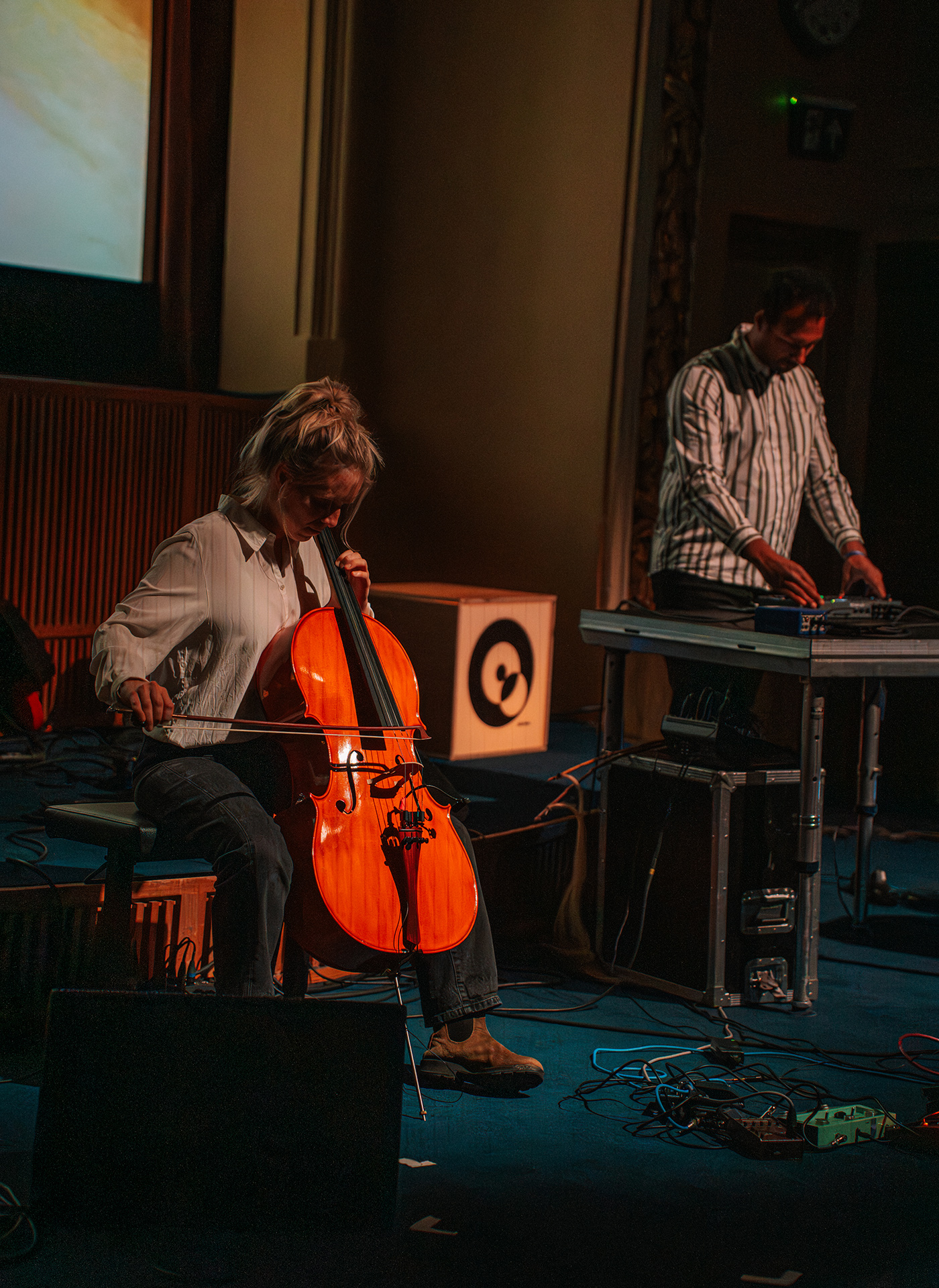
The next evening, Júlia Mogensen, Liina Holmes, and Fredrik Einevoll kick off the festival with an audiovisual performance. Their project Resonant Polarities connects the Arctic festival scene: Insomnia (Norway), OMVF (Finland), and Extreme Chill (Iceland). Inspired by the Nordic environment, the musicians focus on experimental improvisation. Frederik Einevoll, a sound artist from Tromsø, participates through the Cloud: Exit support program. For ten years, Insomnia has promoted young talent from northern Norway, such as Johanna Sandels. The 29-year-old sound designer from Stockholm came to Tromsø through Erasmus. Cloud: Exit allowed her to invest time in her artistic process and gain stage experience. Her mentor, acoustician Ingemar Ohlsson, taught her how to build her own speakers — something she couldn’t have done before.
The evening’s program is challenging, the audience fantastic. It is open to all kinds of experiments with noise and sound, and artists are celebrated with standing ovations. My personal highlight is Sainkho Namtchylak & Θ (Theta). The avant-garde singer from Tuva (Mongolia) impresses with improvisations using various vocal techniques, including throat singing as well as laughter and crying. Together with Theta, who lives and works in Tromsø, she creates a mystical moment on stage, conjuring spirits and ancestors.
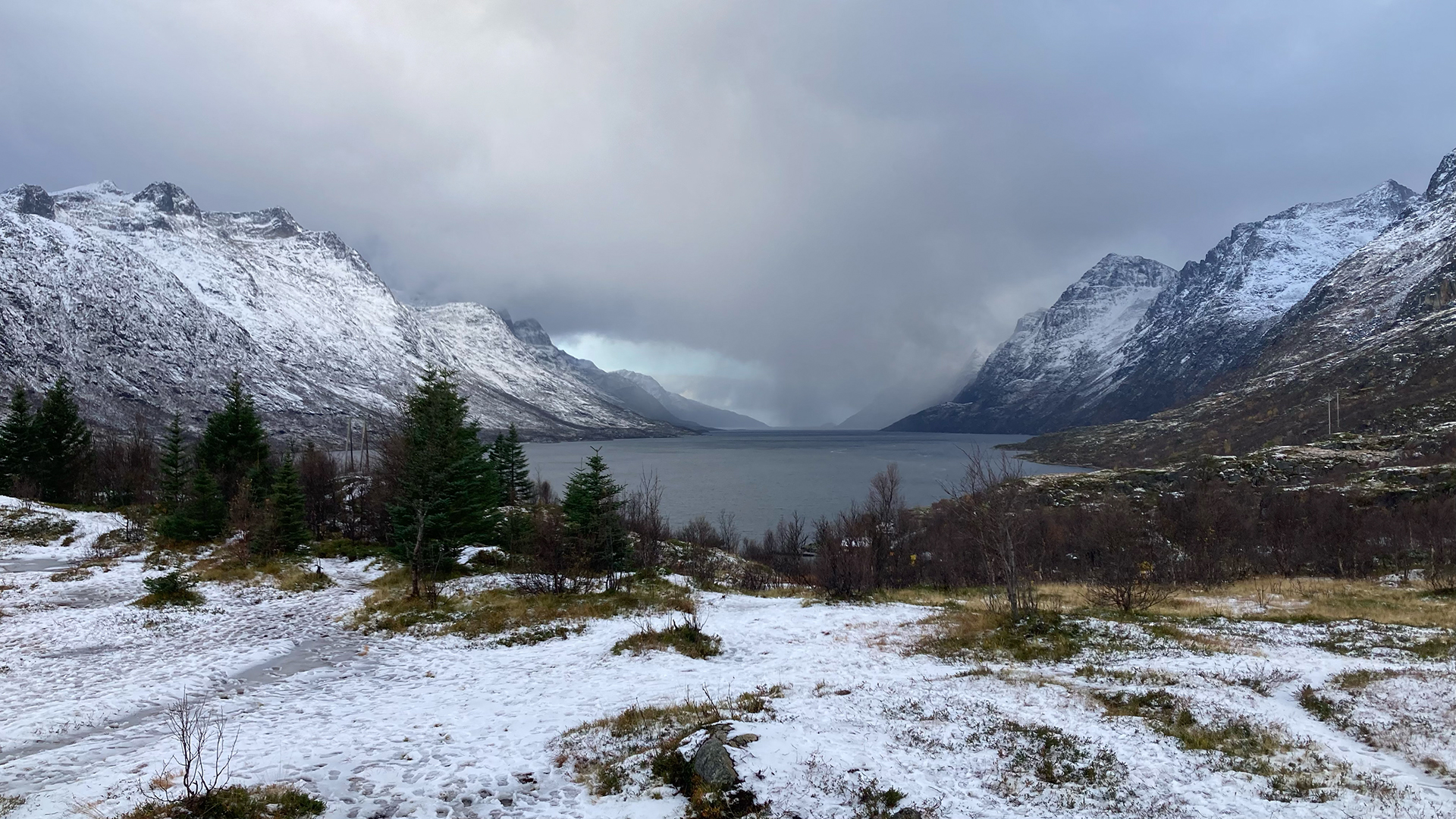
If I had to describe Tromsø in one word, it would be: crisp. The air is fresh and clear, and every breath is a pleasure. We take a trip to a fjord a few kilometers west of Tromsø, driving over a long bridge. Below us lies the Arctic Ocean, not a lake as I first thought. Small, colorful wooden houses line the shore, nearly every one with a porch. The sun is low in the sky, as if about to set — but it’s only noon. At the Ersfjord viewpoint, we stop to take photos as fog rolls in from the distance.
“The landscape reminds me of Scotland,” says Scylla Magda. She and her husband, Bobby, are from Birmingham. Bobby, known as Higher Intelligence Agency since the 1990s, is a minor icon of electronic music. He was last in Tromsø in 1996, recording the album Polar Sequences with Geir Jenssen (Biosphere). He will play a live set on Saturday, with Scylla providing the visuals.
Back in Tromsø, I walk along Storgata again, this time to Brokken Records, where Dialog and Benji are giving a workshop. Dialog consists of Samuel van Dijk and Rasmus Hedlund, who founded their dub techno label DOT — Dialog of Thoughts. Together with Benji, they produce “hazy sounds with a clear message.” Samuel recalls the intensity of releasing their first record: “There was so much to consider: the size of the print run, track arrangement, distribution…” But the upside was immense artistic freedom, from cover design to vinyl color. Their first record, DOT1, sold out in three months. They pressed 200 more copies to recover financially. Today, they’ve released three EPs with Benji, who adds a unique roots flair. The trio is a well-rehearsed team, performing live on stage. Do they consider themselves a band? “Maybe, yes — why not.”

Brokken Records
Brokken Records is probably the coziest record store in the world, more like a living room than a shop. I don’t want to leave; it’s warm and inviting inside, while outside the rain continues. But I pull myself together, put on my shoes, and head to the harbor for an open-air concert.
Outdoors? Well, yes. A small tent houses a table, a laptop, and a mixing desk with countless buttons. Twelve speakers are arranged in a circle around the tent, and the audience walks around, experiencing slightly different sound at every point. The resulting multidimensional soundscape flows constantly. Bint Mbareh’s singing feels sacred, like the echo in a church. Lasse Marhug’s sound is cerebral, intricate, and experimental. The Lofoten artist has composed several pieces for multichannel systems, often integrating Arctic nature sounds. Standing there, walking in a circle, the sound penetrates my consciousness, stirring a range of emotions I haven’t felt in a long time. Afterward, I am completely drained and crave a hot shower and rest.
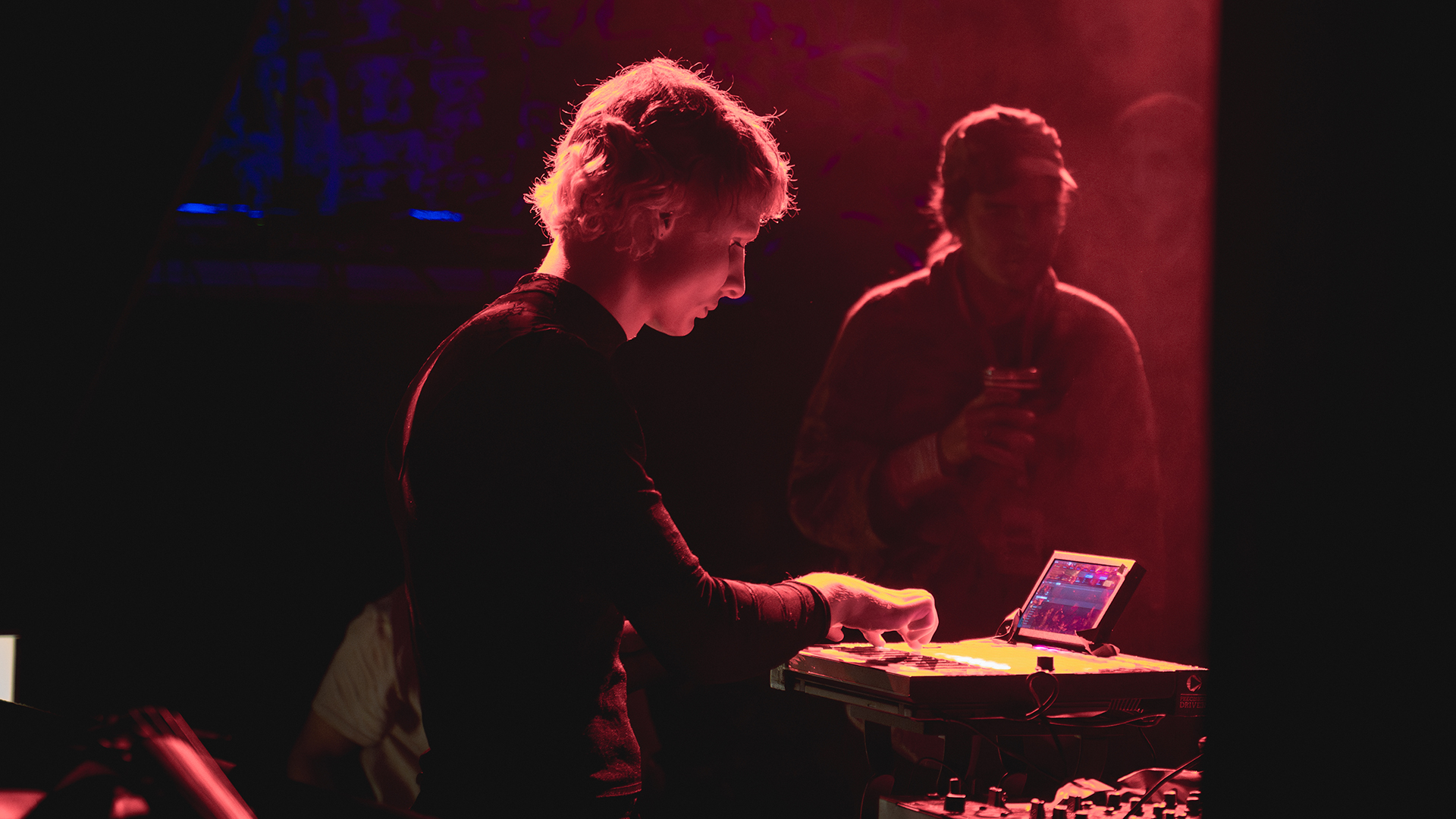
Grisha 223 (Lucien Hubert)
But rest is short-lived. Friday night arrives, and the club opens at 9 p.m. I grab an energy drink and head to Bryggeriet, the main venue. Bands, DJs, and live acts play all night on three floors. “You absolutely have to see Grisha,” I hear repeatedly. On the second floor, soft minimalist club beats fill the room, yellow and red lights accentuating the atmosphere. The audience is completely focused on the artist, who is absorbed in the controllers.
Grisha is part of the local Tromsø scene. She explores the boundaries of modern sound system culture and even builds her own tools and equipment. As a visual artist, she critically examines her surroundings and the art world. “She’s one of our talents,” Marte says proudly. Grisha came to Tromsø to study at the art academy. The scene here is very DIY. With few venues actively supporting the scene, people take matters into their own hands, like Gustav from Brokken Records, who steps up whenever opportunity arises. Right now, a lot is happening.
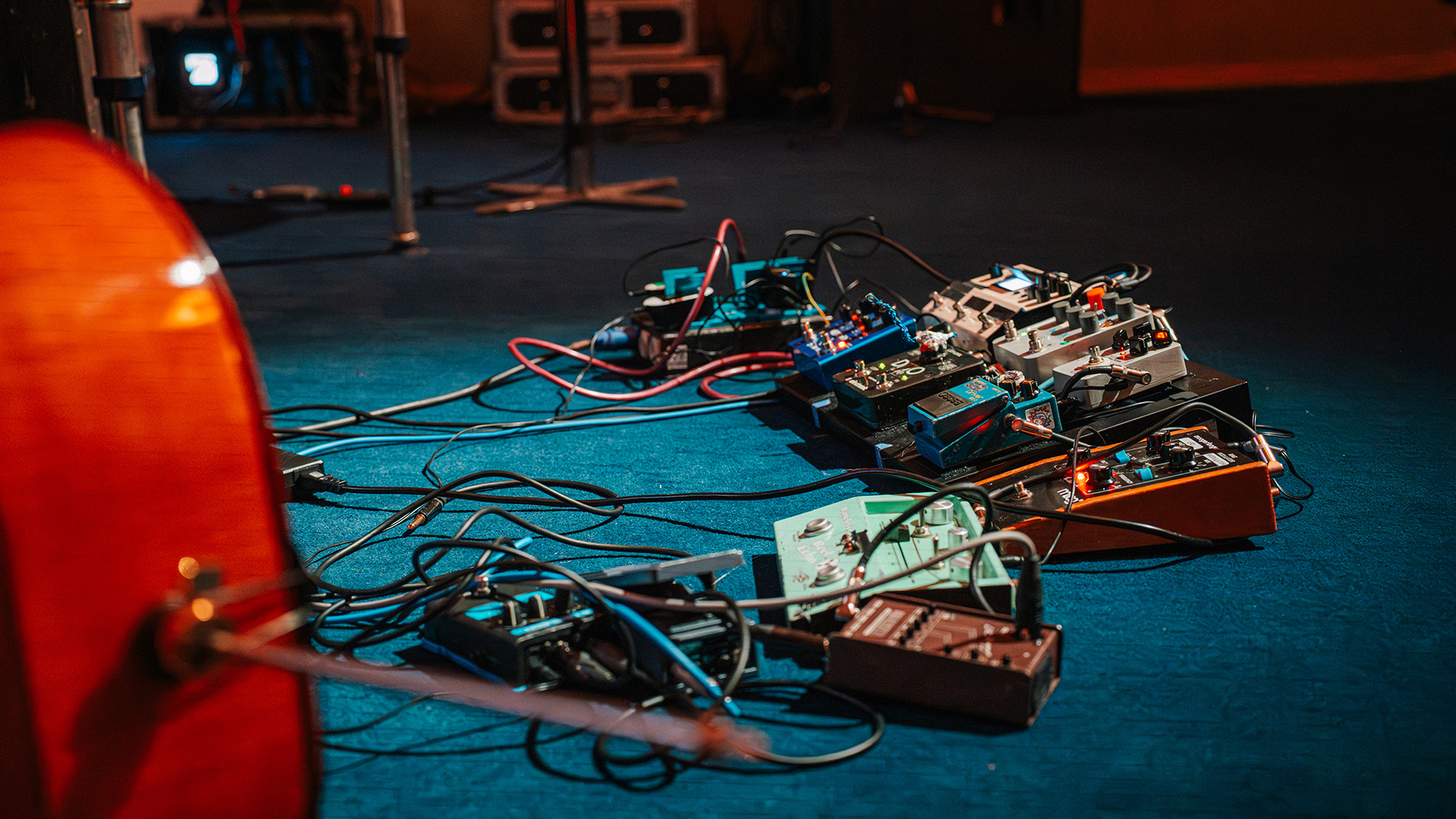
Petrasamazinglife
After the concert, I explore the venue. It feels new and professional, with three floors: a main floor and two smaller ones. In Tromsø, club culture differs from Germany: there are no instructions at the door, and nobody covers your phone camera. Though there’s no “no-photo” policy, hardly anyone uses their phones. On the dance floors, people move joyfully — some even take off their shoes. Tap water is always free, and open drinks at public events are common, a sharp contrast to Cologne.
I enjoy the rest of the evening, savoring another small beer. At 3 a.m., the Norwegian club night ends. The after-hours party at Narsh continues, but I choose sleep, reflecting on the day. How has such a dynamic scene developed so far north — far from Berlin, London, or Oslo? The Insomnia Festival maintains long-standing structures while embracing fresh ideas and young talent. The festival price is affordable, with student discounts and volunteering options. Over the years, the torch has passed — like Marte Aasen, who evolved from “Insomnia Potato” to festival manager/CEO since 2013. Perhaps someone attending this year will take on that responsibility in the future.
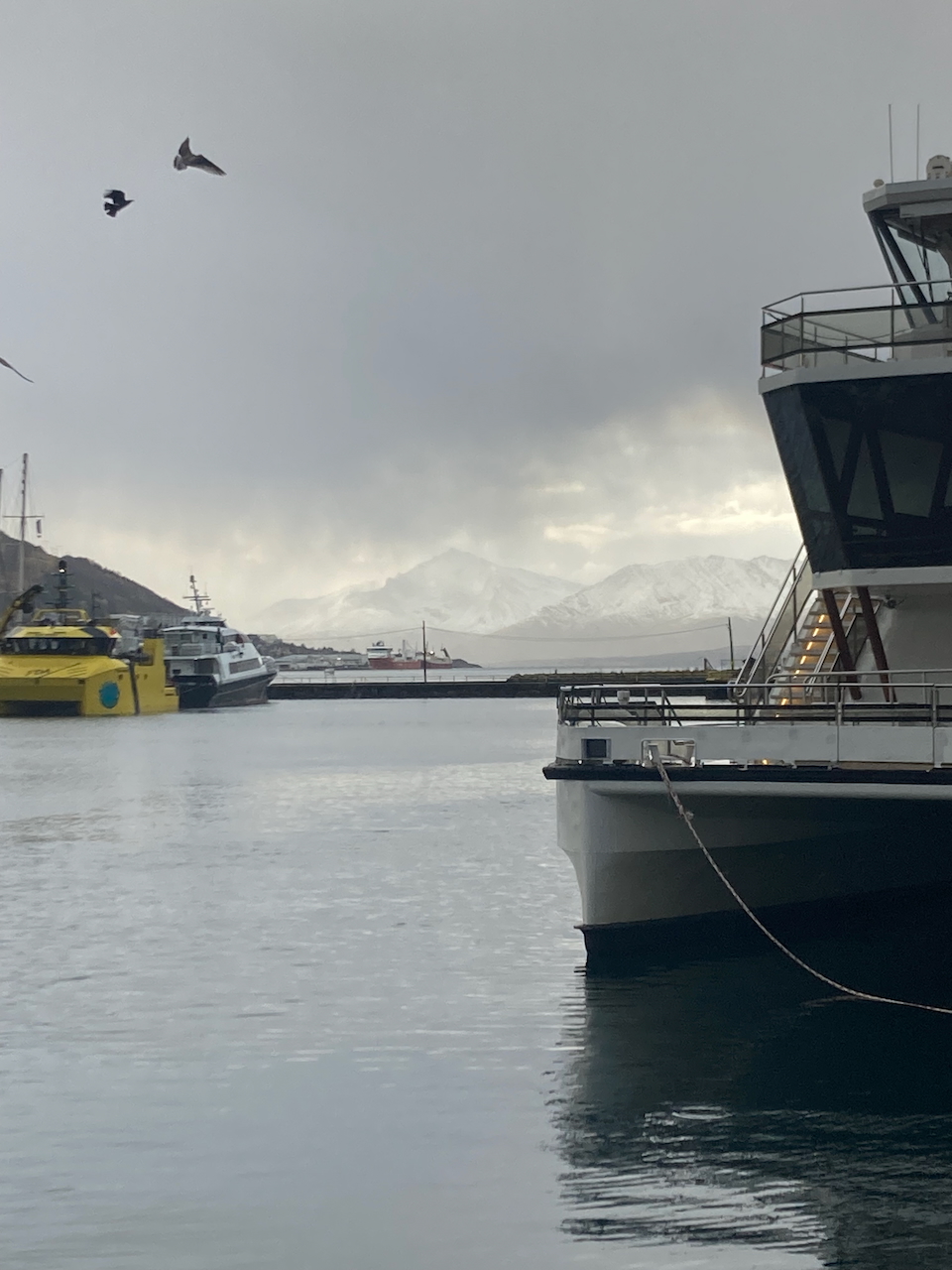
Hafen Tromsø
The next morning begins with a fantastic hotel breakfast. Many artists are staying for the entire weekend. Dialog feat. Benji kicks off the night, followed by Higher Intelligence Agency. A must-see for me is Ismistik, aka Bjørn Torske. Together with Ole Mjøs, the Tromsø duo pioneered electronic music in Norway in the early 1990s. Inspired by Chicago and Detroit, they developed their own style after experiments at campus radio station Brygga. Their cult-label releases brought recognition, but their final LP Remain came out in 1995, and it seemed to be the last release — until this year. In October, Finnish label Elektroni released the first Ismistik record in over 30 years. Their EP Yamadoor features two tracks from 1994 and two remixes by Rolando Simmons.
Other remarkable performances include Holy Tongue, Ovio, Temp-Illusion… and The Bug feat. Warrior Queen, who closed the festival with a legendary performance exceeding all decibel limits. The festival bids farewell to its crowd with a bang.
The next morning, I take one last deep breath of Tromsø’s crisp air before boarding the plane back to Cologne, after only an hour of sleep. During takeoff, I glance at the book Marte gave me: Dreaming Awake – 20 Years of Insomnia. Filled with interviews, stories, photos, and memories, it documents the festival’s history. I ask myself again: Why here, in Tromsø, in the Arctic?
Perhaps seeds planted in the late 1980s and early 1990s kick-started the local scene. Since then, it has held its own. Factors include the promotion of young talent, the art academy, and the long dark winters that allow for plenty of time to create. Tromsø’s reputation also precedes it: casual visitors might leave disappointed. Apart from Insomnia, the scene maintains a low profile, partly due to a lack of clubs and venues. “There is a big scene, but no audience,” locals joke.
In any case, I am thrilled by the atmosphere, the people, and the spirit, and I take back a lot of inspiration to Cologne. Cologne would do well to take a leaf out of Tromsø’s book.