

FarAvaz “Anger Means Hope”
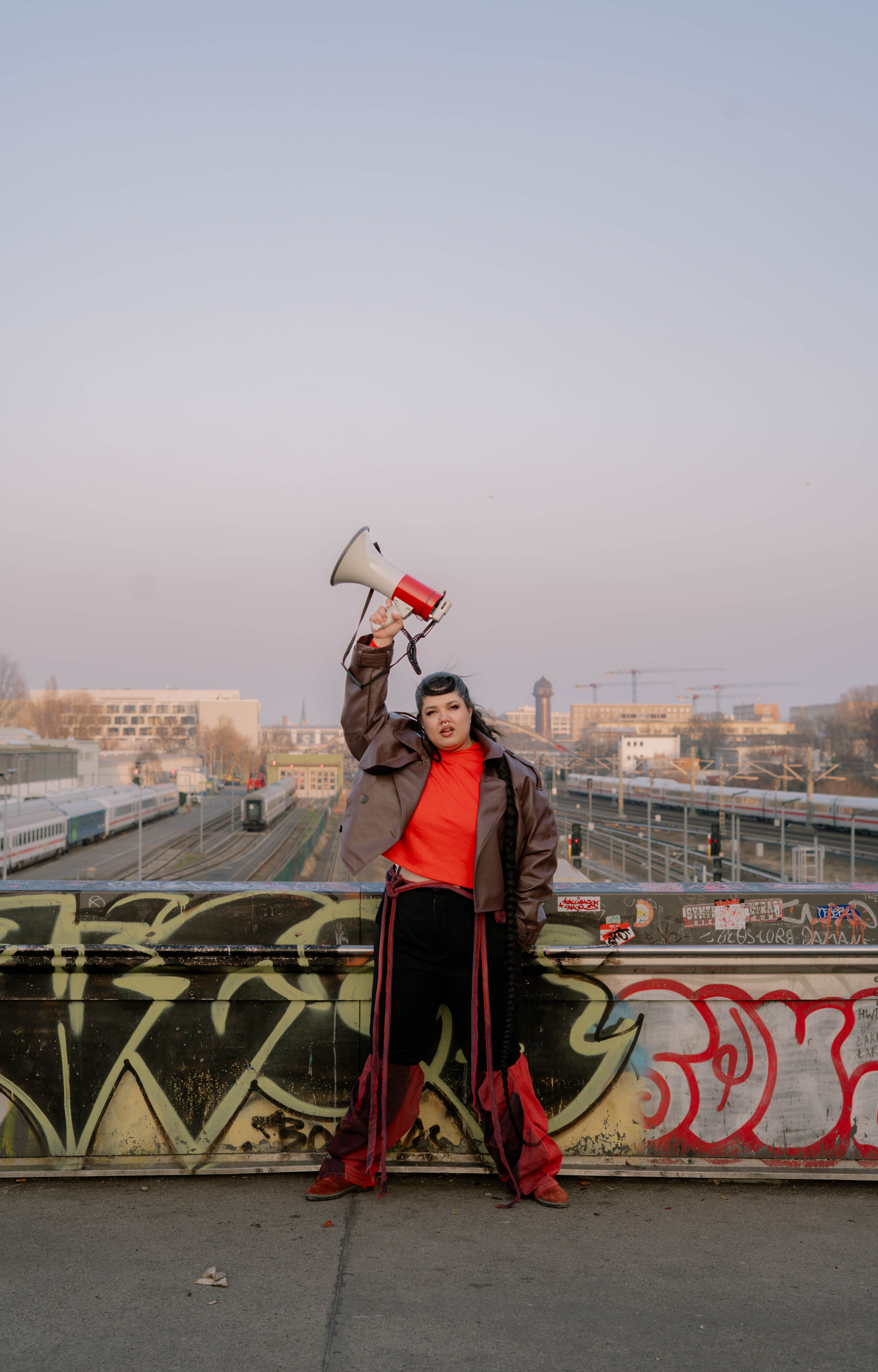
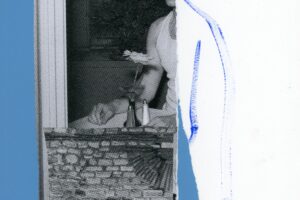
FARAVAZ (Photo: Beyond Binary)
As a teenager, FarAvaz’s music had already attracted the attention of Iran’s mullah regime. While she was in Berlin for a concert in 2018, the musician was sentenced in absentia to a prison term by a Revolutionary Court – and decided not to return to her home country, instead going into exile in Germany.
FarAvaz left everything behind: her home, her parents, siblings and friends, with no certainty of ever seeing them again. Since then, she has been in Germany making music built on jagged beats and unsparing English lyrics that articulate her resistance, self-empowerment and outspoken opposition to oppression and authoritarianism.
Benedict Weskott spoke with FarAvaz about visibility, hope, and the burden of responsibility that comes with being an exiled Iranian voice of opposition.
On her way to the interview, FarAvaz posts an Instagram story: “The Islamic regime couldn’t force us to wear the hijab – but the German winter weather managed it.” It’s her way of dealing with the shattering reality of life as an Iranian woman in exile. These are not easy days for people in the Iranian diaspora. News of massacres of protesters in Tehran keeps surfacing. The internet is still shut down; only a few people can be reached at all. There is constant fear for relatives, loved ones, friends.
You’re receiving a lot of attention right now – on the radio, in magazines, on ARD, in Tagesspiegel, taz, Der Spiegel. Does that also open up more opportunities for you?
FarAvaz: Unfortunately, not yet. In interviews I often feel like a case study. I’m happy to tell my story and speak about my people, but it frustrates me that I don’t have the same opportunities in Germany as others. I had to leave my country because I wasn’t allowed to sing there – because I was arrested for it. But as an exile and a musician from Iran, it’s hard to gain a foothold in the German music scene. Sure, making a living from music is difficult for everyone. But the scene here is very white and only superficially diverse. Diversity is often celebrated as a trend, yet diverse artists end up with the worst slots in the lineup and the least pay. There should be a real mix, so unfamiliar voices can actually be heard. Instead, I often feel like people invite someone like me just to tick a box – not because they genuinely want to listen.
It’s understandable to feel isolated when access is so difficult. And then all multiply marginalised people are fighting over the few slots that exist, instead of asking: why are we only getting crumbs instead of a proper slice of the cake?
FarAvaz: I think it’s generally hard for FLINTA artists to claim even a bit of space and sometimes we’re afraid to share it because we think we might lose it. But ultimately that’s not our fault – it’s once again the problem of patriarchy and male dominance in the music industry.
Sookee, who I recorded the song “Jin* Jiyan Azadî” with, stopped performing for adults because she’s understandably angry at this industry too. But we keep going, and we won’t stop defending our place. Just because we’re angry and unhappy and complain doesn’t mean we stop fighting the system. Fuck the system.
It’s absurd to think that you fled a country where you weren’t allowed to sing, and that it’s still so hard to be heard. How do you deal with frustration? Given the escalation in Iran, are you throwing yourself into work right now? Is art a way for you to channel anger and despair – or does it block you? Are you even able to be creative at the moment?
FarAvaz: For me as an Iranian artist, anger is a central driving force – it shapes my songs, my art. I value it, and I believe we should all be much angrier. Especially now, in one of the worst phases for us Iranians, with thousands killed by the Islamist regime, that anger has grown even stronger. It motivates me to keep fighting and to keep making art, because I believe it’s necessary. Anger is a creative force for me: I’d rather use it to create something than waste it. Because anger also means hope.
At the same time, I ask myself: why do I always have to be angry? Why do I always have to fight? People should also have time for joy, for rest, for a life without constant fear. Of course I have sad and desperate moments too. But right now, anger outweighs everything – and that’s a good thing. I use it.
And she does exactly that: FarAvaz’s music blends Persian influences with jagged trap beats and forthright English lyrics that speak of self-empowerment and resistance, of desire for sexuality, freedom and pleasure. In the song “Mullah,” Shiite clerics are bluntly sexualised (“Suck my dick, mullah, mullah / Lick my face, be my slave, come strip for me, mullah”). “Taxi Driver” is an ode to artistic freedom and self-determination; “Dessert” a sensual plea against body shaming. And with “Jin* Jiyan Azadî” FarAvaz – together with LIN, Sookee and Hanie – has delivered the ultimate German-language anthem for the Kurdish and Persian liberation struggle.
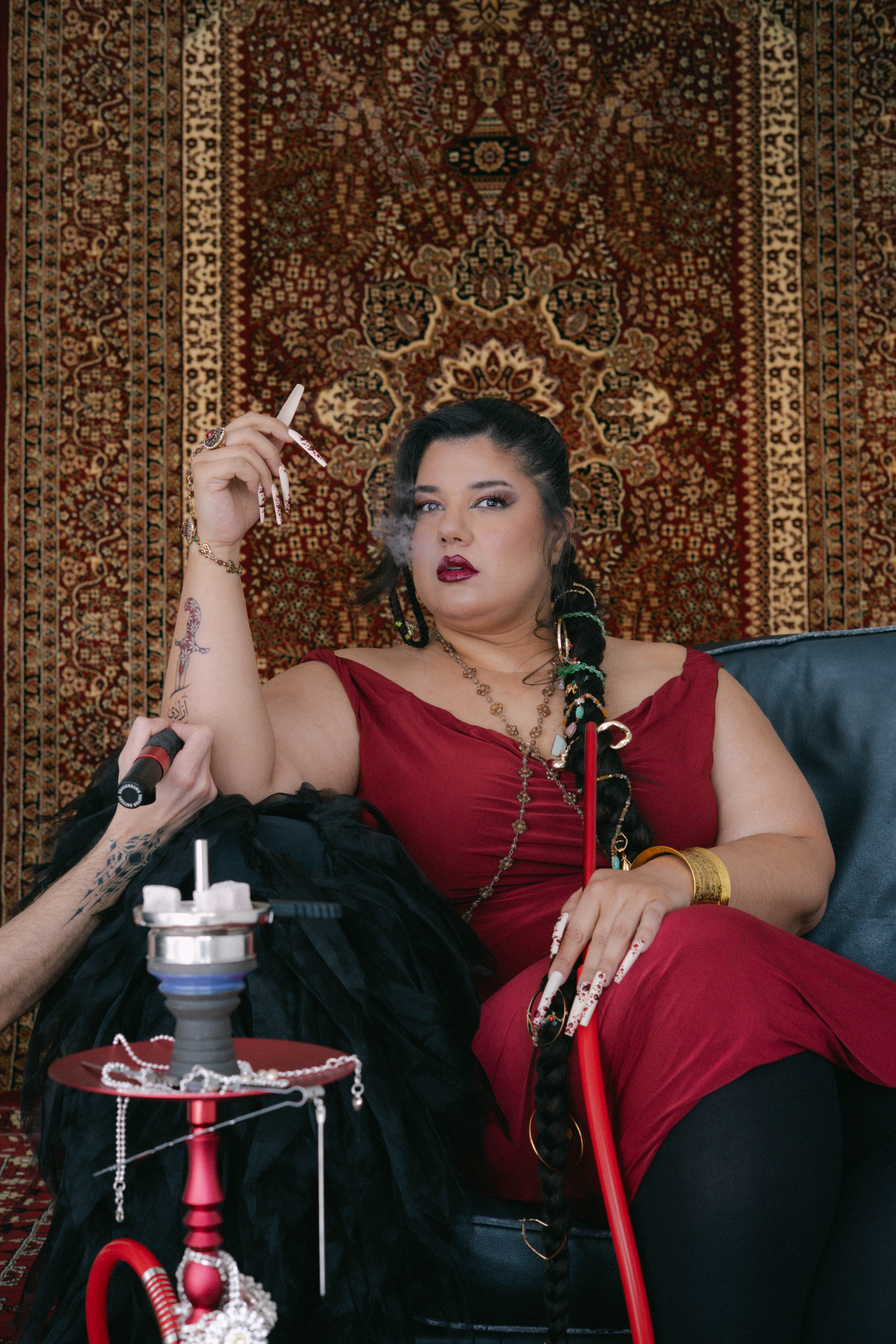
FARAVAZ (Photo: Beyond Binary)
Do you feel under pressure because you have the ability to speak openly and a platform on social media?
FarAvaz: We carry this responsibility with us all the time – the feeling that we have to do something, post something, write something, fight. Many Iranians feel guilty if they even laugh for a moment, eat or simply live. When the first messages came through after the internet shutdowns, people wrote: “We’re ashamed to be alive.” That’s understandable when you’re watching your loved ones being killed. And yet we have to find a balance between fighting and living. If we only fight, we eventually burn out – and that helps no one in the end.
Presumably it takes people in the Iranian diaspora to speak out, especially when the internet is shut down.
FarAvaz: That’s the absurd thing: for 47 years, the regime has claimed that the Iranian diaspora doesn’t belong to the people, that it’s indifferent, controlled by Israel and the U.S. It tried everything to stigmatize us. But now, when protesting in Iran often means death, many people there say: the diaspora is our only hope. The fact that they rely on us feels like a victory to me. The regime’s ideology, its 47-year effort to tell us we don’t stand together, that we’re divided, has simply failed. We are closer now than ever before. It’s incredibly inspiring for me to see how people resist, how they try to be happy, to dance, to celebrate life – even as so many are being killed.
As if they’re refusing to let the regime win. Ultimately, that gives you hope – I can see how you light up when you say that.
FarAvaz: My former singing students in Iran write to me: “My cousin was shot dead in front of my eyes, but please keep going – we have so much hope.” And I think: how could I not have hope then? They see things differently than we do, and we have to keep going. That’s the only thing we can do. Because if we give up, it will become even more terrifying than it already is. That’s all we can do: not give up, and keep going.
After we finish the interview, FarAvaz receives news from the European Parliament that the Revolutionary Guards have been placed on the terror list. It’s small victories like this that need to be celebrated, to keep hope alive.