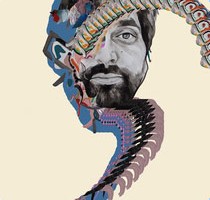


Elia Einhorn: “I thought I’d fried my brain forever—music saved me”
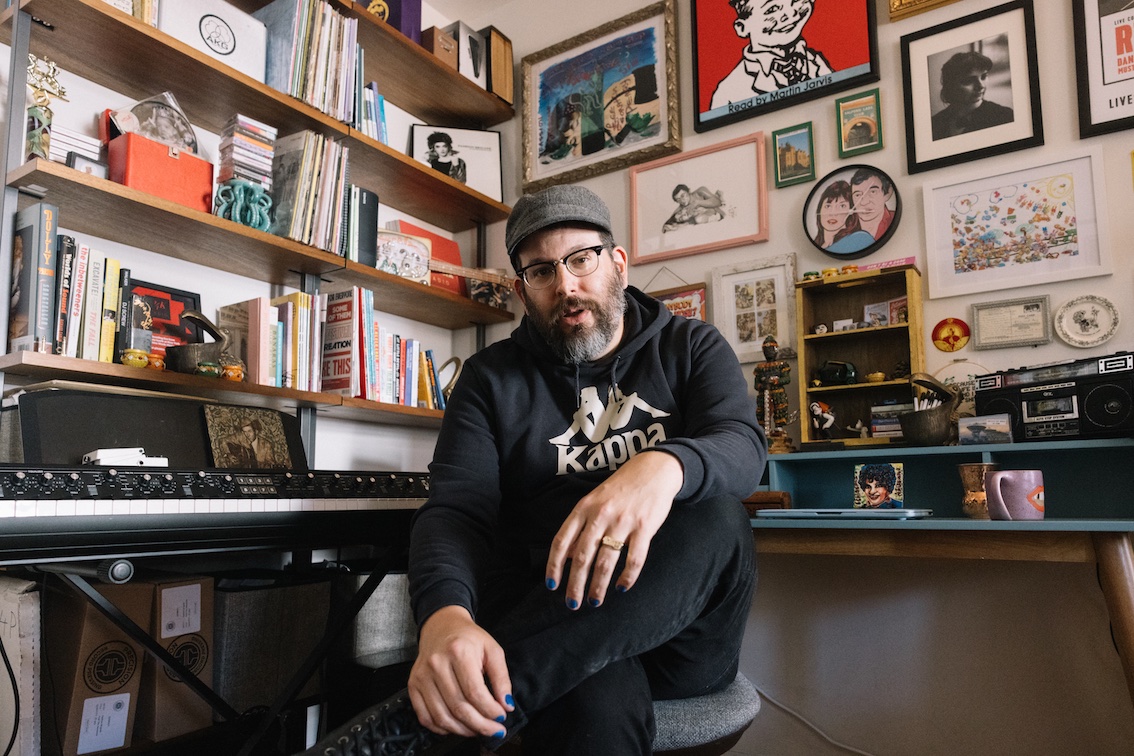
Elia Einhorn (Photo: Ebru Yildiz)
I first met Elia Einhorn at Week-End Fest 2024, curated by my close friend Jan Lankisch, and later again in New York at the birthday party of legendary Studio 54 DJ Nicky Siano. Both encounters confirmed what quickly became clear in our conversation: Elia is one of the most dynamic and generous figures in contemporary music culture. Born in Wales, raised in Chicago, and now based in New York, he has worn many hats—musician, DJ, record producer, writer, and host of influential radio and podcast projects for Pitchfork, Talkhouse, Sonos, and East Village Radio.
As the founder of Fashion Brigade and a longtime member of Scotland Yard Gospel Choir, Elia has worked with artists ranging from Lee “Scratch” Perry to Shamir. His production work includes a collaboration of the Kronos Quartet project with Willie Nelson, Laurie Anderson, Ringo Starr, Iggy Pop, and Pussy Riot, among many others, commissioned by the Nobel Prize Committee and the Bulletin of Atomic Scientists. Equally committed to music and activism, he co-created Sober 21, a platform supporting musicians in recovery. Elia’s story is one of relentless creativity, collaboration, and conviction.
By perfect timing by the stars, today we also celebrate the release of the new Fashion Brigade record, do not miss out in this beauty. And now, enjoy this truly kaput conversation,
Elia, we first met at last year’s Week-End Festival, curated by my close friend Jan Lankisch. How did you make it from New York all the way to Cologne for the event?
Elia Einhorn: What an amazing fest! I’d first met Jan backstage at Marshall Allen’s 100th birthday Sun Ra Arkestra show in Philadelphia. I’m a big fan of, and frequent collaborator with, Maestro Allen, so it was an honor to be invited. I drove down from Brooklyn for the show and stayed for his private birthday party the next day, where Jan was also present. We closed the bar that night (neither of us drinking alcohol!), then hit a taco stand and talked about music for hours. Jan invited me to come over to the festival to interview New Age legend Laraaji and air it on my East Village Radio show Elia vs ?, along with coverage of Week-End Fest.
How did you experience the festival? Especially as someone coming from New York, a city where you can find endless music events?
Elia Einhorn: Oh man, Week-End Fest was incredible! I loved that you could move from room to room in the same complex—catching a folk legend like Bridget St John, discovering an artist I hadn’t heard of before like Conny Frischauf, and then dancing all night to Studio 54’s Nicky Siano. I later hosted both Bridget and Nicky on my show, and spun their music alongside Conny’s. It was a big learning experience.
And now, as we’re talking, I’m preparing to head to Busan, South Korea, for a similar festival invitation!
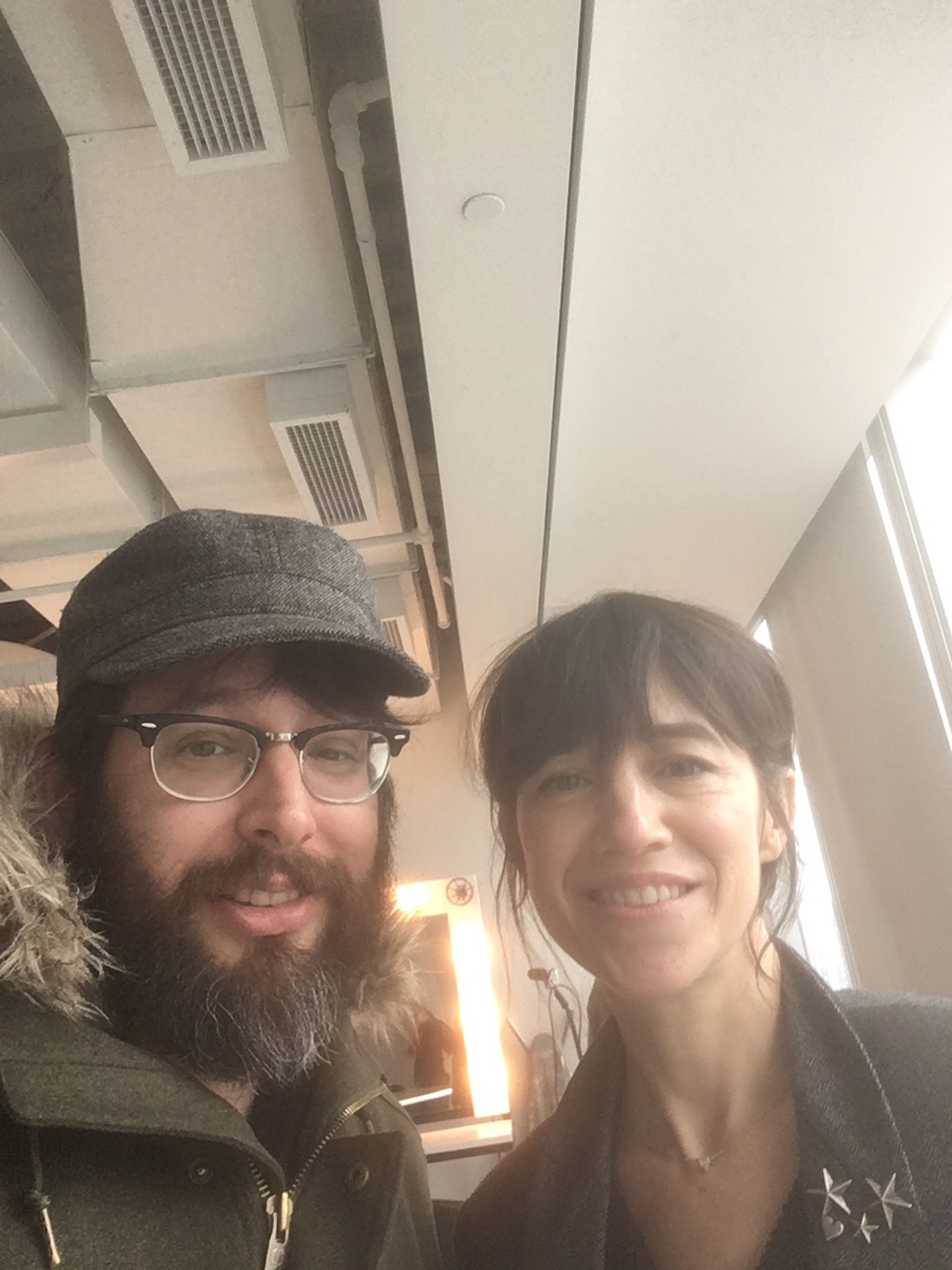
Charlotte Gainsbourg & Elia Einhorn
You just released, as you put it, “a massive record” produced for Kronos Quartet, commissioned by the Nobel Prize Committee and the Bulletin of Atomic Scientists. It’s two versions of Dylan’s A Hard Rain’s A-Gonna Fall, featuring an incredible list of contributors: Willie Nelson, Allison Russell, Iggy Pop, Sampa The Great, Pussy Riot, Ringo Starr, Ocean Vuong, Laurie Anderson, The Magnetic Fields, Asha Bhosle, Deerhoof, Tom Morello, Terry Riley, Charlotte Gainsbourg, and so many more. How was it to work with all these legends?
Elia Einhorn: Sometimes I’ll be in the studio, super focused on getting the best take from an artist, and then I’ll zoom out and realize I’m working with one of my musical heroes. And then they thank me for putting them on the track! That’s such a beautiful feeling, and I’m so grateful. Working with artists at the top of their game is incredible—you can give them an idea and watch as they make it even better.
With such a short timeline and so many stars, a lot of the recordings had to happen remotely. I was on WhatsApp video with Asha and Zanai Bhosle as they recorded in Mumbai. Willie Nelson cut his vocals at his Texas ranch. But I also got to record in person with Laurie Anderson, Stephin Merritt, and my co-producer Mark Yoshizumi at Electric Lady Studios in New York—a truly historic place to work.
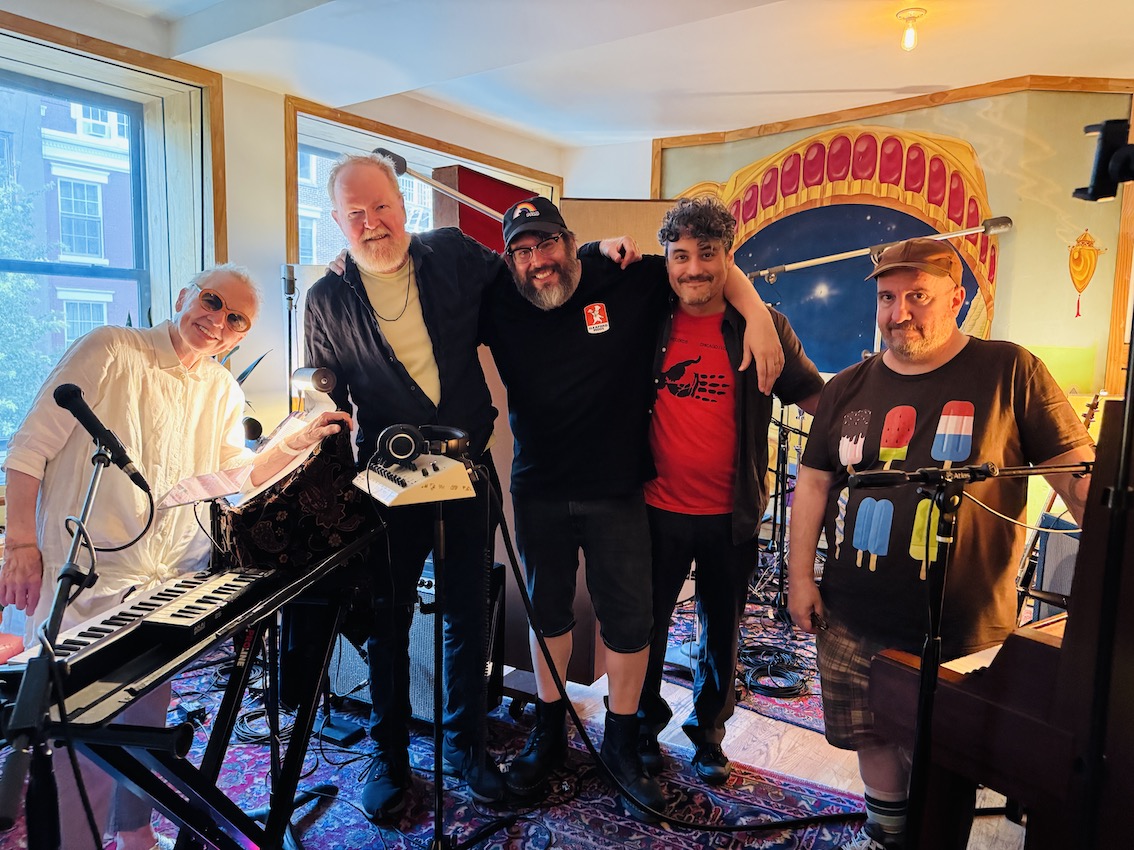
Recording “Hard Rain” at Electric Lady with Laurie Anderson, her studio manager Jim Cass, co-producer / engineer Mark Yoshizumi and Stephin Merritt (The Magneti Field)
You also contributed musically: singing, playing 12-string guitar, harmonica, and harmonium, and co-writing the drone music with Kronos. How was it to be part of the sound alongside such iconic figures?
Elia Einhorn: I never imagined I’d collaborate with a Beatle! Hearing Ringo recite Dylan’s lyrics over a piece I’d helped compose was surreal. Of course, there’s pressure to create something worthy when you’re in the room with legends, but as one of my music school teachers used to say: “If you’re gonna cack it, cack it with conviction!” I’ve definitely botched takes in front of rock stars, but I just do it again until it’s right. It’s all in the service of beauty.
How did the project itself come together—its intentions and hopes?
Elia Einhorn: The project originated with the Nobel Laureate Assembly for the Prevention of Nuclear War and the Bulletin of Atomic Scientists. They were hosting a Nobel conference at the University of Chicago and wanted Kronos Quartet to record Dylan’s A Hard Rain’s A-Gonna Fall. Kronos leader David Harrington called and asked me to produce. I immediately said, “Yes!”
Red Hot’s founder John Carlin suggested recording a drone version as well. Terry Riley, who was originally meant to appear on one of the Hard Rain versions, was so moved that he recorded an ancient Indian raga on his porch in Japan with his student Sarah Miyamoto. It meditates on the end of the world—a perfect complement to the project.
What I loved about you right away is your openness to meeting people. I also believe in a non-hierarchical approach to cultural processes. How easy is it for you to realize such an approach?
Elia Einhorn: Thanks! I genuinely love meeting and collaborating with people, so it comes naturally. Occasionally I’ll work with someone more closed off, and that’s fine—I adapt to their style. But I get energy from collaboration and often bring talented people around me into projects. I’m as excited to work with rising artists like Lollise or Slowspin as I am with icons like Asha Bhosle and Iggy Pop. They’re all channeling something powerful.
In Europe, we might call you a Tausendsassa. Could you lay out your different activities?
Elia Einhorn: I wear a lot of hats! I’m a music radio, podcast, and TV host and producer, a record producer, a DJ, and an artist myself. I also occasionally write, contributing to Pitchfork, Bice, Talkhouse, and others.
Does that mean you’re great at time management?
Elia Einhorn: If you ask the world, yes. If you ask my wife, no. I’d say my restlessness helps me get a lot done. Being part of strong teams is crucial—every Red Hot release, Pitchfork project, or Sonos Radio project involves many people working together. I also try to choose collaborators wisely.
Over the years I’ve asked ultra-productive artists like Black Thought, Laurie Anderson, and David Byrne how they manage it all. Byrne told me he keeps many projects simmering at once—you never know which will take off. That’s my approach too. (Black Thought wakes up at 3 a.m. to work before his kids are up. I’d never survive that!)
From where you stand—being an artist, manager, radio host … —how would you describe your relationship with the music industry?
Elia Einhorn: On one hand, I’m deep in it. At my first Grammys, I felt like a bit of a fraud, but then I realized I could text 20 of the performing or nominated artists and kept bumping into managers and agents I knew in the hallways. On the other hand, much of my work is rooted in activism, so I also spend a lot of time learning from folks outside the commercial industry. I genuinely enjoy connecting with everyone—artists, publicists, managers, video directors, engineers, producers. Music is holy to me, and it takes a village to bring it to the world.
You’ve got years of experience: how do you see the development of the music industry from the early ’90s to today?
Elia Einhorn: The American music industry is absolutely fucked for artists right now. Streaming pays almost nothing, touring is prohibitively expensive, and brilliant musicians simply can’t afford to live. I’m very dark on that at the moment.
I did an event with Reggie Watts earlier this year—he’s into the subscription model as a way forward, and Zola Jesus has said the same. We need a campaign to show music fans that if they care about artists, they need to support them directly: buy records, merch, and subscribe to Patreon or similar. Subscribing to Spotify alone is basically performative allyship with musicians at this point.
What are the most pressing questions we need to address?
Elia Einhorn: Artists need to be paid a living wage and have access to health insurance, which we don’t get through the U.S. government. Groups like UMAW (Union of Musicians and Allied Workers) are pushing for this, but we’re far from achieving it.
And how does the current socio-political climate in the U.S.—and the world at large—relate to that for you?
Elia Einhorn: Seeing Week-End Fest supported by the government was amazing. Same with Scotland funding records and Canada giving grants. In the U.S., though, artists are shit out of luck. Our government has slashed arts funding, which is devastating for filmmakers and the musicians who score their films.
At the Tribeca premiere of Stanley Nelson’s new Sun Ra documentary, he said: “This film could never have been made if we hadn’t done it before these cuts.” That says it all.
Are you seeing signs of hope? Are there models or scenes that feel like the future you want to see? Do you feel your own work is part of the necessary paradigm shift?
Elia Einhorn: Big questions! There’s a line in the musical Suffs where suffragettes sing, “I want my daughter to know I was here,” listing their family members they want to know they stood up for what’s right. I feel the same. I want my daughter to know I used music to help marginalized communities—addicts, trans and non-binary folks, people suffering from climate injustice.
As for hope: right now, I don’t see a sustainable living wage for artists unless legislation changes. I recently spoke with Zohran Mamdani, who’s likely to be New York’s next mayor, about affordable housing for artists. He committed to creating more units, which is encouraging. But we need much broader government support.
Elia, let’s go back in time. How do I have to imagine your upbringing? What did your parents do? Was music important at home?
Elia Einhorn: I was born in Wales and raised mostly in Chicago. My parents divorced when I was a baby. My mom, Ann, sold vacuums in a downtown department store and did telemarketing on the side. My dad was a psychologist who managed a halfway house, and also a wonderful guitarist and songwriter.
My mom, though not a musician, would sing Beatles songs while cooking dinner. My relationship with my dad was strained when I was young, but he introduced me to great music like Latcho Drom, Zap Mama, Paul Simon, and Ladysmith Black Mambazo. Later we reconciled, and he became one of my biggest supporters.
At that time you were based in Chicago, right?
Elia Einhorn: Yes, I spent the school year in Chicago and every summer on my grandmother’s farm in rural North Wales.
How did Chicago shape your identity as an artist and cultural worker?
Elia Einhorn: Both Chicago and Wales shaped me. In Chicago, I was obsessed with radio. As a kid, I tuned into B96 for the 10 o’clock remix—if you heard it, you were cool at school the next day. Friends made me mixtapes of Public Enemy, Arrested Development, and remixes. House music was everywhere, though we didn’t realize how special that was at the time.
As a teenager, I got into Q101, which played Morrissey, The Cure, and Chicago bands like Urge Overkill. I saw tons of shows at The Metro—local punk bands for $5, or touring acts like Suede, The Specials, and Beck. My first concert was Smashing Pumpkins at the Aragon Ballroom—I moshed, crowdsurfed, got knocked out, came to with my first cigarette. Life-changing!
In Wales, a friend from Manchester turned me onto Madchester and early Britpop—The Happy Mondays, Stone Roses, Cud, The Farm. That was foundational for me.
Later, I studied at Old Town School of Folk Music in Chicago, learning banjo, guitar, and voice. At Columbia College I studied music, interned at Drag City, and my old band Scotland Yard Gospel Choir signed to Bloodshot Records. I even met my wife at The Hideout. Chicago is in my DNA.
Was there a moment when you realized music wouldn’t just be a passion, but your life’s work?
Elia Einhorn: I knew in my heart at 17, but the moment it became real was hearing my first single played on Sound Opinions. I was so excited I literally threw myself to the floor and kissed it.
What’s your earliest memory of music feeling vital—not just sound, but something important?
Elia Einhorn: As a kid, my dad took me to an open jam at Old Town School of Folk Music. While the adults played guitars and banjos, I drummed on an empty soda can. It was the first time I felt I’d contributed to live music.
How did you end up in New York?
Elia Einhorn: Pitchfork moved its editorial team from Chicago to Brooklyn in 2011. In early 2012 they told my wife—then their News Editor—that she had to relocate. So we packed up and moved. The day after we arrived, I went to a Rise Against show in New Jersey—it was nice to see Chicago faces. I’d always thought of NYC as a place you tour and then leave, but after a few months I half-wished I’d moved ten years earlier.
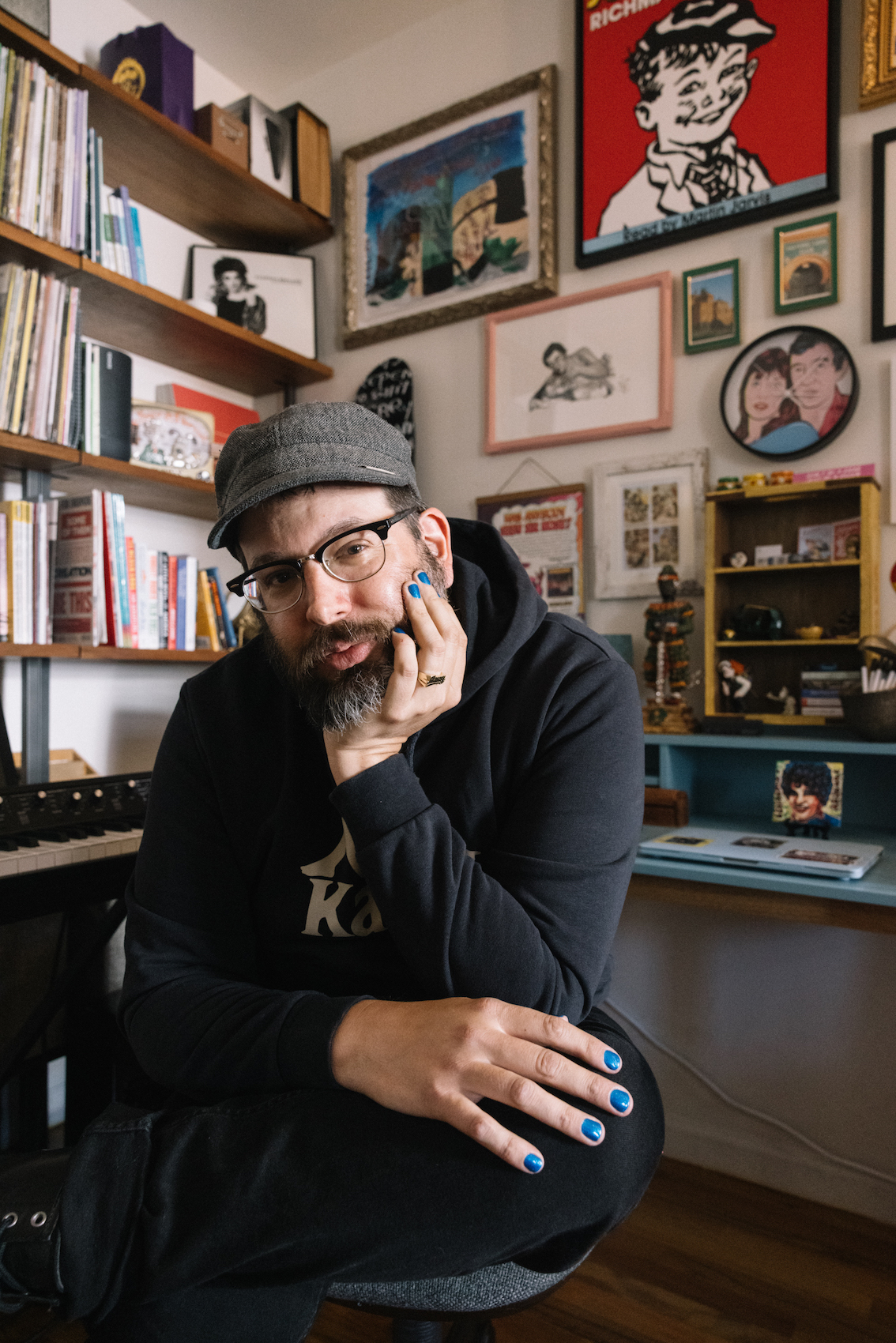
Elia Einhorn (Photo: Ebru Yildiz)
Let’s talk for a minute about some of your specific projects. I want to start with The Scotland Yard Gospel Choir, a multi-member group based in Chicago and active since 2001. What’s that all about?
Elia Einhorn: I’d had one band before, but Scotland Yard Gospel Choir (SYGC) was the first to really get love. It started in 2001 and went through many lineup changes. By the time we signed our record deal, I was the singer-songwriter with a fantastic six-to-eight-piece band. We had guitars, bass, drums, plus strings and horns—I was profoundly influenced by Belle & Sebastian.
We got to play with some of the most adored artists of the time—Arcade Fire, Ben Gibbard, Tegan and Sara. Our songs appeared on The O.C. and Gossip Girl (twice!). People thought we’d be the next big thing, but we never quite got the chance to see it through.
Next up, I’m curious about your involvement in Fashion Brigade.
Elia Einhorn: SYGC’s career ended after a horrific tour accident in 2009. While recovering from a fractured back and neck, I started making lo-fi songs. At first I thought they might become the next SYGC album, but the band wasn’t in shape to tour. Bloodshot Records told us they needed 100 shows to release a new LP, which was impossible for us.
I moved around—Olympia, then back to Chicago, then to Brooklyn—writing and producing alone. I began bringing in collaborators we’d toured with or who were SYGC fans, like Exene Cervenka from X and Kelly Hogan. Then I added NYC friends like Frankie Cosmos, Shamir, and members of LCD Soundsystem. Suddenly I had enough songs for an LP, and Gentle Reminder Records released Fvck The Heartache.
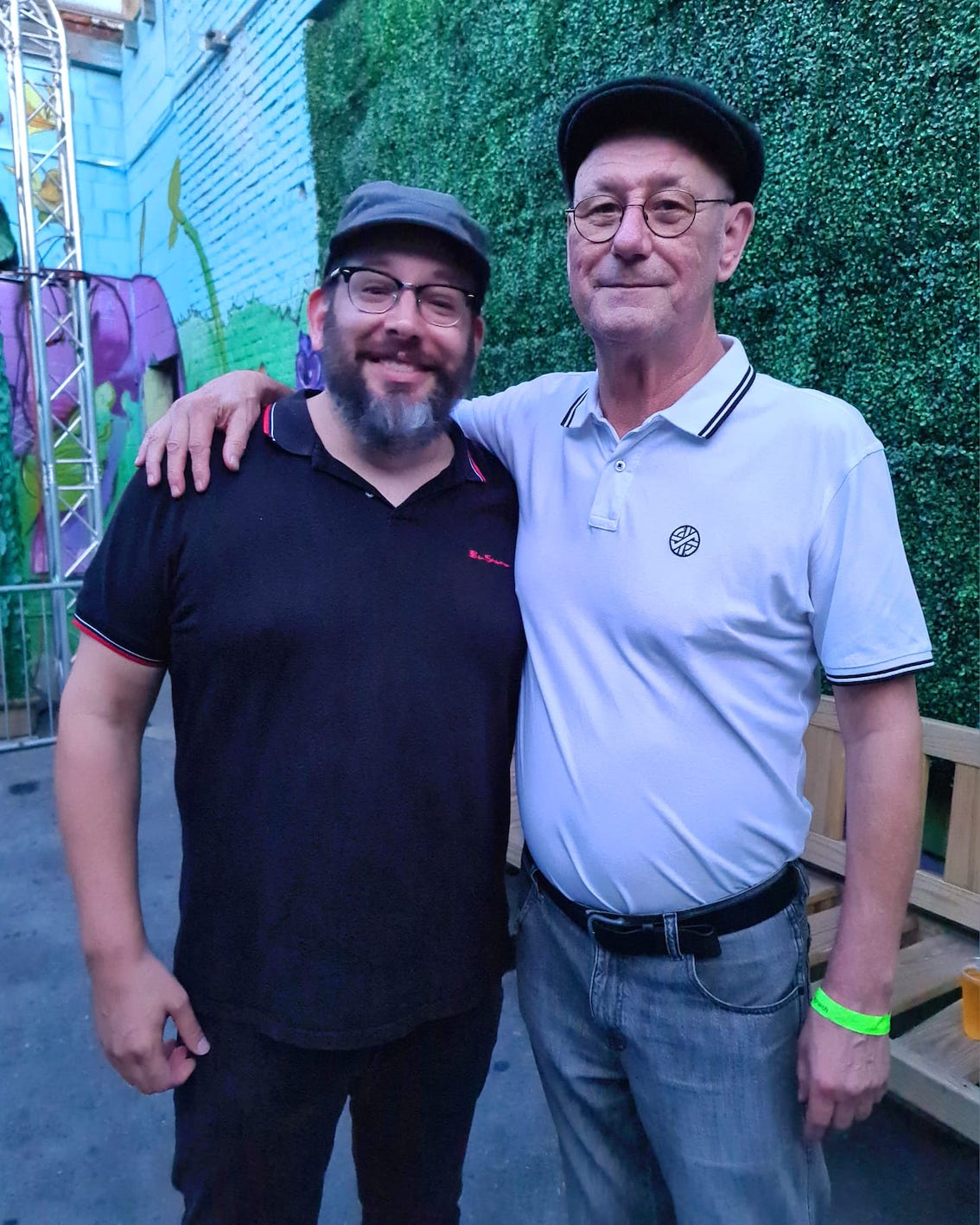
Elia & Steve Ignorant (Crass)
Now there’s a new Fashion Brigade 5-track EP featuring the late Lee “Scratch” Perry (who also painted the cover), Ayse from Savages, Shamir, The Range, and more. It’s coming as a cassette with an accompanying zine featuring interviews with Steve Ignorant (Crass), RP Boo, The Magnetic Fields, and others.
That sounds awesome. How did this come about, and how did you bring so many people into creative flow together?
Elia Einhorn: I got obsessed with the Jamaican concept of “versioning”—creating multiple songs from the same rhythm track. I thought: what if I give the exact same song to five different artists and see how it comes out? Each track ended up completely unique—one a dancefloor filler, another a dub piece, another indie pop. It was thrilling.
I couldn’t believe Lee Scratch Perry wanted to work with me. His work is on the highest pedestal for me. He was in his mid-80s, and I felt blessed to collaborate with him.
Do you feel you’ve changed as a musician and songwriter over the years? And how important is that knowledge—to be a musician—for your other activities: producing, programming radio, artist management, coordinating projects?
Elia Einhorn: I’m a musician first, and that underpins everything I do. I did a hundred interviews as an artist before sitting on the other side as interviewer, so I know how to get deep quickly—and which questions are annoying.
Studying music gave me the technical skills to communicate with people like Kronos Quartet when working on scores. I also made it a point to learn many instruments well enough to show ideas to experts—guitar, bass, drums, trumpet, harmonica, vocals, percussion, piano… probably a few more I’m forgetting!
As someone who’s hosted and produced so many radio shows for Pitchfork, Sonos, and Talkhouse—what makes a good musical conversation?
Elia Einhorn: New stories, good rapport (or great editing), deep subject knowledge, and a willingness to go deep. The interviewer shouldn’t presume too much audience knowledge—they should provide context. Also, slightly uncomfortable honesty can be powerful. And celeb collaboration stories—audiences love those.
You’ve had intimate conversations with legends and emerging artists. Which interviews have stayed with you emotionally, and why?
Elia Einhorn: A moment with Genesis P-Orridge, in conversation with Laura Jane Grace, stays with me. Gen said people should be free to present however they want—even with fur or horns if that’s who they are. That was powerful.
And after working with Brian Wilson for the first time, I had to sit down for half an hour. I was shaking. That guy is one of the greatest songwriters and producers ever.
Together with Mark Yoshizumi you created 3db, a hub of talent and projects. Can you talk about your community in New York?
Elia Einhorn: Mark and I go way back to grade school in Chicago. He’s one of the greatest living engineers and producers. When my NYC workload exploded and he kept flying in for projects, I begged him to move here. He finally did, and it’s been amazing.
Together we’ve worked on the Talkhouse Podcast, many Red Hot records, Sonos Radio stations with D’Angelo, Thom Yorke, Erykah Badu, Ghostface Killah, Björk, and more. We’ve built a real creative hub.
I also want to ask about being totally sober in a cultural environment often driven by alcohol and drugs. I guess the starting point was your own addiction and recovery?
Elia Einhorn: Yeah. I was a drug addict by my early teens. By 17, I thought I’d fried my brain forever and would need institutionalization. Instead, I went to rehab and got sober. I’ve stayed sober thanks to a network of sober folks and the understanding that I’m not the central controlling power of the universe—that I can rely on something greater in good and bad times.
Working with addicts is my life’s calling. It keeps me grounded.
With Sober 21 you created a special group. Can you tell me about its development and activities?
Elia Einhorn: Musicians often pulled me aside at shows or parties to say, “I can’t stop drinking/using, and I’m afraid my career will be over if I get sober.” They feared they’d lose creativity, touring ability, or opportunities. I knew that wasn’t true.
As I approached 21 years of sobriety—a symbolic milestone in the U.S.—I started a service project. I gathered sober musicians to share their stories, tips, and hope. That became Sober 21, featuring Moby, Nile Rodgers, Patty Schemel (Hole), Peter Hook, Mix Master Mike, Maluca, and many others.
I didn’t anticipate the massive press it got. Because of my busy schedule and fatherhood, it took time to finish, so it ended up releasing during the pandemic—when many hit rock bottom. We donated money from The Creative Independent to MusiCares to help addicts enter rehab.
Of course, relapse is part of the picture. Do you feel a burden of responsibility for others in Sober 21? How do you moderate ups and downs?
Elia Einhorn: I feel responsibility to all who need sobriety. Others showed up for me when I needed it most, so I do the same. Besides being a father, the most important thing I do is support fellow addicts. I talk to recovering folks every single day.
Final question: What’s next on your timeline, and what’s the dream project you keep in a drawer?
Elia Einhorn: Dream project: I want to expand Sober 21 into a full-length book. Publishers, call me!
Next up: dive into the South Korean music scene, release Fashion Brigade’s Annie, I Wish You’d Quit Drinking, finish the full-length Hard Rain LP with Kronos and Red Hot, celebrate the one-year anniversary of my East Village Radio show Elia vs ?, and host an MF DOOM book club tomorrow.
Thanks for your time, Elia.
Thanks for asking me to chat! Xo, Elia