

Ronald M. Schernikau ‘Writing, Being Gay, Being a Communist’
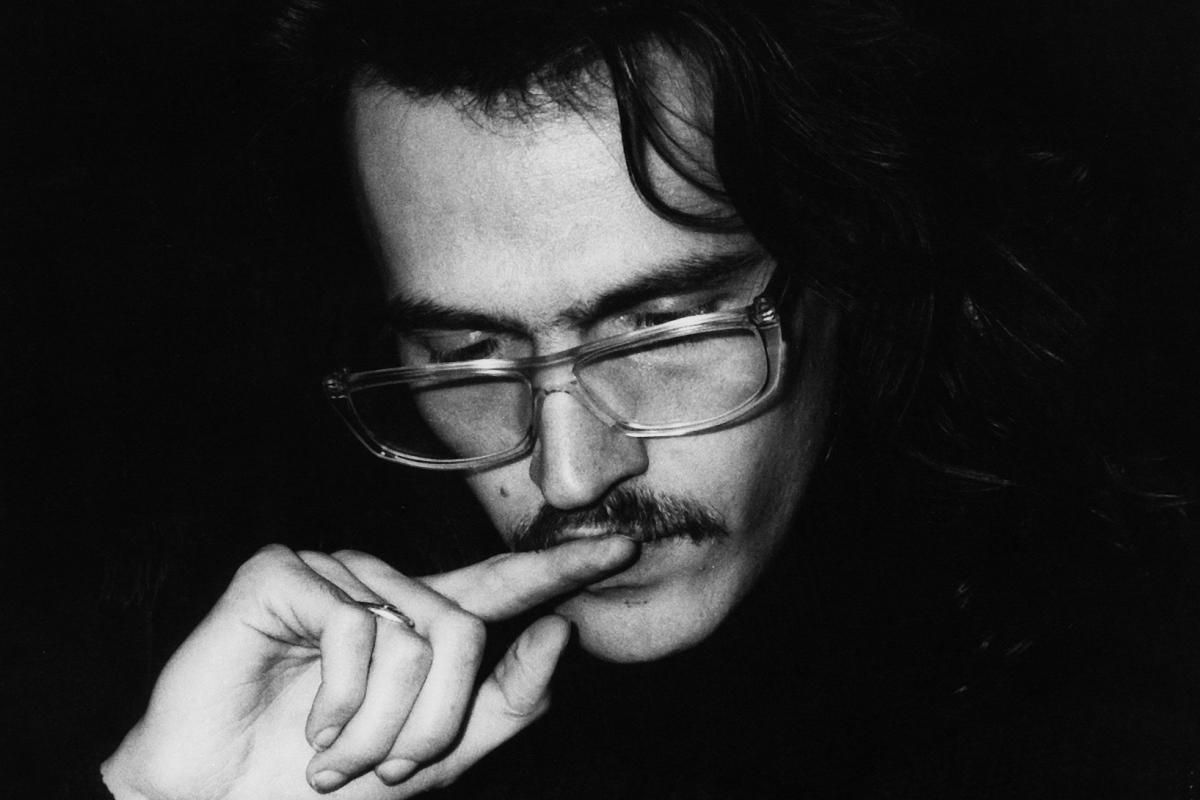
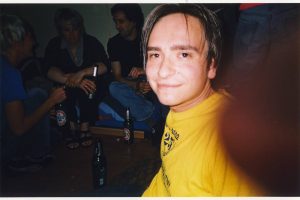
Ronald M Schernikau (Credit: Frank Feiertag)
In 2009, I wrote a song called “Königin im Dreck” (“Queen in the Dirt”) for the publication of the Schernikau anthology of the same name. In 2025, I was part of a concert-style Schernikau reading. We also called it “Königin im Dreck“.
What is the image of the queen in the dirt all about? Or first of all: who is Ronald M. Schernikau anyway? In his own profile, he describes himself with a few simple words: ‘writing, being gay, being a communist, faith, love, hope, childish, camp, self-confident’.
Schernikau was born in Magdeburg in 1960, the son of a nurse. In 1966, his mother took him to West Germany. In 1989, he became a citizen of East Germany again. He died of AIDS in 1991. Schernikau wrote his first and only bestseller, “Kleinstadtnovelle” (“Small Town Novel”), while still at school. His magnum opus, “Legende” (“Legend”), was published posthumously in 1999 to little fanfare.
In 2009, Matthias Frings published the biography “Der Letzte Kommunist” (“The Last Communist”), triggering a minor Schernikau renaissance that never made huge waves but also never completely died down. In its initial phase, it was dominated by a fascination with the pop star look and the adventurous life of the hero. There are many strands: his mother, who was an ardent GDR citizen and yet fled with her son to Hanover because his father lived there. His father, who secretly already had a family and turned out to be a Nazi. The passion with which the mother then kept alive the memory of her beloved, lost homeland in her son. His wild gay life in West Berlin. And then, the final drama: the GDR, the land of his dreams, which disappears the moment he finally reaches it – and his own early death shortly afterwards. All of this understandably captivated the interest of those rediscovering him.
The biographical approach led to a legion of Schernikau impersonators with fake moustaches and to a certain trivialisation and neglect of his writings. At the same time, however, it ensured that their two most important themes were addressed: homosexuality and communism. Schernikau said of the strange incompatibility of these two areas:
“At first, when you become gay, you think all gay people are nice. I thought that for quite a long time. For example, I always felt the urge to tell the people in the gay group in Hanover about my experiences with the SDAJ, and I was always very surprised when they weren’t interested. Conversely, I also thought all communists were nice, and I was always quite surprised when they couldn’t relate to my being gay. And the gay people and the communists never knew each other. They never saw each other. On my eighteenth birthday, I threw a big party and invited everyone: the people from school (…), the communists and the gay people. And in the middle of it all was my mother. It was wonderful. But it was also a sign that the two groups couldn’t really be brought together. I brought them together. For me, it wasn’t so bad. But objectively, they didn’t belong together.”
Tragically, over the past ten years, we have seen the crack that ran through Schernikau’s life reappear in the way his work is treated. Some theatres have staged productions of “Kleinstadtnovelle” in a way that isolated the gay coming-of-age story and used it as a backdrop for dull orgy reenactments. The fact that the main character is also a well-read Marxist whose desire to shape school policy is much more controversial than the anti-establishment attitude of his stoned classmates was ignored.
On the other hand, one could attend reading evenings organised by communists in overlit rooms, where one could nod in sombre agreement when the famous passage came in which the author prophetically calls out to the congress participants of the GDR Writers’ Association, that they know nothing yet of the ‘degree of submission’ that ‘the West demands of each and every one of its inhabitants’. Here, of course, everything related to sex and fun was left out.
„Is it permissible to enjoy oneself in the midst of a world of excrement?“
Now, while usually legitimate to take a selective approach to a work, in this case, halving the subject matter misses the central point. In the ‘Legend,’ it says about the “Legend”: “This whole long book is a great treatise on the role of pleasure in our lives. Is pleasure allowed in a shitty world?”
All Schernikau’s writing is in some sense an effort to provide a life-affirming ‘yes!’ in response to this question. Elsewhere, the question takes a different form: “How does a queen behave in the dirt?” And in this figure, the queen in the dirt, a process that is decisive for Schernikau crystallises, which I would like to call communist camp. I understand camp as a conscious affirmation of kitsch. Kitsch as that which reminds the bourgeoisie of the aristocracy in terms of aesthetics – everything exaggerated, lavish, gay. Susann Sonntag depicts the gay affinity for aristocratic posturing as aesthetic anti-moralism. But the aristocratic gay man does not simply position himself against morality, but against a morality directed against him. Hubert Fichte puts it very drastically in one passage of his novel “Versuch über die Pubertät” (“Essay on Puberty”):
“Alex W. Kraetschmar has poor taste. It is in poor taste to send your beloved a bouquet of red roses to Lockstedt for their birthday – and dangerous. In poor taste – the perfume Soir de Paris. In poor taste – “the aristocratic” (…) Sentimentality is regarded by bourgeois liberals and critics as the feigning of false feelings through surrogates (…) Being tasteless means not submitting to the magical code that has become bourgeois or anti-bourgeois. Tastelessness is a counter-language like illness or criminality (…) Tastelessness is the last false language before destruction.”
It is also important to note the bourgeois-anti-bourgeois alliance against kitsch. The left demonises it as a lie, as a sugar-coating of harsh reality. Schernikau embraces that lie as a means of utopian anticipation:
“communist art, I try to plan things. I would like this and that to be the end result, as an attitude, as an outlook on life, as a meaningful way of living. And that means I lie. It means that I make claims about the situation here, even if I believe that they are not true. Not yet, anyway!”
For Schernikau, the concept of the lie is closely linked to the concept of the ideal: “There is a simple test. Ask someone about their ideals and ask them about reality. If they start singing the praises of their ideals, then let’s go. If they lament reality, forget them.“
The ideal, one might say, is nothing more than a lie with the mission of making it come true. Aesthetic embellishment is therefore not the opium of the people, but, at least potentially, something activating, something that can inspire improvement in the world. Schernikau accordingly finds emancipatory potential in GDR schlager, to which he devotes a long, affectionate treatise, in Andy Warhol’s Pop Art, and in pop in general:
“POP AS CONTEXT: THEN AND NOW | Here, the alternative crowd will probably have to resort to a concept of culture that considers disco programmes and schlager songs to be irretrievably reactionary. If that is the case, I find this concept of culture absurd. The tremendous longing for happiness contained in every disco song, no matter how silly, should be reason enough to work with those involved […] to make things more concrete, imaginative and realistic. Wherever they want to reach us, we should put on one of their records, ask ourselves once again what happens to us when we do so, and shake their hands.“
Conversely, Schernikau is deeply suspicious of the aesthetic programme of honesty, of social realism. The truthful reproduction of misery does not encourage its abolition, but rather depresses. the obsessive fixation on the circumstances prevents thinking beyond them:
“that’s life| I hate books that make me nod my head and say, ‘That’s life.’ That’s life, so what? That’s life, which means above all: that’s the way it is and no other way. Gertrude Stein knew why she had to shake her head thoughtfully at Ernest Hemingway.“
“A rose is a rose is a rose | Gertrude Stein coined the famous phrase: a rose is a rose is a rose. The phrase is famous, and it is invariably read as: a rose is a rose, nothing more than a rose and always just a rose. This interpretation is wrong. The phrase reads: a rose is a rose, and also a rose, and additionally a rose, and perhaps even a rose. A rose is always different. Those who believe the world is unchangeable are lost to roses.“
Schernikau’s attack on aesthetic dreariness is evident not only in the basic message, but also in the way it unfolds, in his typically exuberant leaps of thought. From a critique of realistic literature, he moves on to a revision of the supposedly common interpretation of a famous modernist language game, and from there to an equally enchanting and calendar-like punchline about the changeability of the world.
Schernikau’s attack on aesthetic dreariness is evident not only in the basic message, but also in the way it unfolds, in his typically exuberant leaps of thought. From a critique of realistic literature, he moves on to a revision of the supposedly common interpretation of a famous modernist language game, and from there to an equally enchanting and calendar-like punchline about the changeability of the world.
The rose is a leitmotif of camp sensibility. The drag queen is its ultimate personification. And, of course, the queen in the dirt is a drag queen. As such, her nobility is defiant pride against bourgeois homophobic resentment. At the same time, she symbolises the communist fighting a losing battle. Her secret weapons are “high heels, art, intellect, emotion, insight, help and support“ and a big heart for “failed seriousness“ (Sonntag).
“I admire knitting a hundred thousand times more than the invention of the computer. A computer relies on the vast experience of previous generations, but the fact that you can shear a sheep, spin its hair into yarn and weave it into something warm using two wooden sticks is something I find infinitely fascinating. And in exactly the same way, I also admire myself, who day in, day out tries to introduce communism in West Berlin, inexplicably never discouraged, unconvinced by any reality.“
Here, the steadfastness of the party soldier is presented in the snappy manner of a diva. For Schernikau, living the right life in the wrong one is possible, namely as an anticipation of happiness in the fight for its general enforcement. For the drag queen, this is obvious. Living out her desires is both the means and the end of her struggle. Schernikau extends this principle to the dirty work of the party communist:
beauty | “The crucial thing is that I make an effort to make something beautiful. I learn, I am given tasks, I do. Like this. If I don’t go, I feel like something is missing. I defend it when people ask me. An idea of a party that sets me tasks in my head. In other words, I set myself tasks based on the idea I have formed of the party. I make myself the way I want to be. I want to be optimistic. That’s a great motivation, isn’t it? Maybe the situation isn’t as bad as I think. Anticipation is the greatest joy.“
Pleasure and work are not contradictory. Working towards the possibility of pleasure for all is itself a pleasure. But traces of the old Protestant motto „Work before pleasure“ can also be found in Schernikau’s work, albeit in a flamboyantly triumphant form:
“Who was better, Heiner Müller or Marilyn Monroe? That’s what preoccupies me. What do I want to be? I want to be everything. I want the world for myself. I have done for the world. Now the world should do for me.“
The idea that codes of royal excess could be used progressively in the context of its democratisation also arose in real socialism, when things were going well for a short time. For example, after the war in East Berlin, showcase construction projects were called ‘palaces for workers’. In his 1972 essay “Das Poetische“ (“The Poetic”), Peter Hacks performed a positive revaluation of decadence from a post-revolutionary perspective through his exploration of the category of ‘pomp’ (which is closely related to camp):
„The king, with his purple cloak and golden cardboard crown, still serves as a symbol of theatre […]. Pomp has become contemptible because, in the reified, soulless world of the bourgeoisie, it has come to be seen as nothing more than empty ostentation. But as far as I can see, there is nothing wrong with expressing greatness in a grand manner. Theatre as pomp is, historically speaking, the self-confidence of a class. Aesthetically understood, it is a celebration of human possibilities, a display of acquired and attainable riches, man’s pride in himself.“
Assemblages and miniatures of fragile optimism
For Schernikau, as for Hacks, belief in the GDR was a prerequisite for his programmatic festivity. “The stupidity of the communists is no argument against communism” is one of Schernikau’s most famous quotes. For him, the shortcomings of the GDR were also not an argument against the GDR, but merely an occasion to put it to shame all the more vigorously by means of its glorification. However, there is a world of difference between his attitude and the relaxed classicism of Hacks, who declares the major problems to be solved and nonchalantly gives shape to the remaining, comparatively trivial ones.
Schernikau’s optimism is much more tense and fragile. This is already evident in the fragmentary form of his writing. The vast majority of his work consists of montages and miniatures. His short sentences possess a complex simplicity. The language draws on very different sources, but these converge to form a very distinctive style. On the one hand, there is a naive, childlike everyday language. Then there is a lofty, archaic, biblical tone. And finally, there is an excessive precision reminiscent of Wittgenstein’s ideal language, which does not avoid word duplications if they arise logically. The registers exist separately from one another, but also, as here, mixed together:
the people | “and in the ice, the people find it warm. and in the ice, the people live as usual. they are accustomed to the ice around them. because this ice is normal, it does not exist. ice that always exists does not exist. and no one made the ice. and no one is to blame for this world. and no one knows about this ice. a snow queen is someone who gets by.“
Even the more cryptic, sombre passages never descend into utter despair. The following section evokes a lost paradise, drawing on a mood of loneliness and isolation. But the almost manic systematicity has something uplifting about it, like a constructivist painting developed from a single geometric form. At the same time, there is also something childlike here, a sense of wonder at seeing things as if for the first time.
“the boxes | and if the boxes are hollow. and if the boxes are large. and if there are people in the boxes. and if there are many people in one box. and if the people are alone. and if I am also in a box. and if the boxes are small from above. and if the boxes are together from above. and if the people are alone from above and together. then perhaps I am one of them. then perhaps the boxes are made of building blocks. then perhaps the building blocks are bigger than me. then perhaps the world is smaller and bigger than me.
in the other houses, the people where I cannot go. in the other cities, the houses where I cannot go. in the other country.“
One of the few, longer coherent works after his debut is the novel “so schön” (“so beautiful”). The final scene of this love quadrangle, described as a ‘utopian film’, depicts in a realistic yet fantastical way how the division of worlds, that the poet suffered from throughout his life, had finally been overcome. It takes place at a peace demonstration attended by both communists and gay people:
“The two from Helmut’s flat share a glance at each other briefly, then they dance. Franz visits a lottery ticket seller. Knut asks the woman who just sang ‘Liebe kann so weh tun’ (Love can hurt so much) to dance. Michael searches his way through a maze of mirrors and needs time. Helmut enjoys himself in the meantime. Paul likes the soft, younger types and watches some of them shooting. After they have been gone for a while, they discover that all the paths lead back together again.
Everyone who arrives laughs at first and is a little relieved. Not everyone falls into each other’s arms, but everyone goes along with everyone else. A few have taken the party’s stand and are carrying it with them. Franz’s long white faux fur coat is still a little long. Helmut still has laugh lines around his eyes. Gera is still wearing only jeans. The sun has come out and some have joined in. I want there to be a fair. I know it’s sentimental. But so beautiful.“
The world in which Schernikau wrote has disappeared. His GDR has collapsed. There are good reasons as well as bad ones, not to regret this. On the other hand I can think of no reason to believe that, after three and a half decades of unrivalled capitalism, the world is now in a state that no longer requires a radical alternative. Schernikau’s texts have outlived their frame of reference and yet have aged remarkably well (which is easy to see when reading them aloud to a young, unburdened audience). This may be because he always avoided focusing on specific historical phenomena any more sharply than was necessary to transcend them. Or because the question of how to live in a world ‘in which affirmation always seems to be nothing more than the affirmation of the reactionary’ is once again becoming a pressing one today. Hardly anyone has attempted to answer this question more warmly and humorously than Schernikau.
Please order your copies of the kaput print magazine directly from Wolke’s website.
Bookshops and online retailers can find more information on Wolke’s worldwide distribution here.