

Ichi – Ni – San – Shi / Japanese Noise as a Radical Punk Mutation
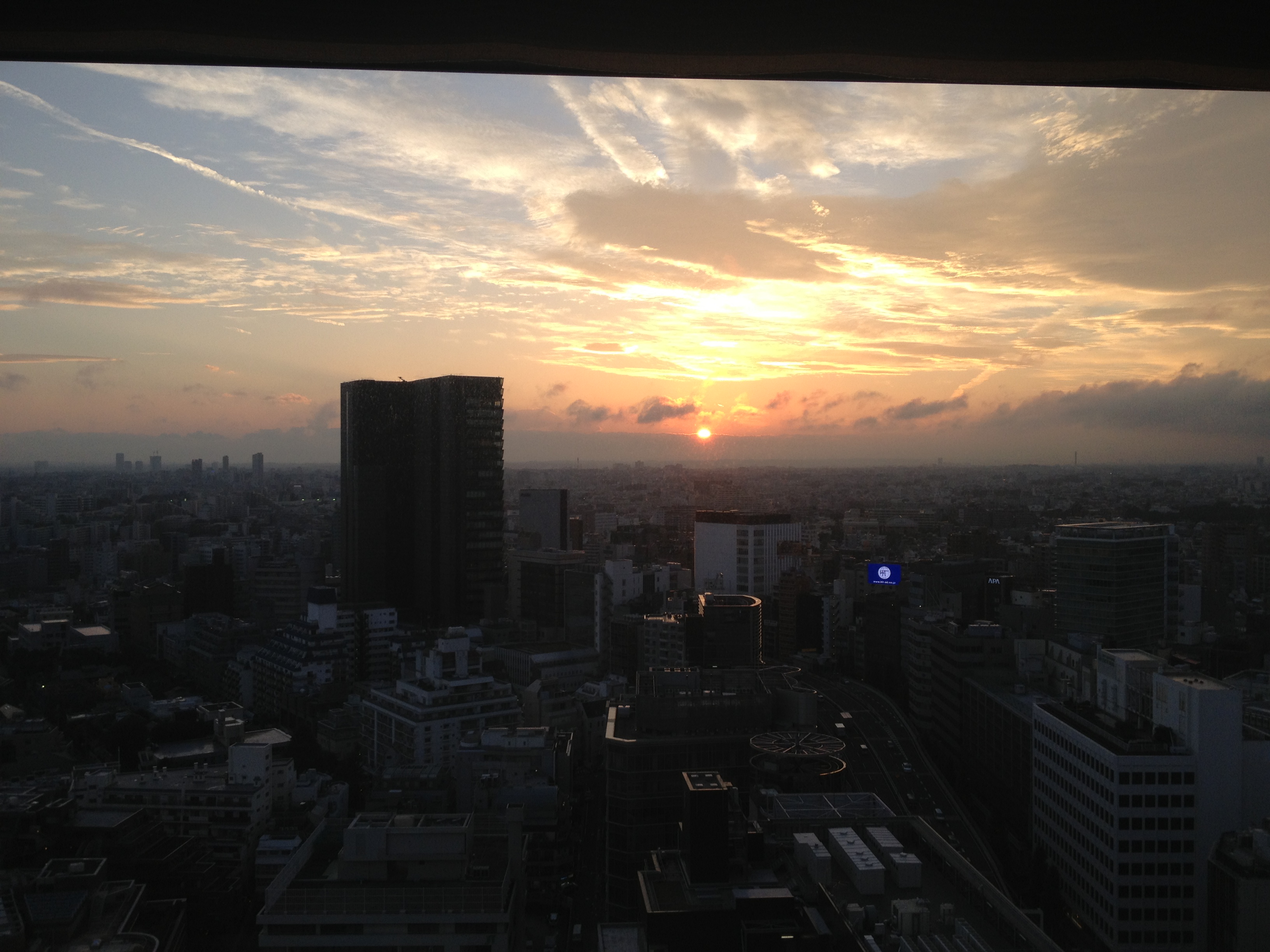
Tokyo, view from Shibuya; 17/10/2014
17 October 2014, a date that will go down in the long history of Japanese noise music. The tension at SuperDeluxe, a venue (unfortunately no longer in existence) with an almost mythical reputation in Tokyo’s subculture scene, is hard to beat. Right at the back, in the dark shadows behind the stage, a nervous figure is already pacing restlessly back and forth: Yamazaki Maso Takushi, better known by his stage name Masonna.
And then the moment arrives: the performance by the Japanese noise legend begins with a primal scream, crawling out of the depths of the effects units through which Yamazaki lets his voice creep to the surface. It is striking how tense his body is. Particularly remarkable: how his left hand hangs limply yet full of adrenaline during the eruptive performance, which lasts a mere two minutes and 15 seconds – a bio-dynamic mystery.
The brevity of the performance is not only a radical gesture, but also has to do with his limited capacity for concentration, as he will tell me in an interview the next day: “The performance lasts exactly as long as I don’t have to think about other things that distract me.”
Yamazaki’s career began in Led Zeppelin and Deep Purple cover bands, before he was quickly drawn into the hardcore and punk scenes. From that time, he has retained the classic punk kick-off gesture: “I start with 1, 2, 3, 4 – and keep the energy level high until I can’t go on any longer!” Yet on this particular evening, he actually pauses repeatedly for fractions of a second, abruptly slowing down only to surge back up explosively and crash either into the audience or himself. The sound engineer’s desperate attempt to right the microphone stand comes across as an absurd slapstick side show. This storm over Tokyo wants anything but to leave a proper stage behind.
The often-invoked calm before the storm becomes here a calm cultivated in multiple fleeting moments amidst the storm. One cannot help but think of “Ma” (間), the deliberately placed pause between sounds in Japanese culture – not an absence, but a structuring moment that makes rhythm and tension possible in the first place.
Masonna’s performance is not about communication, but confrontation. The fact that Yamazaki explicitly references punk and hardcore, yet strips them of their instrumentation, is crucial: what remains is pure action.
With an abrupt pop of the microphone, it’s all over after just 135 seconds. No crescendo, no reverberation, certainly no encore – just a room full of people who first have to comprehend what they’ve just experienced. No other Japanese noise musician compresses time quite like Masonna: every second represents light years of sensitivity.
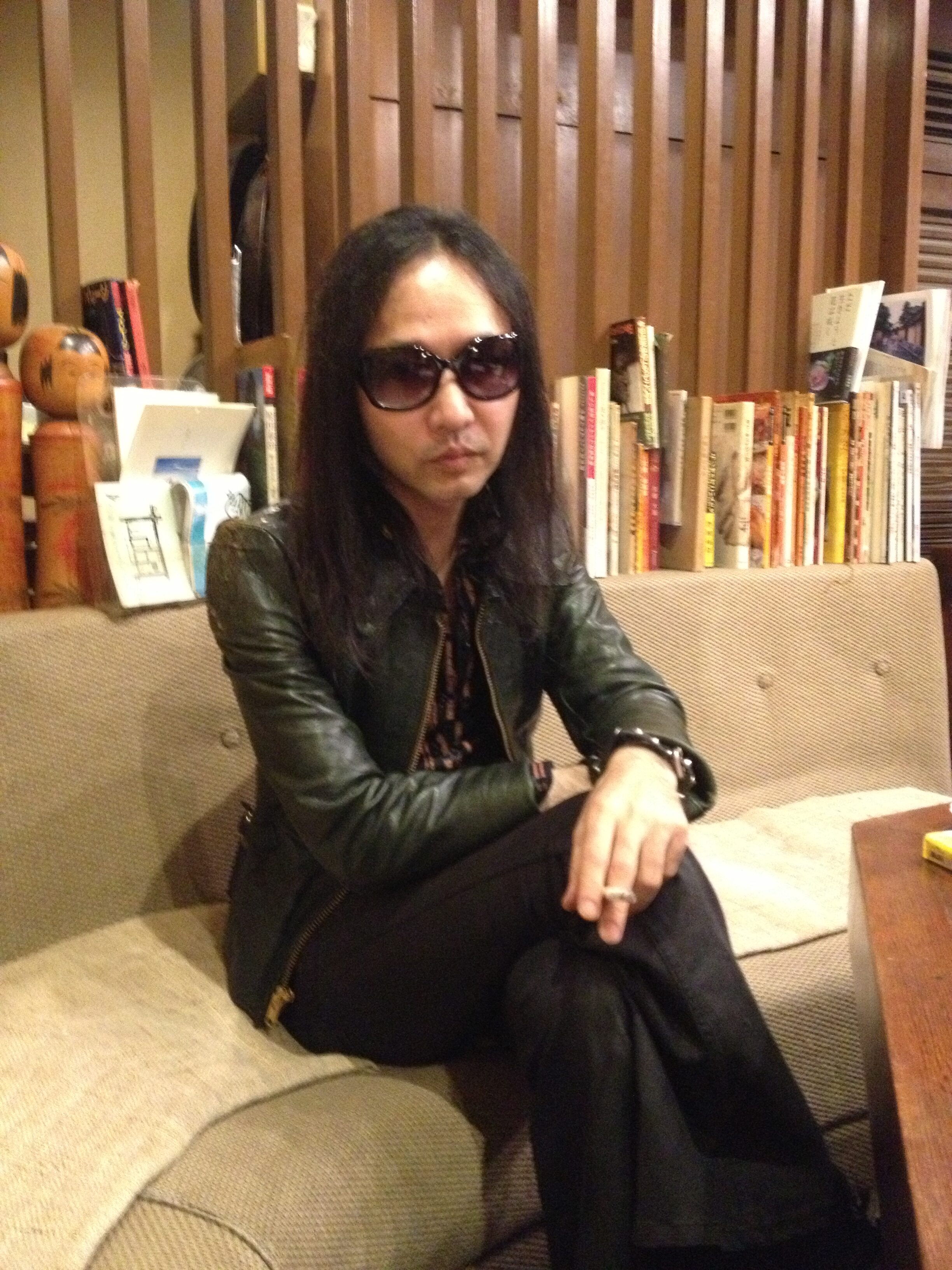
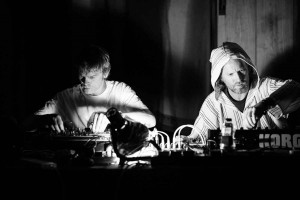
Violent Onsen Geisha (Photo: Thomas Venker)
„Wails to Whispers“
Masonna’s performance was part of “Wails to Whispers”, an evening celebrating the Japanese noise music scene, organised by the Red Bull Music Academy, which visited Tokyo in 2014. Alongside Masonna, the line-up featured Melt-Banana, Violent Onsen Geisha and Keiji Haino, the latter, befitting his status, giving two performances.
If punk is the act of constantly breaking with conventions and expectations, then Yamazaki is a strange hybrid. For whilst he is, of course, now known for his short performances – they still catch you off guard every time. Predictability is simply not a disqualifying factor for radicalism here.
Even if the idea of “faster, shorter, louder” is not a Japanese invention, there is hardly a scene that has internalised this mantra to such an extent. Japanese noise music is not merely a continuation of punk, but its most consistent form: a sonic eruption that cuts away everything superfluous and lays bare the core – energy, defiance, presence.
Punk was never just a sound, but an attitude: anti-virtuosity, DIY, physical radicalism. Noise takes it a step further. Whilst punk still flirts with song structures, noise destroys the very idea of structure. Sound becomes material, feedback becomes vocabulary, volume becomes argument. One could say that Japanese noise is a mutation of punk, enriched by influences from the Western avant-garde – from John Cage to Derek Bailey.
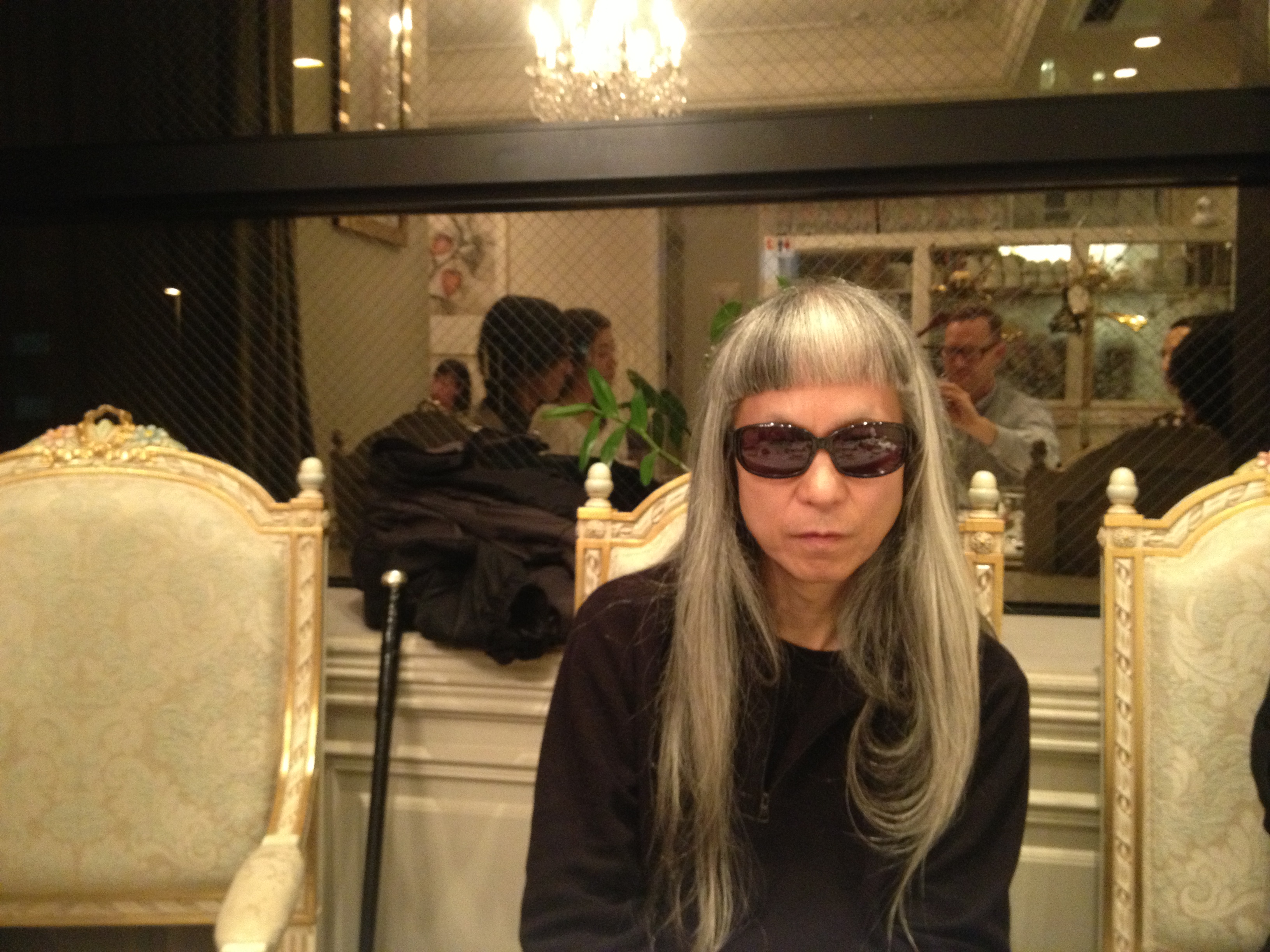
Keiji Haino (Photo: Thomas Venker)
Keiji Haino: Der Anti-Wiederholer
It’s time to turn our attention to one of the epicentres of Japanese noise music: Keiji Haino. Born in Chiba in 1952, he is one of the rare examples of a Japanese musician who has become a fully-fledged member of the Western avant-garde. Collaborations with John Zorn, Derek Bailey, Faust, Bill Laswell, Peter Brötzmann and Jim O’Rourke bear witness to this.
His back catalogue in Japanese contexts is equally impressive: he has been active as a multi-instrumentalist for over fifty years and has worked with Yamantaka Eye, Yoshida Tatsuya and Merzbow, amongst others. Haino himself highlights the influences of Marlene Dietrich, Charlie Parker and Syd Barrett.
“Never to repeat myself,” Haino stated as his motto in Tokyo in 2014. It is not about shocking, but about surprising oneself. Improvisation here is not a technique, but an ethic. Sound already exists; music only comes into being through devotion. Eleven years later, Haino’s performances show that even the anti-repetitionist is not immune to evenings that seem rather textbook-like. Yet he continues to surprise – for instance at the Unsound Festival in Osaka in 2025 with Bachet Sound Sculptures, originally designed for Expo 1970.
It was Keiji Haino who, during a conversation in Tokyo, opened up the ‘Ma’ universe: unexpected, unpredictable silence as a source of new patterns. ‘If it’s predictable, it’s boring – I can’t learn anything from it.’ From this follows his radical demand regarding improvisation: do not repeat.
Noise as radical punk
To truly understand Japanese noise, one must bear in mind the genre’s origins and the diversity of its key figures. From Hanatarash, Hijokaidan, Boredoms and Merzbow, through Violent Onsen Geisha, to Zeni Geva, Boris, Melt-Banana and OOIOO, a wildly sprawling landscape has emerged.
What unites all these artists is less a sound than an attitude: a refusal to repeat, a rejection of convention, a focus on energy rather than form, and indifference to audience expectations. Haino sums it up: he sees his role as a DJ not as entertainment, but as confrontation.
In this sense, Japanese noise is perhaps the most consistent realisation of what punk once sought: total freedom of expression. Whilst punk was historically codified quickly, noise eludes any fixed definition. It remains fleeting, intangible, dangerous.
In the Eye of the Storm: Primavera Festival, Barcelona
The Primavera Festival is a melting pot of diverse sounds. On that summer night in 2024, I was particularly looking forward to Yamantaka Eye, who was playing one of his rare DJ sets.
His band, the Boredoms, founded in Osaka in 1986, are among the most influential groups on the scene. Known for their blend of noise rock, Japanoise and tribal drumming, they evolved from chaotic soundscapes towards rhythm-driven, psychedelic structures and repeatedly performed in extreme line-ups featuring dozens of drummers.
If Masonna grants us the mercy of a swift death through his performances, Yamantaka Eye celebrates his art as endless torture – to stay with the metaphor. For over an hour, he layers his own material across multiple planes, shifting, condensing and interlocking it – a set that dissolves the idea of forward movement and pulls in all directions at once. Time stands still, as it can only do in the most intense performances.
But the final words should go to Keiji Haino:
“It’s not about shocking people at all. Everyone wants to make the world a better place. If people aren’t 100 per cent committed, it gets worse. You have to develop other ideas to make a difference, to surprise people and bring new movements to life.”
This article was commissioned and produced in punk collaboration with KAPUT – Magazin für Insolvenz & Pop and Gegenüber the transatlantic magazin of the Goethe Institut North America.