


Jan Röhlk: “I’m not going to wait until I’m 67 anymore—I’m going to do everything I can from my bucket list right now.”
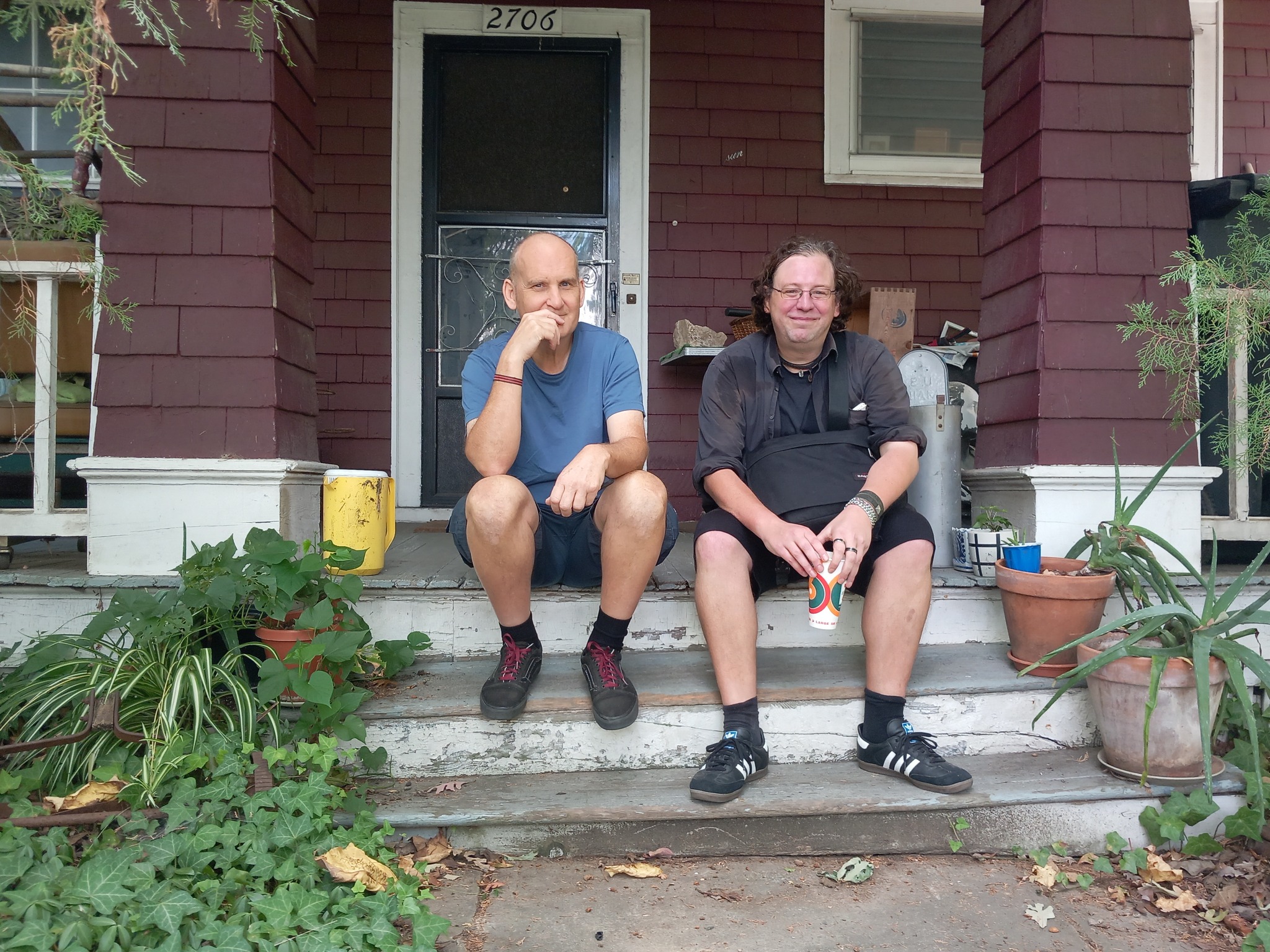
Washington, 2024 (with Ian MacKaye) – “A week of music tourism: clubs, record shops, studios. DC hardcore has always fascinated me. In 2010, we did a Dischord special at the Trust—that’s how we got in touch.”
The “blessing of being born late” often opens up a unique perspective on history: you experience it from the sidelines, perceive it differently—sometimes more intensely. Jan Röhlk, born in Leverkusen in 1978, discovered punk in the early ’90s through his older sister. A defining moment: the Ramones in 1992 at the Cologne Sporthalle; favorite album to this day: “Lifestyles of the Rich Kids on LSD: A Rock’n’Roll Nightmare” (1987). Since 2003, he has been active as a participating observer for the Trust fanzine.
The focus here, however, is on the travel-punk fan who—in addition to jobs as a press assistant in Frankfurt and Cologne—visits places and protagonists of punk history around the world.
What was your first punk concert?
Jan Röhlk:My first punk concert was in 1990: Solitary Confinement at the JUZ Bunker in Leverkusen, along with the death metal band Lemming Project. The mix was exciting, but more importantly, it was the first time I understood what 100% punk really meant. Everything was DIY—the stage, the bar, the ticket booth. No professionals, no distance. That thought—“I could do that too”—clicked immediately. Shortly after, I got started myself: rehearsing, organizing concerts, fanzines, compilations, vinyl, tapes. Just getting started.
What still excites you about punk today?
Jan Röhlk: I’ve always found punk to be totally constructive. Sure, there’s a lot of complaining—but that’s exactly the point: do it better. That “Get going!” attitude is extremely strong. Often, the people and the conversations are almost more important to me than the concerts. You meet all kinds of music nerds who just get things done: bands, labels, radio stations, festivals, magazines—without a grand plan or career goal. That still impresses me to this day.
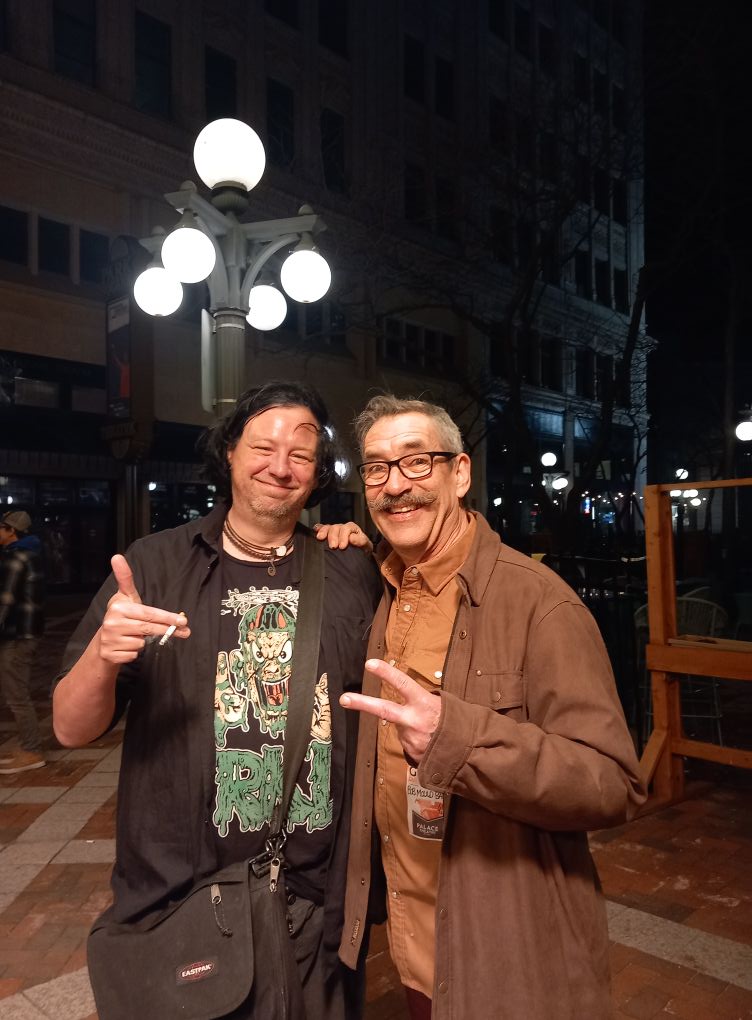
Minneapolis–Saint Paul, 2025 (with Greg Norton) – “Following in Hüsker Dü’s footsteps, I approached him at a concert. A day later, he called out to me in front of another venue: ‘Hey Jan!’—his wife took the photo.”
Wie entstand die Idee zu deinen Reisen?
Jan Röhlk: Die Wurzel liegt in einem Familienurlaub 1990 in Los Angeles. Diese „Star Homes“-Touren, die in Los Angeles zu den Häusern der Stars angeboten werden, fand ich faszinierend, obwohl man kaum etwas sieht. Ich mochte die Idee von Orten mit Geschichten. Später suchte ich mir meine eigenen „Stars“. 1997 fuhr ich als Hosen-Fan nach Düsseldorf, in den Hofgarten – das war der Anfang. Daraus wurde nach und nach mehr, immer gezielter.
How did you go about planning the trip?
Jan Röhlk: In 2008, I made a bucket list: Detroit, Chicago, New York, D.C., Minneapolis, Austin, New Orleans, Australia. I thought I wouldn’t be able to do it until I retired—luckily, I was wrong.
Books were often the starting point: biographies, label histories, scene reports. That gave me addresses, which I later supplemented online. Then I mapped out daily routes to cover as many places as efficiently as possible. It sounds dry, and it is—but that’s exactly what I like. The mix is what matters: old venues, shops, concerts, and, if possible, meeting up with people from the Trust fanzine scene.
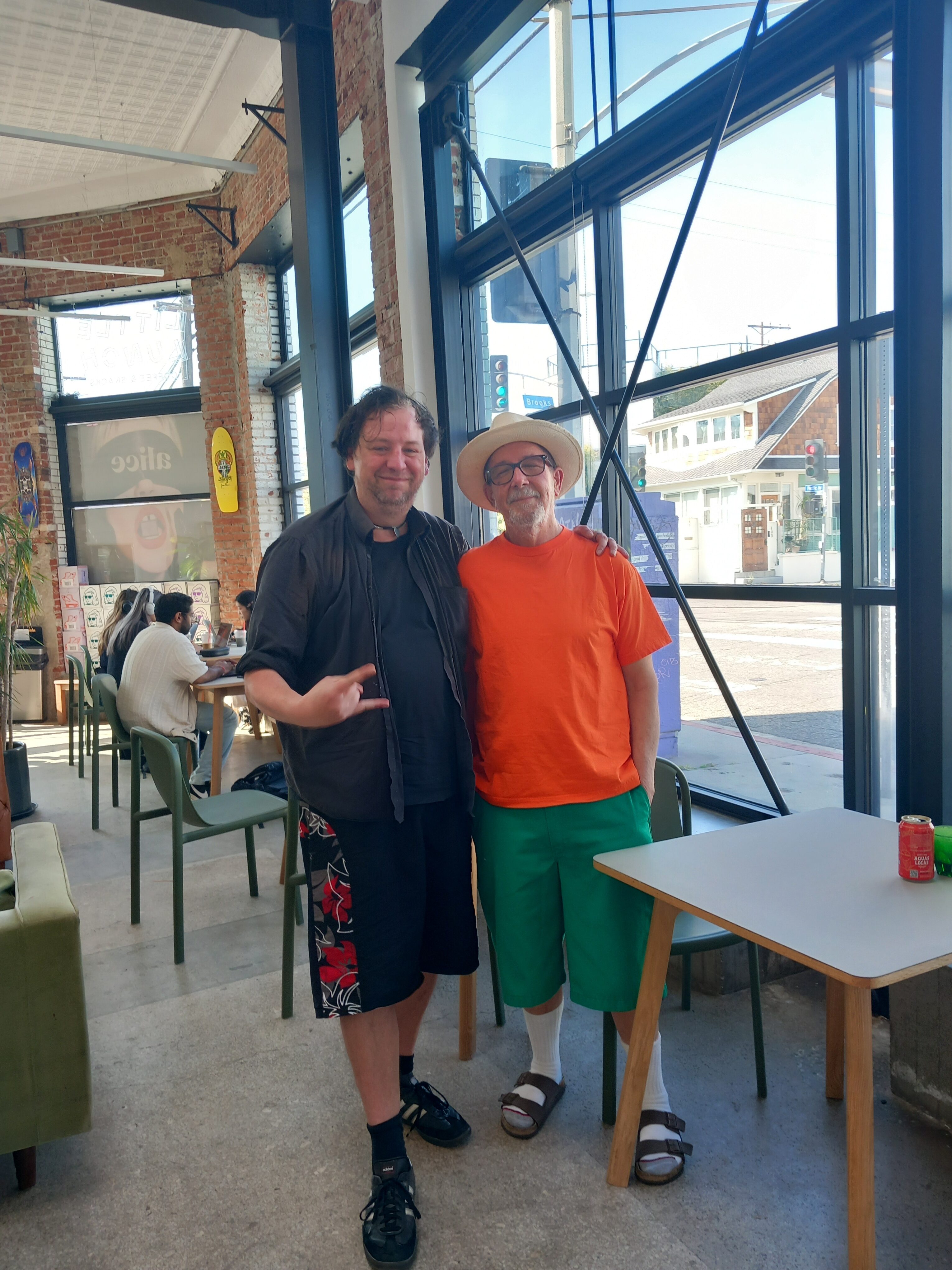
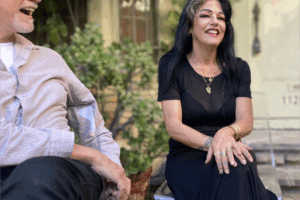
Los Angeles, 2023 (with Chuck Dukowski) – “In 2008, I interviewed him via email for an SST special. Fifteen years later, we met at his favorite café in Venice.”
Why the U.S. and Los Angeles in particular?
Jan Röhlk: Music tourism is thriving here too, but U.S. hardcore—especially SST from L.A.—has always fascinated me more and more. It started early on—partly because of U.S. TV shows. In 1990, I heard Black Flag’s “The First Four Years.” It was like a monolith: suddenly there, full of force, completely unique. That mix of anger and energy stayed with me for a long time. Later, Joe Carducci explained to me this blend of bohemianism, working-class attitude, and surf culture in the South Bay—it made total sense.
How do local people react?
Jan Röhlk: Most of the time, not much happens—a lot of it is “silent archaeology.” You stand in front of places that often no longer exist. But sometimes you hit the jackpot: For the ZK cover “Eddie’s Salon,” the original location was gone, but the real barber was still working—in his late 70s. I walk in, and there he is. Moments like that make it all worthwhile.
And what about the musicians themselves?
Jan Röhlk: Most of them react calmly or with interest. Ian MacKaye thought it was great that I visited the old places and gave me some tips. If you’re genuinely interested and don’t just show up as a fanboy, you end up having perfectly normal conversations.
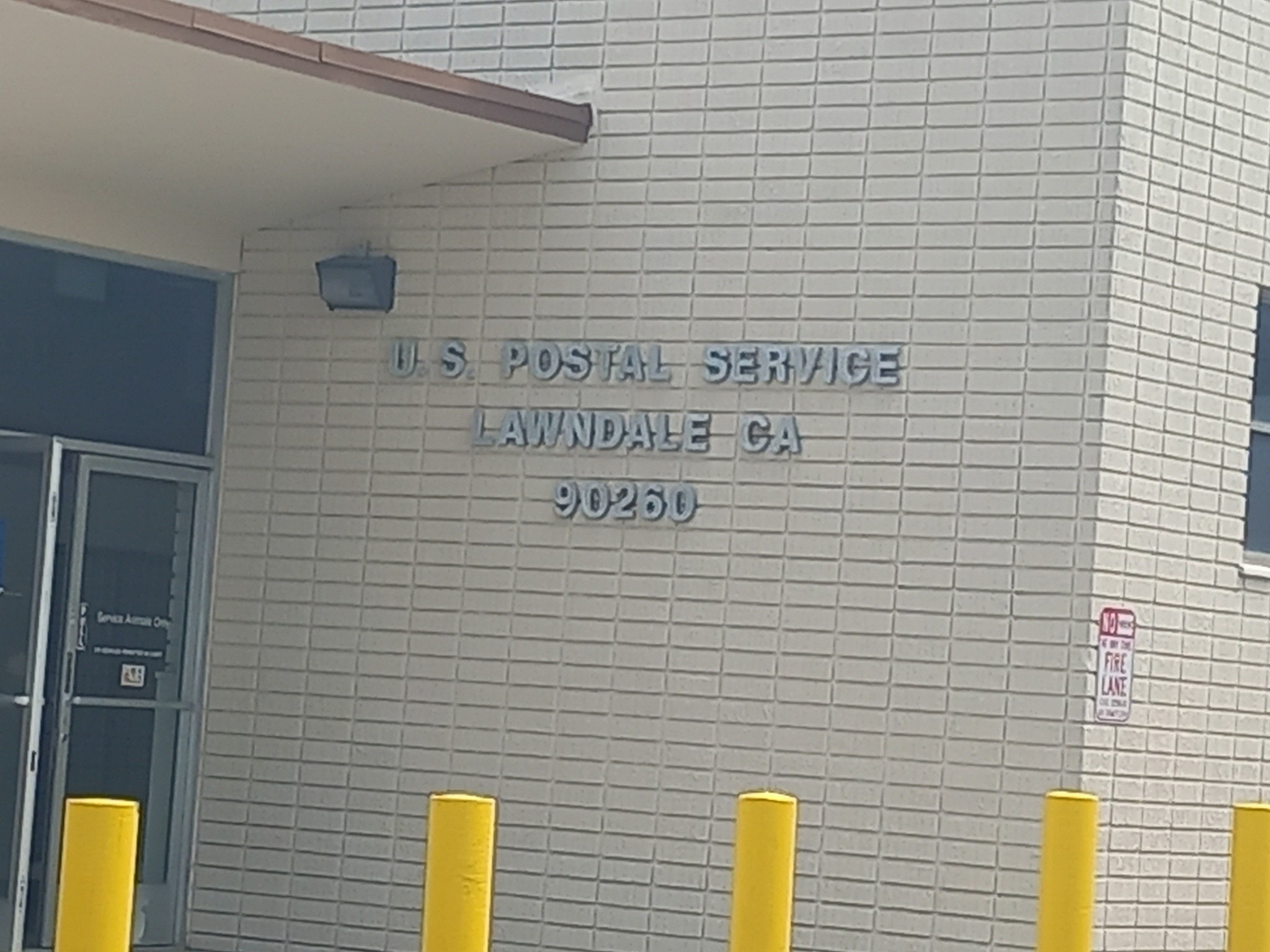
Lawndale, 2024 (SST P.O. Box) _ “This is where the legendary SST P.O. Box (P.O. Box 1) was located from 1978 to 2007—still noted on the releases to this day.”
How do you finance all of this?
Jan Röhlk: Of course, it costs money and time. From 2010 to 2018, I hardly traveled at all because of work. In 2019, the wanderlust came back. And in 2023, I thought: No more putting it off. I’m not going to wait until I’m 67—I’m going to do everything I can from my bucket list now.
What was your most intense trip?
Jan Röhlk: As an SST fan, South Bay in L.A. was always a highlight: Hermosa, Redondo, Manhattan Beach. You know the story—and at the same time, it’s just a beautiful place. Surreal.
Australia in 2019 was also special, especially following in the footsteps of AC/DC.
What’s next?
Jan Röhlk: Next up is Brazil, especially Rio—following in the footsteps of Ronnie Biggs, the Sex Pistols, and Die Toten Hosen. Then on to Easter Island and Tahiti. Main reason: the bay from “Mutiny on the Bounty” with Marlon Brando. Sometimes that’s all the motivation you need. Aloha!
This article was commissioned and produced in punk collaboration with KAPUT – Magazin für Insolvenz & Pop and Gegenüber the transatlantic magazin of the Goethe Institut North America.