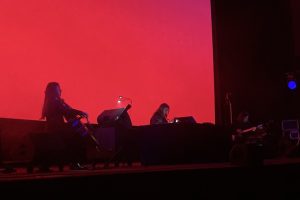



Hallucinatory, Shadowy Sound, Pain and Hedonism: Burial’s Burial / Britney Spears’ Blackout
Burial
„Burial“
(Hyperdub)
Almost twenty years after the release of his self-titled debut Burial in 2006, is there anything relevant left to add to the reception of Burial as an artistic persona? EIn fact, the media theorist Mark Fisher, who died far too young, may have already said everything there is to say about this enigma of electronic music. It was Fisher who first described Burial’s sound as a ghostly echo of abandoned places — like a memory that is hard to grasp, a memory of raves and community, a hallucination unfolding in urban space.
But perhaps that is not the point when selecting 25 records from this first quarter-century. Rather, the question is what remains. And hardly any artist has captured the attitude toward life, the questions, and the breaking points of the noughties more vividly in sound than Burial.
One could almost call the self-titled debut — the first full-length release on Kode9’s label Hyperdub — and its successor Untrue prophetic albums. With their hallucinatory, shadowy sound, they capture the atmosphere of city centres hollowed out by gentrification, social injustice, and sell-outs.
Listening to Burial means mourning before you even know what for. It is music for the end of history — that fantasy of Francis Fukuyama — whose neoliberal utopia ultimately revealed itself to be a perfect nightmare. And between the shadows of past, repressed raves, we still manage to glimpse beauty in Burial’s soundscapes. Not all is lost, he seems to suggest with tracks like Night Bus. At least not as long as we still carry the memory within us.
Britney Spears
„Blackout“
(Jive)
When Britney Spears’ magnum opus Blackout was released, I was far from ready to admit publicly that I listened to her music. I secretly downloaded the brilliant, autobiographical single Piece of Me from iTunes and listened to it on my iPod — but my music consumption, as a recent high school graduate, was too performative to allow such a confession.
And this was during her downfall era, when everyone else was publicly tearing both the album and the artist to pieces. Four years had passed since she released In the Zone. In the meantime, she had married, released a Greatest Hitscompilation, had children, suffered several mental breakdowns, and — in early 2007 — famously shaved her head in a Los Angeles hair salon while being pursued by paparazzi.
Blackout carries all of these experiences within it — above all the messiness and pain, but also the desire for hedonism, for delivering a contemporary dance record brimming with sex appeal. The contrast between the Britney who coos “it feels good” and the visibly fragile woman pushed into performing at the MTV Video Music Awards, for which she was clearly not yet ready, was almost impossible to reconcile.
Blackout was commercially successful. Yet only in retrospect did it become clear how influential the album truly was: how it helped push sounds such as dubstep and EDM into the pop mainstream, and how many subsequent pop greats continue to cite it as a reference point. Notably, it was the first and last album on which Britney Spears was credited as executive producer — her greatest gift to pop history.