

A Song Ain’t No Bridge Anymore – On Cultural Boycotts and the BDS Campaign
What role can culture play in mending rifts, what can it do to create solidarity across nationalities, across national borders? And who, conversely, feels an incentive to create division? How much power does cancel culture wield in a decade that’s eating itself alive anyway? A collection of cultural journalism on the BDS and its boycotts directed against Israel. By Philipp Kressmann und Linus Volkmann.
It’s a quarter past nine in the evening. Music, lights, hectic activity. The show is underway, a big, a massive show. In the audience, a man and a woman make themselves ready. The adrenaline is flowing. They’ve smuggled a bag through security into the concert hall. Their mission is to throw red paint onto a survivor of the Hamas massacre of October 7th, to disrupt her performance. To send a message. It is May 2025, and the 69th Eurovision Song Contest is taking place in Basel. Yuval Raphael is on stage, representing Israel. The country’s participation has repeatedly sparked protests over the years, but the rift within the diverse communities had become even deeper since the Gaza war. The conflict, the sense of irreconcilability, is real—even here, 3,000 kilometers away from the scenes in the Middle East, in neutral Switzerland. The singer’s performance is met by both cheers and jeers. Raphael sings, in English, French, and Hebrew, “New day will rise / Life will go on.” The man and woman now mount a barricade, attempting to get on stage and punish this person, this woman who managed to survive the rapes and murders that took place at the Nova festival only by hiding beneath a pile of corpses, playing dead for hours. With this paint attack, they intend to silence her once and for all. But, at the last moment, security guards prevent the couple from carrying out their plan. Though the bag of paint does get thrown, it strikes some production staff, causing a brief commotion. In the end, no one gets hurt. In the TV broadcast of the show, none of this gets seen.
A song can be a bridge? Not a chance. No one’s speaking of bridges anymore. Not at the ESC, not at other events, those met with hostility or hit with boycotts because of their association with Jewish artists or the state of Israel itself.
The failed attack in Basel fit right in with the catchy phrase used by online activists calling for protests in Basel: “Escalate for Palestine!” What concrete benefit the people in Gaza would get, if any, from an attack on an artist, one who had returned to the stage after her own traumatic experiences, is not for us to say. What’s clear is that we aren’t dealing here with an act of passion spurred on by empathy for a suffering people. Rather, protests are being channeled and empathy stirred up by networks who want to make anti-Israel sentiment hegemonic throughout the cultural sphere. Today, we want to talk about the most powerful of these networks, the globally active BDS: Boycott, Divestment, Sanctions.
BDS: History and Concept
A progressive music club in Tel Aviv whose homemade sound system enjoyed international renown: The Block. The club differentiated itself through its vision: among other activities, the club team promoted its parties with posters in both Arabic and Hebrew. The Block took the approach seriously: it had an Arab manager, the team openly criticized Israeli Prime Minister Netanyahu, and the club saw itself as part of a coalition of Arab clubs. Founder Yaron Trax recounts all this in the book Judenhass Underground (Hentrich & Hentrich Verlag). But the club was met with hostility—especially from the Israel boycott campaign BDS. According to Trax, even DJs faced concrete threats.
A look back: In 2005, BDS published its official manifesto, in which it lays out its aim of boycotting Israel in economic, academic, and cultural spheres, thereby isolating it internationally. Among other things, the BDS movement seeks to pillory Israeli companies, including those abroad. According to social scientist Dr. Jakob Baier, these calls for boycott have had little effect on Israel’s gross domestic product, but, since the 2010s, the boycott campaign has gained traction, especially in academic and cultural circles. Baier’s research at Bielefeld University focuses on topics including anti-Semitism in the cultural fields and conspiracy ideologies in modern media. “In the cultural sphere in particular, you can reach a lot of people in a supposedly prepolitical space and familiarize them with the movement’s goals,” he says in an interview with Kaput magazine. Bands and artists, whom people may look up to, then carry these ideas forward. Many acts have now followed BDS’s calls for boycott, including well-known musicians and bands like Massive Attack, Brian Eno, Fontaines D.C., and Lorde. But bestselling author Sally Rooney has also supported the campaign and there are also collaboration posts on Instagram from climate activist Greta Thunberg and BDS.
The BDS program is at certain times very explicit, and at others rather vaguely articulated. Its founding manifesto, for example, calls for an end to the occupation of all Arab lands. “It’s quite unclear what this means. Is it a demand that also envisages a Jewish state? Or is it about wiping the state of Israel off the map and replacing it with an Arab state? I suspect that behind this ambiguous wording lies the intention to form a broad political alliance. This would win over both the radical forces that aim to destroy Israel and the peace-loving groups that advocate for the existence of a Jewish state and a Palestinian state, which is a perfectly legitimate demand.”
But just a glance at the signatories of the BDS manifesto is enough to cause unease. It doesn’t just include groups from Palestinian civil society, such as trade unions. The long list of signatories also included the “Council of National and Islamic Forces in Palestine“ – an alliance of organizations that also includes the PFLP, Islamic Jihad and Hamas. “There is a broad alliance of moderate groups, including important groups from Palestinian society, but also radical terrorist groups.”
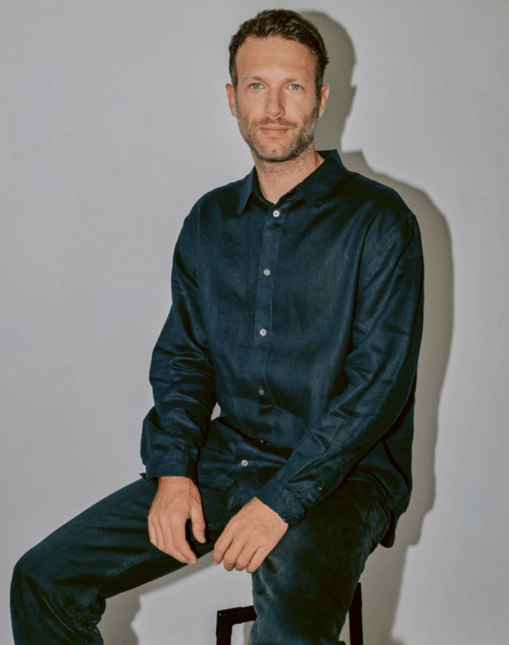
Dr. Jakob Baier: “October 7 marked the practical implementation of an Islamist ideology that is, at its core, anti-Semitic.” Immediately following the massacres in Israel, terrorists around the world called for attacks on Jewish communities. The anti-Semitism researcher emphasizes: “Islamism is an ideology that predates even the State of Israel.”
Some actions also made headlines in Germany: in 2017, for example, BDS activists disrupted an event in Berlin and shouted at a Holocaust survivor. In 2019, the German parliament issued a resolution stating that the BDS campaign’s “patterns of argument” were anti-Semitic. Baier says that BDS is both programmatically and methodologically an anti-Semitic campaign. Criticism of the Israeli government and, among other things, its political decisions to support settlement construction is entirely legitimate. People in Israel regularly protest against decisions by the government, which is considered the most right-wing in the history of the country. However, statements about Israel can also amount to Israel-directed anti-Semitism. The so-called “3-D test” can be useful in identifying anti-Semitic implications. As Baier explains it: “If Israel is demonized to a high degree, that’s one ‘D,’ then anti-Semitic rhetoric is present. If Israel is delegitimized, if it is said, for instance, that Israel should not be allowed to exist, then this is also anti-Semitic rhetoric. The third ‘D’ stands for double standards: these exist when criticism of Israel is based on standards that would not be applied to any other country.” An example: When the Eurovision Song Contest 2019 took place in Israel, a graphic on a BDS homepage caught the eye. “This website published a logo that was an altered version of the official ESC logo. You see a heart, it’s broken. The ‘break’ resembles an SS rune. This suggests Israel is no less than a Nazi state. Not only is this the worst possible form of demonization, but it is also the kind of perpetrator-victim reversal typical of the anti-Israel activism of BDS groups. After all, Israel is the state of the survivors of the Shoah.” Such imagery and rhetoric can also be found in the work of former Pink Floyd musician Roger Waters, who puts public pressure on other artists not to perform in Israel. “With his BDS activism, he sees himself in the tradition of the White Rose, i.e., the anti-fascist resistance against National Socialism. He consistently invokes such tropes and narratives.”
The core demands of BDS strike a different tone. The campaign, for example, calls for the right of return for all Palestinian refugees. But just what does that mean? “In 1947, the United Nations adopted a partition plan for the British Mandate of Palestine. The plan provided for the establishment of a Jewish and an Arab state. In 1948, the State of Israel was founded. The establishment of a Palestinian state, however, did not happen because the partition plan was rejected by the Arab side. Five Arab armies attacked the newly founded State of Israel at that time and lost the war,” explains Baier. “In the course of this war, around 700,000 to 750,000 Palestinians were displaced or fled. They are now considered refugees, as are their descendants. Refugee status is inherited here, which is a special feature of the Israeli-Palestinian conflict. As a result, the number of Palestinian refugees has grown to just under 6 million, most of whom now live in Jordan, Gaza, and the West Bank. If one were to demand that all these people ‘return’ [authors’ note: including all Palestinians born in other countries after that war], the demographic majority would shift to the detriment of the Jewish population. This would lead to the dissolution of Israel as a Jewish and democratic state.” So is anyone actually talking about coexistence? Baier points, in this context, to statements made by founding members of the campaign. “That’s where it becomes very explicit. BDS leaders say that there should be an end to the Jewish state.” Israel is openly delegitimized here. “This is also an anti-Semitic demand. Because it means taking away a safe space for Jews in this region. What happens then is what we saw on October 7th, 2023: it was the largest massacre of Jews since the Shoah—and it took place in Israel, committed by terrorists from Palestinian Hamas and their allies in the Gaza Strip.”
The campaign is not content with placing massive pressure on artists not to perform in Israel. A BDS offshoot even called online for a boycott of what has since become an Oscar-winning film by an Israeli-Palestinian collective. According to Baier, the documentary, No Other Land, takes a highly critical look at the situation in the occupied West Bank. But, because the filmmakers did not explicitly commit to the demands of the BDS manifesto, the production also came under scrutiny from the campaign. As Baier puts it, “Even people who criticize the current Israeli government and work for peace and understanding between Israelis and Palestinians are boycotted if they do not comply with all of BDS’s demands. This is a very authoritarian enforcement of these goals, which are implicitly or explicitly anti-Semitic.”
Examples of this approach are numerous. A particularly dramatic case dates back to 2020, when Palestinian peace activist Rami Aman organized video calls between Palestinians and Israelis in Gaza. According to several sources, a BDS activist brought this to the attention of the Hamas authorities. Aman was subsequently imprisoned and tortured by the Islamist terrorist organization. It is no coincidence that such actions go unmentioned by BDS. They also fail to bring up the plight of Palestinians in other countries, such as ongoing discrimination against them in Lebanon, and they ignore efforts made in the region to destroy Israel. For all this would be inconsistent with the narrative that Israel is solely to blame for the conflict in the Middle East. How is it that many artists fail to recognize the fundamentally anti-Semitic ideology of this campaign?
“Over the last ten to fifteen years, we have seen increasing politicization in cultural spaces. Mostly these are scenes that view themselves as left-wing and progressive. They are scenes whose activism is strongly linked to anti-racist and anti-colonial movements. Anti-Semitism is not discussed in these contexts, particularly where it is a question of Israel-directed anti-Semitism. In the vast majority of cases, it is ignored or denied. Most of the time, people say that they are against racism and, therefore, also against anti-Semitism. Here, anti-Semitism is understood as a subset of racism. However, anti-Semitism functions according to different psychodynamic premises,” says Baier. “People with an anti-Semitic worldview consider Jews to be, on the one hand, inferior and, at the same time, all-powerful.” This is also reflected in the most powerful forms of anti-Semitism today: in conspiracy ideologies and Israel-directed anti-Semitism. In an article for Germany’s Federal Agency for Civic Education, Baier writes that the “conflict between Israelis and Palestinians” is “always interpreted by BDS as a struggle between a supposedly imperial and colonial oppressor and a colonized, oppressed people.” BDS portrays, for example, Zionism as a racist and imperialist project. In the interview with Kaput magazine, he explains why this interpretation is wrong: “Zionism was and is a reaction to anti-Semitism worldwide. If you attack the idea of a Jewish state and want this safe haven for Jewish people to cease to exist, then you are acting and speaking in an anti-Semitic manner. Of course, we are currently dealing with an Israeli government that has moved away from moderate Zionism. Nevertheless, Zionism is essentially an emancipation and national movement that advocates for the creation of a Jewish state where people fleeing anti-Semitism can live.”
Anti-Zionism, nevertheless, has now become a trope of pop culture, and the term “Zionist” an insulting term. Various alliances today identify with the goals of the BDS movement, whose ideology, according to Baier, has developed a life of its own. “The BDS label is no longer really necessary today; these ideas are circulating and finding supporters.” Though not every boycott action is necessarily backed by BDS, the campaign is the motivating force behind the global boycotts of Israel.
BDS: October 7th and its Aftermath
The images of Hamas’s attack on the Nova music festival, the videos of the kidnappings,the news of the over one thousand civilians murdered spread around the globe—but none of it proved to be a damper on the enthusiasm of networks like BDS. On the contrary, the campaign has continued to gain attention and support ever since. Empathy for the plight of the Jewish victims that became public after October 7th, on the other hand, remained conspicuously muted despite this undeniable attempt to destroy Israel and its inhabitants, be they Jewish or Arab. How could it have come to this? A journalist Nicholas Potter put it in a commentary, “The glorification of Islamist terrorist organizations such as Hamas, Hezbollah, and Palestinian Islamic Jihad as anti-colonial resistance fighters, which has been gaining momentum in some left-wing circles since October 7th, cannot be explained without the groundwork laid by BDS.” On the day of the attacks itself, BDS published a post on Instagram. The text talks of “armed resistance.”
Even Claudia Roth, then German Minister of State for Culture, who, in the face of incidents deemed anti-Semitic at documenta fifteen in 2022 and the Berlinale 2024, was someone never suspected of pursuing a one-sided, pro-Israel agenda, said in an interview with Die Zeit that it was “appalling […] how supporters of the BDS movement have relativized the terrorist attacks of Hamas.” Jutta Ditfurth (ÖkoLinX) had already identified BDS as the “foreign policy arm of Hamas” some time ago; her remarks from the 2017 rally against the BDS/Kopi conference in Frankfurt are still available online today [German language].
The prominent collective Artists4ceasefire, which formed on October 20th, 2023, and, with the help of the publicity surrounding the acts, sought primarily to delegitimize any military interventions in pursuit of rescuing the hostages in Gaza, was built on connections to BDS. As a result, the campaign’s arguments and narratives are now widespread across various alliances, who often forgo the use of the label. Jewish artists and Israeli acts are feeling the effects of this. The boycott does not selectively target supporters of the Israeli government or institutions relevant to its infrastructure; rather, it is applying a scattergun approach. It seeks out publicity and outrage wherever they can be generated—and in the age of algorithms geared toward such factors, calls for boycotts and defamation all too often go viral, unleashing their destructive potential. Jakob Baier has also observed developments in pop culture. He cites “DJs Against Apartheid”: in a statement issued by this campaign, they describe Hamas’ acts of terror as “armed resistance” and a “natural response” to “occupation.” Several thousand international DJs joined the campaign, which denies that anti-Semitism is a core element of Hamas ideology. “After October 7th, you could see a blurring of boundaries and a radicalization of anti-Semitism, especially in club culture. It continues to this day.”

The Israeli musician and actress Liraz is the daughter of Persian-Jewish parents who immigrated to Israel because they could not live freely in Iran. The song “Haarf” is about her desire for peace in the Israeli-Palestinian conflict.
The same goes for cultural boycotts. Concert cancellations have affected, for example, Liraz, an Israeli artist with Persian roots. She sings in Hebrew as well as in Farsi. But that’s not the only reason she has many fans in Iran: among other themes, her music is about women’s liberation. Liraz even organized clandestine recording sessions, bringing together Israeli and Iranian musicians. At the end of 2023, she said in an interview with the Berlin newspaper Taz that a BDS activist had announced in advance that she would disrupt her concert in Bruges, Belgium. Sure enough, a woman came on stage during the show. At first, Liraz was scared. But then the two women started talking, and in the end, the heckler danced with a Palestinian flag and the two women hugged. Liraz, who danced with the Iranian flag, had said to the woman, “No one chooses where they are born. I speak of women’s rights, of love, of peace between two countries, Iran and Israel. I have Palestinian friends, I live in a neighborhood with Arab people, my daughter goes to a school where her Arab friends also go. I don’t think I’m someone you have to be angry with.“ Liraz has proven that she is committed to understanding. But: “Those who build bridges come under fire,” as the newspaper Jüdische Allgemeine wrote in March 2025. What had happened? Since the beginning of the war in Gaza, 80 percent of Liraz’s concerts in Europe and the U.S. have been canceled. According to the newspaper, there was hostility from Israel boycotters.
Liraz is by no means an isolated case. “The question always arises as to why Israeli acts or people who speak out publicly against anti-Semitism suddenly disappear from lineups. On the one hand, this is due to anti-Israel activism,” says Jakob Baier, adding that, “there are then also people who, in their eagerness to comply, no longer book these artists because they don’t want any trouble. They don’t want to be at the center of a shitstorm because they invite Israeli artists. In principle, this is a kind of silent boycott where there is no longer any debate about why people are invited or not. They just quietly disappear. I think this is a big problem for Israeli and Jewish artists. They can’t defend themselves, they can’t even enter into the debate or cause a scandal. They are excluded—without explanation.” The following section will therefore focus on musicians and a club that have already been confronted with the issue of boycotts.
Noga Erez: No Alliances
In a widely-viewed post in 2024, the musician Noga Erez publicly revealed what had been going on behind the scenes for her since October 7th: “Today I got a call from my management saying that many of the festivals and media appearances that booked me have canceled my participation because I am an Israeli. I really wish it were just one case, but the list kind of keeps growing. It’s not for anything that I said; it’s simply because I was born where I was born.” Erez, a songwriter who previously was never known for her extreme political positions, said this live on a concert stage. She has performed at protest rallies for the abducted hostages and against the war policies of Netanyahu’s government. Her 2024 album The Vandalist also includes the song “A+,” which features Ravid Plotnik. In his section, the rapper disses the far-right Israeli security minister Itamar Ben-Gvir and briefly recalls the peace agreements between Israelis and Palestinians in the early and mid-1990s, which later fell apart.
But even such critical positions on the current Israeli government are apparently irrelevant to the boycott campaign. There is no talk of potential alliances that could be sought with acts like Noga Erez. Instead, as BDS co-founder Omar Barghouti has openly stated: “We reject a Jewish state in any part of Palestine.”

She has a beat and empathy for everyone: Noga Erez. She recently became the first Israeli musician to perform at the Coachella Festival. Prior to that, a string of her performances had been canceled. After October 7, Noga Erez called for a ceasefire agreement.
Sharon: Once the Truth
While Noga Erez enjoys a certain degree of protection thanks to her international fame, it is much more difficult these days for smaller acts to resist the boycott mentality in the music scene. One example is the musician Sharon, a queer Old School HipHop artist. The Pforzheim native has been performing on stage since her child days and started releasing music in 2016, since then she released an album and several EPs, and, early on in her career, ventured into the battle rap cypher on the Berlin program “Rap am Mittwoch” as a female MC, where she held her own amidst the macho culture there. She and her powerful voice have enjoyed a good reputation not only in the queer-feminist rap scene for the past ten years. Sharon gets lots of bookings and interacts with audiences and other acts in the scene. Then came October 7th. After that, not only did the requests stop coming in, but the cancellations began to pile up. And the explanations for this varied, as she recounts in conversation: “One time they told me the truth, that booking me was a political statement. For those who don’t know me or my music yet: Yes, I am Jewish. Yes, I am Israeli. But no, that’s not what my music is about. My music isn’t political just because I wear a Star of David necklace. I’ve been doing that for years, but that doesn’t mean I’m making a political statement. This jewelry is not an invitation to drag me into debates or pigeonhole me. Just as a Christian person can wear a necklace with a cross without fear and without having to justify themselves.”
Another time, Sharon was booked for a hip-hop festival in Magdeburg, a larger event that incorporates live music, graffiti, and skating. “They booked me a few months in advance, but two and a half weeks before the event, I got a call: ‘Hey, we’re so sorry, but the festival isn’t happening—we didn’t get the funding we had planned on.’” The organizer assured her that they would “keep her in mind” for future events. Did they mean it? It’s doubtful, because Sharon would later find out that the event had indeed taken place—just without her. “Repugnant,” is how the musician describes such practices, which affect so many acts “read” as Jewish and artists with Israeli roots these days. But even though many of her former comrades-in-arms from the queer-feminist scene and cause have turned their backs on her since October 7th solely because of her origins, Sharon refuses to be silenced. She will soon complete her studies as a voice actress and is also working on her second album, which is scheduled for release in 2027. “Music is simply my therapy,” she adds, “and no, the album won’t be political, but it will be very personal.”
BĘÃTFÓØT: Boycott of Silence
Israeli musician Udi Naor has had his own experiences with boycotts. He has toured with Israeli bands in the past: “I’ve been touring since 2013. With Red Axes and later theAngelcy, we were on the road for months at a time in Europe. There were always waves—sometimes a bit of BDS activity outside a venue, sometimes comments online—but until October 7th, it never felt like something that truly blocked the music from happening.” According to Naor, musicians used to almost try to downplay their Israeli origins. But he also remembers a time when people were becoming curious about Tel Aviv: “There was this sense of cultural openness. Red Axes were bringing what people called a ‘Tel Aviv sound.’ theAngelcy were openly anti-war, very humanistic, very critical in the lyrics—and that was embraced.”
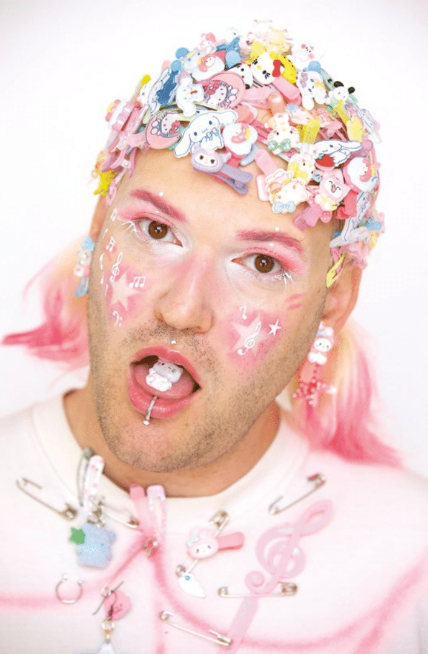
He’s usually up for a rave: Israeli musician Udi Noar of BĘÃTFÓØT believes that culture can bring people together. Since October 7, he has been receiving significantly fewer booking requests internationally than before..
Udi Naor is a pacifist and refused military service. But he doesn’t see himself as a political person, but rather a spiritual one. “Before any nationality, before any narrative, I believe we’re humans.” He tends to stay away from the news and is careful about the media he consumes. His own music project, BĘÃTFÓØT, became known for its eclectic sounds, combining hyper-pop, acid, and punk. The music is shrill and over-the-top, sounding made for a rave with hordes of people. Naor was regularly on tour, sometimes with several BĘÃTFÓØT shows in Europe in a single month. “For example: the summer before October 7th, we had around ten shows in Europe. The following summer—zero. Booking inquiries went from steady to almost nothing.”
His career was changed overnight. “Whether you call that a silent boycott or something else, the effect was very real. People and collaborators slowly stepped back. And I understand—if someone feels their own career could be harmed by association, they’ll make decisions accordingly. It’s human.” Financially, the boycotts were a serious blow to BĘÃTFÓØT: “Our main income was touring internationally. When that stopped, that revenue stopped. I imagine some decision-makers simply preferred to avoid anything potentially controversial.” So is it controversial today for some bookers to book bands from Israel for concerts? Doesn’t that say more about the bookers than about the groups themselves? Naor can’t say whether the boycott actions originated with BDS. In any case, this development affected him deeply: “At first, it hurt. Of course it did. When you tour for years and build something internationally, it becomes part of your identity. And then suddenly that disappears—it shakes you.” But Naor has also become more self-confident regarding his art. “Before releasing our last album, there were moments when we softened titles because people around us were afraid of backlash. At the time, I agreed. I didn’t want to hurt the momentum. Today, I wouldn’t. I don’t want fear to edit my authenticity.”
Online, he also noticed changes. “You release a new song, and someone comments ‘Free Palestine,’ and you feel the frequency behind it. The subtext is, ‘We don’t care about anything you do because you are affiliated somehow to Israel and that’s bad and you should be ashamed of yourself.’ Some didn’t even realize we were Israeli, but objected to us playing in Israel.” Naor found this surprising. “It’s strange, because if you actually read our lyrics over the years, they are deeply critical of war, occupation, violence, domination—any system that dehumanizes people. Nuance doesn’t always translate online.”
Can the boycott be resisted? “I don’t love the word ‘resist.’ I think people should act according to their conscience. If someone feels that boycotting something genuinely makes the world better, that’s their journey. I just hope actions come from clarity and compassion rather than fear or pressure. If someone wants to support us, it’s simple: engage with the music. Come to shows where possible. Support cultural spaces that create dialogue rather than division.” Naor then refers to a spot in Israel: “I do want to mention House of Solidarity in Tel Aviv. They are friends of ours, and we’ve collaborated with them for years. They are a mutual-aid collective that amplify marginalized voices—Palestinians, asylum seekers, people from disadvantaged social structures. They do real, grounded work in building bridges. We’re proud to work with them. Supporting initiatives like that—ones that genuinely create shared spaces—feels meaningful to me.” A final question: What does he expect from people trying to work towards rapprochement and peace in the Israeli-Palestinian conflict? “If you really care about peace, apply yourself. Join organizations. Build dialogue spaces. Support groups that feel aligned with love and dignity. But also pay attention to the ‘frequency’ behind movements—are they driven by compassion, or mainly by anger? That matters.”
Naor does not see himself as someone crafting geopolitical solutions. But, as he says, “culture—music, art, shared experiences—can be small bridges. And maybe peace starts when enough individuals choose to see each other as human first, narrative second.”
HÖR for Palestine
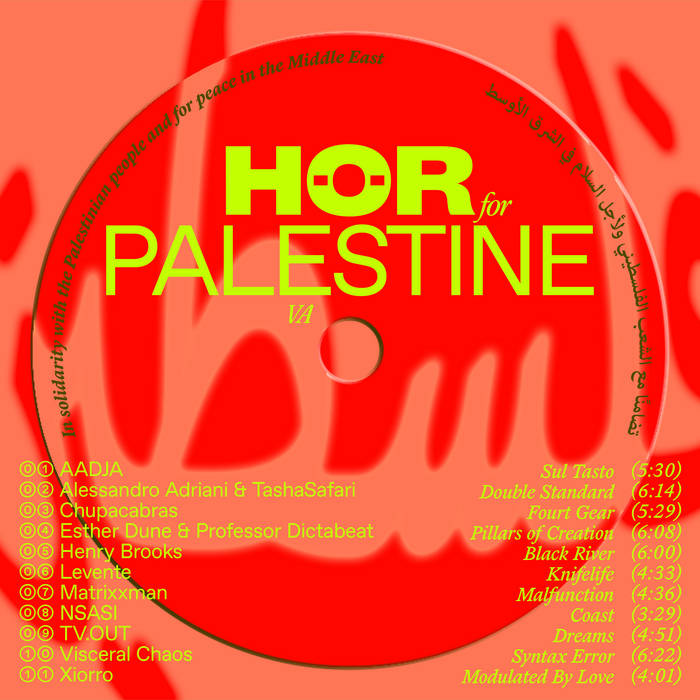
HÖR is a popular DJ platform for electronic music based in Berlin. On November 3rd, 2023, the platform’s operators canceled two live performances by DJs who were wearing Palestinian symbols that were interpreted as a denial of Israel’s right to exist. The platform was subsequently confronted with accusations of censorship and calls for boycotts against it. Some DJs had recordings of their performances removed from the platform. The campaign that was launched led to a wave of online hostility and threats against the HÖR team. Its Israeli-born founders continued to affirm their critical stance toward the Israeli government and demonstrated solidarity with the Palestinian people by compiling a highly-acclaimed benefit compilation entitled HÖR for Palestine. However, the hardening of the cultural front became clear when the aid organization Heal Palestine refused to accept the donated money. The BDS campaign and its followers made it clear in this case, too, that their sole aim was to silence Israeli figures. It has touted its power online by claiming that their boycott threats resulted in HÖR being disinvited from the London SXSW conference in 2025.
://about blank: The End of Exchange
There are also blacklists circulating that involve media outlets and venues. Anyone seen to be showing solidarity with Jewish acts can end up on these lists, as can those who open their stages to Israeli acts. In Berlin, the German city where the pro-Palestinian movement is probably most prominent, the label “Zionist” is also used to target venues that are not in line with their boycott campaigns, such as ://about blank.
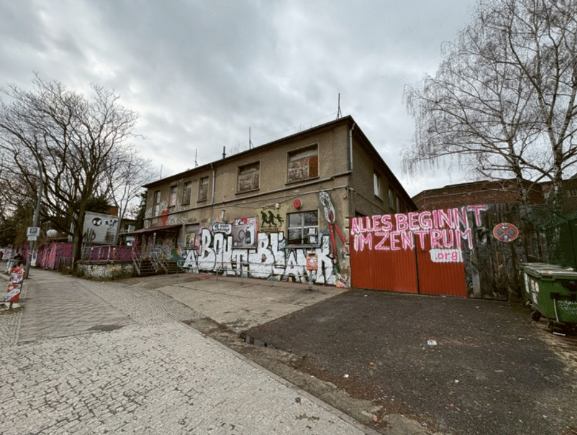
The ://about blank has also been the target of attacks and calls for a boycott. The left-wing techno club in Berlin hosted an event about the Nova Festival, which had been attacked by Hamas. The club also organized solidarity parties for the civilian population in Gaza. (Foto: Philipp Kressmann)
The space opened in 2010 in Friedrichshain, organized as an autonomous, anti-fascist membership collective. The renowned Berlin location hosts live concerts and has a chill outdoor area. Recently, a solidarity event became necessary because boycotts and open aggression against the left-wing venue were making themselves felt.A member of the collective said in an interview with Kaput: “This party became necessary because, since October 7th, we have not only had to deal with increased boycotts and cancellations, but also physical attacks on the club in the form of fecal matter being thrown, butyric acid, and graffiti. There are now even stickers ironically calling for the expropriation of the club, which is the only one in Berlin that is not privately owned but run as a cooperative. All these developments have created a great deal of uncertainty, not only with regard to ://about blank, but also beyond, across the entire spectrum of club culture—among DJs, guests, agencies, and event organizers. The fear of negative consequences for both their own careers and their own mental well-being—keyword: shitstorm—is spreading, with the result that DJs and agencies no longer want to work with us. At the same time, we are seeing an increase in both anti-Semitism and racism. The shift to the right in politics is leading to the racist attribution of a supposedly ‘imported’ anti-Semitism, which is an outrageous narrative in the country of the perpetrators of the Shoah, as well as to a discriminatory rejection of Palestinian perspectives.”
This nuanced view of the collective, which repeatedly foregrounds empathy for the Palestinian civilian population in their discussions, is apparently not a reason for BDS activists to engage in dialogue. They seem to be far less interested in conversation than in the authoritarian enforcement of their own hegemony. ://about blank also commented on this aspect: “We very rarely see any interest in dialogue. And not only among the initiators of the campaigns, but among all those involved in them. Before October 7th, there was still a critical exchange of solidarity with artists and promoters who represented different positions than our own as an operator collective. Such an exchange arises here primarily through cooperation, for example through opportunities for conversation that arise in the context of performances or parties. In the meantime, most of these threads of conversation have been broken. […] Sooner or later, the topic [in comment sections] is deliberately steered toward ://about blank, with its imminent demise being demanded or predicted. Subsequent posts then like to comment with things like, ‘Our resistance is working!’ As if destroying left-wing venues was something to celebrate. Of all places, in a city where social inequality is increasing right alongside the rate of gentrification. At a time when society is shifting to the right, which will further increase the danger for racialized people, queers, and Jews in the coming years. How this kind of political debate is supposed to help the civilian population in Gaza and the West Bank is beyond us.”
Standing Together: A Palestinian Perspective
Concrete aid projects such as the government-critical grassroots movement Standing Together are also being targeted by BDS. The group brings together Jewish and Arab people who are committed to peace and equality between Israelis and Palestinians. BDS has antagonized this alliance and called for its boycott. In a letter, the Palestinian branch of Standing Together stated: “It is disheartening to be silenced by other pro-Palestinian groups at a time when we are being silenced and persecuted by the Israeli government and Israeli institutions for fighting for the lives of our people, but it will not stop us from continuing to organize. We are proud to organize Palestinians and Jews together, we stand by our movement, our strategy, and our theory of change, and we will continue to organize until we are all equal and free.”
Even behind such words, BDS sees “Zionist” schemes. But “despite persecution, despite repression, despite incitement, Standing Together remains active. They organize food packages for Jewish, Muslim, and Christian families, offer legal aid hotlines, and provide solidarity guards who promote dialogue,” states journalist Peter Laskowksi.
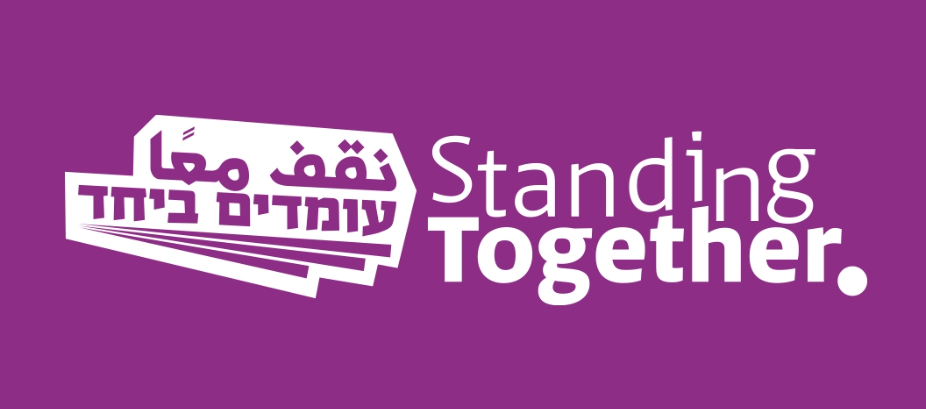
Arabic and Hebrew script in a single logo? We’ve known for some time now—at least since the incident involving the “Falafel Humanity Shirt” at the Berlin store K-Fetisch—that “activists” find even that objectionable.
Hamza Howidy: Palestinian Peace Activist
Palestinian peace activist Hamza Howidy is also critical of the boycott movement’s practices. On X, he wrote about the BDS campaign against the aforementioned Norwegian-Palestinian documentary “No Other Land,” which deals with the expulsion of Palestinians from the West Bank: “The [BDS movement’s] call to boycott No Other Land is yet another example of its intellectually bankrupt and counterproductive approach to Palestinian advocacy. Rather than engaging with a documentary that exposes critical realities, BDS instinctively resorts to censorship—stifling discourse instead of fostering meaningful dialogue. This reactionary stance reflects the movement’s broader failure: it thrives on moral absolutism and ideological purity tests rather than pragmatic solutions. By discouraging engagement, academic and economic cooperation, and cultural exchange, BDS actively undermines the very Palestinian voices it claims to champion, reducing the struggle for justice to a rigid, self-defeating campaign of isolation.”
Hamza Howidy was born in Gaza and earned a bachelor’s degree in economics and administrative sciences from the Islamic University of Gaza. He took part in protests against Hamas and was arrested and tortured several times. In the summer of 2023, he managed to flee. He currently lives in Germany, and his first book, Muscheln am Strand von Gaza: Erinnerungen an ein zerstörtes Land [Shells on the Beach of Gaza: Memories of a Destroyed Land), has just been published by S. Fischer Verlag. Howidy regularly publishes posts on Instagram. Most recently, he also drew attention to the escalating acts of violence committed by Israeli settlers against Palestinians in the West Bank.
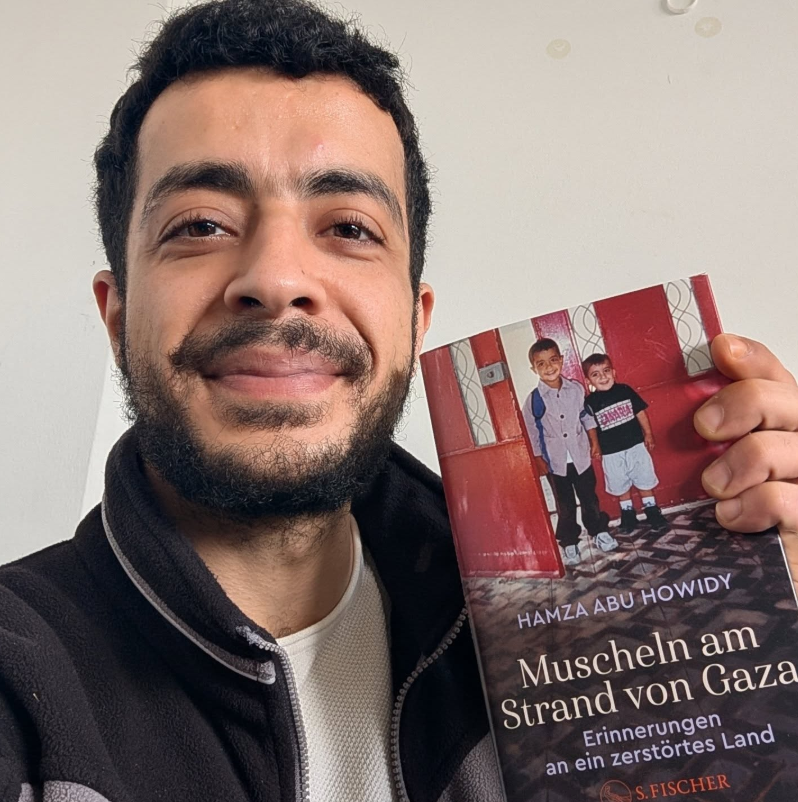
Palestinian peace activist and Hamas opponent Hamza Howidy regularly posts on Instagram. Most recently, he wrote about the increasing acts of violence by Israeli settlers in the West Bank. He accuses the BDS movement of preventing dialogue between Israelis and Palestinians. (Foto: Instagram)
Boycott the Boycott
Without glossing over the fact that many who join these cultural boycotts do so voluntarily, it must also be said that it is the constant threat of becoming the victim of such campaigns that is a decisive factor lending the network its power. Jakob Baier says of BDS’s approach: “It’s probably a rather small group within the scene, but one that acts very aggressively and obsessively and takes action against other people. This group operates with a very strong authoritarian logic of submission that says: either you are for us or you are against us. This authoritarian drive to punish also affects many people, including some non-Jewish people, on a personal level. There are people who are publicly defamed on social media. I consider this to be a very big problem.”
However, there are also musicians who refuse to boycott, though it is mostly older stars who are taking a clear stand. In an open letter from 2018, Nick Cave described the cultural boycott of Israel as “cowardly” and “shameful.” He said that he in no way supports the Israeli government. He too wanted to see an end to the suffering of the Palestinians. A just solution would require enormous political will on both sides. In Israel, which he calls a “vibrant, functioning democracy” with Arab members of parliament, contact with the people – „engaging with Israelis, who vote“ – would be more helpful than “scaring off artists.” In 2024, he reaffirmed his position. In a podcast produced by the magazine Reason, Cave again argued against cultural boycotts, which he believes harm ordinary people.
Radiohead: The Hatred of Bridge Builders
“Music, art, and academia is about crossing borders not building them, about open minds not closed ones, about shared humanity, dialogue, and freedom of expression.” These words come from a statement by Thom Yorke, who performed with Radiohead in Tel Aviv in 2017. Yorke was responding to Ken Loach who supports BDS. Loach, Roger Waters and other anti-Israel activists had called in an open letter for Radiohead to cancel the concert. Yorke countered: “Playing in a country isn’t the same as endorsing its government,” continuing that, “we’ve played in Israel for over 20 years through a succession of governments, some more liberal than others. As we have in America.” The Radiohead singer emphasized that the band supported Israeli Prime Minister Netanyahu just as little as U.S. President Donald Trump. Nevertheless, the band would continue to perform in the U.S. Israel certainly plays a role in Radiohead’s history: their song “Creep” was a hit there as early as 1992. Radiohead guitarist Jonny Greenwood is married to an Israeli woman. He also has a music project with Israeli rock musician Dudu Tassa that brings together Arab and Jewish artists. Their joint album Jarak Qaribak was released in 2023, whose title can be translated as “Your neighbor is your friend.” This is also the theme of the music, which literally crosses borders: on the album, musicians from across the Middle East reinterpret old love songs with Arabic vocals. Each singer performs a song from a foreign country. Egyptian musician Ahmed Doma sings a song by an Algerian singer, while musician Safae Essafi from Dubai sings an Israeli song. Palestinian musician Nour Freteikh also sings on one track. In 2024, “bridge builders” Greenwood and Tassa performed together in Tel Aviv. BDS spoke out, calling for an end to “artwashing genocide.” Greenwood wrote a statement: “[…] silencing Israeli artists for being born Jewish in Israel doesn’t seem like any way to reach an understanding between the two sides of this apparently endless conflict.”
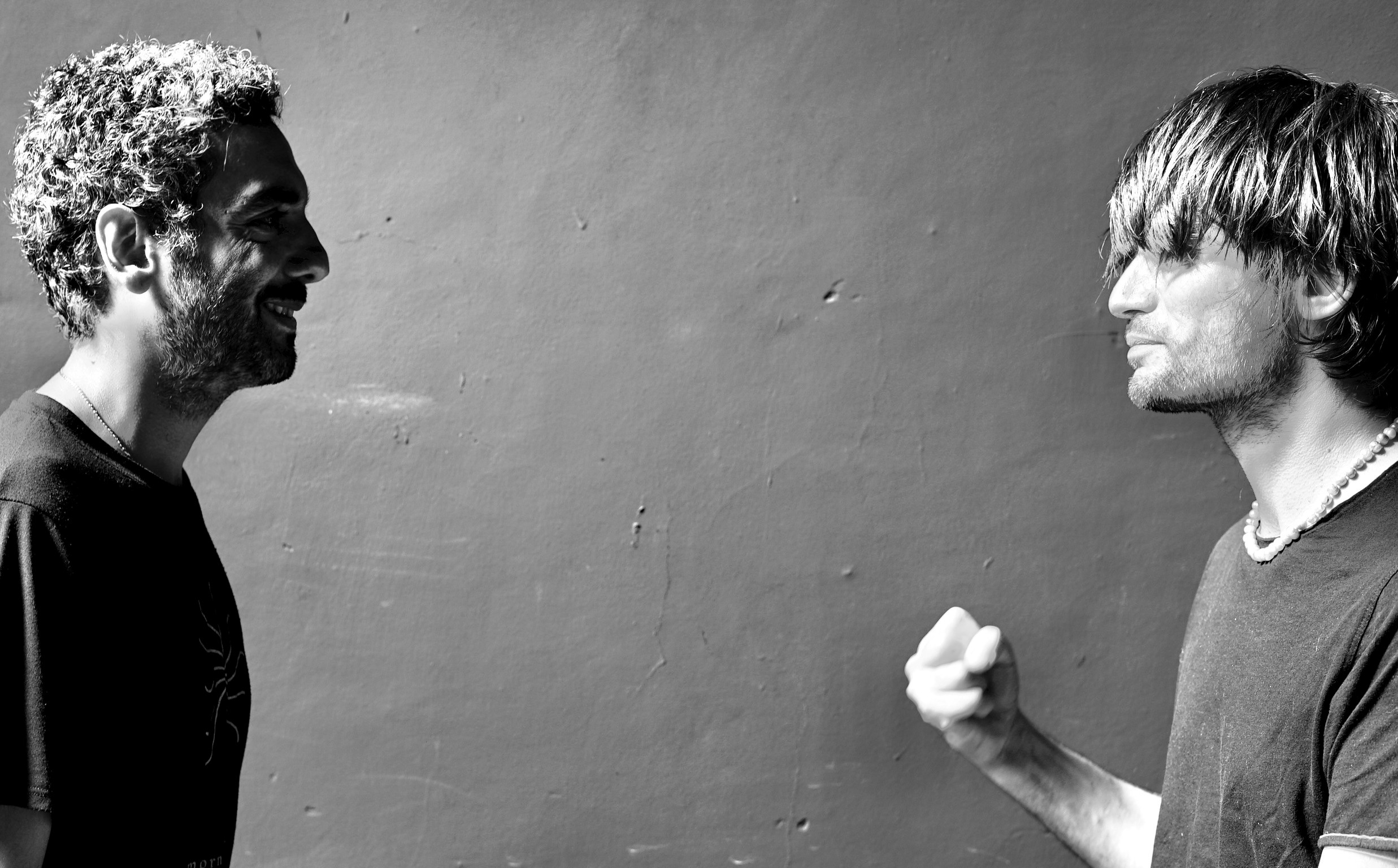
The bridge-builders Jonny Greenwood (of Radiohead) and Dudu Tassa. Artists and organizations that criticize the current Israeli government and advocate for peace and understanding between Israelis and Palestinians are also boycotted by BDS. Photo: Shin Katan (courtesy of the artists)
May 2025: Two planned concerts by the duo in London and Bristol were canceled. Greenwood and Tassa explained that the venues had received credible threats. It was no longer safe to hold the shows. The BDS movement had called for a boycott. Tassa and Greenwood made the incident public. An Instagram statement said: “Forcing musicians not to perform and denying people who want to hear them the opportunity to do so is self-evidently a method of censorship and silencing.” (At that time in England—under pressure from activists—concerts by the Jewish Klezmer dance band Oi Va Voi were also cancelled; in late 2025, the London-based group found itself compelled to hire additional security personnel for a performance. Speaking to The Guardian, the band recounted that their lead singer had advocated for the release of the hostages and had, through her music, condemned the Netanyahu government’s reluctance to end the war in Gaza.)
In 2024, Sharona Katan, Jonny Greenwood’s wife, also spoke out. The artist wrote an article for the Israeli daily newspaper Haaretz. “I do not see a genuine effort made by movements like the one advocating BDS to positively engage with Israelis. Instead, I only see the demonization of all things Israeli and Jewish. A silencing. A simplification of the issues, for the sake of winning a propaganda war.” Katan criticized the fact that Israelis were now being called colonialists – „We are not“ – and, drawing on her own family history, reminded readers that Jews from Europe and Middle Eastern countries had to flee pogroms and anti-Semitism. She said she believed there was a “disgusting campaign to force all Jews outside Israel to proclaim themselves anti-Israel […].” There are many people, she said, who want her to feel ashamed as an Israeli Jew.
Thom Yorke should also be ashamed of himself—at least according to one concertgoer who disrupted a show in Melbourne in 2024. He loudly demanded that Yorke comment on the war in Gaza. Yorke, who had not yet publicly commented on October 7th and the ensuing war, left the stage. In May 2025, he posted a lengthy statement on Instagram. He wrote that a concert is not the best moment to address the humanitarian catastrophe in Gaza. He was shocked that his “supposed silence” was interpreted as complicity. This had severely affected his mental health. He had hoped that his art would convey that he „could not possibly support any form of extremism and dehumanization […]“.
Yorke then sharply criticized Netanyahu’s conduct vis-a-vis the war, calling his government a “crew of extremists” and denouncing, among other things, its “ultra-nationalist administration” and the blockade of aid deliveries to Gaza at the time. Yorke called for international „pressure“ on Netanyahu and Israel’s far-right government. He then recalled the “horrific acts” of Hamas on October 7th that triggered the war. The slogan “Free Palestine” does not address the fact that the hostages are still not back home. According to Yorke, Hamas is also hiding behind the suffering of its people – „for their own purposes“. He probably already knew that he couldn’t please everyone with his post. Yorke attempted to convey empathy and nuance—but many comments under the post did not. What followed was what he lamented in his post as a “social media witch hunt”: a gross simplification of complex issues and coercion to make statements. When Radiohead announced their reunion tour in the fall of 2025, BDS once again called for a boycott. In the fall of that year – the interview took place before the cease-fire agreement in october -, Yorke said to The Sunday Times that he would no longer perform in Israel. Greenwood, who had previously protested for the release of hostages and spoke out in favor of new elections, disagreed with Yorke, arguing that this could actually benefit the current government. He also said he would not be ashamed to work with Arab and Jewish musicians: “I can’t apologize for that.”
At the time, Yorke was approached by complete strangers on the street, with one man telling him he needed to distance himself from Greenwood. The Radiohead case exemplifies once again how divisive the BDS campaign is and what this aggressive climate can do to artists who simply want to play music for their Israeli fans.
as1one: An Israeli-Palestinian Boy Band for Hope
It’s really bizarre that as1one isn’t far better known. It is the world’s first Israeli-Palestinian boy band, made up of four Jewish and two Palestinian members. Its members were cast in Israel—the final round took place in 2023 in a peace village founded in 1969, where Jews and Palestinians live together. The six musicians have even worked with Chic founder and disco icon Nile Rodgers. On October 6th, 2023, the boy band traveled to Los Angeles to record their debut album. A Paramount+ documentary series shows how much the events in their homeland weighed upon the young men. But the group stayed in the U.S. for the project at the time. The pressure to continue became greater than ever. This difficult time is also the subject of their song “Stranger,” which the members wrote together at the time. However, the music project had already faced difficulties before that: the idea of forming an Israeli-Palestinian boy band was not universally welcomed. The group itself does not want to be constantly associated with the Israeli-Palestinian conflict, even though it had of course shaped its formation. “We don’t want to be political,” Palestinian band member Aseel Farah told the online magazine Billboard at the end of 2023. “We just want to be humanitarian.”
When many prominent musicians made their music inaccessible in Israel via geo-blocking technology in the fall of 2025, as1one worked to make themselves heard. The group still exists: at the beginning of this year, for example, the sextet performed in England. The band regularly posts a cappella covers of well-known songs on Instagram. Just like a boy band should.
BDS will certainly view this inclusive project as a hostile one as well. After all, as the examples prove, it is a campaign that treats Israeli musicians or academics exclusively as representatives of a state whose right to exist it rejects. Now, regardless of the Middle East conflict, the question arises as to whether and under what circumstances cultural boycotts are productive at all. Can societies only achieve progress through culture and academia? Shouldn’t cultural exchange be utilized wherever possible? Songs and books in particular can enable identification potential and offer a change of perspective across national borders. Isn’t that one of the central hopes and promises of pop music in the broadest sense? Shouldn’t pop music as a medium serve emancipation rather than division?
Noga Erez summed it up during her show, the one from which she uploaded the aforementioned clip to Instagram:
“I believe that boycotting artists will not bring any solution. I believe that banning songs and movies and plays and books etc. is not gonna fix the world’s problems. The world is full of so much suffering. The amount of pain happening right now, is devastating. I’ve seen some of it with my own eyes. Maybe right now would be the best time for us to try and find common ground, and not add to how shitty it already is.”
Philipp Kressmann / Linus Volkmann