

Fairouz Hasan “How can a film about Palestine have an ending?“
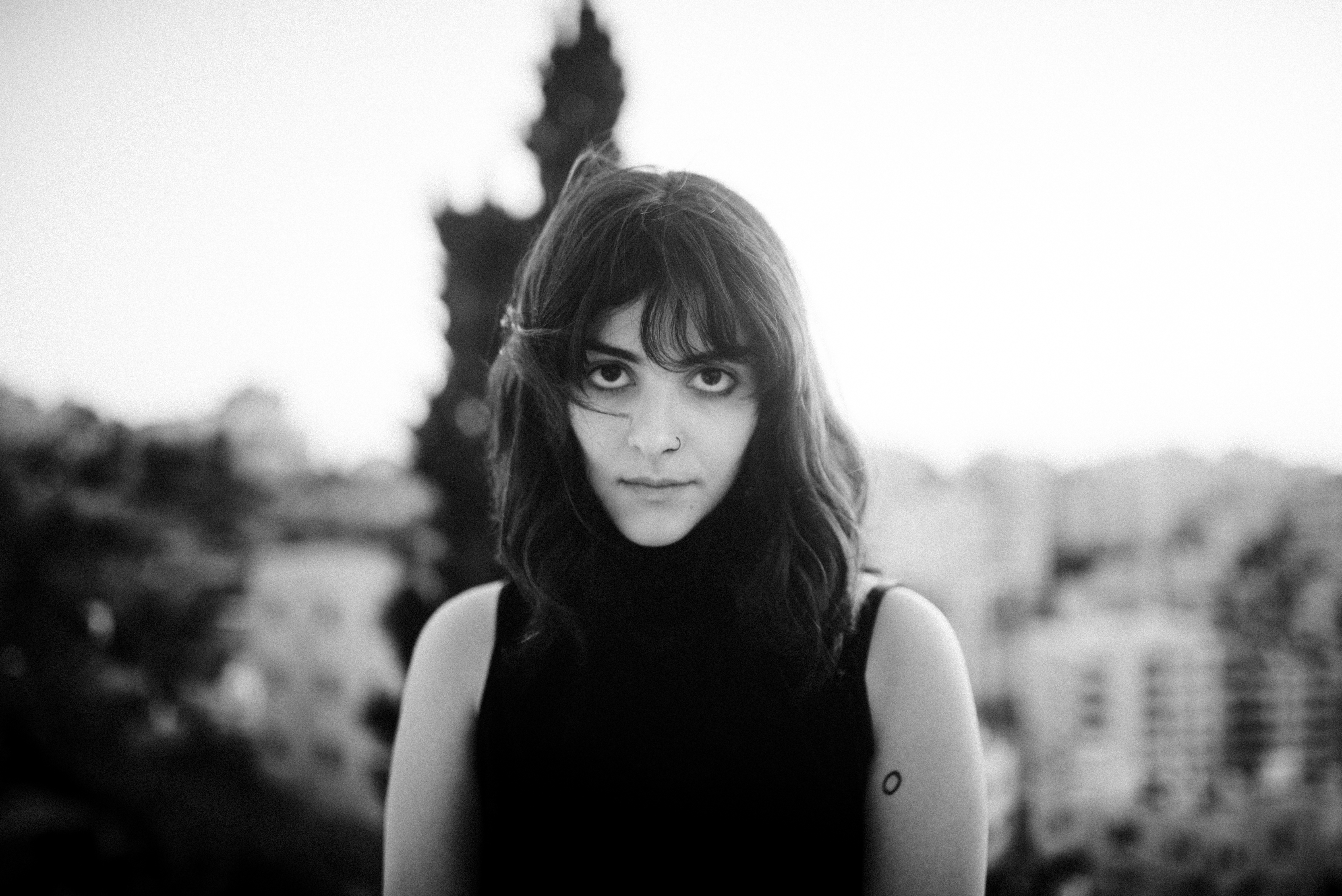
Fairouz Hasan
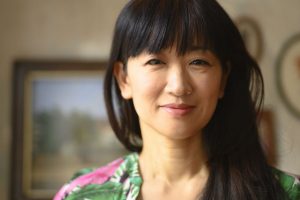
Catching up with the young filmmaker and visual artist Fairouz Hasan is not an easy task: She is in Berlin in early January, then travelling to Paris and Poland, re-emerging in Berlin before leaving for Palestine. Hasan is incredibly busy, working on shows and exhibitions, and in the end we abandon our plans to meet in person, instead meeting up online. After some back and forth with different time zones, we finally connect on a bright winter’s day, Berlin’s streets in front of my window are full of snow, she, however, is sitting in what appears to be the courtyard of her family home in Bethlehem, where the sun is shining high and bright.
Born and raised in the Occupied Palestinian Territories, she originally had different plans for her life: ´I wanted to become a brain surgeon,”she tells me,“ but after I watched Alfred Hitchcock’s Psycho , I became obsessed with watching movies.” And she realised: this is what she wants to do. You can control life by doing a film,” she continues, “well, not control, but make people see the world through your eyes, for an hour, or 20 minutes. Make them see and feel what you see and feel, and reflect themselves through your work.”
It may be a stretch or sheer speculation to say that the lack of control a resident of the West Bank has over their own life may contribute to the fascination of writing one’s own history. Yet, precisely that does not seem too far-fetched after a conversation with Fairouz.
A lovely butterfly
Fairouz Hasan’s art is firmly grounded in the land she is from and the experience of occupation. Take her recent work Lovely Butterfly : an experimental short film dealing with her father’s incarceration in Israeli prisons, and the incarceration of so many Palestinians, often only for “security reasons .” It was accepted by the prestigious documentary film festival Visions du Réel in the Swiss city of Nyon. A reason to celebrate, of course. But her personal success does not wipe away the realities that form her filmmaking: “ll my friends are in prison now,” she says. The pain of not being able to see her father inspired a film made from archival footage and Google Maps data, navigating the fraught terrain between memory and reality. It also inspired her work at the Krupa Art Foundation in Poland, an installation about womanhood under occupation. It deals with “ the fear of being a mom ,” she explains, “ and the fear of losing your child before you deliver them .” Trains of thought that came up while digging into her feelings and memories from her father’s absence during his imprisonment.“ Occupation can build another meaning to being a child, and to being alive. As a mother, you carry your beloved child and deliver them to death, because this is a place where you are surrounded by death ,” Hasan says. Leaving the house at the wrong time could be fatal, being on the wrong street could be fatal, as recent deaths of Palestinian civilians at the hands of violent settler groups, for example, have shown.
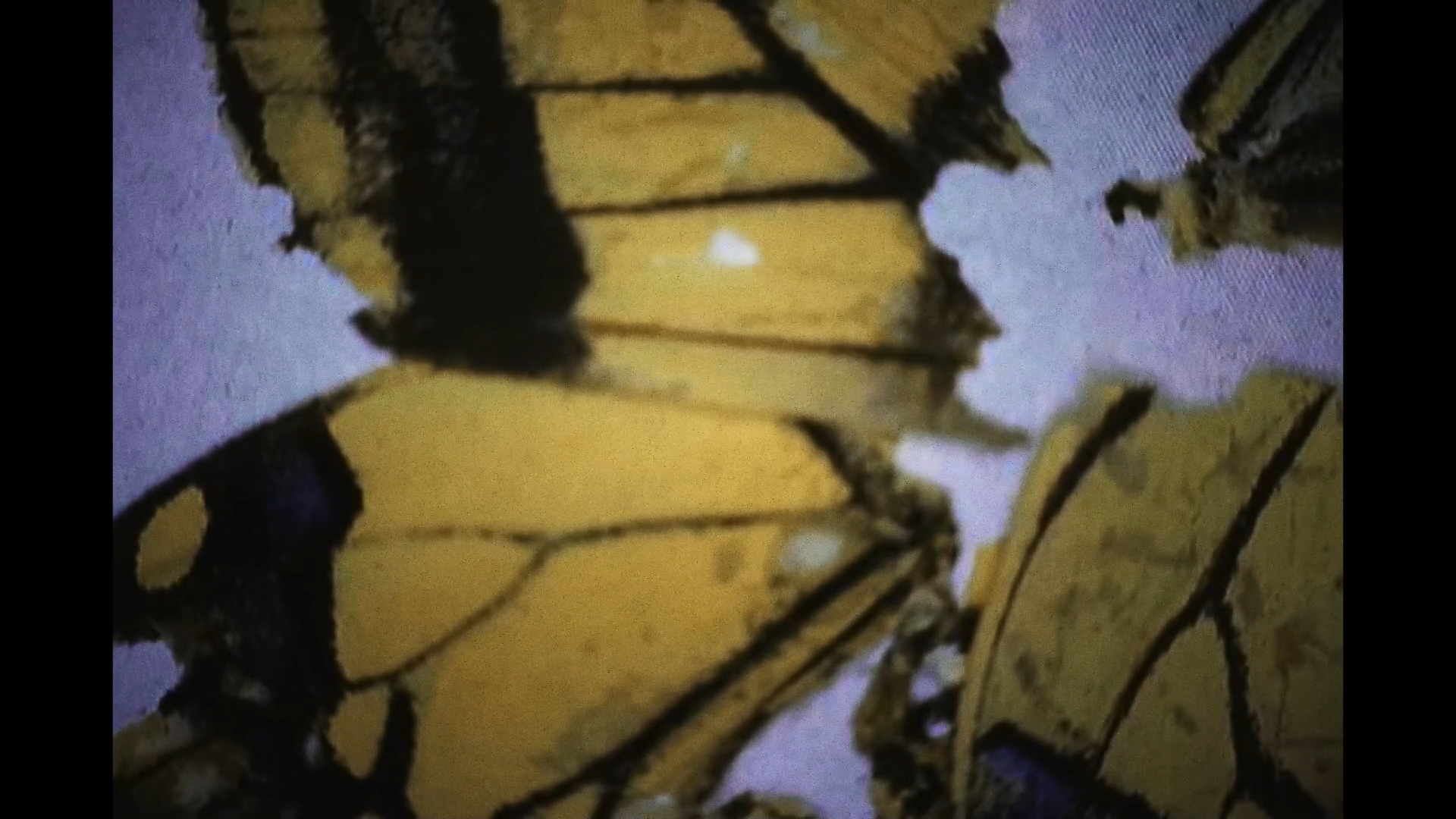
A Tree Fenced In
Her work at the Krupa Art Foundation, an immersive video installation, combines ultrasound footage with videos from butterflies leaving their cocoons. Again, the image of the butterfly, a constant element of her artistic language. But why?“ When I went back to my dad’s letters he wrote from prison, there was one with a drawing of a child and it said ‘ lovely butterfly .’ I had to laugh, and thought: ‘ I’m not a lovely butterfly anymore, I’m a shattered butterfly .’ That started it.”
The butterflies are quickly becoming a constant in her work; they appeared also in False Vectors , a collaboration with DJ and producer Muqata’ a at Germany’s Monheim Triennale in 2026 (who, in turn, also worked on the sound of Lovely Butterfly , and her installation in Poland). “The butterfly is a very sensitive creature, when you want to help it you might hurt it ,” Hasan muses. She uses the poetic butterfly almost as a counterpoint to quite intense footage from Gaza, and other “disturbing footage from the disturbing reality,” as she calls it. Especially relevant to the discussion of motherhood, the cocoon and the butterfly appeared as apt visual metaphors to her point of children being delivered to, well, their death in a violent and volatile space like the Occupied Palestinian Territories. “It’s a dark and rough idea, but it’s not that I want people to die,” she adds, “I want people to live, in their country, in a free Palestine.”
This type of experimental work seems quite far removed from the commercial Hollywood cinema of her first cinematic influence Hitchcock – but not too far from the filmmaker she is most inspired by now: Gaspard Noé, the Argentinian-French filmmaker behind Irréversible , Enter the Void or Climax , a provocateur to some and visionary to others. As Hasan sees it “ his work is rough and dark and painful, but it shows the truth of darkness. And not in a nice way. It’s not an easy watch and it’s tough.” And similarly, she wants to confront her audience. Yet, as opposed to Noé, with the realities of her personal experience: “ I needed to make something out of the situation I was in.”
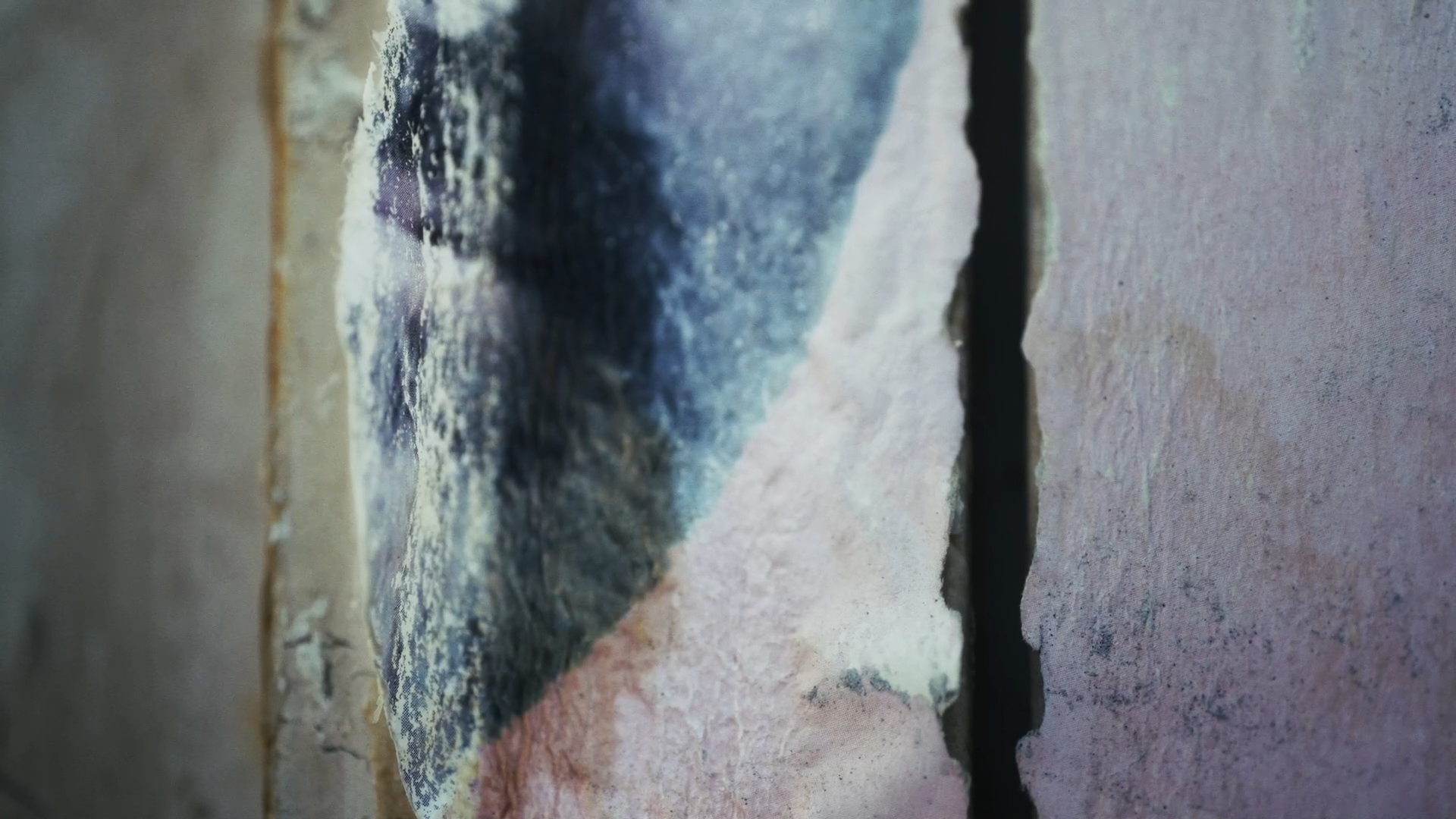
A layered reality
This approach ties in with another of her major inspirations: Iranian cinema, a school of filmmaking born out of daily restrictions and artistic constraints. Restrictions towards freedom of speech, freedom of art, social restrictions of the topics society might discuss, sometimes even restrictions on the physical freedom of movement for filmmakers and artists, and material restrictions regarding resources. Similarly, Hasan’s realities are shaping her artistic output: “I’m working on my second film from archival footage, because it’s pure, it’s tough and it’s rough. It’s shaped by the reality, the political situation that I am living in – and it’s a layered reality. And because it is so layered, I can’t do a linear reality in cinema. My life is so chaotic and uncertain, and I explore that by using an experimental approach.”
Filmmaking, to Hasan, has been a tool to make the world understand her point of view, but rather to come to an understanding of herself: “When a film of mine was funded by my college, they asked me if I am going to tell the world how being the daughter of a prisoner feels – but I said no, I am trying to understand how I am feeling. I haven’t had the time to process my own feelings.” Her film teacher called it “ process cinema ,” a term she had not heard before until then. Process cinema can refer to either films where the unscripted manipulation of physical film is central, or to a transmedial film that focuses on the processes of labour, of tasks. Hasan’s work, with its use of found footage on the one hand, and the labour of working through her own feelings and memories, and archiving the realities she experiences, straddles both definitions. “How can a film about Palestine have an ending?” she asks, “we are in a situation without an ending, without closure.”
The fragmented nature of her films reflects the fragmented realities of her lived experience. The contradictions, the shifting ground beneath her feet. “ What’s specific about Palestine is that the reality is controlled in disturbing ways ,” she explains, referring to closures of roads and whole cities, and other aspects of life under occupation, “ I’m trying to rebuild reality from my perspective, and show how it’s affecting me.” This approach is also reflected in Lovely Butterfly , for example, which does not present a straight narrative about her family’s experience. Instead, it explores her own emotional landscape resulting from these experiences. As if the film were a tool to foster understanding: “ Even when those who watch my film are not Palestinian, they will think about their fathers, about the ones they lost without any control over the situation.”
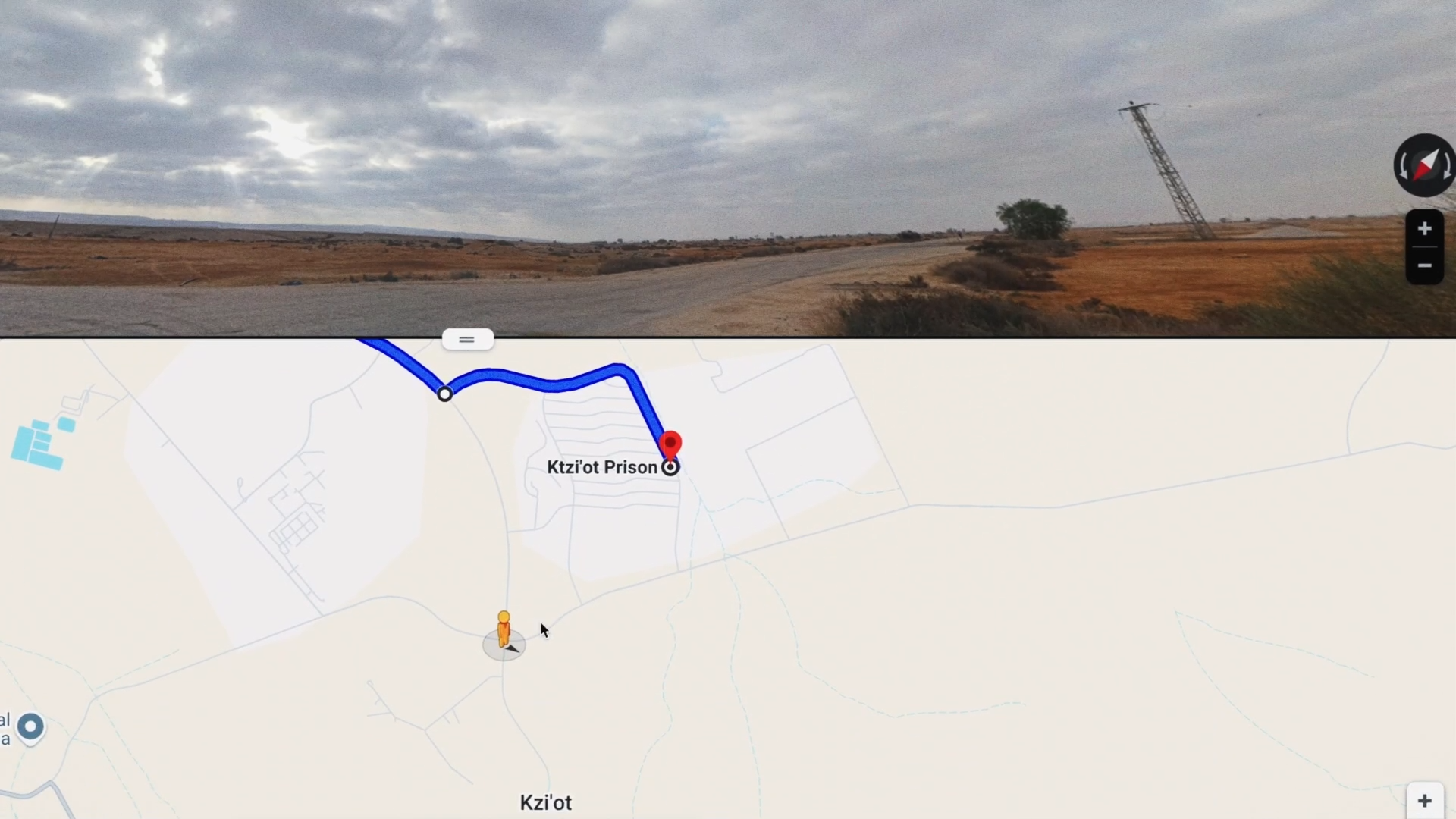
A freely roaming butterfly
Talking to Fairouz Hasan, one has to remind oneself that this filmmaker is still a student – she is in her last year at Dar al-Kalima University, the only higher education institution in the Palestinian territories with a film school. Currently, she is working on her final film project – naturally, a work to challenge herself, and create a fictional experimental film. She has a few ideas she is currently thinking about and working on, before deciding which one to pursue. But all of them relate to the practice of archiving, making and producing herself – a practice she has relied on in her previous and current work with found and archival footage. It should not come as a surprise that a filmmaker would ache to create archives of the world surrounding them, considering life in the West Bank and the constant changes in the landscape.
Hasan’s works are an attempt at holding something that is under the constant threat of vanishing: feelings, geographies, people, beauty, memories. And it is this act of holding onto something, of creating an archive, that is an act of defiance in itself. Defiance against forgetting, against erasure – and finding space to establish the beauty of a freely roaming butterfly.
Please order your copies of the kaput print magazine directly from Wolke’s website.
Bookshops and online retailers can find more information on Wolke’s worldwide distribution here.