

Insolvency & Pop – A Roundtable Discussion “The Social Fabric of Culture is Disintegrating”
Insolvenz & Pop – der Roundtable
“THE SOCIAL FABRIC OF CULTURE IS DISINTEGRATING”
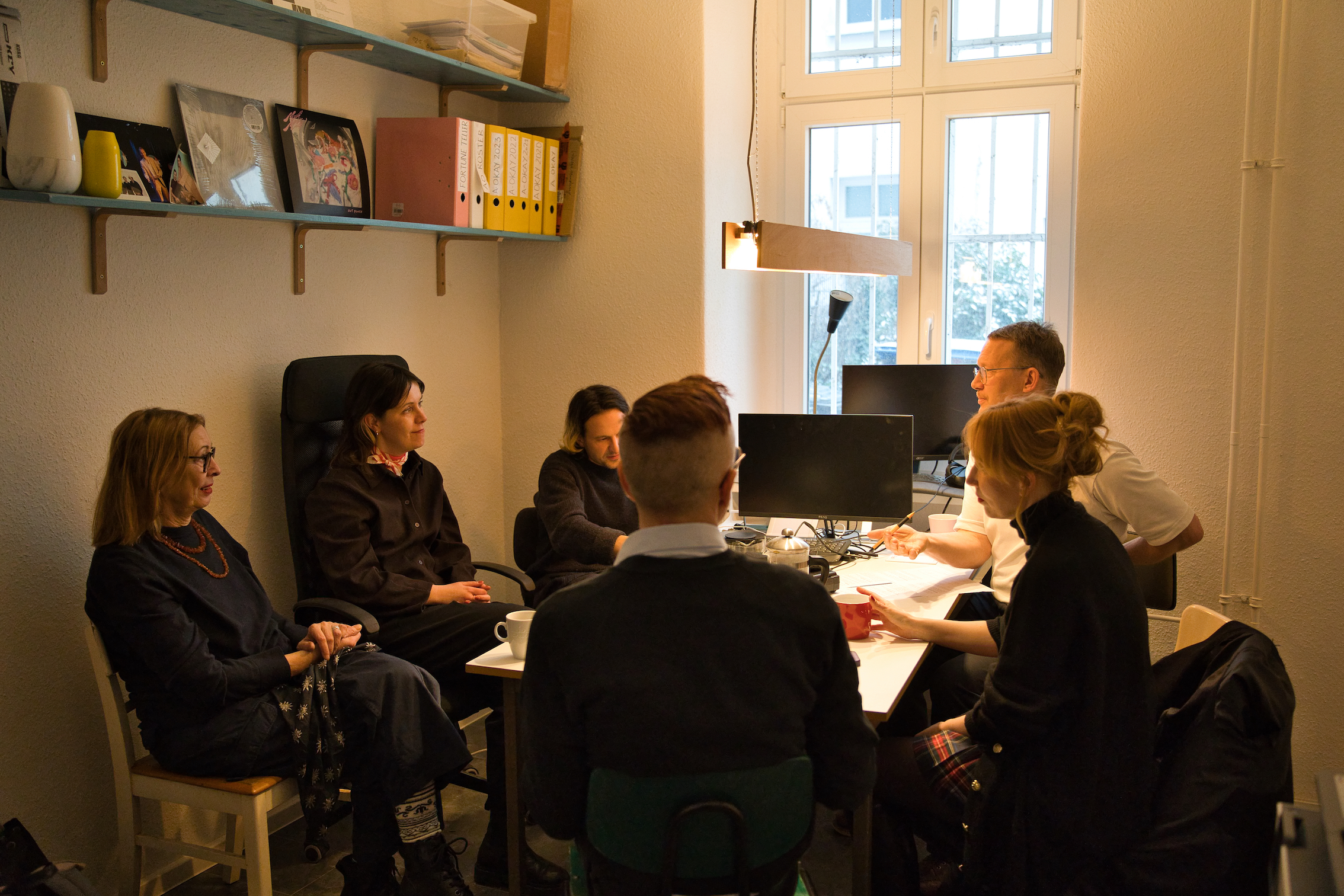
Guests: Gudrun Gut, Laureen Kornemann, Christin Nichols, Anton Teichmann – Moderation: Thomas Venker, Linus Volkmann
Photos: Marisa Eul Bernal
When Kaput magazine launched as a website in 2015, even we weren’t quite sure what “Kaput” was supposed to mean. Nevertheless, we felt confident about the name: It had a sound and something awkward to it that we liked. The subheading, “Insolvency & Pop,” was less of a puzzle. To this day, this duality describes what the magazine is all about. It reflects the glamour, the utopianism, but also real-world economic conditions. How can an artist function in today’s hostile capitalist system?
For our first print issue, we posed this question to four very different figures from the pop music industry. Is there really anything left to be gained—apart from retirement payments of 347 Euros a month?
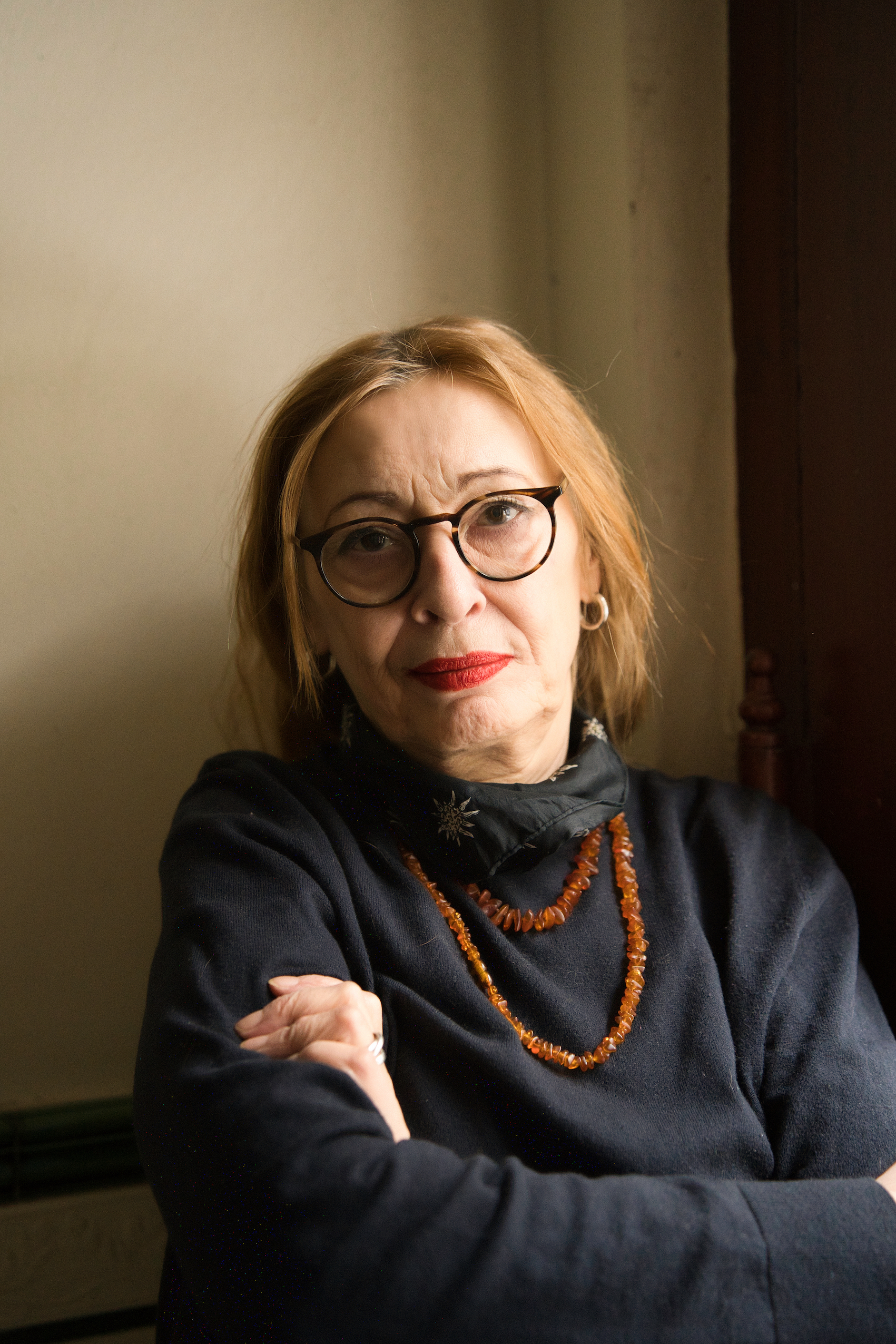
Gudrun Gut
Say my name
Linus Volkmann (Kaput): Could you briefly tell us who you are, what you do, and how long you’ve been in the pop music business?
Gudrun Gut: I’m Gudrun Gut, and I’ve been in the music business since the late 70s or early 80s—with bands, music publishing, my label, and various releases. This year, I’m writing a book with Tim Ra about my label Monika Enterprise and oceanclub. We’ve done a lot of interviews, mainly with the artists. I’m not really into digging up the past, but I think it’s going to be great.
Laureen Kornemann: I’ve worked in the music industry for 15 years. I started out as a journalist at motor.de in Leipzig. Then I moved to Berlin and started working at Sinnbus, a label with an in-house publishing company. I’m a partner there, now. We release or have released acts like Odd Beholder, Painting, Me and My Drummer, Hundreds, and Bodi Bill. My main job is at VUT [Association of Independent Music Entrepreneurs] as a public relations and diversity officer. I also volunteer organizing festivals such as the Immergut Festival and the alínæ lumr Festival in Storkow. Furthermore, I’m on the jury for artist funding at Initiative Musik.
Anton Teichmann: I’ve also been in the industry for about 15 years. My first job, incidentally, was an internship at Sinnbus! A good ten years ago, I founded my own label, Mansions and Millions. The label specializes in underground pop from Berlin. Six years ago, we launched the management agency A-Okay Management. Neither of them are overly successful financially speaking . These are my main jobs. It would be nice if I could make a living from these two things, but at the moment I still need other work .
Christin Nichols: I am a musician and have been in the business for about eight years. I’ve released two solo albums, my third is coming out soon and is simply called, “Christin Nichols.” I’m also an actress, I studied at the Ernst Busch Academy of Dramatic Arts, performed at the Berliner Ensemble and the Volksbühne, and regularly work for ZDF and ARD shoots. You can also see me in the queer series All You Need on Netflix and I work as a voice actress.
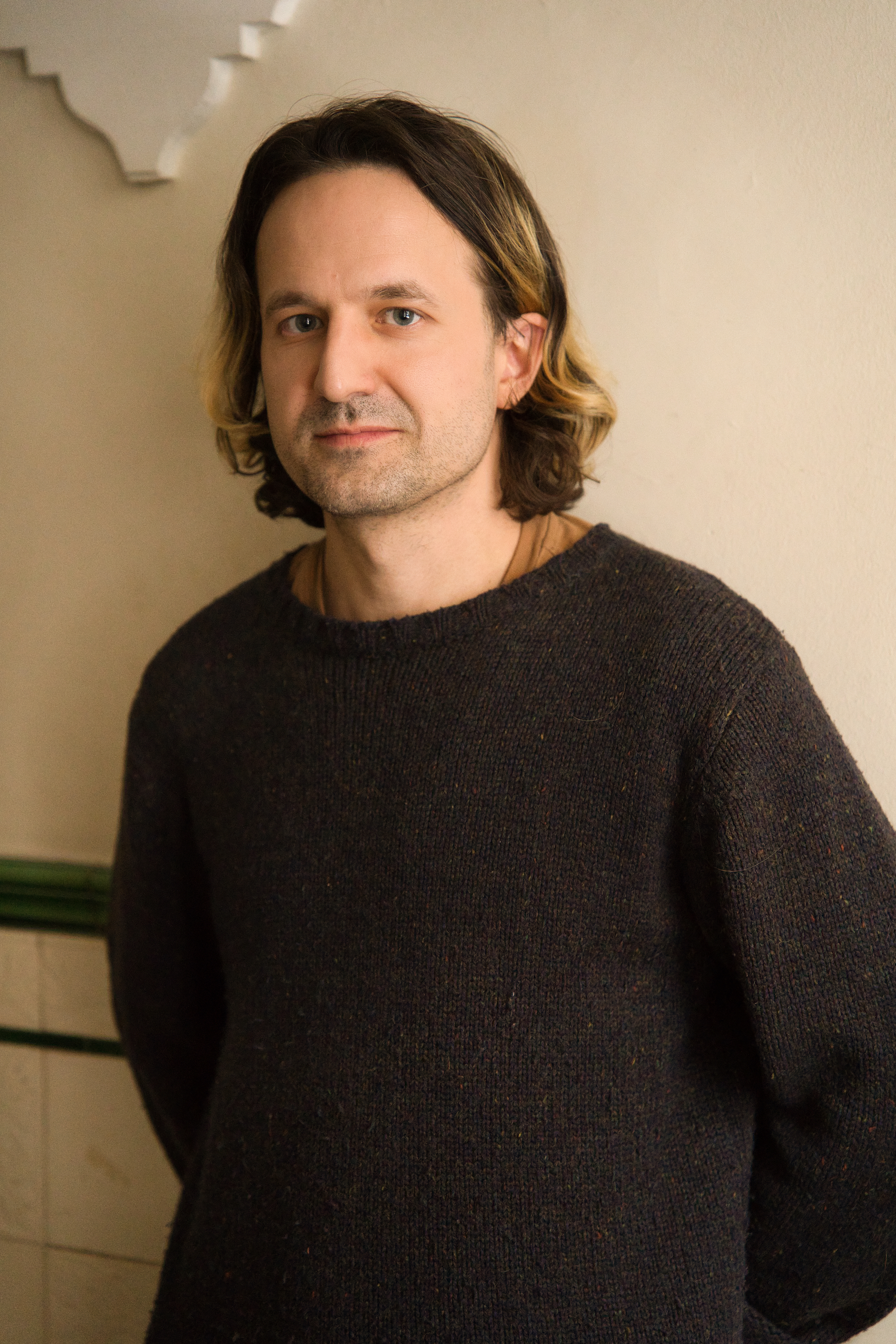
Anton Teichmann
347 EURO: Side Jobs & Retirement
Linus Volkmann (Kaput): A “softball” question to start things off:
Gudrun Gut: My personal mood is not really important, but the general feeling in the music industry is so gloomy that it can only get better. Everyone is at the end of their rope or in some form of despair. We’ve seen something like this before, at the end of the 90s, when the music that was actually being made at the time wasn’t being represented anywhere, especially not on the radio. Many new labels were started as a result—and suddenly there was a crazy number of things happening again, a crazy number of things becoming possible. Music has that power. My feeling is that the next few years will be super interesting.
Christin Nichols: Well, I sure hope so.
Anton Teichmann: The past year was totally frustrating. I have full-time projects, yet I still had to take on an other work. That sucks. I think the entire economy in the indie sector is completely broken. The system no longer functions. However, there are always moments—a sync deal comes through, or a release does better than expected—that give me hope. Right now, I’m mainly trying to play to the strengths that AI can’t offer: organizing concerts, representing scenes, community building.

Laureen Kornemann: I’m actually feeling quite optimistic. I was at the “One of a Million” festival over the weekend. I knew almost no one in the lineup, but in the end I thought: even if everything is shitty, we still have the music. It finds its people. People come and show their interest, they want to discover new things. That made me feel positive. If people know that the curation is good, they’ll come, no matter who’s playing. Of course, I’ve also had different experiences, but the festivals where you don’t know anyone are the best. That’s where you can still discover something new.
Christin Nichols: : I can totally agree with that, but, as you said, there’s also the other side to it right now. Tours are being canceled, even by household names. The live music industry is no longer in the same position it was in before the pandemic. Still, I’m actually feeling quite cheerful at the moment. I’ve finished an album and had the privilege of having resources thanks to funding from groups like Initiative Musik.
Gudrun Gut: As a musician these days, you really ought to have modest expectations. You put so much energy into an album but, at the same time, you know that it might all come to nothing.
Christin Nichols: Oh no! What do you mean by “nothing”?
Gudrun Gut: You get three interviews, sell 300 records. You don’t even know if you can do a tour. It’s not a real business anymore. You really have to want it, otherwise you won’t be able to keep going.
Anton Teichmann: In the past you knew that, if you invested, you would get attention and make some money back. Today, every release is a dice roll . Sometimes the algorithm decides in your favor, sometimes it doesn’t. You can hire a PR agency and invest in marketing—and the results you get no longer have any relation to the costs.
Thomas Venker (Kaput): Ten years ago, Gudrun was the first to mention Kaput in an interview about her retirement statement. At the time, the prognosis was that you’d be getting 350 euros. How much did it end up being?
Gudrun Gut: 347 euros!
Linus Volkmann: Are you already retired?
Gudrun Gut: I’m 68 now and hadn’t really been interested in retiring. I wanted to wait, hoping that maybe I’d get more. But a friend said to me, “Do it now! Take it or leave it—that’s all there’s going to be.” So now I receive 347 euros a month from the artists’ social security fund.
[Incredulous murmurs in the room]
Gudrun Gut: What? That’s just great, isn’t it?
Thomas Venker: I always tell the artists, with whom I work : be realistic when declaring your contributions to the KSK [the artists’ social security fund]. Otherwise, there’ll be a boomerang effect. Since the KSK doubles your pension contributions, it makes no sense to try to cut corners there.
Christin Nichols: It’s crazy that even someone like you only gets that amount. As an artist, I’m of course also worried about my retirement, even though I have, what feels like, eight different sources of income.
Gudrun Gut: I never really gave it too much thought.
Christin Nichols:But even people who earn relatively high salaries today, even people who are employed, often don’t earn enough to afford an apartment in Berlin and live in dignity. Even with an income of 6,000 euros before taxes, you don’t have much left at the end of the month. I did this calculation just for fun. [Conspiratorially] Do you have any tips, Gudrun?
[Laughter]
Gudrun Gut: We bought a house in the Uckermark almost 20 years ago. At the time, nobody wanted to go there. But I fell head over heels in love with the region and really wanted to get out of Berlin. It was still incredibly cheap because everything was empty. Today, unfortunately, everything has become very expensive there too.
Linus Volkmann: You say that so casually, but you can’t live on the retirement payments you mentioned, can you?
Gudrun Gut: No, I couldn’t pay 1,000 euros in rent with that. But as an artist, I also have GEMA and publishing income—I have my own publishing company. It’s not a fortune, but it’s enough.
Thomas Venker: And you just keep working?
Gudrun Gut:I keep working and I love what I do. On top of that, I get invited to lucrative talks like this one [laughs]. At the end of the day, as a freelancer you always have to stay on your toes.
Laureen Kornemann: The only smart investment at the moment is gold, right?
Gudrun Gut: Yeah, but then what? [Laughter] At least you spend much less in the countryside than in the city. We still have the apartment in Berlin, and when I’m there, the money just vanishes. In the countryside, we cook for ourselves, I bake bread. You don’t go out for a coffee that costs five euros, you prepare it at home. It’s makes a huge difference.
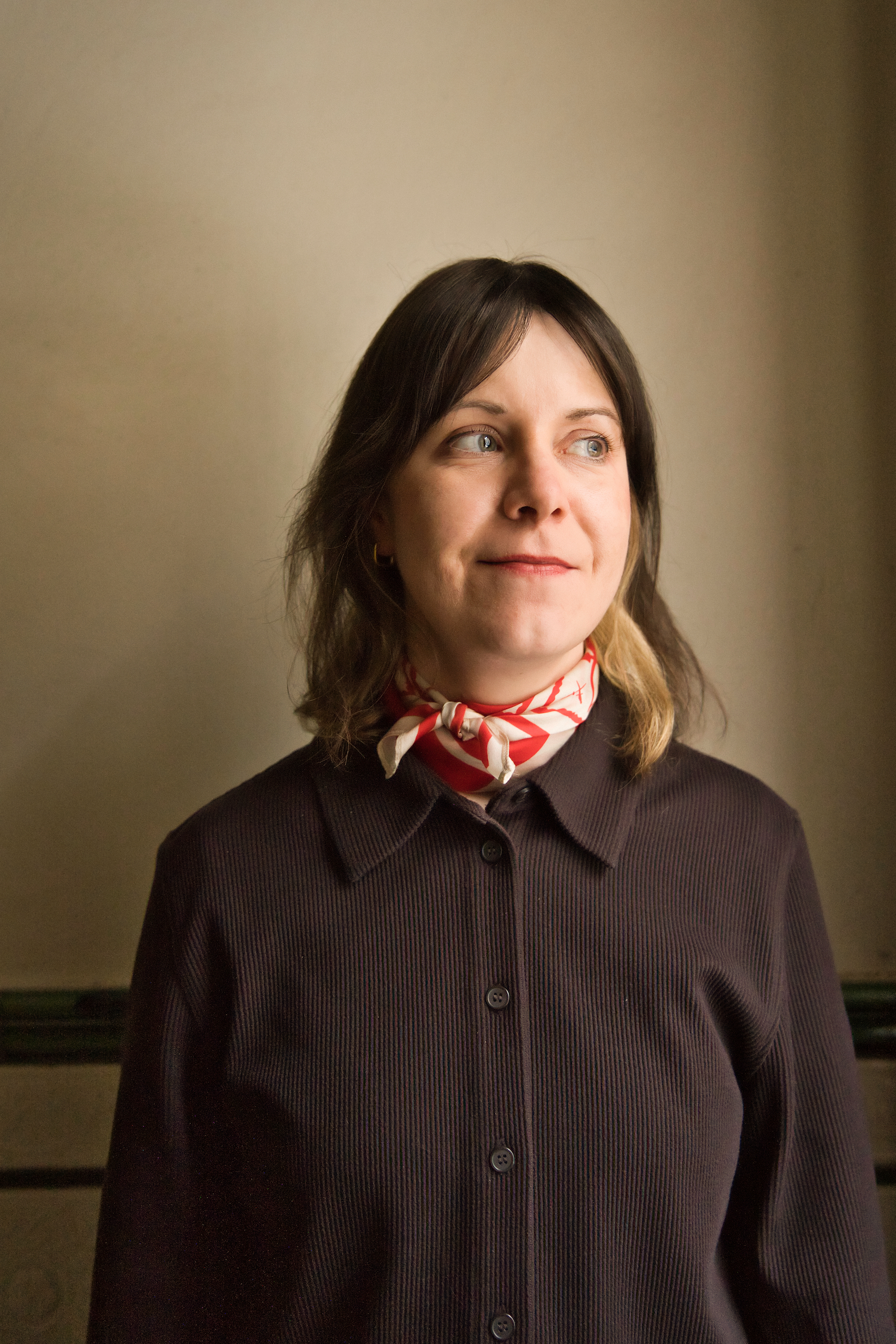
Laureen Kornemann
Who’s Drunk, Who’s Sober? Streaming Monetization
Linus Volkmann: D: It took streaming well over ten years to become the dominant way of listening to music, a long process. Now that dominance is total. What is your relationship to streaming—and to the industry giant Spotify?
Christin Nichols: For me, the biggest gamble is the playlists. Will I get in or not? With print and press, I still have some overview of the situation, but with playlists, I just don’t know: Who’s deciding what goes where? Who’s drunk, who’s sober? With some songs, I think, why isn’t this on any playlist, it’s so good—or the other way around, you have a song that you think is just “meh” and, all of the sudden, it’s everywhere. You feel powerless, and that’s the scary thing about this profession—this constant dependence. At the same time, it’s part of the appeal, it’s why we don’t want a nine -to-five job: because there’s always the chance something unexpected will happen.
Anton Teichmann: Last year, I was just completely fed up with the whole streaming thing, and especially with Spotify. I was at my other job and got an email from my music distributor. I had to pay Spotify a penalty of ten uros per song, because of “fraud detection.” One of my songs with a few thousand streams got demonetized because I’d been accused of buying streams.
Christin Nichols: Crazy.
Anton Teichmann: Completely. There you are at your other job and the company that’s supposed to be paying you for your content sends you an invoice . It’s absurd and you can’t really dispute it. Spotify has come up with a system to squeeze even more money out of people. I told my distributor: I can’t pay this in good conscience, especially since it’s not true.
Thomas Venker: What exactly was the accusation?
Anton Teichmann: There are playlists created by bots. To make them seem real, the bots also put “real” songs in them. Spotify sees, “Oh, this song is being streamed by bots,” and then punishes the artist. You can even use it to sabotage people: if I don’t like someone, I buy them a few bot streams, their song gets demonetized, downgraded by the algorithm, and then they have to pay a penalty as well . It’s an ingenious system for raking in even more money alongside marketing tools like “Showcase,” “Marquee”, and “Discovery Mode.”
Christin Nichols: So, what happened?
Anton Teichmann: I had to pay up. The distributor said , “What can you do?”
Linus Volkmann: There’s no one you can call, even communicating with these companies means communicating with bots-
Laureen Kornemann: We also took up your case at VUT [Association of Independent Musicians and Music Companies] at the time. In our proposals for improving streaming, we call for changes, we try to lobby for them, but it’s very difficult because Spotify doesn’t talk to anyone. The worst thing is that they simply pass the costs down to the small labels. Ten euros, completely random. But it’s their platform that they need to clean up and rid of bots.
Anton Teichmann: In any case, I’ve switched over to Tidal now. After this penalty payment thing, I canceled my subscription immediately. The whole Spotify system is so rigged.
Linus Volkmann: We don’t want to be too activist with this article, but… .
Christin Nichols: … but actually, we do! [laughs]
Linus Volkmann: …but neither do we just want to stand by and watch—at the very least, readers should take a good, hard look at streaming platforms and decide, which of them they want to support and what that decision means for the musicians.
Thomas Venker: Another unfair aspect is that there’s often good money in the professions surrounding the industry. Technicians and large concert promoters can demand inflation-adjusted fees. That’s not the case for small labels or artists. There are no collective bargaining agreements. They also don’t exist for writers. Some of my fees haven’t been increased since the introduction of the Euro.
Anton Teichmann: In the past, prices in stores also got adjusted. But when pressing costs rise, when you have to pay people more for PR, artwork, and mastering, Spotify doesn’t come to you and say, “Right, everything is getting more expensive, so we’ll pay out more.” Who can you turn to? I recently had to raise my prices for physical releases, even though my overall margin has decreased because the cost of pressing records has risen by a third in the last six years. Even this doesn’t give you leverage over Spotify.
Gudrun Gut: But who’s still on Spotify today? Everyone’s left.
Linus Volkmann: In some corners where there’s an awareness of all this, Spotify’s business practices are certainly a topic, and many have drawn their own conclusions, but you shouldn’t overestimate the overall impact.
Anton Teichmann: When the conversation turns to this topic, I like to show my DSPs…
Linus Volkmann: Your what?
Anton Teichmann: They let me see how the streams from my digital catalog are distributed across the different platforms. [Shows us his smartphone ] You can see it very clearly here: 92 percent of my catalog is listened to on Spotify. That’s a figure that drives me crazy.
Thomas Venker: And most importantly, it’s a figure that means you can’t tell your artists, “We’re getting out of here.”
Anton Teichmann: Exactly, then I might as well close up shop.
Laureen Kornemann: Everything is getting more expensive, except for the Spotify subscription. But these low prices devalue the music.
Anton Teichmann: They could, of course, raise the subscription prices and pay that out to the acts—as if they would ever do that. Besides, they’re afraid people wouldn’t accept a higher price. You can already see that lots of people aren’t willing to pay even this low monthly rate anymore and that piracy is on the rise again.
Laureen Kornemann: These low subscription prices are also doing something to the value placed on music.
Anton Teichmann: Definitely. But when I started my label ten years ago, we weren’t established enough to sell physical recordings, and apart from that there was only Soundcloud, which didn’t pay anything anyway—and then there were digital downloads, which were also kind of meaningless. It was only when Spotify came along that I could earn money with my label for the very first time.

Christin Nichols
Hard Drive’s Broken, Website’s Down: Back to Vinyl and the Merch Table
Linus Volkmann: What is your relationship to physical releases? Vinyl, CDs—is it just for the fanatics or is it still a viable business model?
Christin Nichols: People who are interested in me and my music actually still buy vinyl—and CDs, too. When my last album came out, I thought that nobody still wants CDs, but then everyone was asking for them. Vinyl has in many cases become too expensive, and so people are turning back to CDs.
Linus Volkmann: You make money with that?
Christin Nichols: Yeh, it’s not nothing. I sell the stock over time, mail-orders come in—but I’m also someone who is happy when I sell eight records and five CDs at a concert. I can’t live off that, but it’s nice.
Linus Volkmann: Do physical releases not become another form of advertising today ? You have something to show, something to take on tour; yet the real business, the majority of music listening, happens via streaming.
Laureen Kornemann: It’s true that, these days, vinyl is more of a luxury or merch item. Nevertheless, it always makes your release more significant than something released only digitally.
Anton Teichmann: Today, vinyl is a luxury product for those who want more than just the stream. But, for me, coming from the punk scene, it’s also really a question of who can even afford this? Because often the prices themselves make vinyl a luxury. For everyone who simply doesn’t have the money, we make tapes, which are cheaper.
Gudrun Gut: The whole digital thing also has a kind of transience to it. We’re working on this book now, and because everything was still in physical form back then, we’re looking through a lot of press material. The question came up of, should we really scan all of this and then… throw the originals away? But I don’t want to do that either.
Anton Teichmann: Definitely don’t throw them away. That’s a huge problem right now: digital archives often just disappear, hard drives break, websites get shut down. De:Bug is gone, Spex and Intro are gone.
Linus Volkmann: People laughed at me when I kept collecting all the magazines at home after the intro.de website was launched. And today, the site has long been shut down because their former publisher no longer wanted to pay the server fees and maintenance costs. Over 25 years of music journalism, almost 300 issues full of articles—all gone.
Gudrun Gut: Yes, that’s terrible. I’m not the collector type at all, things don’t always have to be lying around everywhere. You can throw things away sometimes. But…
Anton Teichmann: … but isn’t it nice to have a place on the shelf with all your releases? It’s nicer to look at than a link on the internet. Don’t you have a rack at home of all your records?
Gudrun Gut: I have a whole basement stuffed with them!
Christin Nichols: I don’t have anything of my own stuff. No CDs, no records.
Laureen Kornemann: But what if Spotify pulls the plug at some point? Then everything will be gone.
Linus Volkmann: How important is streaming for your label, Laureen?
Laureen Kornemann: Unfortunately, it is very important. Our distribution is hardly any different from Anton’s. Spotify is by far the biggest revenue source. We also make records, small runs, but they get sold mainly live at the merch table. Those ten minutes after the concert are crucial.
Christin Nichols: Since day one, I’ve been going straight from the stage to the merch table, usually with a fanny pack for the money and a brush to freshen up. I really enjoy it.
Gudrun Gut: I hate it!
Christin Nichols: I’m still in a state of euphoria then, so I’m not as vulnerable. If I’ve been backstage for an hour, I have to force myself to go out again.
Laureen Kornemann: But by then, everyone’s already gone. You have to seize the moment when people are still euphoric from the concert. Because you know from your own experience that when you order something afterwards and then a package comes, it’s nothing compared to that direct encounter after a good show.
Christin Nichols: And of course, the show has to have been really good. After a bad one, I really don’t like going to the merch table.
[Laughter]
GEMA, TikTok, and Malaria
Gudrun Gut: : I just got a licensing deal for Japan. They want to re-release all the Malaria stuff on CD. In Japan, the CD never died . But by the end of the day, it’s a collector s’ market; an incredible amount of physical sales is a collectors’ thing.
Thomas Venker: You have the advantage that your music isn’t limited to the German market.
Gudrun Gut: Yes, it’s great, of course, that I’ve been able to perform my music in so many places—and still do. But in the end, you don’t really make a lot of money from the international market. That’s why I’m glad that GEMA exists and that it collects money for the artists. Earlier we used to hate them at times, but they’re the only constant source of income. Labels go bankrupt, but GEMA always pays.
Laureen Kornemann: I can only echo that. Despite all the criticism of things like the distribution of the royalties, copyright collectives are simply essential. They work in Germany, but in other countries they don’t exist at all.
Anton Teichmann: : This criticism leads some artists to decide not to join any copyright collective. That can’t be the alternative, though. The money that you end up not getting paid doesn’t help anyone—it goes into weird pools and ends up being distributed to someone else. I often have to convince people: register with GEMA and GVL! It’s a no-brainer.
Gudrun Gut: Why wouldn’t you want to register?
Anton Teichmann: It wasn’t just in the punk scene, where this was long considered uncool. “GEMA-free” was a slogan, especially around the time when the dispute with YouTube was going on and a lot of music was getting blocked there. But not being in GEMA is stupid; you’re literally giving away money.
Laureen Kornemann: Back then, it wasn’t such a bad thing that they were standing up to a multinational giant like YouTube, with all the consequences that entailed.
Anton Teichmann: Absolutely. At the time, people were falling for the big conglomerates’ narrative about the missing music videos.
Laureen Kornemann: GEMA even just filed a lawsuit against a large AI company; they’ve become pretty badass.
Thomas Venker: Gudrun, does having a valuable catalog like yours mean a kind of second pension for you? Or does it come in waves, sometimes more, sometimes significantly less?
Gudrun Gut: There are fluctuations, but ultimately it’s the same every year, I get regular payments—and it’s a little more than my state pension.
Anton Teichmann: But when the band’s catalog really took off again in the 90s with the remix of the Malaria song “Kaltes klares Wasser,” did you earn a lot?
Gudrun Gut: Yes, “Chicks on Speed vs. Malaria” was a lucky success from the underground. No one knew why it went through the roof.
Anton Teichmann: Tell us more about that. I t’s a good example because that isn’t unlike today , when everyone is puzzled over why a song suddenly becomes a hit on TikTok.
Gudrun Gut: DJ Hell was supposed to do the remix, but he didn’t finish it. So we released the mix by Chicks on Speed and Barbara Morgenstern as a 10-inch. The distributor was against it, but it became a hit in the clubs. Suddenly, the musician Chica Paula called me and said, “Play this, it’s going to be a hit, it’s awesome.” So I did—and you can feel it immediately when people suddenly have this collective “wow” moment. It was great.
Christin Nichols: Jasna Fritzi Bauer and I even used the song in our final exam at the Ernst Busch Academy of Dramatic Arts!
Wanting to Get in Everywhere for Free, but Paying 15 Euros for a Cocktail:
When the System is Structurally Unfair
Linus Volkmann: I’d like to come back to another aspect. In 2026, listening habits are totally different from what they used to be. Everything is moving away from the model of a solitary album release every year and a half; today, people want a new single released each month. How do you deal with that?
Christin Nichols: I don’t think that’s a bad thing at all. I have a lot of output and like to release a song every six to eight weeks. Then, at the end, the album comes out.
Anton Teichmann: We also do this, to bridge the gaps. But the album remains important as a statement, especially for the press and booking. In genres like hip-hop, singles are enough, but in the indie sector, your outreach only really increases with the album.
Laureen Kornemann: One track after another is like gambling on playlists. Once you’re in, people might discover your entire catalog.
Christin Nichols: Yeh, and when it’s your own stuff, and people like it, it’s great. You put a lot of material on the playlists, and the momentum kind of builds. As long as it doesn’t all put too much pressure on you mentally, I would advise everyone to go for it.
Laureen Kornemann: I think that, today, many listeners pursue a dual strategy : they have a streaming subscription and also buy merch or records from their favorite acts.
Thomas Venker: Which brings us to the duality of micro- and macro-economics. People buy something on Bandcamp, for example, out of respect for their favorite acts—even though they could actually just stream it. But that only works as long as their own purchasing power, their own micro-economy, allows for it. When everything becomes more expensive, the first thing people are going to cut back on are these kind of “support the artist” purchases.
Anton Teichmann: In Berlin, “support” isn’t really a thing. And people don’t even have to be in bad financial straits for that to be the case—on the contrary. “Don’t pay anything, just get on the guest list” seems to be the motto. I organize concerts myself and offer “subsidized” tickets—five euros cheaper for people who have less, five euros more for those who can afford it and, thus, help those who don’t have as much money to spend on going out. The subsidized tickets were immediately sold out—bought by people who I know have good jobs. I’ve talked to people from Paris and Copenhagen about it, and they don’t have this problem. It’s a Berlin thing: wanting to get in everywhere for free, but paying 15 euros for a cocktail. The value of culture lies in the toilet.
Christin Nichols: When I see how many of my friends have good jobs and still ask for guest list spots… I always say, “If you really don’t have the money, okay. But if you do, then buy a ticket. The money goes directly to the band.”
Laureen Kornemann: Tristan Brusch does that too, because he himself had to live without much money for a long time.I saw how his concert announcements always say: “DM me if you can’t afford it.” If you do that too, Christin, I’m wondering, do people contact you?
Christin Nichols: No, then suddenly they can afford it after all…
Anton Teichmann: Yes, people dare to do that with me because they have the impression that it’s all anonymous. So they can save some money, and it’s easier to just buy the cheap ticket than to write a message and explain that they really don’t have that much money— which, in the case I mentioned , was in no way even true. But we shouldn’t underestimate the fact that there’s a lot of stigma attached to not having a lot of money. For many people it’s embarrassing to buy discounted items. Outing yourself as someone who gets welfare is not something that comes easily in this society. But it’s not the people who’re the problem.
Christin Nichols: : I’ve had similar experiences. The people who want to be on my list could actually all afford it, but they just want to be on the guest list. Like, come on, man, it’s 20 euros for a ticket, you pay that for two packs of cigarettes, so what’s the problem with investing in a band?
Gudrun Gut: : The entourage often earns more than the creators. In the end, the artist gets the least. That’s why minimum fees are so important, like those that are now required for getting funding from the Initiative Musik. It’s like a minimum wage for artists.
Because We Actually Exist
Thomas Venker: But this also raises the question: who can still afford a five-piece band? If I have to pay everyone a fair rate, I need huge funding.
Christin Nichols: Costs have risen everywhere. My band now only has four members instead of five because we could no longer afford to have the fifth person on tour. It breaks my heart.
Anton Teichmann: Many acts you see today have wealthy parents. If a five-piece band from America makes it to Europe with their first record, you look them up online and see that both their parents have a Wikipedia page. Many people who choose to pursue music are in line to inherit . There are more nepo babies and rich heirs in the industry than you might think. They’ve got real estate and investment tips for you. Our system is structurally unfair. Those who have will be given more. Those who have little can’t save anything. This is a big problem: the social fabric in this sector is dissolving.
Christin Nichols: That’s why solidarity is so important. Go to the shows, buy the opening band’s t-shirts, share the links! We can only do this together.
Anton Teichmann: We need to place value in culture again. And now the AI issue has been put on top of all this. We have to play to our strengths: that we are real people. Real communities, real emotions. AI can copy a lot of things, but not real encounters.
Christin Nichols: I recently fell for an AI song myself. I always thought I was pretty clever, but I was wrong. It took me a while to realize there was something off in the phrasing. I was totally embarrassed, but if it happened to me, someone who engages , so to speak, “professionally” with music, how is someone who is just a listener supposed to tell the difference?
Anton Teichmann: I read a study that said the majority of people can no longer distinguish AI music from human music. I was totally shocked by that…
Laureen Kornemann: I read that too, and I felt the same way. Just shocked at first.
Anton Teichmann: : I immediately sat down and wrote a group email to all the artists on my label: The days when you could just sit back and hope the worst wouldn’t come to pass are over!
[Laughter]
Linus Volkmann:Those are the infamous emails you don’t want to get from your record boss at night…
Anton Teichmann: : But let me finish. I also wrote that this is an opportunity for us because we have one strength: namely, that we actually exist. And we have to play to that strength now. Sure, in the future they’ll try all kinds of things, with avatars, with holograms on stage, so that nothing is real anymore, from social media to music to live shows, but at the same time there will always be real people who know each other, who want to get to know each other, who’ll form communities. We have to lead with this now. Just releasing a single every few months and posting something on Instagram every now and then is no longer going to be enough.
Christin Nichols: And we have to come together to the extent that it’s clear we can’t undercut our own prices. No shows with five people getting paid 250 euros and no travel expenses. I had that offer last year, and if I don’t do it, someone else will. And today I had another request in my inbox. I’m not going to say which company it was, but it’s a big one, and they were like, “Yo, it’s Women’s Day soon, you’re such a power woman, can we use your photos for free for our campaign? It’s all for feminism.” It drives me crazy. Billion-dollar companies want to celebrate “feminism” by not paying female artists—and I just know some people are still going to go along with it. But this kind of thing is just not acceptable anymore, it has to change.
“I Had Such Good Grades in High School, Why Am I Doing This Shit?”
Thomas Venker:Have you thought about retirement planning? Or is that purely a luxury issue?
Gudrun Gut: : I already receive a pension. But getting sick, for example, is a huge problem. Last year, I had to cancel a concert because of a fever and had to pay back the fee. Often you end up dragging yourself on stage even when you’re sick because you need the money.
Christin Nichols: I always dutifully report my correct income to the KSK. I’m partially employed on a permanent basis doing film shoots and I pay into the pension fund. I also share the fixed costs with my husband, which helps enormously.
Thomas Venker: Finally, do you ever regret the path you’ve taken in life?
Anton Teichmann: I can’t do anything else. I want to do this.
Christin Nichols: It fluctuates. There are days when I think, “I had such good grades in high school, why am I doing this shit? Where did I make a wrong turn?” But then there are moments when I know, “This is my passion, this is what I love.” But I often advise young people, “Don’t do it.” It’s a very hard road!
Gudrun Gut: Now I think, maybe I wouldn’t have found a nine -to-five office job so bad after all, knowing now what it’s like on the other side… [laughs]
Thank you, and good night.
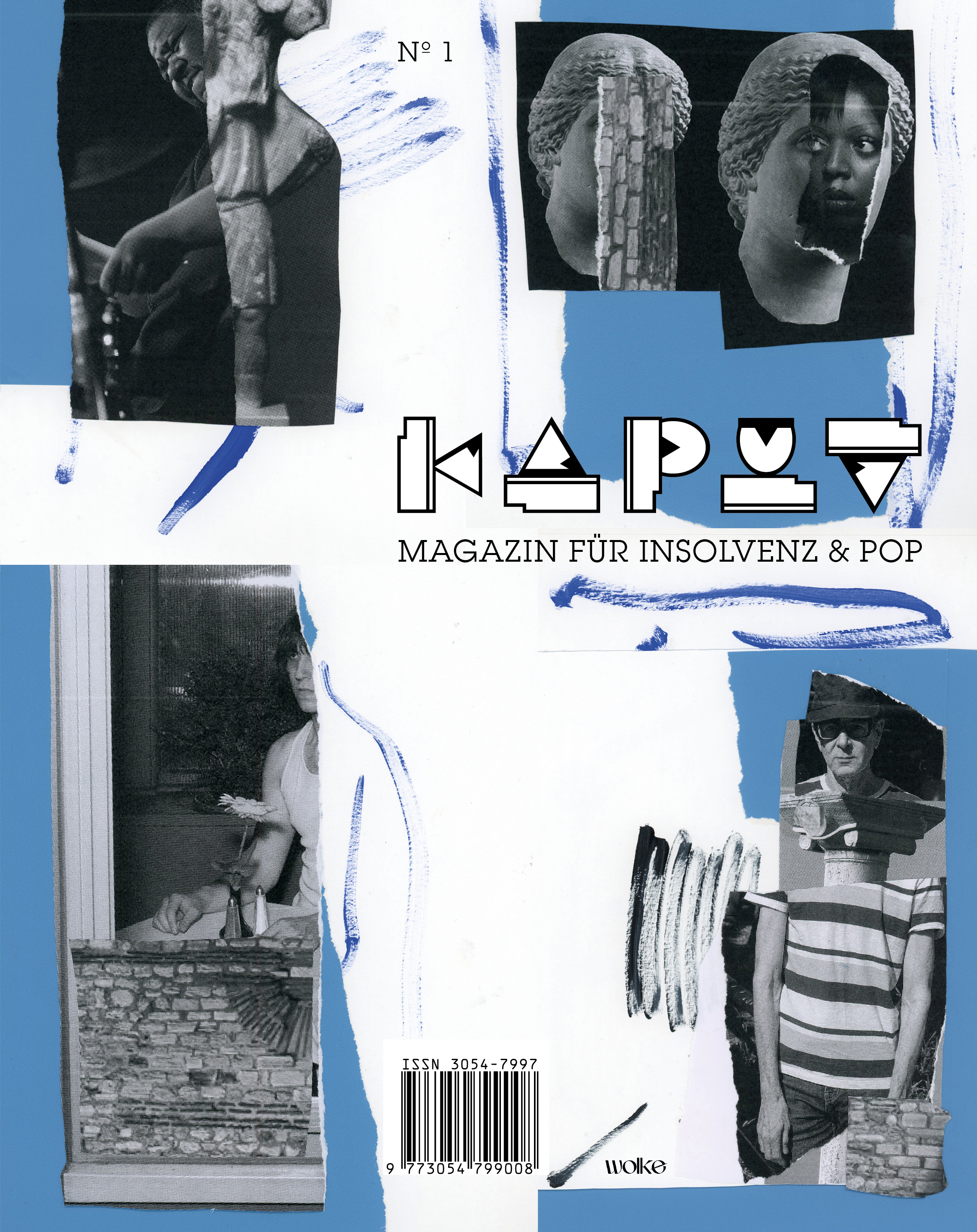
Please order your copies of the kaput print magazine directly from Wolke’s website.
Bookshops and online retailers can find more information on Wolke’s worldwide distribution here.