

Geese – Quit Thinking
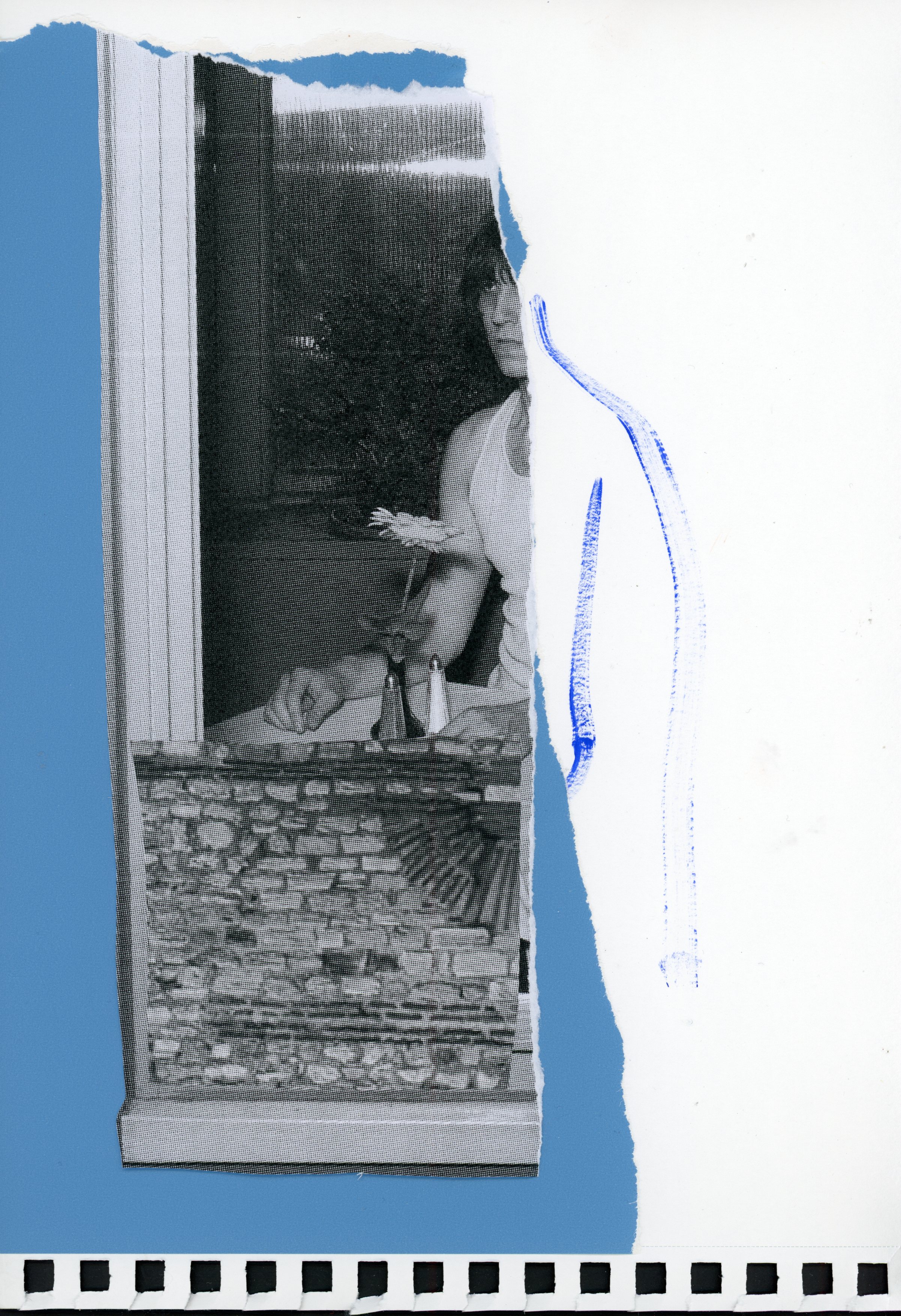
Cameron Winter / Geese (Collage: Sarah Szczesny)
“There’s a bomb in my car!”
(“Trinidad”, Song 1 auf “Getting Killed”)
“Let me dance away, forever.”
(“Cobra”, Song 2 auf “Getting Killed”)
For a long time, I had the mindset that my favourite art should belong only to me. I didn’t want to share it, because that would mean my personal relationship to some album/film/whatever would no longer be unique. I would now have to let others into my intimate bond with this object, or even, God forbid, accept their thoughts about it, despite the fact that I myself was, after all, its only true admirer. It probably has something to do with self-identification, or with distinguishing oneself from others, but however that may be: such pseudo-individualistic thinking is, of course, nonsense. The joy of celebrating something together has been amply proven by the fervour around Geese – surely the most exciting indie rock band in the world.
Of course, we shouldn’t exaggerate: this hype didn’t take place on a truly mainstream level, but towards the end of 2025, Geese and their album “Getting Killed” emerged as everyone’s best indie album of the year – in a world in which finding any kind of shared consensus seems increasingly impossible, and where rock music no longer has the status it once did.
The music press went nuts – The New Yorker called Geese the winners of 2025 – and threw around the “rock is back” claim left and right; frontman Cameron Winter became a kind of indie poster boy, and his long, unwashed hair became the latest hipster trend. My Instagram timeline consisted of nothing but Geese, Geese and more Geese. That the young New York band also has its fair share of haters only makes them all the more relevant – because if no one can fight against it, if no one finds this music annoying, how original can it really be?
As always, there are skeptics who perceive the celebrated sound of a new young band merely as the unoriginal recycling of older groups. Yes, Geese’s influences are clearly audible: the abrasive swagger of The Velvet Underground; the semi-serious stream of consciousness of a mid-sixties Bob Dylan; the hypnotic imagery of The Doors. But like any outstanding rock band, Geese transform their inspirations into something contemporary. No one has combined these elements in quite this way before – certainly not with this sense of urgency, nor with a result like “Getting Killed”. And besides, why should any teenager care whether a boomer is reminded of their favourite music from decades ago? They couldn’t care less. Many of them barely recognise these classic-rock references anymore, and why should they? All that matters is that Geese sound modern, like a product of the present. Because that is exactly what they are (more on that later).
The other factor that many Geese critics cite as the reason for their aversion is the idiosyncratic voice of frontman Cameron Winter. He yelps, bellows and croaks in an unrestrained manner; every vocal flourish is at once a stubborn declaration of war and a sentimental embrace. I always say that the most interesting vocalists have something meme-like about them – that they must be imitable in a funny way. This applies to Winter more than to anyone else: his singing is limitless, not (only) in terms of range, but in the way he can stretch his voice in a thousand directions. The most frequently cited comparisons are Thom Yorke (Radiohead) and Julian Casablancas (The Strokes), but ultimately Winter reminds me far more of jazz/R&B legend Nina Simone. Still, no one howls like he does, which recently led to the ultimate accolade: an SNL parody of Cameron Winter, complete with wig and an unimpressed, stone-faced stare. Of course, not a single word is intelligible – everything turns into expressionist wailing. Yes, there’s always some truth in parody. Thankfully.
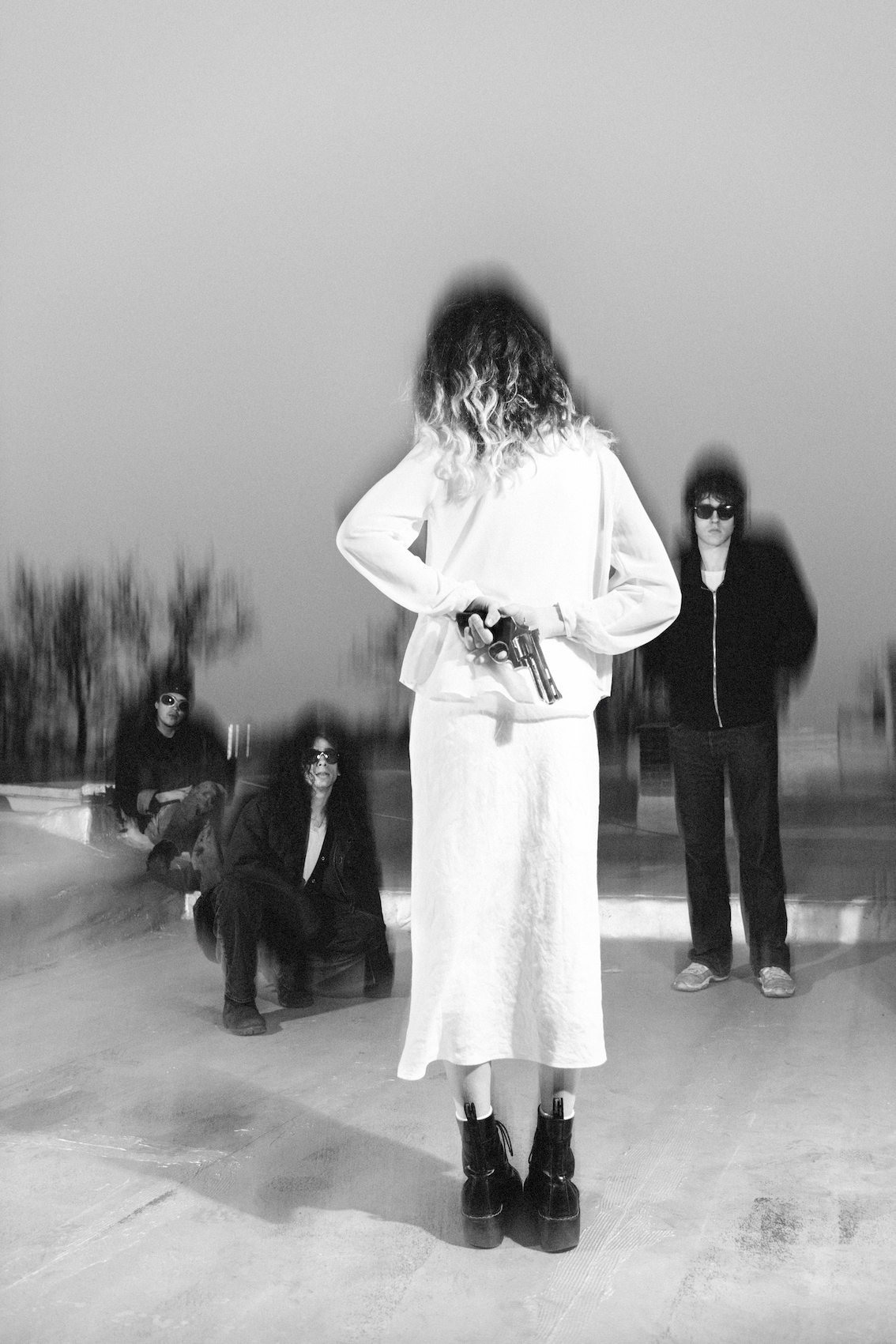
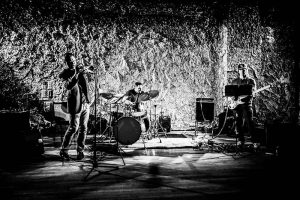
Geese (Photo: Mark Sommerfeld)
A proper rock’n’roll band
But Geese are more than just an outlet for Cameron Winter’s voice and songwriting. What sets them apart from other contemporary indie rock acts is that Geese are a real band in the classical sense – a coming together of creative minds, bringing different influences and ideas to the table. The four members have known each other since their school days, which naturally means they know each other well. You can hear that in the thrilling interplay and in the shared acceptance of imperfections. Unlike the early Strokes – whom Geese are often compared to because of their origins (NYC), their demeanor (nonchalant), and the core narrative surrounding them (“rock is cool again!”) – Geese do not treat the tight, three-minute pop song as the ultimate goal. Instead, they embrace collective drift. They represent a looser, deliberately less focused form of NYC rock, one that constantly changes in a live setting and reflects the ADHD mood of our present moment. Geese come across as more confused, which, in this case, means they feel more contemporary (in terms of content as well, but again, we’ll get to that).
Guitarist Emily Green is essential to Geese’s overall sound. When listening, it often feels as though she’s still searching for her parts rather than simply playing them, creating a fragile sense of excitement that becomes clear in her floating countermelody on the Geese highlight “Husbands”. She frequently plays with a soft, warm clean tone, skillfully sidestepping outdated rock clichés, and in doing so provides a necessary contrast to Max Bassin’s brutal drumming. Self-professed Geese fan Nick Cave put it best: “I mean, my God, those drums”. Crash cymbals explode like bombs on impact, and tom-toms sound like a dancing herd of horses. Bassin essentially plays lead drums, much like Keith Moon (The Who) did in the 1960s and ’70s, but his prominent approach also recalls striking indie drummers such as Bryan Devendorf (The National) or Christopher Bear (Grizzly Bear). This combination sums up Geese’s sonic aesthetic in a nutshell: classic rock on the one hand, 2000s hipster indie on the other.
Actual rock bands haven’t shaped the American indie discourse for quite some time now. While guitar bands were still the most common form of indie acts in the 2000s, things gradually shifted: the most relevant and influential indie artists eventually became genre celebrities like Phoebe Bridgers – an ultra-mellow singer-songwriter with as much humour as sorrow, under whose shadow the U.S. indie landscape has operated for the past five or six years. Of course, there were also real groups like the folk-hippies of Big Thief, who – like Geese – thrive on a palpable chemistry among their members, but who still wouldn’t primarily be described as a rock band. With the hype around Geese, it now feels as though the introverted Phoebe Bridgers era of U.S. indie may be coming to an end – and that the most relevant indie rock is becoming rock again. Maybe ”Getting Killed“ could mark a turning point, but only the future will tell. The mere fact that this possibility exists is already exciting.
The hype surrounding Geese didn’t come out of nowhere, but is instead the result of steady, gradual development. After all, ”Getting Killed“ wasn’t the band’s first album, but followed ”Projector“ (2021) and ”3D Country“ (2023). The still-very-young Geese had already gained experience before their major breakthrough. They had time to introduce themselves to their audience and let it grow organically. My take: acts like this tend to age better than those who land on magazine covers with their debut and are immediately hailed as genre saviours. They’re less likely to give off a sense of having already peaked. You don’t get the feeling quite so quickly that you’ve already fully grasped their aesthetic.
In contrast to bands like The Strokes or Interpol, who will forever be remembered for their debut albums, Geese’s future still looks just as exciting even after ”Getting Killed“. Because fans can see that the band was already making strong albums before – so why wouldn’t they continue to do so? (Let’s hope that the toxic machinery of fame and attention won’t come back to bite them. I’m optimistic about it. They seem pretty chill.)
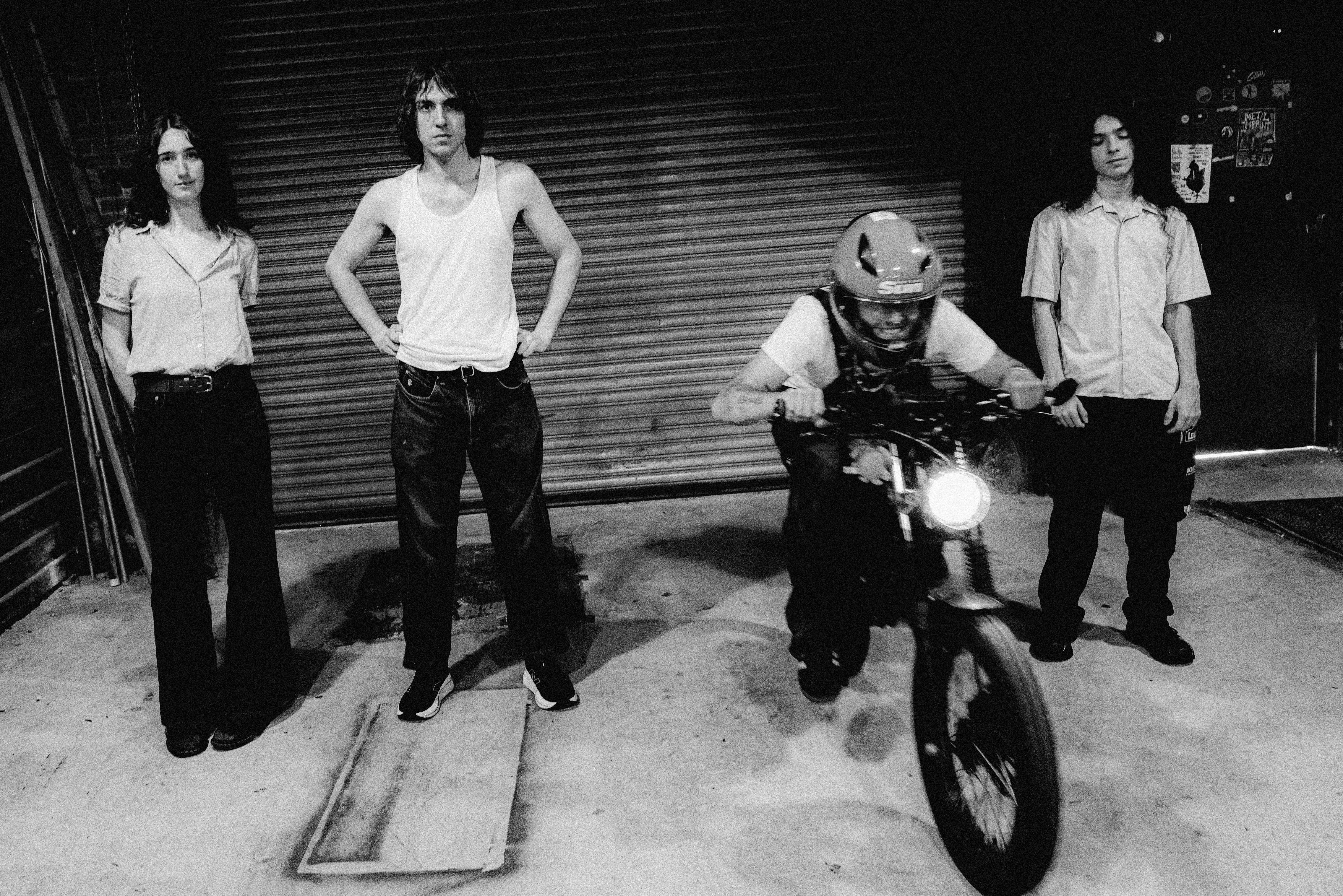
Geese (Photo: Lewis Evans)
From post-punk kids to swag-rock icons
A few years ago, I would have ruled out the possibility that Geese would one day have the standing they enjoy today. I remember seeing the band in 2022 at the Haldern Pop Festival. At the time, they were mostly performing songs from their official studio debut ”Projector“. I enjoyed it, but they didn’t exactly blow me away – so much so that I went to get beer several times during the set and even headed to another stage toward the end. In their ”Projector“ era, Geese were still playing solid post-punk, with angular guitars and spastic rhythms that resulted in songs like “Disco”: well-crafted, but somewhat unoriginal.
Back in the early 2020s, there was no shortage of bands like that (see the Windmill scene with groups such as Squid, Shame, and Black Midi). To be honest, I already found that hectic post-punk sound – particularly the wave coming out of the UK – rather tiring at the time, and I initially wrote Geese off as nothing particularly earth-shattering.
The step that followed was immense – because that’s what it’s like when you’re young: your musical interests often move in short phases, constantly refocusing. So Geese shifted their influences from the second half of the 1970s to the first, from New York post-punk bands (such as Talking Heads or Television) to rootsy swagger-rock legends (like The Rolling Stones). The result was ”3D Country“, a colourful, jam-heavy record on which Geese let it all hang out and seemed to be having fun every second. This! This is how this band is supposed to sound, people agreed.
The album captured the expansive three-dimensionality of American music – gospel, blues, Southern rock – while simultaneously seeming to parody it. Every sound feels like a carefully drawn caricature, or a deliberate exaggeration of making a “real” rock ’n’ roll album in the 2020s. Lyrically, Cameron Winter drew on chaotically strung-together, often deeply American pop-cultural images – cowboys, tumbleweeds, the road – and fused them with an apocalyptic end-of-the-world mood: “I’m losin’ all faith in my life, and I’m lookin’ for a way to the bright light”. So much is happening on “3D Country” that you can’t help but wonder why every album doesn’t want to be like this.
The answer arrived in the form of ”Heavy Metal“, Cameron Winter’s meditative solo debut, released between ”3D Country“ and ”Getting Killed“. Suddenly there was this idiosyncratic, spiritual folk-soul masterpiece that no one saw coming and people went crazy for it. The label had few expectations for the album and released it in December 2024, when year-end lists have already been written and new releases usually slip through the cracks. But then the hype machine kicked in: Pitchfork boosted ”Heavy Metal“ with a positive review, mentioning justified comparisons to ”Astral Weeks“ (Van Morrison) and ”Music from Big Pink“ (The Band). The internet seemed to love Winter from the start, and there were countless videos of actors and rappers voicing their affection for this abstract pop music. ”Heavy Metal“ had nothing to do with the diary-like singer-songwriter aesthetic of Phoebe Bridgers, so even without a roaring rock band, Winter delivered a refreshing alternative. With his moaning voice, he floats over fragmented pocket symphonies, each melody wanting to enchant and unsettle us at the same time.
The title is, of course, the first joke, since the album sounds more like soft velvet than heavy metal. But despite its goofiness (“the conga line behind me is a thousand chickens long,” he sings) it’s an entirely earnest record. Much like Bob Dylan on his amazing 1967 album ”John Wesley Harding“, Cameron Winter understands that religious elements carry a certain imagery and can be used symbolically: “I’m not kidding this time, I think God is actually for real,” he sings on the highlight “$0” – and by God he means love (I think). “Love Takes Miles” is the best song on “Heavy Metal”, and it carries an indefinable wisdom that’s already apparent in the title: love requires work, time, distance. Highly sentimental, and yet somehow not at all: “I need your feet more than you do,” he sings. You grin, you cry, you furrow your brow, all at once.
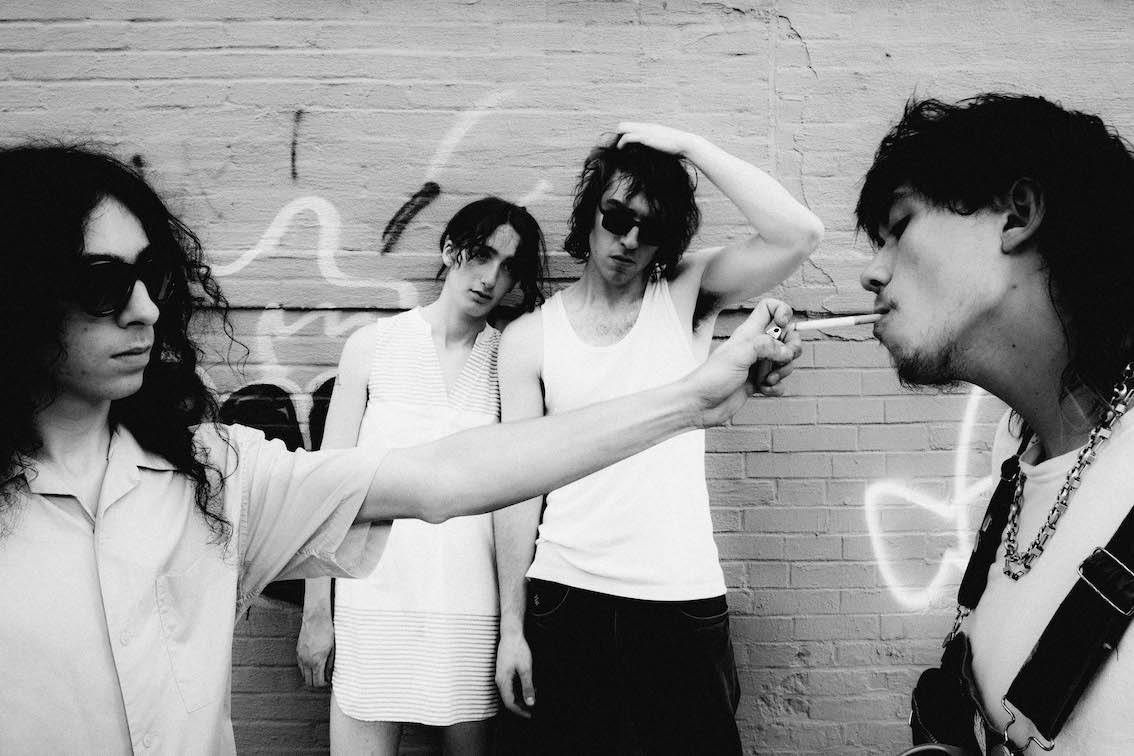
Geese (Photo: Lewis Evans)
Middle fingers and pep talks
Cameron Winter was then able to fold this element, this fusion of oddness and emotionality, back into his work with Geese. So when it was time for the band’s new album in 2025, Winter and the world were, in a sense, ready; everything pointed toward Geese’s ascent. And yes: ”Getting Killed“ represents the high point of their work to date. As abrasive as it is heartfelt, it raises a middle finger and delivers a pep talk in the same moment. Unlike ”3D Country“, the album isn’t a colourful dopamine flood, but more cohesive, more focused, more self-contained. The music doesn’t bombard you from three thousand directions at once; instead, it hits you in a tightly channeled stream – a new feature of the Geese sound that may well be owed to their new collaboration with producer Kenneth Blume (aka Kenny Beats).
Not only does my favourite song on ”Getting Killed“ keep changing, but so does the way I hear and enjoy the album. Sometimes I delight in the randomness of this music, in its earnest lack of seriousness, and in all the wonderfully dumb references to horses or boats. “Will you know what I mean?”, Cameron Winter asks in “Husbands”. My answer: not really, but I don’t care. The combination of humorously specific lyrics with classic-rock influences is a quality Geese share with another standard-bearer of the current indie-rock landscape: MJ Lenderman. Both essentially make classic rock for the brain-rot generation.
But then it hits me again just how thematically charged ”Getting Killed“ actually is – how Cameron Winter does, after all, want to get things off his chest instead of merely trying to disturb us. In “Bow Down,” for instance, he sings, “I was a sailor, and now I’m a boat / I was a car, and now I’m the road,” which is random and funny, but ultimately means: I used to be in control, and now I’m the one being run over. (Or, to put it differently: I used to be the one fucking; now I’m the one getting fucked.) So to a certain extent, the aptly titled ”Getting Killed“ stands for a fear of passivity, the fear that things will take a turn for the worse and that you won’t be able to do anything about it.

Geese (Photo: Lewis Evans)
Nobody knows where they’re going (except me)
Fortunately ”Getting Killed“ is the exact opposite of a capitulation. The album pushes me and leaves me fist-pumping (which is why, in my mind, it’s closely linked to the rousing cinematic wake-up call ”One Battle After Another“ by master director Paul Thomas Anderson – a film that carries a similar “we can get through anything” energy in the face of our present-day paranoia, and which actually came out in the very same week as ”Getting Killed“). So when Cameron Winter, in the opener “Trinidad”, bellows “THERE’S A BOMB IN MY CAR!” with pure intensity, over thundering drum avalanches and noisy wah-wah guitars, it comes not from pure fear, but from the drive to act that grows out of that fear. That the sunny folk-rock song “Cobra” follows immediately afterward makes the album’s message clear: the threat is not the end. “Let me dance away, forever”, Winter sings.
And when he explains in “100 Horses” that everyone should smile in times of war, he means it. Of course, he knows that this is easier said than done – but what other choice do we really have than to try? “There is only dance music in times of war”, he sings (followed immediately by a wonderful piano motif that belongs among the best musical moments of 2025). That doesn’t mean there is no other kind of music in turbulent times; rather, it means that one kind becomes especially precious then: the kind that urges you to set off, even if the destination is still unknown.
But for most people, even that is already too much. Just set off? And then go where? What happens after that? Every task is turned into a burden. “I’m getting killed by a pretty good life”, the title track declares; even paying taxes is described as an impossible act in the aptly titled “Taxes” – a symbol that Cameron Winter, of course, presents with a critical edge. Constantly keeping one’s own problems in view is essential, no question, but to what extent? And how much does that actually lead to action or a will to change? If I already freeze up when it comes to paying taxes, what does that mean when I’m faced with far more frightening problems?
In the album’s most beautiful song, the eternally soothing “Half Real”, Winter offers some encrypted guidance. Over an arrangement that recalls Bob Dylan’s magnum opus Blonde on Blonde, he speaks of awful people who call true love into question and describe it as nothing but a “nail in the wall”, something trivial that you can easily remove. “That’s how a lot of assholes feel, but that’s not how I feel at all”, he defensively sings. Such people are constantly looking in the rearview mirror, wondering whether a past relationship was good or bad, probably coming to a sad conclusion. But that, of course, is nonsense. Sometimes the mind has to be switched off, even if (or precisely because) it is overflowing: “Get rid of the bad times, and get rid of the good times too” – because what even is the difference? – “I’ve got no more thinking to do”. Anyone who reads this as surrender hasn’t understood Geese. Which brings us back to the bomb in my car: do I wait for it to explode? Or do I dance away, forever?
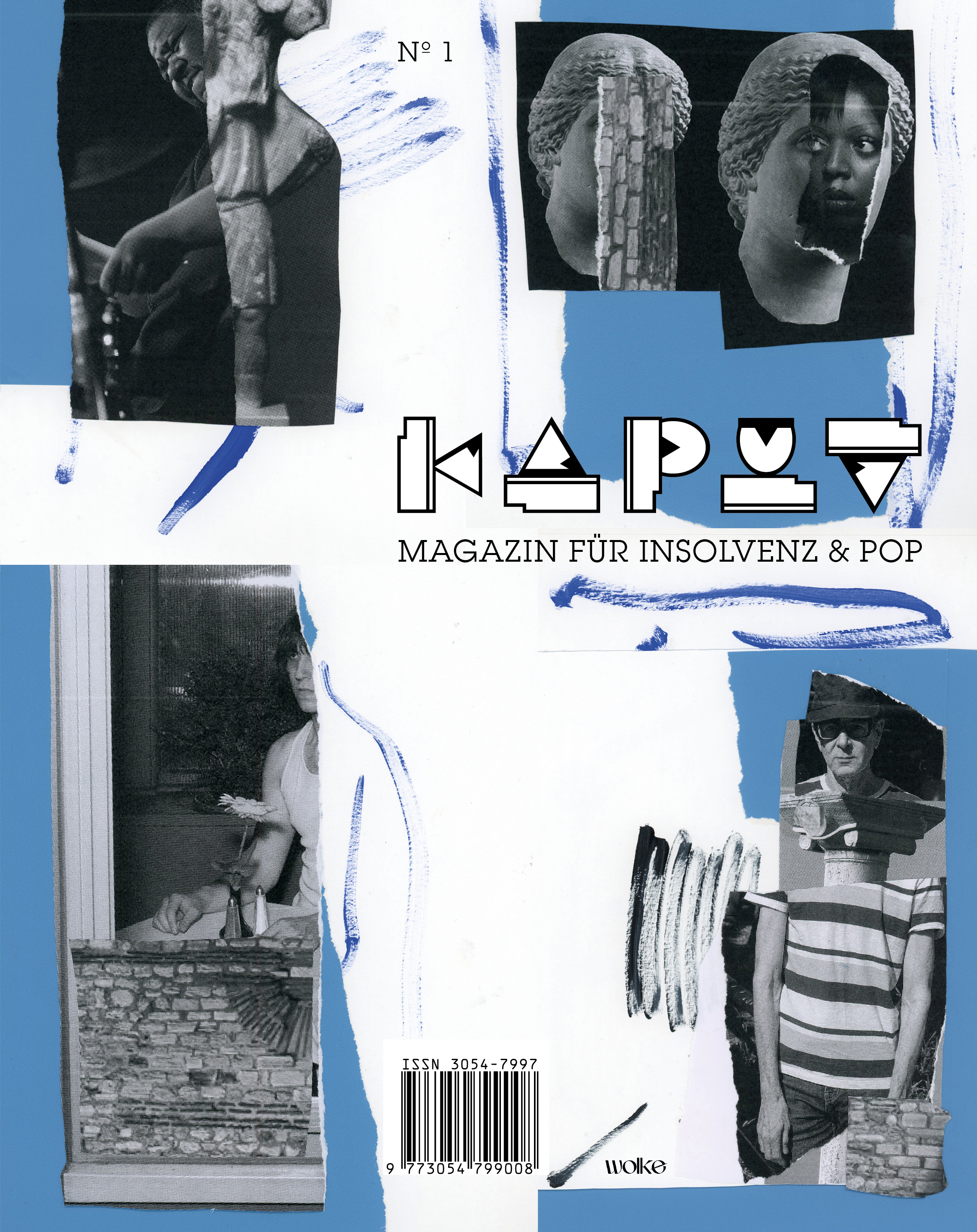
Please order your copies of the kaput print magazine directly from Wolke’s website.
Bookshops and online retailers can find more information on Wolke’s worldwide distribution here.