

KeiyaA: “Black healing music coming from Black pain, that’s the tradition that I still follow” Interview with Chakeiya Camille Richmond
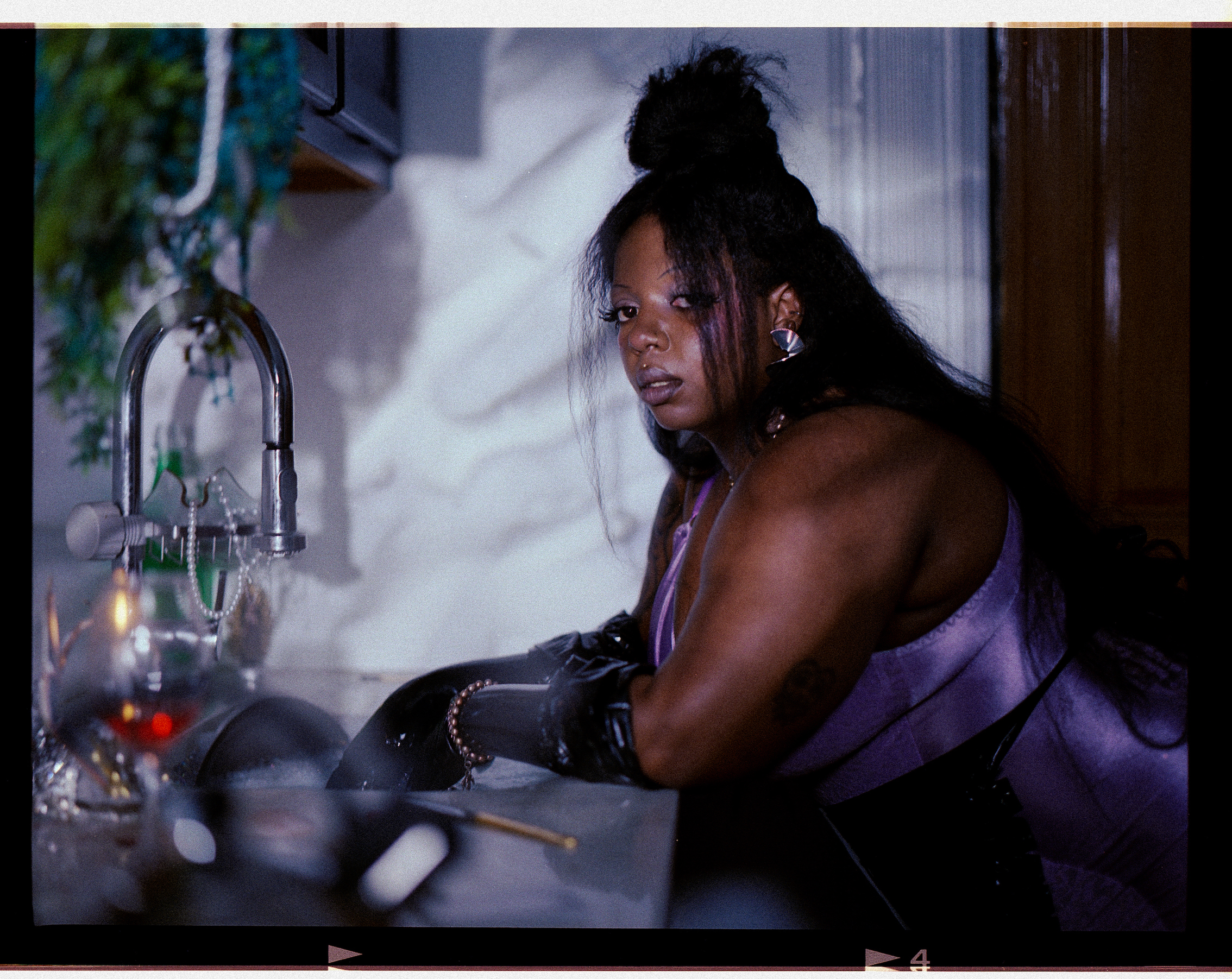
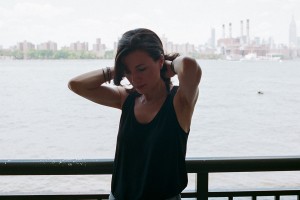
keiyaA (Photo: Caity Arthur) / courtesy of XL Recordings / Beggars Group
A late Friday afternoon zoom call connects me with the Chicago-born, New York-based Chakeiya Camille Richmond, better known under her music alias KeiyaA. For the next hour we discuss (among other tropes) leaving the University and by that the “classic Jazz”-path, the sonic roots of her new album “Hook’s Law”, and the complex politics of creating healing music in a world that was always a bad place.
The connection comes through clear and warm, a voice from London where it feels, she says, like she’s among cousins. KeiyaA is on the precipice of releasing “Hook’s Law”, the long-awaited follow-up to her critically lauded 2020 debut album, “Forever, Your Girl”, which arrived back then like a lightning strike at the start of a global lockdown, its intricate, sample-heavy R&B and raw emotional honesty becoming a lifeline for many. Four years later, the world feels no less troubled.
I read you left the College, where you studied Jazz / Alto Sax cause of disillusionment with the program’s hierarchical nature. Is that right?
KeiyaA: I left because it was hard, but especially because of misogyny, fatphobia, and misogynoir—Black women-specific misogyny. I just noticed that the hierarchy was white boys, then other men, then non-Black women, and then Black women. That was the order of things there.
I assumed it was more of a general critique of institutions, a need to make art rather than study it formally.
KeiyaA: That was part of it too. I don’t think my experience was hyper-specific; a lot of Black women in jazz deal with that. It’s why you don’t see that many of us left in the genre. But at that time, many of my fellow jazz students knew we weren’t going to pursue a career in jazz. We considered it like classical music. A lot of the people I went to school with played in funk bands or indie bands or were figuring out their artistry doing solo singer-songwriter stuff.
For me, it was really hard because I wanted to sing, write songs, study jazz on saxophone, and make beats. Now, kids in college can take an Ableton class as part of their music degree. They had those classes when I was in school, but it was seen as completely separate from the music department, if that makes sense.
Yeah, right. It has all changed over the decades. I’m also teaching at a few universities now, and you see how what were once separate worlds are now finally understood as one: art is the creation of a world.
Let’s go back a little bit. Why is music your chosen artistic path? What do you search for in it?
KeiyaA: It kind of chose me. I’ve just always loved it, and I always had a strong ear. My family tells me that when I was a small girl, if there were commercials that had jingles, I would learn them. Or with TV show theme songs, I would teach myself how to play and sing them around the house.
Growing up, public schooling in Chicago still had a lot of music and arts programs. A lot of those have since lost funding, but I was able to pursue my interest without my parents having to spend money on it. It also worked out because my family were all working and very busy, and I needed someone to watch me after school. It worked for them that I could go to an all-city jazz band on Wednesdays and Thursdays from 6:00 to 8:00. So, I was into it, and it was convenient for my parents.
Is your family musical?
KeiyaA: They love music. Playing and listening to music and dancing is a big part of Black culture across the world, but in the States in particular, it’s a big ritual for us to gather. I’m from Chicago, where our regional dances are the Percolator and the Cha-Cha Slide. No matter the family gathering, we’ll just do the Cha-Cha Slide.
I got very lucky because my mom was young—she had me as a teenager—so she was in her early twenties in the early 2000s. She really loved neo-soul and R&B, so I listened to a lot of D’Angelo and Erykah Badu in my mom’s house. But then my grandparents loved jazz and soul. I got a big history lesson on music just by nature of my family listening to it. But I’m the only musician, even though a lot of people in my family can really sing.
Did they encourage you to pursue it as a career?
KeiyaA: No. They encouraged it when I was a kid because it was an after-school program. But when it came time for high school, our mission statement was just “college.” The mission was to get you to college. So when it came time to decide what to study and I said, “I want to study music,” they were like, “Teaching, right?” They wanted me to teach or study music business. They just didn’t see art as a surefire way to make money.
They definitely did not want me to study jazz performance. For my first couple of years of school, my mom and I were kind of fighting about it. Now they’re very proud of me and kind of in awe. They’re like, “I can’t believe it.” But it took nearly two decades of struggling.
Same here, my parents did not really get it that writing could be my profession…
If you could go back, would you still go for it in the same way?
KeiyaA: I would go for it, maybe much harder and much sooner. I probably would have spent less time following boys around. A lot of the men I was dating when I was younger were also musicians who were all already kind of doing their thing before me. If I could do it again, I would just go way harder and focus more on myself.
But it’s hard to say. Part of me is like, “Oh no, I would definitely not study jazz,” but I love jazz. It’s just hard because of the environment. It feels so far away from the culture of when a lot of these people were alive. This is Black art, Black revolutionary music, Black healing music coming from Black pain, and that’s the tradition that I still follow. So, maybe sometimes I wish that I had finished school… so I could carry this understanding of being proud to be a jazz musician, as opposed to having been like, “Fuck jazz, I’m going to do my own thing,” and then coming back full circle.
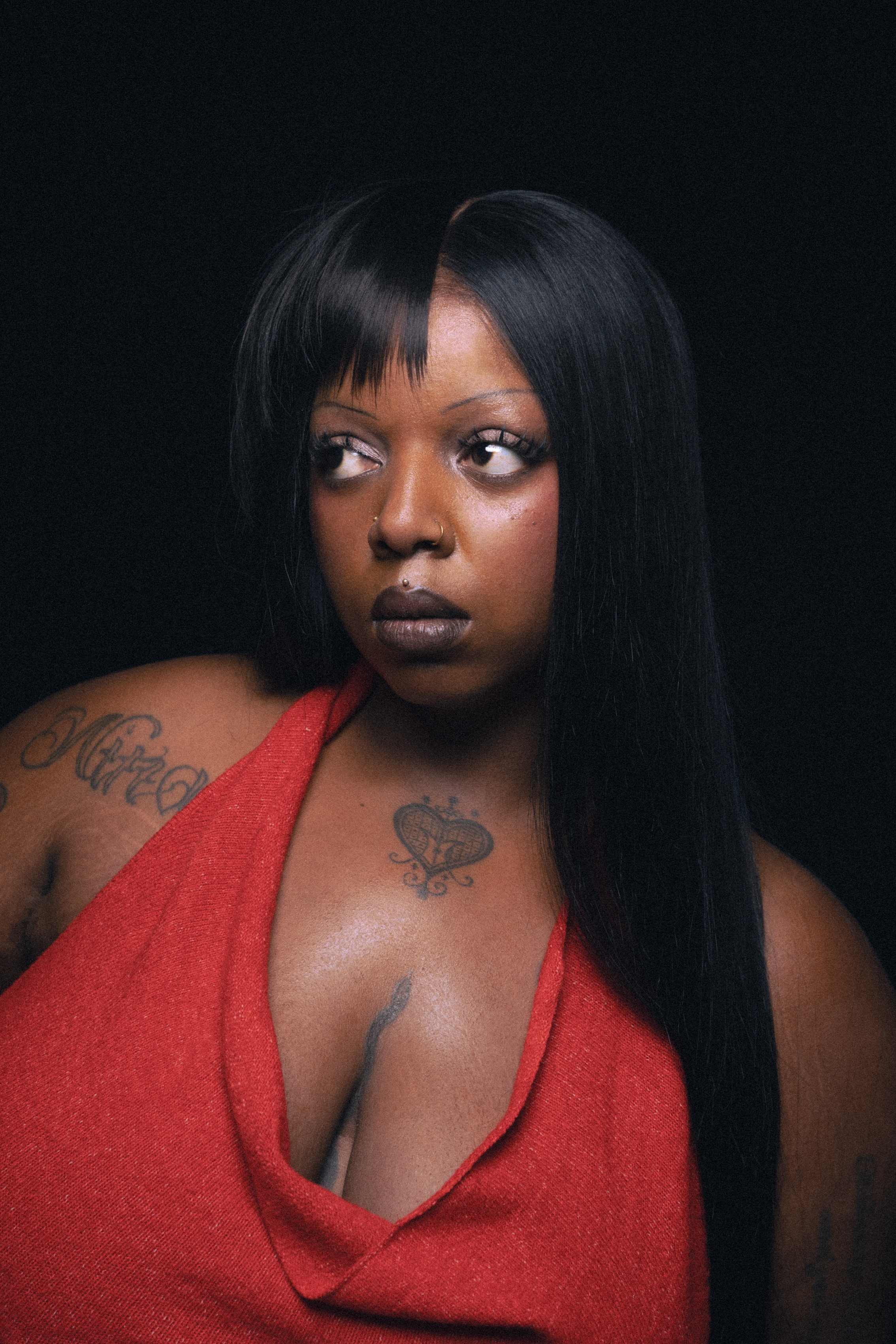
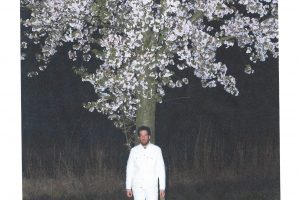
keiyaA (Photo: Jessica Foley) / courtesy of XL Recordings / Beggars Group
This friction—between tradition and the systems that contain it—is central for your work. The political aspects aren’t a layer applied to the music; it’s the very ground from which it grows.
That said: These days, history and politics feel very present. Do you feel you have to comment on them in your songs?
KeiyaA: Yeah. It’s kind of a conflict. I had a conversation with a friend of mine, Ally Rosa-Salas, who was curating something with a bunch of white artists speaking about race and class through their art; she is the vice president of Abrons Arts Center, which is a very important arts education institution in the Lower East Side of New York, and I did a residency there recently. It got canceled because people were like, “What? You got white people talking about race? They’re the ones who caused this.” Ally’s point was, “Well, yeah, why do the marginalized always have to be the ones to talk about it and teach the world about things they experience but didn’t even set up?”
I think about that constantly. Do I always have to be the fat Black feminist that’s educating y’all on stuff? It’s yes and no. Yes, I have a responsibility. Yes, who else is going to do it if not us? But also no, I have the freedom to be all these other things. But it’s hard because I still feel that if I’m going to be freaky or sexy or horny, then I have to look really put together while doing it, or else they’re going to scrutinize me. If I’m going to be angry, I still have to look really pretty. If I’m going to curse, it still has to be in tune.
I’m still thinking about how women experience this, but also Black people, but also fat people. I also think about the fact that I’m going to be scrutinized no matter what I do, so I might as well do it. But then… I don’t know. This is the conflict in my mind. Like, I should, but I don’t want to because it’s not fair. But if I don’t, who else will be able to speak on my experiences accurately? My voice will be lost. But then will I be heard if I don’t look almost perfect while doing it? Those are the things I wrestled with in college and as a young kid and thought I had sort of healed from… and then confronting it again is kind of why I wrote “Hook’s Law”.
Even to this day, I was listening to it this morning and was like, “Man, maybe I should have sung that better.” There are moments where I’m not really singing perfectly. And to this day, I still think about it. Like, did I do myself a disservice by not putting a bunch of runs and pretty things on it to get the message across?
It makes perfect sense. I was just at a talk and concert by Wadada Leo Smith at the Jazzfest Berlin, a fellow jazz musician of yours from Chicago. He was asked about the world being in a dark place, and he said, “Well, I was born as a Black kid. I’m a Black man. I live in 400 years of history of really bad shit. For me, the world is not turning into a bad place. The world was always a bad place.”
KeiyaA: I love that. Yeah, at this stage of my life, I want to be in conversation with more jazz musicians. I feel like it’s hard because I show up with my computer and they’re like, “Jazz? I don’t see it.” I feel like I have to have my band and my saxophone on the side for them to see it.
Things develop. Look at Moor Mother. In a way, she also did a lot of Ableton stuff, like audio performances, and now she’s on stage with all these people. It’s a natural flow of meeting the right person, and then a chain reaction starts.
KeiyaA: Yeah, thank you for saying that. You’re right.
You’re originally from Chicago, even tho you live now for some years in New York, it feels that Chicago still mean a lot for your music?
KeiyaA: Absolutely. It’s funny because I feel like Chicago music, especially footwork and juke, is becoming this global phenomenon. So was drill music. I saw in real time how a Chicago genre created a British rap genre and a New York rap genre inspired by the Chicago one. I always knew Chicago was the big city in the Midwest, but it always seemed like our art and culture were super invisible, and I didn’t understand its importance until leaving.
Artistically, I feel like, whoa, this is my city. I need to go and dig into my city before everybody else does. Especially being in New York where there are so many footwork and juke parties, and there are no Chicagoans there. In general, people in electronic music don’t engage with Chicago’s music culture as much as I think they should. I feel like people are doing it with Detroit a lot, which is amazing. I also feel like part of it is that the Chicago government is corrupt. Chicago arts institutions make it really hard to put on any sort of music event unless it’s generating hella revenue for the city. Like, Pitchfork is gone now, so there’s no mid-level festival. It’s only Lollapalooza now. So I’m not blaming the world; I also think Chicago just needs help getting more money to do more amazing art stuff that people can come to, like how Detroit has Movement. Movement is the main festival, but it’s a weekend of a bunch of stuff. I want that for Chicago, you know.
I mean, for me, Chicago was always on eye level with Detroit. Both together are the motherland of electronic music to me.
KeiyaA: Wow. Okay.
Chicago is in my sound in a way that’s almost undetectable. Growing up with juke music… you know, our house music in the ’70s and ’80s was a little bit faster than regular house, which evolved into juke with the claps, which is what we dance to. Learning that makes me really proud to be from Chicago. Seeing the world embrace it makes me want to almost go out of my way to be like, here’s what it was actually like for us. But I’m trying to do that in a way that feels natural. That’s why I have this DJ alias, DJ Cowrie, because it gives me more freedom to do that. But then when I listen to “Hook’s Law”, I see how it’s impacting my work. Everything’s getting faster and more electronic and more dancy anyway.
Your debut album, “Forever, Your Girl”, was a masterclass in this kind of synthesis, weaving samples into a deeply personal and political tapestry. It arrived in March 2020, a moment of intense artistic recognition colliding with unprecedented global anxiety. How did you cope with having a major point in your career happen at the exact moment the pandemic began?
KeiyaA: I’m kind of still there mentally. I’m like, is everyone okay? I’m still reeling from how it impacted my communication, my friendships. I feel like so many people are now like, “Oh, you looked at my story but you didn’t answer my text. You’re not my friend.” Whatever was bad that was happening is much worse now with the apps and how they’re impacting our brain chemistry.
At that time, there was a lot of mutual aid, and it seemed like community-wise we were making better steps. Those protests were a crazy time, but I really thought it was going to be a catalyst for change, and the powers that be were like, “Nope.” And now it’s like we’ve regressed, but all the powers that be are more powerful in the regression, and we’re less powerful. I’m scared, but I’m also like, you know, Gil Scott-Heron said the revolution won’t be televised. I think we’re still learning that we have to mobilize and get offline.
That debut featured prominent samples, like from Nina Simone and Beyoncé. Was it easy to clear those samples?
KeiyaA: Some were and some weren’t. The ones that were cleared were the easiest ones to clear, basically. The Scott Storch, Jadakiss, Mariah Carey one came through pretty easily. And by “relatively easily,” I mean they responded within like a month, and if their price was too high, we were able to negotiate it and it was fine. The only sample that didn’t make it this time was another Mariah Carey sample that was originally in front of “Thirsty.” There’s this Gucci Mane, “Thirsty.” It was a Mariah Carey “Thirsty” that went into Gucci Mane. It kind of sounded like you were switching channels on the radio, but they didn’t clear that one because I just couldn’t afford her publisher’s rate. But they responded early enough that it was like, “All right, I guess we have to take it out,” which was great.
I’ve always found sampling to be the most heart you can give to another artist.
KeiyaA: Yeah. And I have empathy for all the Black artists because the way the music industry was set up, it was like slavery for everybody, but especially them. I understand that the only reason we have to do this stupid government shit of getting permission and paying is partially because of how Black people were sampling music at the time. But I also have empathy because as artists, we barely get paid, so any way that we can get paid for our work, okay.
And then, I also think it’s important because it kind of stamps it in an archive. My song “Kiss” sampled Scott Storch, who sampled this other flute record. I sampled Scott Storch. So his name should be in the writing credits to tell the story of how I got to this song. Coming from jazz, though, there is this one little jazz elder in my head that’s like, “Don’t sample, just play it.” Which is so funny because I think sampling came from the fact that we would write new heads over old chords in jazz all the time. They call it a contrafact, where you take the chords of another song and write a new melody over it. That was a part of our tradition too, which is early sampling.
This brings us to *Hook’s Law*. If “Forever, Your Girl” was a meticulously woven tapestry, the new album feels more like a mushroom field with deep, interconnected roots—easier to step into, but revealing a vast, complex network underneath.
KeiyaA: I love that description.
When you start working on an album, is there a “this is my mission” call, or is it a step-by-step progression?
KeiyaA: It’s more of a step-by-step progression, and it kind of reveals itself to me at the end. With this album, I will say that even before I released “Forever, Your Girl”, I knew my next album was going to be jazzy, but in this genre of jazz that I knew in my head but didn’t think existed, which was kind of spooky and moody and dark. Like, “I’m angry. I’m singing really loud with distortions. I’m screaming,” and the stuff we’re talking about is Black pain, but from this anger, like, “We hate the colonizer, the demons are coming out.”
For a while with “Hook’s Law”, I didn’t really believe in myself, but I was just going to make music because I love making music. So, I made a few beats. I made a couple other beats. Then one time I actually pulled the mic out and sang something. It would just be like that for three, four years. I was also really depressed, but still having to do “Forever, Your Girl” stuff, still having to work.
It was really these periods where I was experiencing crazy relationship shit that would inspire me the most, to be honest. All the autotune stuff I kind of did in the same period of time when I was going through a summer of three really bad, toxic relationships in a row. And I wrote all that stuff. I was thinking about spirals, and how time is not linear. I’m really interested in cosmology from Central Africa, like the Congo. A lot of the idea of how the world works is that there’s an earthly plane and a spiritual plane, and you kind of exist in this loop between them. And I was like, that’s a spiral, and loops, and I loop, sampling loops… slowly it’s coming.
It was hard for me to figure out how it was all going to make sense. Then I decided to do some theater-performing stuff to develop my craft. But I wound up making a musical-based play, so I was like, oh, I have to finish songs to make this. A lot of the songs from the play are in “Hook’s Law”, and the way they were written was informed by how they were performed on stage. The play helped me arrive at the theme of the album. But it took a while to get there.
Listening to “Take It,” I had to think of Goldie’s “Inner City Life.” It has that same melancholic, meandering feeling of a big city at night.
KeiyaA: Oh, yeah. Wow.
Can you give me some insights on your “Take It”?
KeiyaA: Yeah, it’s funny because “Take It” was more of me just being very lusty. But I definitely wanted to channel this feeling like Solange’s “Cranes in the Sky,” Goldie’s “Inner City Life,” a lot of Massive Attack records—this feeling of being in a big city but feeling very lonely. It’s like I alluded to earlier, talking about my experiences in Chicago, where it was this dual feeling of, “I’m a big city girl, but I’m so small and invisible.” That was definitely something I wanted to channel.
Do you have role models for lyrical writing?
Keiya: A: Jayne Cortez and Pat Parker, who are poets. But especially Jayne Cortez, because it’s not just what she says but how she says it. Just the way she opens her mouth. But I was also really inspired by Missy and how rhythmic and simple her lyrics are. And just in general, rap music. I feel like I was more in my bag of the lyric and the rhythm taking precedence over the melody, even though there are a lot of great melodies. It was about lyric and rhythm more so.
The process you describes is solitary, an internal world built beat by beat before it’s exposed to outside air. It requires immense trust—in oneself, and eventually, in a chosen few.
At which stage of creating do you want the perspective of another person?
KeiyaA: I tend to wait until a demo is done before I share it. I can be so influenced by people. Even if they’re not intentionally trying to influence me, their presence may influence the way that I show up. For this project, I waited until I had like four songs done, and then I would send it to my management or to people who worked on my label or my creative team. I didn’t show it to any of my friends until the album was done. With the exception of two or three trusted, trusted musician friends. For the most part, I didn’t show it to really anybody except for my team until it was done.
You mentioned musician friends. I read that Kelela is one of them.
KeiyaA: She’s like my sister.
I imagine you talk a lot about your paths in music and the industry. What do you learn from those conversations?
KeiyaA: I’m just thinking about it because she’s always trying to tell me to pop my shit, you know, like not hold back. These conversations are very much active and ongoing. One big takeaway that I’ve been sitting with is the importance of community and understanding the difference between my actual community and my online, extended community, and to lean into my friends first, to lean into my people first, no matter what.
And because I’m a Black woman in this industry, like, no, I’m not tripping, no, I’m not crazy. She says those things because that comes up a lot. When I experience things, I’ll be like, “Am I crazy?” And so she’ll be like, “No, you’re not.” That’s something that she really wanted to hone in on because I’m about to do these tour dates, so she was like, “I want you to remember that.”
That’s a big takeaway. And another takeaway, just in general in life… sorry, I’m getting a little emotional because I really look up to Kelela and really looked up to her when she first came out. And I was like, you know, it’s okay to start whenever you’re ready. I’m constantly in awe of how she continues to do the thing. Yeah. And she’s also just really smart, like so freaking smart. It’s kind of like, how can somebody be this smart and also be this talented, this beautiful? Yeah.
Do you have a little party with your friends now as the album is coming out?
KeiyaA: That’s a good idea. I mean, I am having a little celebration tonight, which I’m excited about, at this Nigerian restaurant here in London that I love.
Well, then: Have a great night out!
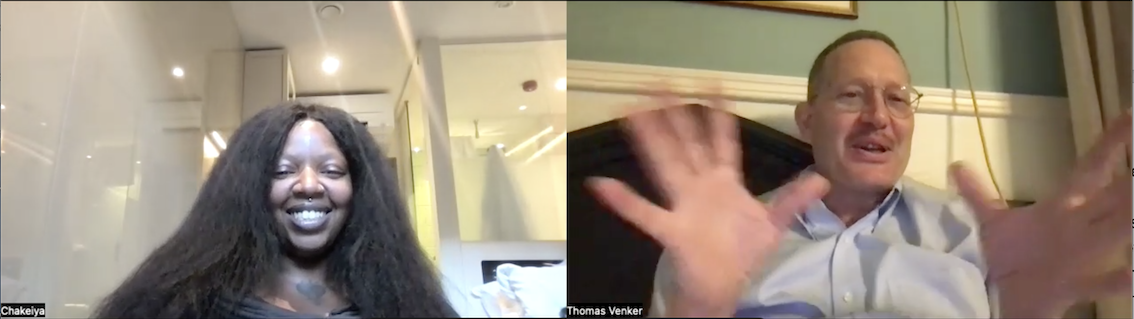
A zoom moment in time