

WE BETTER TALK THIS OVER #14: „SOLAR POWER“ VON LORDE (2021)

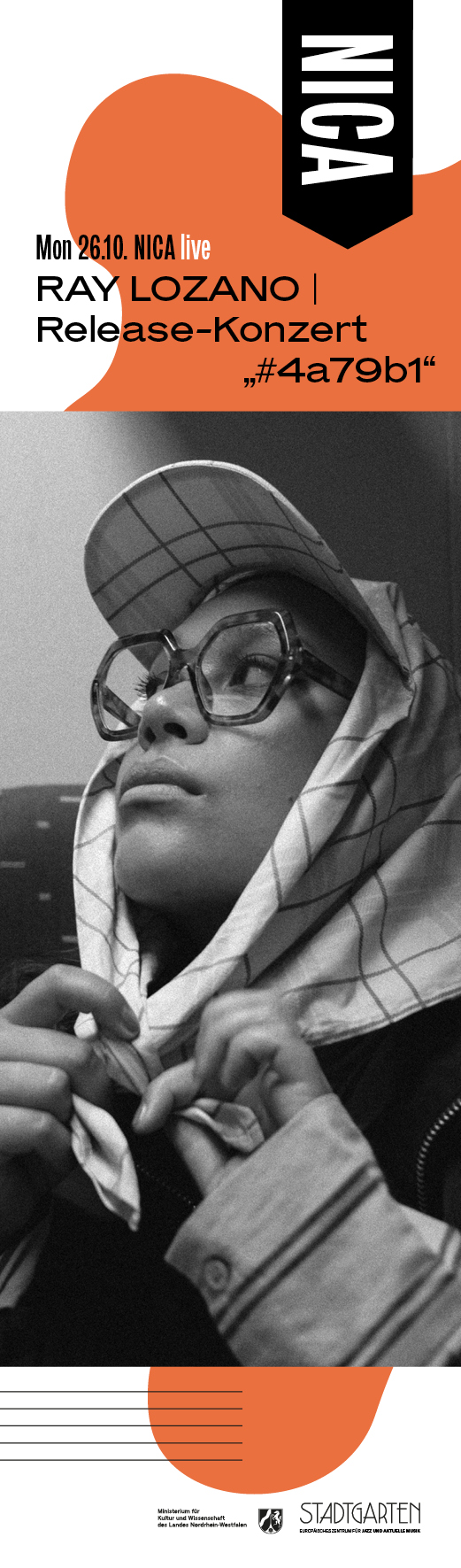
Lord (Photo: Ophelia Mikkelson Jones; courtesy artist, label)
“We Better Talk This Over” is the Kaput column by Lennart Brauwers in which underrated, often overlooked (or even hated) albums by celebrated artists are discussed and reevaluated. After all, our perspective on music can change as it ages. So: an extreme amount of greatness goes unjustly noticed – we better talk about that.
“I used to love the party, now I’m not alright” – Lorde, “Big Star”, 2021
Everyone knows: if you’ve taken ecstasy, you should smoke weed the next day. A lot of it. It helps you get your head straight again, makes you happy, and magically overshadows your own serotonin deficiency.
The fact that this works – or at least seems to – was also known to the New Zealand singer Lorde, whose albums each stand for a particular drug; yes, a silly and somehow rather cute gimmick. While her debut record “Pure Heroine“ represented the alcohol-soaked evenings of her youth and “Melodrama“ embodied the euphoric rush of an ecstasy pill, her much-maligned third work “Solar Power“ was a laid-back weed record – the logical conclusion, so to speak. (With its successor “Virgin”, Lorde seemed to put an end to such drug comparisons and instead promoted a kind of pure immaculacy, as the album title already suggests – once again, a logical consequence.)
To understand “Solar Power”, you first have to grasp the aesthetic of its predecessor “Melodrama”. On this masterpiece, Lorde experiences an ultra-dynamic coming-of-age high, full of ups and downs, with gigantic pupils in both good and bad times, living life to its absolute fullest – such an intense rush that you start to wonder how many more like it are even possible. “We’re king and queen of the weekend”, Lorde sings in the standout track “Sober“, caught up in her own private movie while simultaneously acknowledging its limits: “Bet you wish you could touch our rush / But what will we do when we’re sober?” Again and again, “Melodrama” makes this transition between euphoria and self-reflection clear; Lorde sustains this balancing act throughout, embedded in a narrative of party nights and heartbreak. Musically, the record is packed with delicious ear candy, the absolute opposite of background music (which “Solar Power” would later be dismissed as). Towering choruses, playful electronic beats, and, in between, a heart-wrenching ballad like “Liability”. The result: British music magazine NME named “Melodrama” the second-best album of the 2010s. “It was all so raw and real that it felt like it was happening to you”, they wrote. In essence, the entire music press agreed that Lorde had risen to become one of the most important artists of her generation.
Restraint as a risk
Four years later came the controversial third record, “Solar Power”. Albums are always reactions to their predecessors, of course – and where “Melodrama” thrived on electronic moments of wonder, its successor settles into acoustic folk-pop coziness. The music here is extremely low-key, filled with muted plucked guitars; not even the subtlest of instruments is allowed to truly resonate on “Solar Power”. Even though the sun shines brightly here – as suggested by the album title – you never feel in danger of getting sunburned. Whereas her controlled voice on “Melodrama” once formed a striking contrast to the eventful instrumentation, on “Solar Power” vocals and arrangement largely mirror each other, as if Lorde were no longer seeking friction. What we get is essentially the pop-album version of the YouTube cliché “chill beats to relax/study to”, making the record the exact opposite of the turbulent “Melodrama”.
The response was broadly negative. The German online music magazine “laut.de” wrote that her hippie posturing had “the intensity of a nap“. Reactions at Pitchfork were similarly unfavourable: “These songs don’t move like the songs on Melodrama: no startling change-ups, no fireworks.” Indeed, there is no invigorating hit like “Green Light“ to be found on “Solar Power“.
Shouldn’t music that is meant to embody the energy of the sun be brighter and more temperamental? Isn’t a subtle acoustic album somewhat ill-suited to that? Especially when it comes from one of the most exciting pop singers of her generation?
Yet describing “Solar Power” as a small or modest record is simply wrong. Lorde is by no means content with doing little here; instead, she frames her restraint as a daring act. Doing very little, after all, is a statement in itself…

Lord (Photo: Ophelia Mikkelson Jones; courtesy artist, label)
A pop singer for indie fans
A small step back for context: a certain kind of restrained minimalism was what made the young New Zealander special from the very beginning. Before her, there were hardly any pop stars who used their voice the way Lorde did – always with the handbrake on and guided by the motto “less is more”; a style that would prove highly influential for later acts like Billie Eilish. “Don’t you think that it’s boring how people talk?”, Lorde sang on her debut album “Pure Heroine”, seemingly taking aim at the bloated pop acts of the early 2010s and positioning herself as an approachable, introverted alternative. The production on “Pure Heroine” was just as minimalist as her vocals, standing out through unglamorous synths and restrained beats. The response was enormous, across very different circles. Because Lorde passed as a pop singer while also covering acts like Fleetwood Mac or The Replacements – and even referencing the hipster indie band Broken Social Scene in her lyrics – it felt like everyone could relate to her. Even David Bowie is said to have called her “the future of music”! “[Lorde] fits squarely into the indie zeitgeist yet undeniably scanned as pop”, writes music journalist Chris DeVille in his essential book Such Great Heights. Yes, everyone loved Lorde.
While “Pure Heroine” was still produced by New Zealander Joel Little, Lorde teamed up with the U.S. songwriter and producer Jack Antonoff for both “Melodrama” and “Solar Power”; some may know him as the frontman of the beloved indie project Bleachers, as the former guitarist of the dreadful pop band Fun, or as a key collaborator of Taylor Swift. I have an ambivalent love-hate relationship with the über-talented Antonoff – and I’m far from alone in that. Although he has been responsible for some of the best albums of the past ten years – especially his collaborations with Lana Del Rey, which are magnificent – at some point he seemed to be everywhere, stamping his signature sound onto every indie or pop singer. People grew tired of him, a sentiment that was already surfacing in 2021 with “Solar Power”. And yet, whenever I put the album on again, I find myself thinking about how perfectly his modernised Seventies-style production fits the overall vibe of the record. No – truth be told, I would never want to miss Antonoff.
In the title track “Solar Power”, we find the influences of various feel-good classics. You’re reminded of The Rolling Stones, “Screamadelica” by Primal Scream, and “Freedom! ’90” by George Michael; there’s even a nod to the most positive of all rap groups, A Tribe Called Quest – all culminating in a grinning, party atmosphere. She hates the winter, Lorde declares, wearing sunglasses and a bright yellow bikini, singing: “Forget all of the tears that you’ve cried, it’s over.” You were feeling bad? Just block it out. Winter ends the moment you say it does.
Every other song on “Solar Power” may generate a similar sense of carefree drifting, but is far less danceable. On this record, Lorde does above all one thing: chill. As if kissed by God, she lounges happily on the beach or – better yet – at a Robinson Club resort, basking in the sun and having cocktails brought to her, one after another. The book she drew inspiration from for the album is titled “How to Do Nothing“.
While the rest of the world had little choice but to hang around – COVID, remember? – Lorde almost flaunted her privilege of being able to do exactly that. “I love this life that I have”, she sings in a song called Stoned at the Nail Salon – a title that conjures the most representative image of the entire record: Lorde, barely aware of anything, treating herself to a manicure… It has something of those wealthy hippies who travel to India for overpriced yoga retreats; comparisons to the acclaimed HBO series “The White Lotus“ feel inevitable. “I’m tryna get well from the inside / Plants and celebrity news, all the vitamins I consume / Let’s fly somewhere eastern, they’ll have what I need”, Lorde sings. Where her breakthrough single “Royals“ once insisted she wanted nothing to do with the classic trappings of fame (“That kind of luxe just ain’t for us / We crave a different kind of buzz”), she seemed to abandon that mindset on “Solar Power“.
Are you happy for me?
In the opener “The Path”, Lorde sings about not wanting to search for her own (or anyone else’s) life path, but hoping someone else will come along and give the direction. At first, this sounds like the aforementioned desire to let the soul drift; to rest on one’s own success. But on closer listening, it becomes clear that “Solar Power” is actually a classic anti-fame album. She talks about “poison arrows” aimed at her head and admits to having lost faith in her own talent. The opener sums it up in one line: “Teen millionaire having nightmares from the camera flash”. Positive things (youth/money/attention) are perceived by Lorde as negative, gnawing at her mental health. “Growing up a little at a time, then all at once”, she sings elsewhere.
The mention of OxyContin – a powerful painkiller that contributed to the opioid crisis in the U.S. – is essential. In “The Path”, Lorde equates it with herself and her success: something that should have helped and eased suffering ultimately led to something harmful. “If you’re looking for a saviour, well that’s not me.” Lorde cannot and does not want to be our saviour, which brings nothing good – a sentiment that rapper Kendrick Lamar would explore a year later on his masterpiece “Mr. Morale & the Big Steppers“.
Just a joke
Many of the negative reactions to “Solar Power” stemmed from the fact that Lorde’s feelings were perceived as whining at a high level, as first-world problems; the artist who had always seemed so relatable was suddenly not. “Sometimes it’s just winter,” Lorde, critics seemed to think. The “Süddeutsche Zeitung” wrote: “If she spends all her damn time on the beach, how is she supposed to save us? Glad you’re having fun on the beach, Lorde!” Author Juliane Liebert also had harsh words for the album, saying it could “only be made by people who are rich and beautiful, hanging out in the most beautiful places in the world and who don’t have to deal with material worries or legitimate existential anxieties”.
I should despise the esoteric spirituality that Lorde promotes on “Solar Power”. She talks about shutting herself off from society and instead being in harmony with nature; when people tell me things like that, I usually get annoyed and find it unconstructive, a kind of empty, pseudo-profundity. Nothing is more exhausting than the unrealistic utopian babble of hippies. In interviews, Lorde proudly claimed she had distanced herself from social media, something she sings about repeatedly: she threw her phone into the water, but even if she didn’t, she wouldn’t answer her labels calls anyway. Great, so a rich pop singer who doesn’t want to do her job… How edgy! Her cheeky giggle after singing that she’s unreachable would normally drive me nuts.
But it doesn’t – and the reason is pretty simple: satire! Whereas Lorde had always been the protagonist of her realistic diary-like songs, on “Solar Power” she appears as herself, albeit in a caricatured form. Anyone singing about themselves “I’m kinda like a prettier Jesus” can hardly be entirely serious; not to mention the album cover, where Lorde quite radically presents her own ass to the camera. That the then-24-year-old gave a song the title “Secrets from a Girl (Who’s Seen it All)”, even though she obviously hadn’t seen it all yet, is also a joke. “Solar Power” must be understood as a comedy – you shouldn’t take the record at face value.
Kill All Hippies
A comedy, yes, but a subtly furious one. With the sunny folk-pop of “Solar Power”, words like ‘angry’ don’t immediately come to mind – more the opposite: how angry can someone be who whispers? Yet between the lines, you can hear that Lorde harbours a suppressed dislike for hippies and the super-rich, her anger only partially expressed. The energy is missing, action is difficult. This feeling not only fits the muted, deliberately paralysed chill sound of “Solar Power” but also mirrors the numbed immobilisation of young people who are fully aware of the world’s problems yet, as a consequence, don’t necessarily erupt in rage but faint in helplessness. In this sense, “Solar Power” is an extremely modern album and reflects a widespread phenomenon.
At the time, critics either didn’t take this satirical aspect into account or perceived it as incomplete. The online music magazine Stereogum called the album’s concept “muddy”; popular YouTube critic Anthony Fantano labeled it “satire without the satire” and added: “It doesn’t sound like it’s taking the thing to task, it just sounds like thing.” He gave the album a devastating score of 4/10. I myself initially underrated the record and was disappointed at the time, until I eventually realised that Lorde very much acknowledges all this hippie stuff as nonsense: “Just another phase you’re rushing on through / Go all New Age / Outrunning your blues”, she sings on “Dominoes”. Whether she’s talking to someone else or herself, these are hardly words of encouragement.
Essential for understanding “Solar Power” is the song “California”. While the sunniest U.S. state is usually portrayed in pop culture as the ultimate destination – a place everyone wants to get to – Lorde sings here: “Don’t want that California love”. She rejects the utopian idea of California, saying the state holds her by the neck. Breathing is hard. She also references „Once Upon a Time… in Hollywood“ – the Tarantino masterpiece in which California is haunted by the worst of hippies, the Manson Family. But on top of all these negative aspects, there is one worse than all of them: boredom. Lorde wants to show us that, above all, in paradise there is simply nothing to do. Here again, the content aligns perfectly with the album’s low-key sound; explosive music like that on “Melodrama” would have felt completely out of place. On “Solar Power”, you constantly get the sense that something is missing – you feel just like Lorde, lying in an all-inclusive hotel, wondering if this is really all there is.
“I wonder sometimes what I’m missing”, she sings. “The whole world changеs right around you”. When you think about the fact that Lorde here acknowledges her own worthlessness, “Solar Power” suddenly feels ultra-tragic. She is emotionally numb; someone has to tell her how she feels. Not even her favourite music pleases her anymore, which of course is the saddest part of all. “Where are the dreams that we had?”, she sings. Well, they turned into nightmares. In “California,” she repeats several times that she wishes she could wake up. Lorde is depressed, yet she is not lying alone in a dark room or crying in the shower – she’s in paradise, where everything you could want exists, except the real problems.
A key line on Solar Power isn’t by Lorde herself, but by the amazing electropop icon Robyn, whose wisdom I could listen to all day: “The temperature is unbearable, until you face it”. Very true. Lying down, withdrawing from the world, and just hoping that things will somehow get better is the easiest way to cope with our weariness. But it’s also the most irresponsible.
No, this isn’t a dream.
And painkillers only help so much.
Please order your copies of the kaput print magazine directly from Wolke’s website.
Bookshops and online retailers can find more information on Wolke’s worldwide distribution here.