

Ahmet Sinan Hatipoğlu: “Demos are always better, because there is no “mathematics” in a demo, only feeling.”
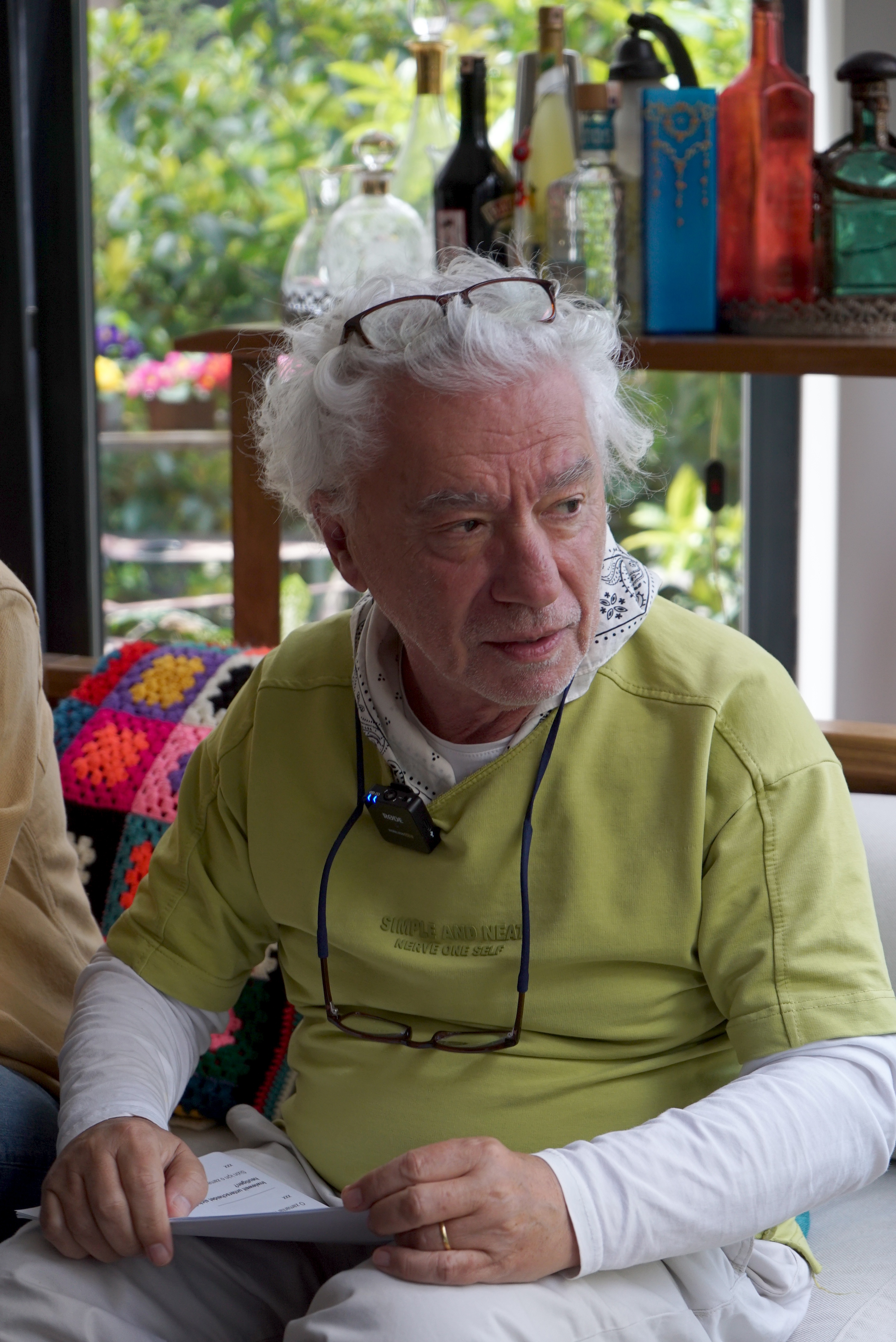
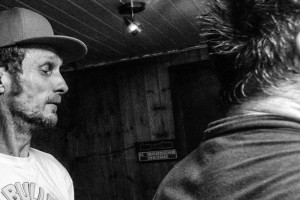
Ahmet Sinan Hatipoğlu (Photo: Sarah Szczesny)
The paths of music are mysterious, a meandering set of hidden passages, where chance encounters echo for years before revealing their meaning. Who could have anticipated that a cassette handed to us on an early autumn afternoon in 2024, across the counter of Deform Music, would quietly take root and, over time, claim a place among our most cherished records? The tape in question: “Musiki”, the debut—and, to this day, only—album by Ahmet Sinan Hatipoğlu.
Records like this tend to travel obliquely. They circulate beneath the surface, whispered from one listener to the next, accruing meaning in private before re-emerging, years or decades later, as something like a cult object. “Musiki”, released in 1993, is one such work. It gestures toward a vocabulary that did not yet exist, even as it quietly named it: “Anatolian New Age.” That it would find a second life decades later—discovered by a generation Hatipoğlu never intended to address—feels less like revival than continuation, as though the music had simply been waiting for the right ears.
But the story does not end with the record. Through one of those improbable chains of connection that seem to govern cultural life, Hatipoğlu’s daughter Zeynep Ayse Hatipoglu, a fully fledged musician in her ownright, turns out to know a friend of a friend. And so, after several more journeys to Istanbul, the abstract becomes tangible. We find ourselves in a living room in Kadıköy, on the Asian side of the city, on a spring day already leaning toward summer.
The meeting unfolds as a family scene. Hatipoğlu’s wife, Banu Hatipoğlu, serves tea and an array of delicate Turkish sweets, moving between host and documentarian, camera in hand. Their son steps in as translator, gently carrying questions across languages and returning answers with a quiet precision that shapes the rhythm of the conversation itself. What might have risked formality instead becomes something porous, almost intimate.
Hatipoğlu, who turned to architecture after stepping away from composing and recording, does not require much prompting. This comes as a surprise. One expects reticence, a certain distance—after all, more than three decades have passed since the release of “Musiki”, Instead, he speaks with an openness that feels less like recollection than continuation. His trajectory—architect, painter, musician—resists linear reading, yet a common thread runs through it: a search for form, for proportion, for a way to hold the ineffable in place. If there is a discipline that binds his work, it is—to my surprise—the mathematics of sound itself, an underlying order through which the unsayable briefly becomes audible.
Thank you for having us here. How long have you lived in this neighborhood?
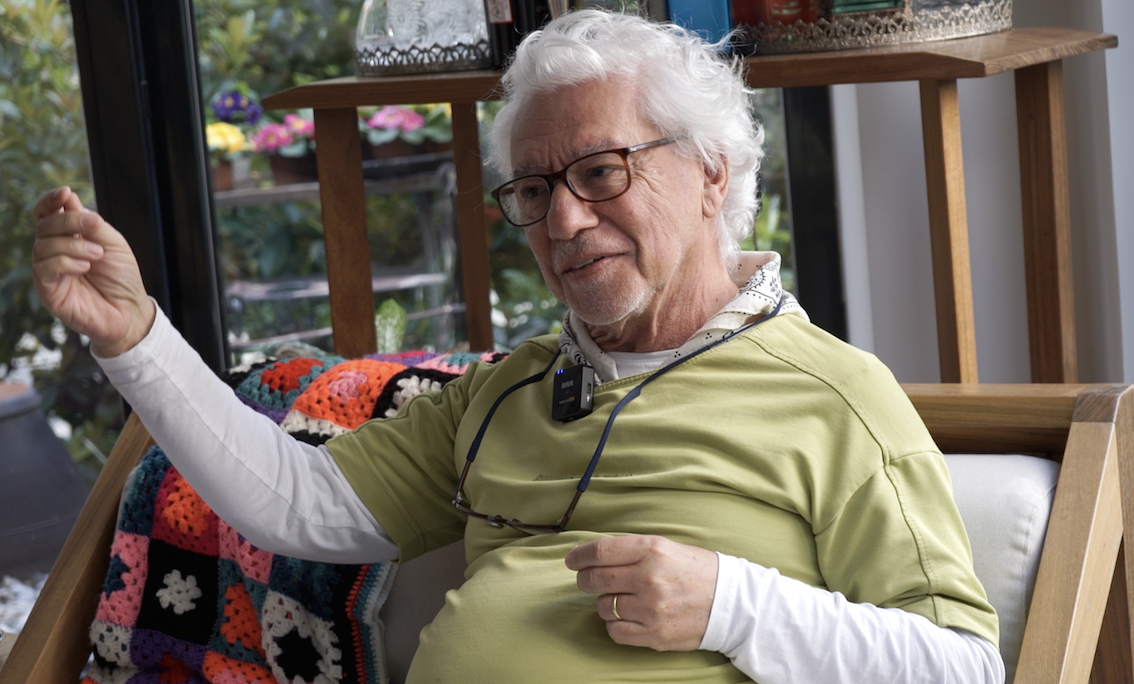
Ahmet Sinan Hatipoğlu (Photo: Sarah Szczesny)
Ahmet Sinan Hatipoğlu: I’ve lived in this area, in this part of Istanbul, for 35 years. Not in this exact building, but always here in Kadıköy. It’s an important place culturally. As children, we listened to music together here; we made music in the street. We were always surrounded by beauty. It was a freer, more affluent neighborhood. It used to be even more beautiful here—almost like Switzerland. It was really a summer retreat.
What were you looking for in music back then? And what are you looking for today?
Ahmet Sinan Hatipoğlu: Back then I listened to an insane amount of music, almost obsessively. There is a certain madness there, a crazy part in me. But at some point what I was hearing no longer satisfied me. Jethro Tull, Yes, the Beatles, Turkish music—I absorbed everything, but then I wanted to understand the voice within myself.
There are two people there: me and my self. One plays, sings, and creates, while the other listens. The two fight each other. Music was very unsettling for me, a great challenge. I threw away a lot of material because I didn’t like it. When I finished my album in 1993, I thought: “Okay, I’ve done it. I like it. It’s perfect. What comes next?”
That is a classic problem for many artists. What happened after that “perfect” moment?
Ahmet Sinan Hatipoğlu: I made a few more instrumental pieces, but my connection to music was lost for a while. I studied architecture and painting and tried to connect myself to those instead. I never wanted to perform or stand on a stage. Being a studio musician was enough for me. The stage is a show—that is a completely different thing. I did everything on my own. Back then there wasn’t much electronics yet; I was basically alone, there was no band.
Were you too much of a perfectionist to reproduce live what had come into being in the studio?
Ahmet Sinan Hatipoğlu: That’s possible. If you ask me today: I’ve forgotten all the things I did back then. I can’t even play them anymore. Demos are always better, because there is no “mathematics” in a demo, only feeling. You fall in love with the demo, and then you work on it. But if you make music professionally, you have to have an audience. You have to think about whether there is a market for it or whether it will sell. I didn’t care about that at all. My musician colleagues would say: “Let’s do this instead of that, it sells better.” But that was never the point. In the ’90s it was almost a joke: put a belly dancer in the video clip, do something like that, then it will sell. I once gave one of my songs to a well-known artist, but she ruined it. That still annoys me a little. It’s her song now, but she interpreted it in a completely different way from what I had imagined.
Did you stop writing for others—or altogether—after that?
Ahmet Sinan Hatipoğlu: I may have worked two or three times as a songwriter for other people. After that I completely stopped listening to music so I wouldn’t be influenced. I’m easily influenced by good music. When I used to listen to Jethro Tull or Yes, I would say to myself: “I can’t do anything. I’m terrible, I’m bad.” Only recently did I start listening to music again—heavy metal was the beginning of it. I told my daughter: “You should listen to Jethro Tull, Yes, Renaissance, Deep Purple, Led Zeppelin. Go and buy those records.” Now I listen again, but more like a normal listener, not the way I used to.
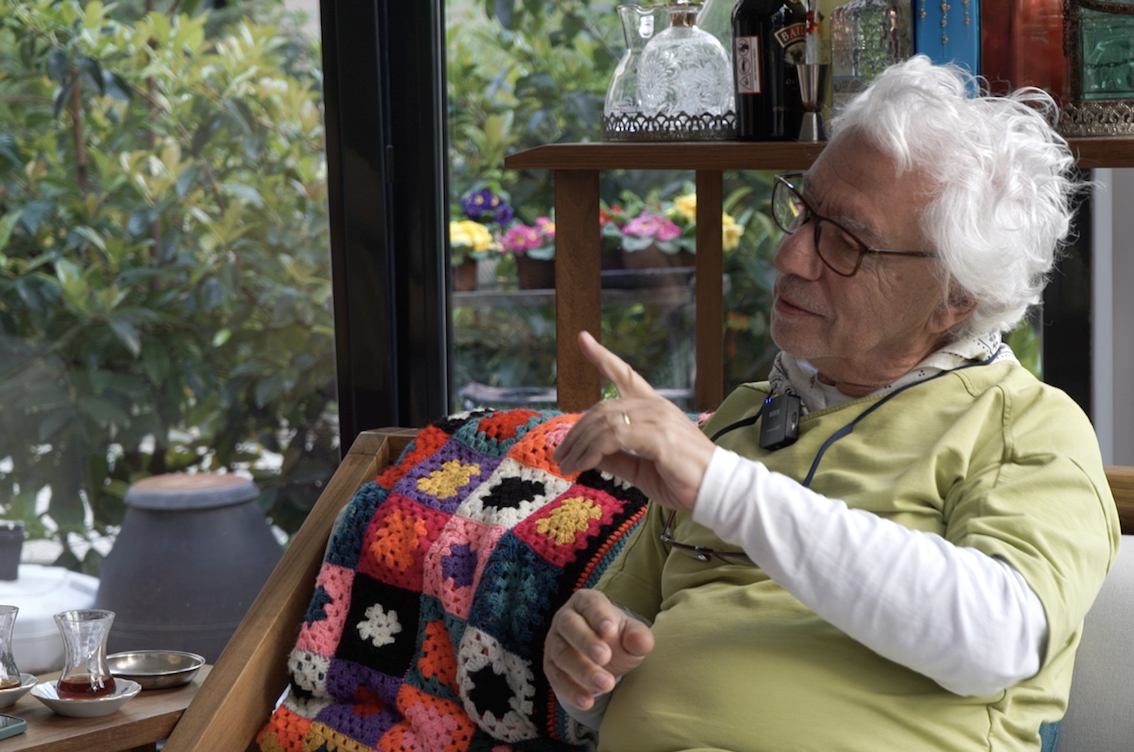
Ahmet Sinan Hatipoğlu (Photo: Sarah Szczesny)
When does the search for one’s own sound end?
Ahmet Sinan Hatipoğlu: You search, you test, you try to find something. But at some point it has to stop. Just do it. Create something. For me, research through improvisation is decisive. I don’t even know exactly whether what comes out of it is a “song.” It’s about falling in love with the demo before mathematics enters the picture. But at some point you have to bring mathematics into it. Then it becomes a matter of dosage—how much mathematics do you allow?
You said earlier that you never felt part of a community. But were there really no sessions with others?
Ahmet Sinan Hatipoğlu: No, I never felt part of a community. There were musician friends, of course. Everyone contributed something; we had jam sessions that never seemed to end. But I told you, I’m a little crazy. For two or three years I didn’t speak to anyone. I only played. When friends came over, everyone would pick up an instrument and we would play, but we wouldn’t speak.
(Hatipoğlu pauses, leaves the room for a moment; when he comes back, he seems almost humble.)
I’m not a good musician. I was deeply in love with music, but not so much anymore. I can’t really play guitar, for example. I’m not a virtuoso. I’m not that skillful with the instrument itself.
But you developed a very specific, unmistakably personal style. Where did those “tactics” come from, if not from pure mastery of the instrument?
Ahmet Sinan Hatipoğlu: I worked for that style. Where did I get those tactics? First I was a musician as a child. Then architecture came. At university you learn the fundamentals of design. You learn what beauty is and how it comes into being through design. Let’s not say “created,” let’s say “formed.” How beauty takes shape. You learn design principles such as continuity, rhythm, and dominance. In architecture there are concepts you have to know, such as contrast. I learned that at university and began to express it through music. What is dominance? What is continuity? Rhythm? Contrast? You can look at music as a visual scene—like a film. That exists in classical music; you can describe it as emptiness or as a mirror. All of those design elements also exist in music. That helped me a great deal. Being an architect helped me implement those principles in sound.
Why, then, did you ultimately choose architecture as your main profession?
Ahmet Sinan Hatipoğlu: Architecture is very difficult. You stay up drawing until morning. My devotion went to architecture because it is a very demanding profession. I am an architect and a musician, but I am more of an architect. If you want improvised music, I’ll play it for you. I trust myself completely there. I play very well, because I’m a megalomaniac. I don’t deny that. But it is difficult to explain the abstract. Language is important, but often insufficient.
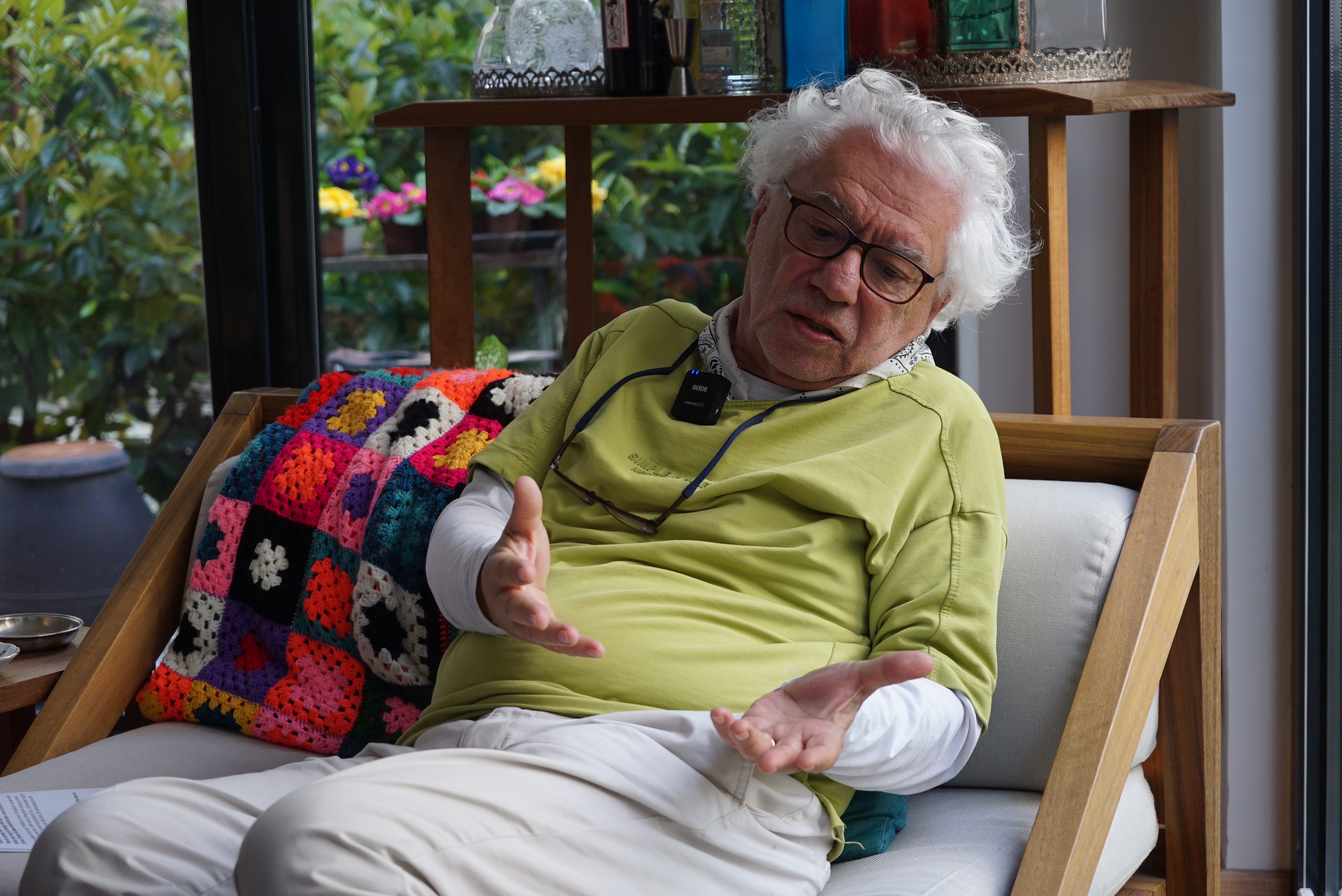
Ahmet Sinan Hatipoğlu (Photo: Sarah Szczesny)
Where language ends, does music begin?
Ahmet Sinan Hatipoğlu: Exactly. When something cannot be described, music helps express the feelings. Music helps me describe what words cannot.
Do you come from an artistic family? Was that encouraged?
Ahmet Sinan Hatipoğlu: Not at all. My father was an engineer, my mother a seamstress. They had no connection to art. But my mother bought me a guitar. She practically had to force it on me. And did she like my music? No. Not at all. And I liked that. That brings us to an interesting point: when I made the album, part of me, deep inside, naturally wanted to be liked. That is human. But actually what I liked best was the fact that not many people liked it at first.
Why was that rejection important to you?
Ahmet Sinan Hatipoğlu: It was a kind of reality check for me. It meant that I hadn’t simply made something trivial, something shallow. It wasn’t total rejection—I had a few fans—but the broader public, my mother for example, didn’t like it. She said: “Son, what are you doing?” She liked Tarkan. She preferred pop. I preferred that audience not like my music.
Are you surprised that in recent years your name has increasingly appeared as a “cult” figure, even though you gave people very little opportunity to hear you?
Ahmet Sinan Hatipoğlu: No. I know they will listen when I am dead. The fact that they are already listening now is simply how it is.
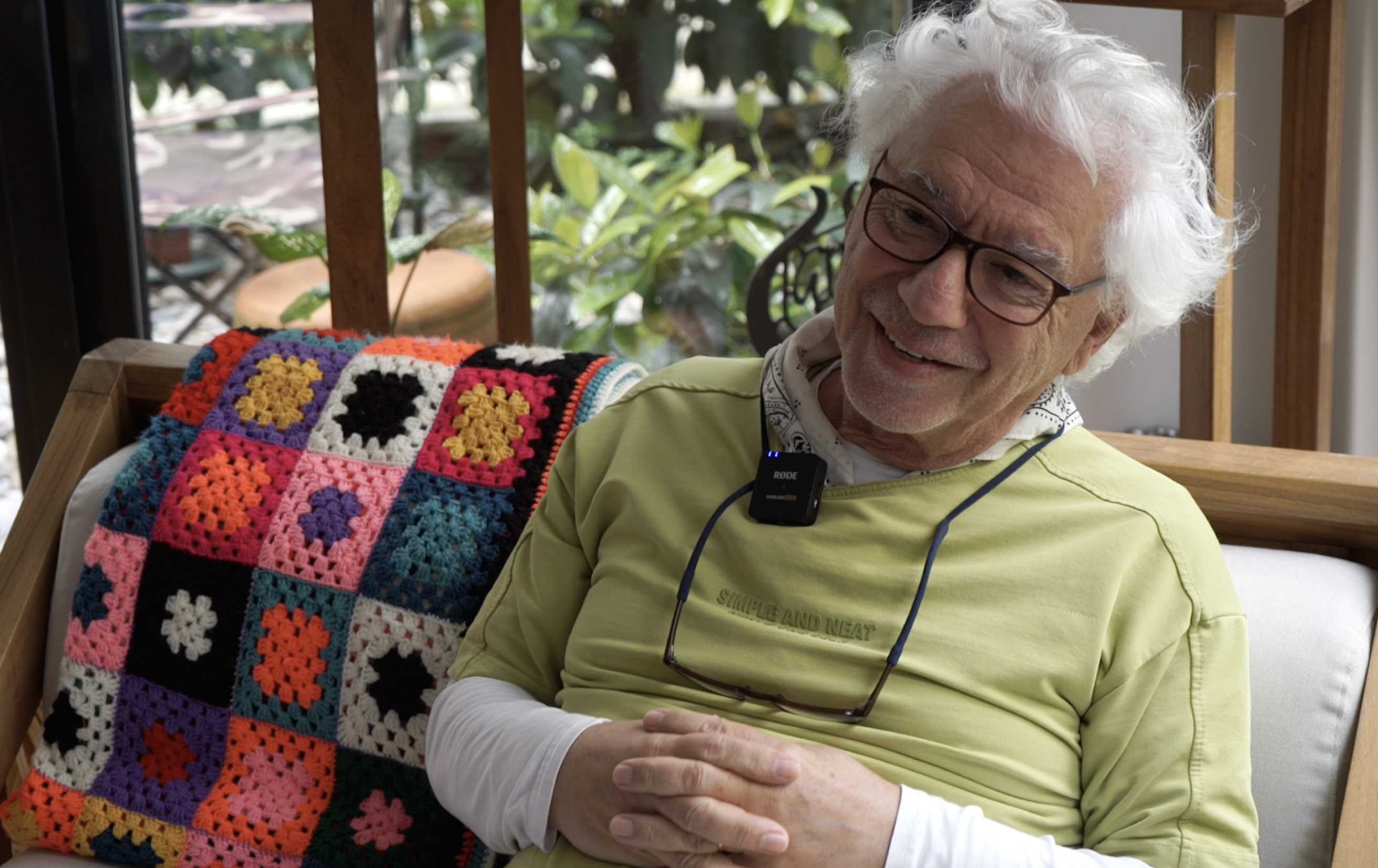
Ahmet Sinan Hatipoğlu (Photo: Sarah Szczesny)
You coined the term “Anatolian New Age.” In Germany, New Age was often used as a slur for esoteric, inconsequential music. How do you define the term for yourself?
Ahmet Sinan Hatipoğlu: I don’t care how other people define New Age for me. I don’t even know what they mean by it. For me, it is a movement that is one step further than the past—but only one step. You can create something “ahead” only if you have already absorbed the past into yourself. Some people told me: “Your music isn’t New Age.” But I call it Anatolian New Age. That part matters.
Did the sociopolitical climate in Turkey influence your music at the time? The 1990s were, after all, a period of upheaval.
Ahmet Sinan Hatipoğlu: Of course I wasn’t unconscious of what was happening sociologically. Today it interests me more, but back then I was focused on my own individual life. It is an inner matter of the individual. I see it as a personal journey. External influences were not directly involved in that process. I don’t have many friends either. As a child I was always ill, I had migraines. If you add all of that up, you get Ahmet Sinan Hatipoğlu.
You said earlier that your music is “intellectual” and rooted in knowledge. What do you mean by that, as opposed to a more intuitive approach?
Ahmet Sinan Hatipoğlu: I’m not like a bird in nature, unaware of culture. I listened to a great deal of music, I read. My music is fundamentally a cultural product. Maybe all music is, but I can only speak for myself. There is a difference between the listener and the creator. Being a listener is easier. That is why the listener often has a higher level of understanding, because the listener can travel further. Creating is hard. You struggle, you fail, and you are limited by what you are actually able to produce. But the listener can fly on the wings of imagination. If that were not so, how could musicians ever be appreciated? Of all the arts, music is the most difficult when it comes to making progress.
You mentioned Jethro Tull and British guitar music. Was the Western world a factor in your production, or was your music meant only for your world here in Istanbul?
Ahmet Sinan Hatipoğlu: During my childhood and youth in Turkey, radio stations broadcast a variety of genres, including Western music, classical music, Turkish art music, and world music; I was nourished by all of these.
I listened to Jethro Tull frequently in my adult years. Since that was the time I had just begun my architecture studies (1972), I was only a listener.
After completing my architecture education, I played improvised music at house gatherings with musician friends. We barely spoke at those gatherings. We played like crazy. I had stopped listening to music to avoid being influenced. I found what I was looking for. My competition was with myself… and I won.
What must a sound have in order to catch your ear?
Ahmet Sinan Hatipoğlu: That changes. There is a difference between then and now. I have grown older; I am an “old” musician. Youth is a beautiful thing—the excitement and the love are greater then. Music contains such an intense agitation—it can almost kill you! That is one of the reasons I left music. I became so excited that I felt I had to die. A young man can withstand that; an old man maybe cannot. That is why painting may be better now. It is slower and not so ambitious.
Is painting, for you, a substitute for what you found in music?
Ahmet Sinan Hatipoğlu: In painting I have not yet found what I found in music. I still cannot let music go. In music I found it and felt: “Okay, that is enough for me.” But painting is not perfect yet.
(He gets up and brings out a painting)
You see? Not bad. But still not enough. It will come if I keep working at it. I still love improvisation. If we were to sit down now and improvise, I could capture a little of that feeling from my youth. But in the past I could play eight or ten hours a day, day after day, for a month. Now I can only last half an hour. I no longer have the “fuel.” I get too worked up. God invented the two-and-a-half-minute radio song so musicians would not have to take such risks.
Despite the focus on phonetics, your lyrics feel very personal. In one lyric you say: “Turn off the light… we will hear the ferries.” That is a very powerful image for Istanbul.
Ahmet Sinan Hatipoğlu: This poem was written by the famous Turkish poet Attilâ İlhan. I was so impressed by it that I composed a song based on it. The melody is quite simple, and I tried to keep it understated so as not to overshadow the lyrics. The lyrics themselves were musical enough. The other lyrics I composed for the album were written by Şehrazat, Emel Güntaş (Leyla Tuna), and Hikmet Onay.
Your daughter Zeynep Ayse Hatipoglu is a musician as well. How did you react when she chose that path?
Ahmet Sinan Hatipoğlu: This was the only path for her. She passed the conservatoire entrance music proficiency exams. Composing is easy for her. She also pursued an academic career. These days, she’s developed her own distinctive style. She’s creating work that’s worth listening to.
It took years to record your album, while other people make something like that in ten minutes. Why did you choose this laborious DIY route in your home studio instead of bringing in professionals?
Ahmet Sinan Hatipoğlu: There are other musicians playing on it; ney played by Bülent Özbek in the songs ‘Kara Toprak’, ‘Derviş’ and ‘Anatolian New Age’, the violin played by Aydın Varol in ‘Aşkı Tutmalıyım’ and ‘Anatolian New Age’ and electric guitar performanced by Haluk Özden in ‘Uzak’. But this is an important point: only I can create my specific sound. I cannot explain it to anyone else. I cannot explain how my songs are supposed to be played. I cannot convey to another person how to play my feelings. And not everyone can sing my songs. Why did I sing them? I have a bad voice—a very bad one, really. But nobody else can sing them. The use of the Turkish language is decisive here. My work has a Western touch, and sometimes people try to sing Turkish in a Western way, which I think is wrong. You must not sing with an English accent.
You once mentioned that during the recordings you were in contact with
Sufism. How did that influence your music?
Ahmet Sinan Hatipoğlu: Yes, during that time I went to the tekke, the dervish lodge. What attracted me was the musicality. There were around 300 people in a small place, all of them sitting there. The Şeyh (sheikh) made rhythmic chants, clapped, and called out: “Hay Allah.” It was a musical, theatrical beauty. There was so much respect; no one shouted. Three hundred people doing that together—that impressed me deeply. I swam in those waters for a while, but I did not become a dervish. In the end, that too is a kind of box, and I would rather not be in any box.
In an old interview you once spoke about wanting to make things “kaput.”
That naturally piqued my interest. Do you remember what you meant by that?
Ahmet Sinan Hatipoğlu: I don’t remember the quote, but I can speak about “destroying.” I do that. I break what I have created. It is a technique—perhaps one I found myself—for catching something new, something different. I sacrifice the work for it. It is like a person who can be stingy or not. In art it is the same. There is something in you that you want to bring out, but you are afraid to let it go, because if you do, you have to confront it. That is stinginess. I am not stingy with my work. But I break it open.
Are there any plans to bring old, unreleased material out of the archive?
Ahmet Sinan Hatipoğlu: What material? The things I set aside? I’ve forgotten them. I don’t want the old stuff; I want something new. I daon’t even see my old friends very often anymore; I want new things. It is a condition—I am old, but I want the new. That is the hard path. It is not that I am actively looking for new friends, but the music world is jealous. If you are a little different, you get pushed aside. That is why I didn’t have much to do with them.
What is your most beautiful memory of music?
Ahmet Sinan Hatipoğlu: There isn’t one single memory. When we improvised, there were moments when we ‘took off’, but I can’t remember them specifically now. It is a collective memory. But maybe another one is ‘Thick as a Brick’ by Jethro Tull. I listened to it so many times that I can’t count them. I didn’t analyse it technically. I simply wanted to enjoy the experience of listening to it. Luckily, it’s a long song. While listening to it, I lost my head a little — only a little, nothing serious. Now, if we sat down to make music, we might struggle for an hour to achieve that ‘high’ and maybe for two minutes. But anyway, I want something new in my music. I want to take the harder path.
After we have already, in a sense, stolen two hours of Ahmet Sinan Hatipoğlu’s time—and that of his family—we begin to gesture toward departure. But leaving, here, is not a simple act. Hospitality in Turkey is a way of extending time itself–and the Hatipoğlu household knows to host particular well.
Glasses are filled—sparkling wine, then wine; Food is ordered, arriving in a steady rhythm that mirrors the conversation, a long, shared drift through subjects that feel both immediate and impossibly large: the transformations of Istanbul over the past decades; the architectural dissonance pressing in just beyond their front door, where hurried developments have overwritten what was once a quieter, almost idyllic neighborhood of summer apartments; Germany, where their son is about to relocate for work, where their daughter already lives; and, inevitably, politics—inescapable anywhere, but particularly here, where its presence is as ambient as the city itself.
Time stretches. Had there not been the obligation of a long return journey across the Bosporus to Tarabya, where we are expected elsewhere, the evening might have continued indefinitely, folding into night without resistance.
And then, at the threshold, another heart warming gesture. Banu Hatipoğlu insists on gifting us one of her paintings—one that had quietly held our attention throughout the afternoon. We hesitate, of course. But hesitation has little place here; refusal is not an option.
Back in our apartment in Cologne, it is no longer only “Musiki” that accompanies us. On the wall now hangs Banu Hatipoğlu’s vividly psychedelic work, its colors extending the resonance of the music into our daily life. But more changed, Musiki” no creates a magic Kadıköy cloud on the room.
What could be more beautiful than the way music draws you into the lives of others—connecting you with people from different cultural spheres.
Şu andan itibaren kalbimin bir parçası hep İstanbul olacak.