

“So music is the problem? – “I wanted to create the opposite of a relaxing space: something hectic and stressful”
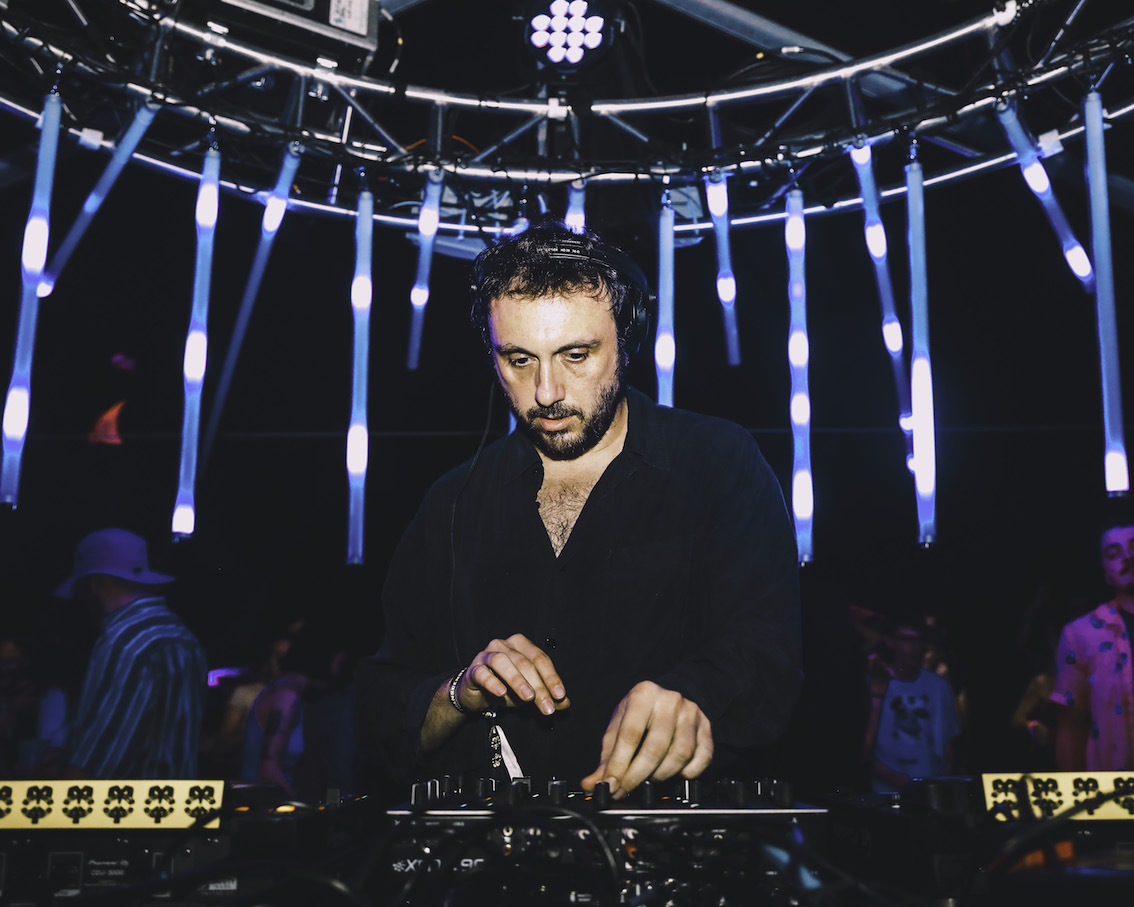
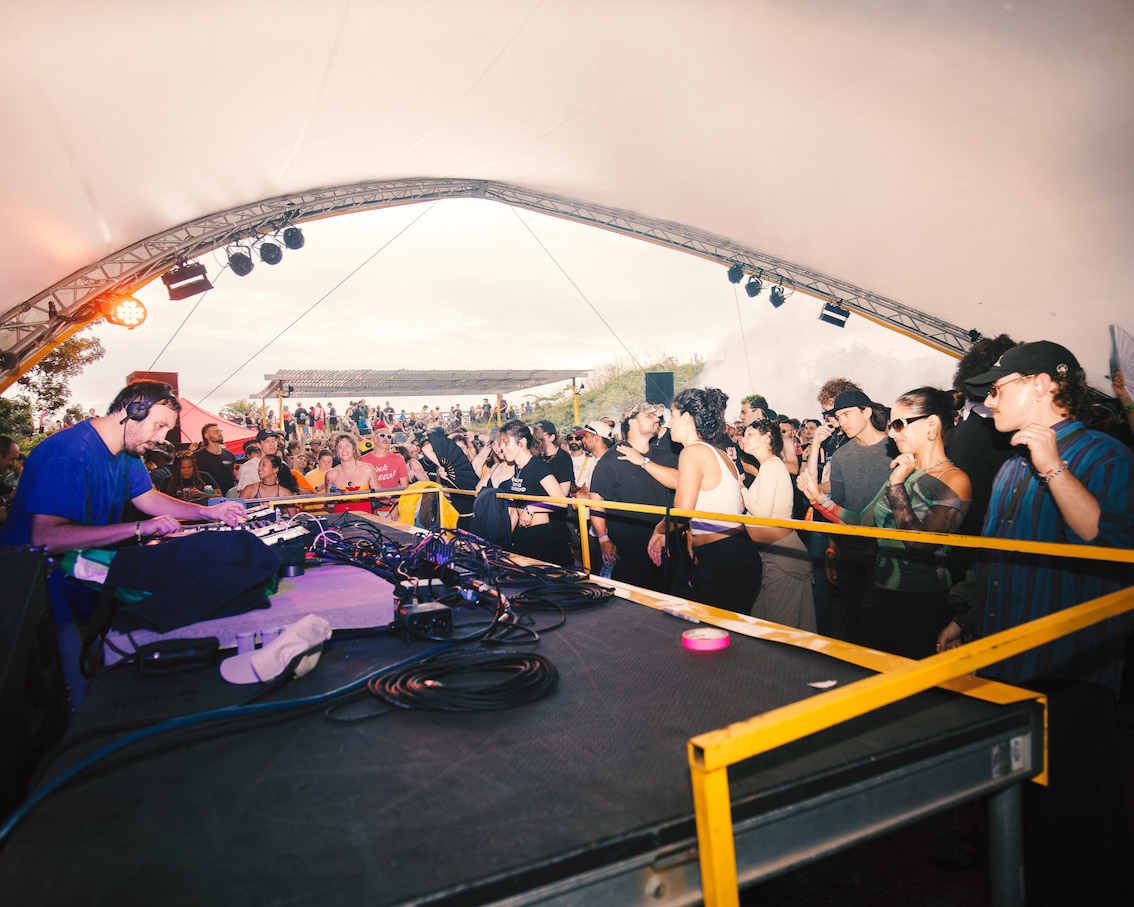
John Talabot at Makine Time (Photo: Uv Lucas)
Four years after the pandemic brought club life to an abrupt standstill, Oriol Riverola, better known to the world of electronic music as John Talabot, returns with “Music for Empty Stadiums”, a 95-minute time capsule released on AD 93 under his new imprint, OR. A deeply personal document of a period marked by anxiety for sure not just for him, emotional disorientation and creative uncertainty, the record moves through synthetic polyphony and heartfelt introspection, reminding us that music might just be one of the few things capable of carrying us through collective trauma without turning us to emotional zombies.
OR takes its name from Riverola’s initials, meaning in Catalan nothing less than gold – a quite fitting name for the result of such a long process of digging deep in his inner world.
Thomas Venker sat down with the Barcelona-based producer and DJ to talk about creative exhaustion, corporate techno, the strange afterlife of the pandemic — and losing a hard drive in Japan.
All pictures by Uv Lucas, conducted mostly for Making Time, Philly.
Ori, I was just looking at the artwork for “Music for Empty Stadiums” before you called: the rocket blasting off into that almost impossibly beautiful, colour-saturated sky; the images inside the sleeve introducing us to another, a new version of you. There’s something wonderfully contradictory about it — a golden-boy portrait wrapped in an image of escape, departure, maybe into a better future, then again: maybde into the apocalypse.
First of all, congratulations on finally bringing this record into the world. It feels like an album that had to travel quite a distance before finding its way out. It fits to say it was a difficult process, right?
Oriol Riverola: Yeah, I was trying to represent a bit of this idea of escapism that I wanted to achieve. (laughs) And I thought maybe this kind of angel leaving the earth as a rocket would give that impression.
It made me think of that public talk we did at Gewölbe Club in Cologne (together with Daniel Ansorge aka Barnt), before both of you also played like a set to a seated audience; this was while the pandemic was still going on, October 2022. It didn’t feel that golden and escapist at that time, did it?
Oriol Riverola: No, no, no. Especially during the first months, when I couldn’t understand really well what was going on, our life changed 180 degrees from traveling constantly to being completely unable to do anything related to music. At that moment, it was unclear to me what we were facing. So I think I used this kind of music and this project to get rid of that anxiety—doing maybe the most stressful music I could, just to kill the other anxiety, you know? (laughs)
I don’t know, I feel like that could be an answer, because otherwise it doesn’t make too much sense that I recorded that much music in just two months.
What are the exact dates of the first and last tracks that made it onto the record? When was that time window?
Oriol Riverola: Wait—the pandemic was 2021, like March?
Spring of 2020!
Oriol Riverola: Was it 2020? Yeah, it was that—like April, May, June 2020, probably. Those were the three months when I just did everything. And I left these six renders done in a folder, but there were around 70 projects of ideas and stuff.
I ordered the tracks chronologically: the first track is the first one I made, and the last is among the last. As said: There were around 70 projects in that folder, from developed ideas to sketches of arpeggios and polyrhythms. You can hear the anxiety building across the record. During those first months, I’d wake up thinking it had all been a nightmare, that there was no COVID. My mind was trying to escape the paranoia that we’d end up living in bunkers and never get our lives back. At the same time, we kept telling ourselves that by the following summer everything would be normal again. It wasn’t.
We all needed something to hold on to, right?
Oriol Riverola: Yeah, totally. And especially when I make music where I need all these interactions and need to see the results, for me, making club music was impossible. I couldn’t. Actually, I haven’t been able to do much club music since the pandemic, to be honest.
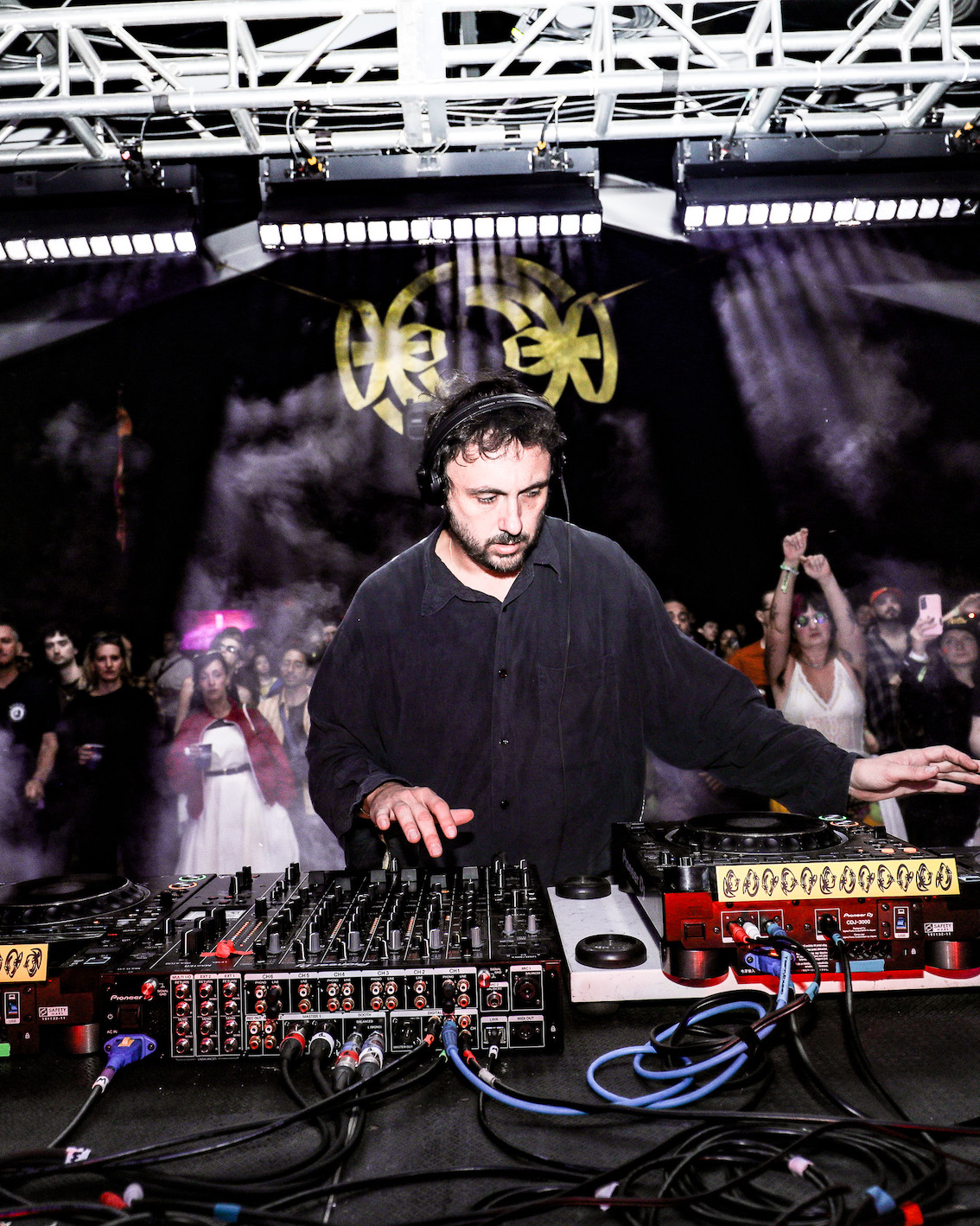
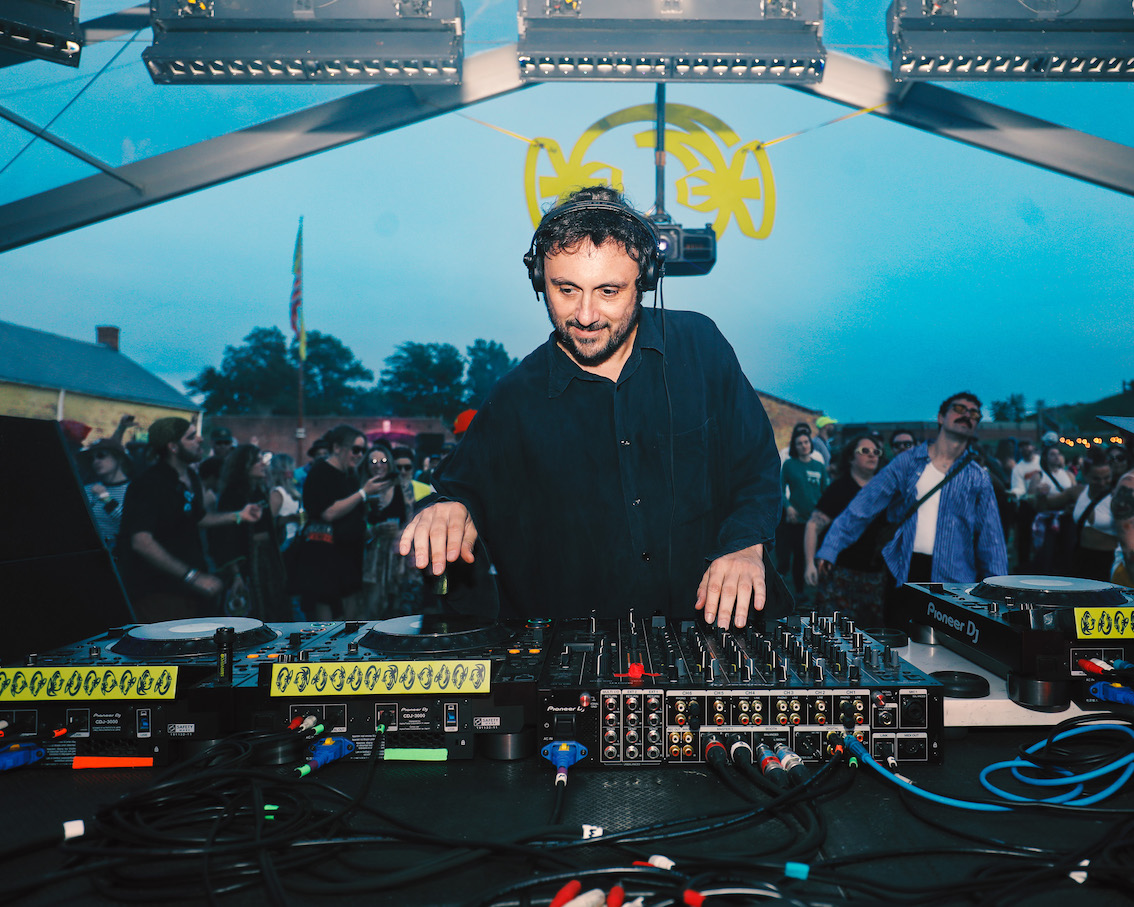
John Talabot at Makine Time (Photo: Uv Lucas)
And how does that relate to being in the club all the time now and playing club music and seeing people dance again? Did it really become two separate worlds for you?
Oriol Riverola: Yeah, in a way. I mean it: I’ve been unable to make much club music since the pandemic. I also realized I’m good at building long narratives, at creating a framework for a larger project. With an EP, I can’t find that same narrative; the tracks often feel like sketches or a compilation rather than a body of work with a clear idea behind it.
Do you think it also has something to do with the specific texture of the music? Because obviously, club music is telling different stories and transporting different emotionalities than ambient music—or in this case maybe sonic ambient, because it’s still very experimental, and there is mos def a certain crunchiness and deepness in those sounds. But the emotionality is definitely different, right?
Oriol Riverola: Maybe I’ve grown up and need to challenge myself in riskier ways. Or perhaps I feel the need to leave bodies of work behind—something solid that people can understand and return to. EPs can be more volatile, tied to a particular club trend or moment. Albums give you room to create something people might follow for 10 or 20 years.
Maybe it’s different for a younger generation who is using streaming in another way than we do, but we are definitely hanging on to an album format. For me, when I go back to artists, I always look at the albums. That’s a reflex I have in mind, even though I know that in dance music there are a lot of people who have manifested singles and tracks, and that’s it.
Oriol Riverola: Yeah, and I’m a fan of the people who left amazing 12-inches behind in a career. I love that. I’m completely attached to that idea. It’s just that I can’t make it work with me. (laughs) I don’t know why. It’s like I wish I could have 20 EPs and you could follow them and see an evolution, but it’s not happening. I need to attach myself to a bigger project to make it work as a narrative, as something that I can express. An EP feels too spontaneous—which is not bad, but I feel like I don’t have the length and the format to explain too many things.

That’s not surprising at all. As a writer, I know that very well, and also as an editor working with my writers at the magazine. There are writers who are brilliant at short reviews, there are writers who are really good at one-page articles, and there are writers who are really good with the long formats—and often they can’t handle the other one. I, for example, am really bad at writing really short stories that are right on point—don’t give that to me! (laughs) I like the long talks, the long interviews, the long narratives.
Oriol Riverola: Yeah, me too. But you also realize that we are going against the popular things. I feel like no one has 95 minutes to enjoy my album nowadays. No one.
The bad thing is that people actually have the time—they just don’t take the time for themselves and such things as deep listening and deep reading, because they are hush-hush there, hush-hush here, even when they are just hanging around at home.
Oriol Riverola: Yeah, and I wanted to try to bring people back to that, to the album format.
How does it feel to release it now as “Music for Empty Stadiums”? When somebody hears that title today, their first thought might not be looking back at the pandemic. People might think, “Oh, this is an interesting concept—what is it, sounds for a stadium where nobody comes?” But you are obviously referring to something very specific. Why did you choose the title, and how does it feel to come out with it four years later, when most people are trying to avoid thinking of the pandemic?
Oriol Riverola: I was thinking about how absurd that period was. I went to Italy to play at an event with the Club to Club people. It was the last time I saw Sergio Ricciardone, who sadly passed away in 2025. We were on a beach where vaccinated people had to sit 20 metres apart. The police stopped me playing ambient music because some people had started dancing. Through Sergio, I asked them whether they would have told people to sit down if there had been no music. They said no. I thought: so music is the problem? (laughs) Something we associate with euphoria and being together had suddenly become almost criminal.
And I started thinking about what club music means when there are no clubs, or what mainstream music means when there can be no concerts. What if music were no longer tied to a physical space, and you had to experience it alone? I recommend listening to this album on speakers or headphones, because I designed it for that situation: being on your own while feeling as if you’re in the middle of a stadium, without the collective experience. The stadiums were empty; they filled them with plants, or held concerts for cameras and livestreams. We were literally making music for empty stadiums.
So I always recommend listening to this album on speakers or on headphones, because that’s how I designed it. I designed it for you to be on your own, having the impression that you are in the middle of a stadium—but without that collective action. And actually, the stadiums were empty; they filled them with plants, they filled them with everything. They did concerts for empty stadiums. We did concerts for empty stadiums. We did those kinds of shows with the recordings and streamings, but in the end, it was empty stadiums.
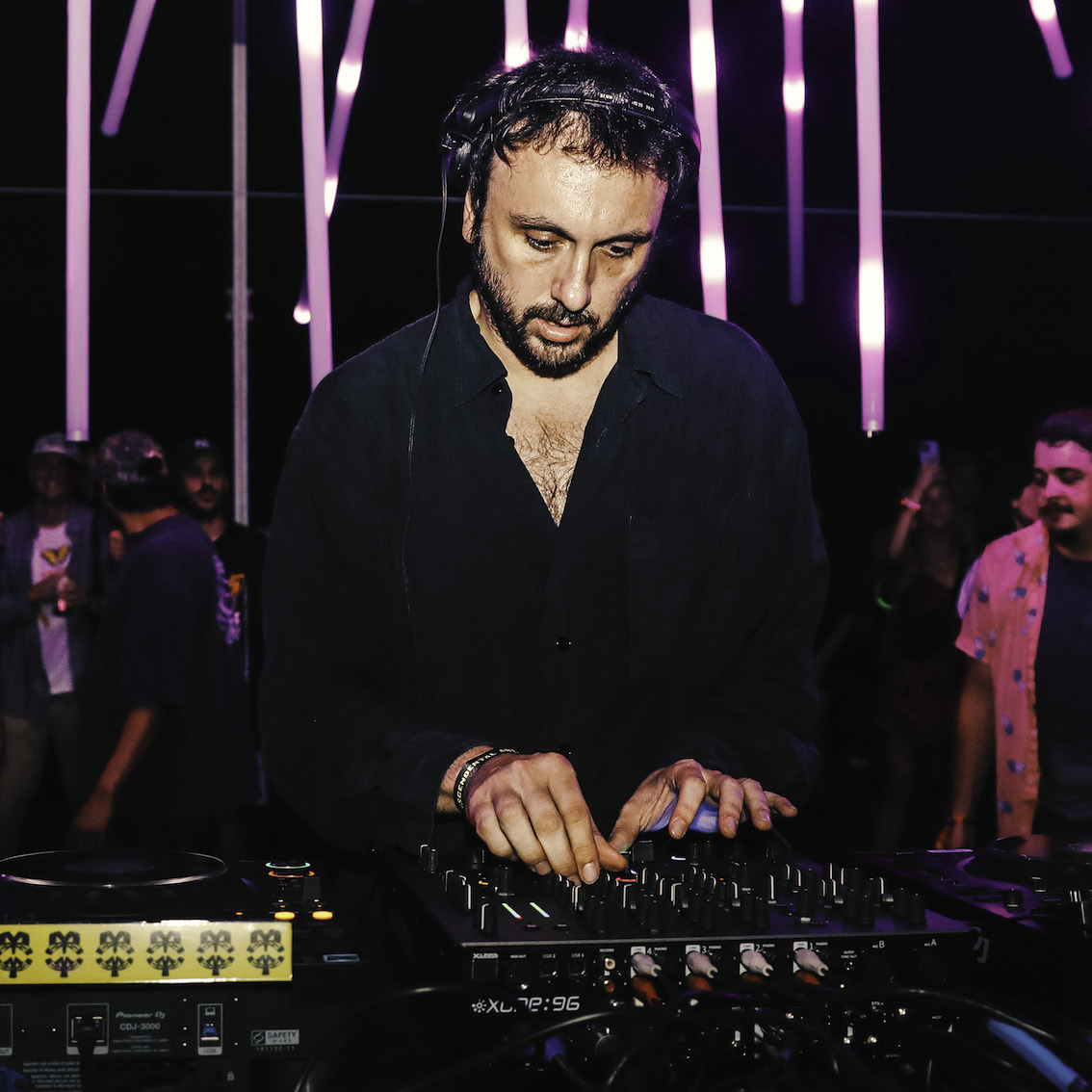
John Talabot at Makine Time (Photo: Uv Lucas)
I remember those pictures very well. They were frightening pictures, really weird pictures. And there was also the anxiety of being in a room with 10 people who were the recording crew of something, where it felt like, “What are we doing? Are we simulating the moon landing without the moon and the dust, or what?” (laughs)
Oriol Riverola: You also start thinking about how our activities are related to the buildings that we build and construct. And in a pandemic, a stadium doesn’t make any fucking sense. (laughs) Like, no. They even canceled the Olympic Games, imagine, and moved them to the next year. I was seeing all these ideas, and the name of the album actually came really fast as soon as I finished those six renders, because that’s the music I felt it was designed for: for an empty stadium, for something that was kind of massive in a pandemic context.
I’m curious to talk about the specific sound of the album and what you were looking for. In a lot of the music you play and in the music from your other projects before, melody, rhythm, and feeling are central. This time, with the ambient approach, you go into very different patterns and textures of sound. Where did the journey take you here in contrast to your other projects?
Oriol Riverola: What I liked about this project was being able to shape the sound and the ideas exactly as I wanted. I worked with sequencers and randomization, recording polyrhythms that were difficult to combine. Much of the album consists of monophonic sequences that, when layered, create something like polyphony. I imagined a synthetic orchestra of soloists: individual instruments that cannot play chords, but together form them.
The tracks are built from melodies entering and leaving. “Where’s the Melody?” is almost an exercise: how many melodies can I introduce? Each time the track starts again, another one appears, until there are six or seven. Elsewhere, a single arpeggio or sequence gradually comes in, answered by another line. I like this almost symphonic way of thinking, with elements appearing and disappearing like instruments in a conversation. You never quite know where the track will go.
There is so much going on, because in a way it’s ambient music, but not ambient in the sense of a slow pulse where everything is floating. It’s ambient in the sense of a trippy environment that really catches you, where it feels as if you are zooming into a biotope under the microscope.
Oriol Riverola: That idea also came from the pandemic, when we were asked to play summer events without kick drums, almost exclusively ambient music. I wondered what the most extreme form of ambient could be if that became our reality for the next 10 or 20 years. When does ambient stop being ambient and become something else? I wanted to create the opposite of a relaxing space: something hectic and stressful, an overwhelming number of notes. One track probably has more notes than anything I’ve written before. (laughs)
To me, it’s also a sound bridge to the early ’90s, to early Warp stuff and all those bleeps—that era when you had the feeling that people didn’t understand ambient or soundscapes as something that had to be camlming, but as a chance to create a whole sound environment.
Oriol Riverola: I recently read that Aphex Twin made “Selected Ambient Works Volume II” while depriving himself of sleep. He became unsure whether he was making the music while awake or dreaming it. You can hear that in the melodies: they seem to exist between the real and unreal, sometimes almost out of tune, but in a beautiful, mellow way.
I thought the pandemic was the worst moment of my life, but it pushed me towards something I might not otherwise have attempted. I was almost manically using music to escape being trapped at home, and that led me to a project far removed from my previous sound. It may not have been futuristic or particularly relevant, but it gave me a concept and a way through that period.
I’m glad the idea found me—or that I found it. As artists, we should give these apparently contradictory side projects time and care. You might lose yourself in something that fails, or discover the beginnings of something much better. Exploration matters; if you focus only on becoming important within one scene or on making work you can monetize, you lose that curiosity.
You used the word “side project.” Do you really feel this record is a side project?
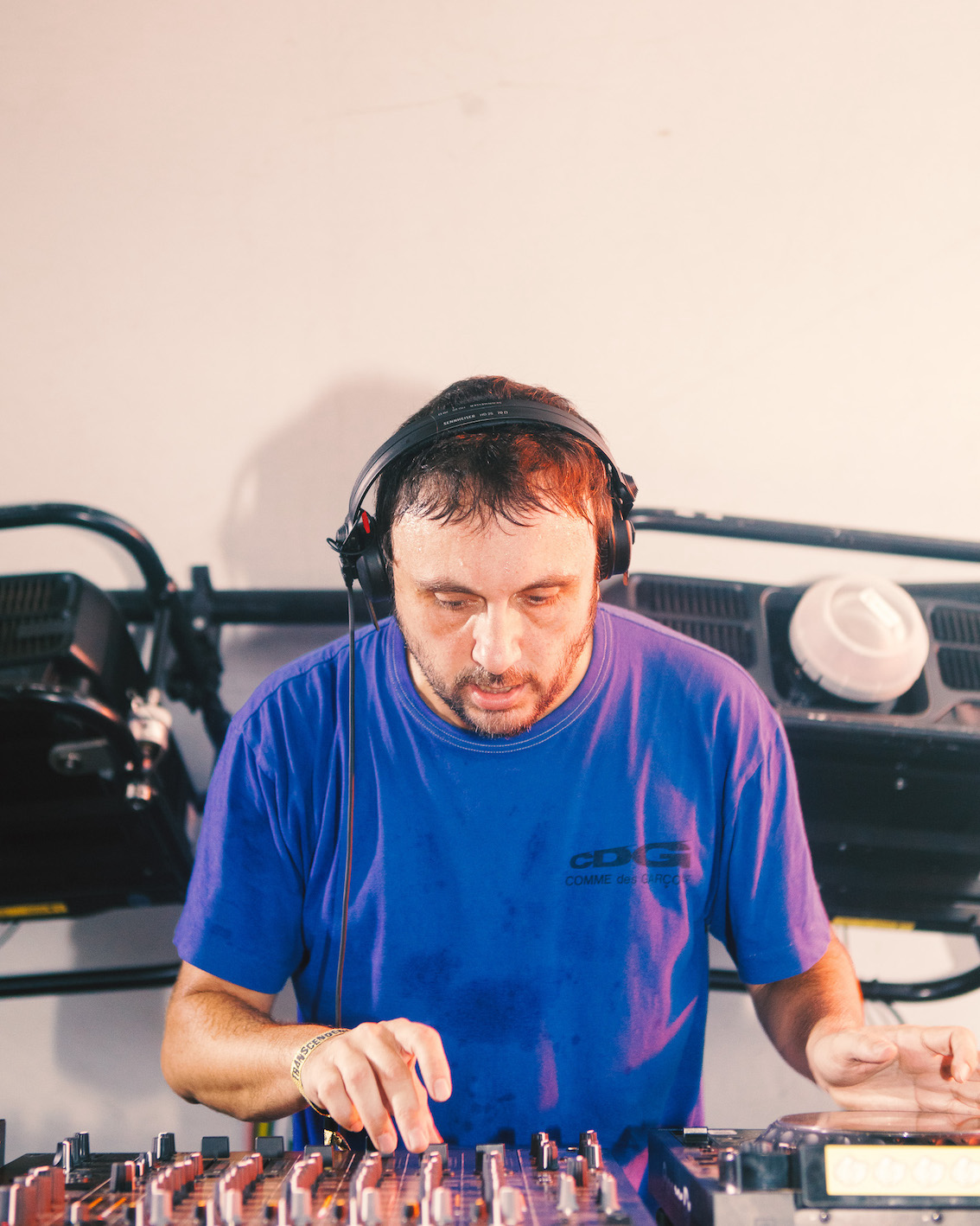 Oriol Riverola: I absolutely saw it as a side project, because it belonged to one very specific moment in my life. For the first time, my lifestyle, my income and my sense of the future felt genuinely vulnerable. I’d never experienced that before. People kept telling me to reinvent myself, but how do you do that in two months? I had spent years, money and energy becoming good at what I do. I didn’t even know what I was supposed to reinvent myself into, or whether I wanted to.
It took me years to understand who I was and to feel confident calling myself something. It took more than 15 years before I could tell people I was an artist. When I first started travelling and playing, I wouldn’t even say I was a DJ. If a taxi driver asked what I did, I’d say I worked in music and events. (laughs)
It took me a long time to decide what I was, and it took me a lot of years to understand that. It took a lot of years to say I was a DJ. It took me maybe more than 15 years to tell people that I was an artist. So for me, it was a process to discover myself and to be confident enough to call myself something. When I started traveling the world and playing, I never said I was a DJ. Actually, if a taxi driver asked me, I would just say I was working with music and events, because I didn’t want to tell them I was a DJ. (laughs) I don’t know why.
Was there a specific moment when you realized you had said it for the first time, or did you just notice at one point, “Okay, now I’m saying it, something must have changed”?
Oriol Riverola: I think after the pandemic, I was convinced of what I was, because I missed it so much that I said, “If I miss it so much, it means that I am this.” If I miss people so much, if I miss going out so much, if I miss playing out so much, if I miss seeing friends and being part of events and creating stuff related to what I see and where I go so much—if I miss this thing that much, it means that this is me. If not, I wouldn’t miss it that much.
At the Making Time in Philadelphia in September you played a John Talabot classic set, and you also played a disco set. Was it weird for you to play all of that while having this album in the final meters before release?
Oriol Riverola: I see these projects as separate, so they don’t compete with one another. I keep them in different compartments: I can perform as one character, then another, and release an album under a different alias. I know what role each one plays. I like having this multifaceted personality; I’m interested in many things, not only music, and I want to explore the possibilities of making art.
You’ve said this sentence about the record: “This is not a new John Talabot album, but it’s a new album from John Talabot.” Do you feel like people automatically understand what the John Talabot part in it is, given their expectations? And are those different parts of you communicating with each other?
Oriol Riverola: People don’t automatically understand it, but I think they’re beginning to see that me as a DJ is one thing, while me as an artist includes all these other projects: Koraal, OR, Talaboman and the John Talabot album. Together, they make a more complete picture. There are still gaps I’d like to fill, projects I want to pursue but don’t yet have the skills or clarity for. Sometimes I need another year or three before I can say, “Now I see it. This is the direction.”
And yes, the projects communicate. I’ve been trying to finish another Koraal album, and I realized that some of the tracks I made for its live show were closely connected to the OR material I performed at Sónar. They inspire one another, even when they seem to belong to different worlds.
Life is about being curious and up for the experiment, following unknown paths—because often the unknown path becomes the main path. We talked about earlier today about the legacy of artists – who is able to tell what your sound actually is when you still have 30 or more years of producing music ahead of you? That said: do you feel you have enough people around you who engage with that openness for your artistic journey, or do you still have to fight for your right to be that kind of artist that you wanna be?
John Talabot: These side projects can almost penalize you as an artist. People want to put you in one box and know exactly what you play onstage. If you release different projects with different sounds, the audience can get lost: “He used to do this, now he’s doing that—does he even have a personality?” I’ve heard that many times. It’s an obtuse way of looking at art, but those people may also be the ones buying tickets. They’re more interested in knowing where to place you than in seeing how you might develop.
I’ve spent years trying to build a career as a DJ and musician while encouraging people to stay open to the different projects. Some will prefer this new album to Koraal, others feel the opposite; and some are definitely waiting for a new John Talabot album, although I don’t even know what that would sound like. (laughs) And some people just want another album like “ƒIN” which is fine to me.
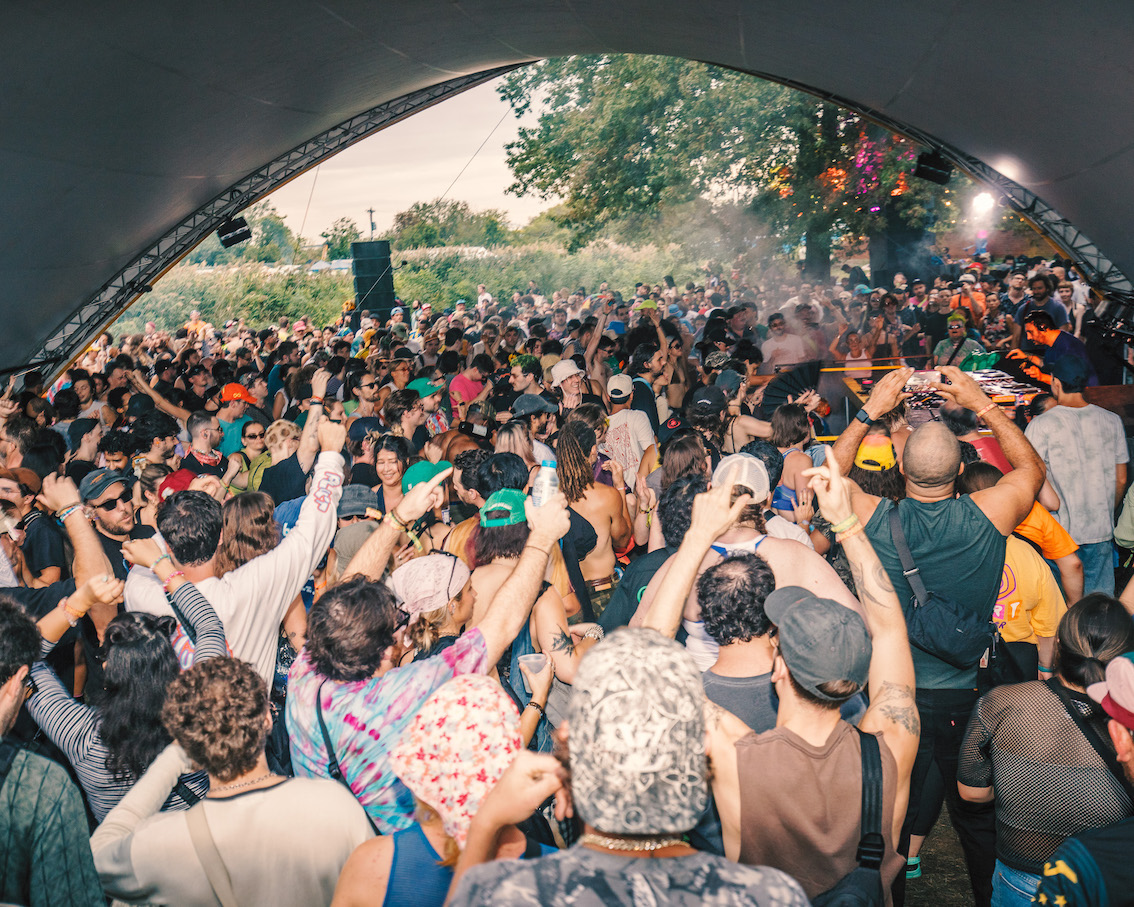
Would you say that, looking back, “Music for empty stadiums” is also a soundtrack of hope and optimism for you, because you found a way out of that era?
Oriol Riverola: For me, it’s preparing people, you know? Since I don’t know how the new John Talabot album is going to be, I’m just preparing people for the most extreme thing right now, just in case—that maybe the John Talabot album can go down unexpected paths. (laughs)
And as for this record, it was not done in an optimistic moment, for sure, but it definitely helped me to get through it, because I had a purpose. Even if it was a really small purpose, when Nic Tasker (AD 93) proposed doing the album after a few months while the pandemic was still on, I thought, “Hey, look, maybe that’s the purpose, and maybe I had to go through this to create this. Maybe out of the pandemic, I can take away that I can build a project like this and make it work.”
Looking at what happened with electronic music after the pandemic, there is a strange twist to your album title: electronic music actually became, more than ever, music for stadiums. There is a real break between the aesthetics and club culture we were socialized with and the post-pandemic one, which often feels built for stadiums. Whats your turn on that?
Oriol Riverola: A lot of people discovered techno through social media. They hadn’t experienced a rave, club or festival before the pandemic, so they formed an idea of club culture online. Rather than going out and exploring, they adopted a single aesthetic—very European, quite distant from techno’s roots, and often corporate.
Club culture was filtered through brands and online events designed for marketing. People were targeted with the idea that buying certain clothes or products made them part of the scene. It felt more like a marketing plan than a cultural one: superficial, and disconnected from the roots of techno.
But I’m not judging younger people. I’m glad they found electronic music, even if social media was their entry point. If ten percent become curious enough to learn more, that’s already valuable. They might discover other histories and visions of the music. I started out going to hard techno nights too, and then my interests evolved.
I was reflecting about this after Juan Atkins, and Jeff Mills’s long statement about protecting his legacy and remembering where techno came from. You don’t want to lecture a new generation, but you hope some people will dig deeper. It’s striking that European media have increasingly acknowledged the African-American innovators behind techno, while the US mainstream press barely seems to notice.
Oriol Riverola: We have to trust that curiosity and encourage people to go deeper. It’s strange that someone who helped invent a genre that has become a multimillion-dollar business barely appears in the news in the US. Journalism is increasingly driven by virality and likes rather than cultural information. Mainstream artists get attention because they generate feedback; the history and innovators behind a genre are easier to overlook.
In Europe, we’re perhaps still more conscious of cultural heritage. Many newspapers retain cultural editors with an academic background and a sense of responsibility for what culture means to society. In moments of polarization, culture can bring people together. The extreme right, of course, has its own monocultural idea of culture, built around censorship. But in much of Europe, there is still a broad consensus that culture matters. In America, where media ownership is so corporate, I wonder who is interested in making space for it.
You also have family in the States, and we just saw each other in Philadelphia for Making Time. From Portland to Seattle to Philly, I’ve had the feeling that the underground electronic scene in the US has become much stronger over the last decade. Do you experience it that way?
Oriol Riverola: Definitely. There are amazing places to play and communities building themselves slowly. Perhaps everything happening in America has made people support one another more. New York is especially strong: the parties, local DJs and record shops. Then there’s Philadelphia, Miami and many other places. If you connect all these smaller communities, you have a substantial network of people making things happen.
At festivals like Making Time, I’m struck by how much of the lineup is American. I’m happy that Dave P (the organizer of MT; the author) is trying to be part of that scene. These independent events are one answer to large, heavily funded festivals that are more interested in selling tickets than serving communities. Some are more business-oriented; others want to make enough money to pay people fairly, survive and build an audience year after year. I’m sometimes envious of the small events and clubs they have in the US.
When everything becomes business, small communities lose their spaces. Venues become too expensive, offer bad deals or simply aren’t interested unless you’re big enough. So people create their own spaces and support one another. I’ve seen the same thing in Madrid, where young promoters are finding ways to build all-day cultural events outside the usual club schedules. I’m happy to see that happening.
Speaking of building things with people you trust, “Music for Empty Stadiums” is coming out on AD 93. Was it that sense of community that attracted you to the label, or was it mostly Nic Tasker asking you?
Oriol Riverola: Nic asked me, and I really appreciated it. I’ve known him since he was an intern at Young. Releasing on AD 93, which began almost as a Young sublabel, and having Young involved on the publishing side felt like bringing together the old team I first met 15 years ago. It was satisfying to make this happen together.
In our last long interview in 2018, you told me, “When I finish an album, I hate my album.” Was that also true for this record? In what you’ve described, it sounds like in one moment Nic was your therapist, in the next your close friend, and in then the label partner waiting for the record.
Oriol Riverola: Oh, yes, I hated it while I was working on it! (laughs) Nic never pressured me, but I told him that every track carried a lot of personal and emotional weight. I could probably open only one project a week, which meant 20 to 24 weeks just to revisit them, before even finishing the album.
Some weeks I had to tell Nic I hadn’t been able to open a single project. At one point, seven were left and I couldn’t face them. I didn’t want to finish something that would exist forever just because I felt obliged to. The album was almost there, but I couldn’t reach that final moment of saying, “Okay, this is done.”
I kept thinking things could be better. We went through three mastering engineers and several designers. I had a very clear idea, and it was frustrating when I couldn’t communicate it or felt people weren’t engaging with it. Then I realized that sometimes you simply don’t click with someone, even if you admire their work.
When Nic suggested Nicola, everything clicked immediately. He understood how musicians communicate and how to read their minds. In the end, everyone involved made the record better: Nic, the press team, Nicola on the artwork, Nil Fernandez on the digital cover, Tommy Wallwork on the mix and the mastering engineer. That’s the value of working with talented people rather than AI. AI can only take you as far as your own instructions; other people bring perspectives you couldn’t have imagined.
Did you already have a celebration dinner with Nic after such a long working process?
Oriol Riverola: No, no, but I owe him a big dinner! Nic is amazing, though I’m not sure if he wants to work with me anymore. (laughs)
I was strict because, for the first time, I knew exactly how I wanted the record to sound, from the mix to the mastering. If it wasn’t working, I wanted to start again rather than settle. With “ƒIN”, I had little experience and let the record be mixed without much involvement. Koraal brought me closer to the process, and working with Matt Karmil on Talaboman taught me a lot. The mastering engineer, Yves Roussel, was based here in Barcelona, so I could visit him. We had some communication issues at first, and sometimes the sound you imagine may not even be technically possible. But this is the first project where I feel I reached perhaps 80 or 85 percent of what I had envisioned.
And you understand when there was the right moment to stop before pushing it past that 85 percent? Because from the outside, people only see the finished state and love it, whereas only you know the exact vision you had inside your head.
Oriol Riverola: Exactly. Sometimes a lot of people compliment you on what you achieve, and you feel bad because that was not actually what you wanted—you wanted to get over there, and you just ended up in this middle step where you had to leave it because that was the maximum you could do. Working or going on stage without confidence in what you are doing feels really bad.
With this album, the last 15 percent would have been extremely difficult—perhaps another two years of work. I stopped because you have to recognize when everyone is exhausted. There’s a point where pushing further makes things worse, and the process becomes toxic. Reaching 85 percent gives me confidence for the next projects: I know I can trust myself and the people I work with.
And two or three days after I sent the mixes to Tommy, I lost my hard drive containing many of the projects. I had gone to Tokyo to close this five-year cycle, from 2020 to 2025, that marked by the pandemic and personal problems. I had been asking the universe so insistently to close it that it did so in the most radical way: I lost a hard drive in Japan, supposedly the safest country in the world, and never found it again. (laughs) There’s a lot of mystery in that. I was devastated for two weeks, but the cycle was closed.
Ori, thanks so much for your time. See you soon somewhere.