


Amelia Holt: “Are you interested in being part of something special, or are you here for the money?”

Night drive in Japan in the snow with Amelia Holt (Photo courtesy of Amelia Holt)
I catch up with the New York-based DJ, promoter, and agency head Amelia Holt. Between the snow-dusted streets of Brooklyn and the post-Berghain haze of a Berlin winter morning, we navigate the fragile economics of modern nightlife, the discipline of the dancefloor, and the ghosts of the ‘80s Manhattan club scene.
The morning light in Berlin-Friedrichshain is unforgiving, a cold, grey reminder that the night before eventually has to end – even tho I was a pretty good boy and went home at 9pm (okay, it was my second entry, but DJ Dustin was just too tempting to seduce me back into the dungeon after eclectic-ecstatic after-breakfast set by Verraco and the right on poin set by Justine Perry ).
I am sitting in a friend’s flat, just a stone’s throw from the concrete monolith of Berghain, nursing the quiet exhaustion and challening the happyness to finally have Amelia Holt on a zoom line.
On her side it is Monday morning in New York. The city has just been dusted with snow, a quiet white shroud over the frantic pace of Brooklyn. She is coming off a birthday weekend, culminating in a set at Night Moves—the intimate, audiophile-focused sanctuary run by James Murphy. As we settle into our screens, the distance between the good old city antidodes Berlin and New York feels thin. We begin where all good conversations about music begin: with the room itself.
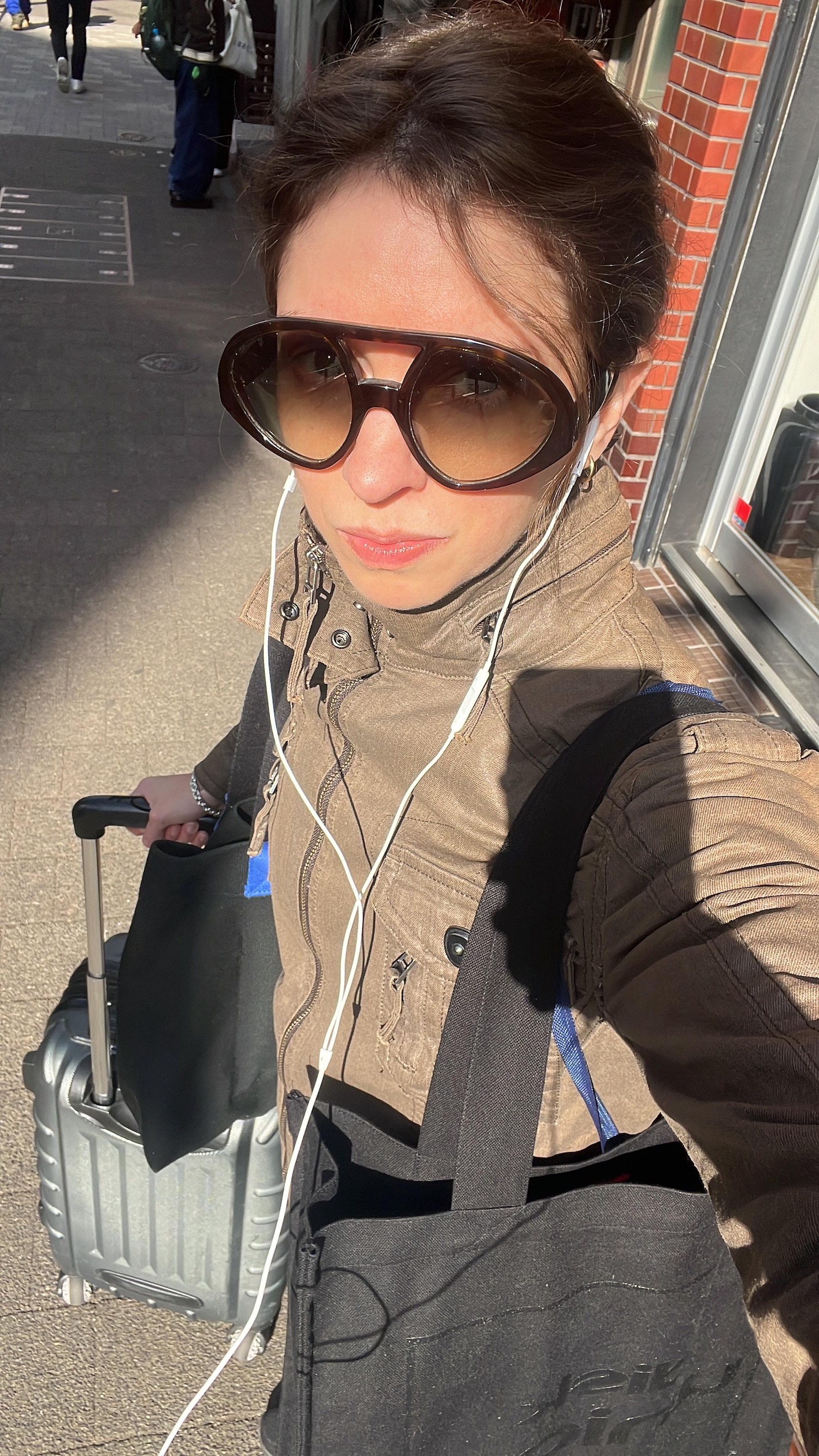
Amelia Holt (Photo courtesy of Amelia Holt)
Amelia Holt: This weekend was my birthday. It was on Saturday, which was Valentine’s Day at the same time. I don’t really celebrate Valentine’s too much because it’s the kind of holiday where people just buy gifts and stuff. But yesterday I played at Night Moves, which is this tiny club in New York run by James Murphy. It was really cute. I played with one of my friends who actually runs the club—he’s the booker. At this point, it’s become a thing where we play back-to-back all the time there. Every time he plays, I play with him. It’s really fun because we have similar taste, so the blends and the flow of the night—the music selection—are perfectly aligned. He’s great. Good hospitality, to say the least. It’s a very nice space and the sound quality is perfect. Tiny, though.
I haven’t been yet, but I talked with Justin Strauss a lot about it. It seems to have a very specific gravity.
Amelia Holt: Justin is the resident of Night Moves. It’s very much in that style—a Justin Strauss club. Everyone who plays there is in that same world of nu-disco, disco, and funk house. Maybe some dark goth EBM-ish sounds at times, but it’s a very beautiful place. It’s very “New York.” You’ve got to come back and check out the new clubs. When was the last time you came to New York?
Last spring. I think we were actually standing right next to each other at Bossa Nova Civic Club on a Sunday, though I’m not sure if we were officially introduced in all the hectic energy, but I feel like my friend (and Hasan Poppu label boss) Elena Colombi, did.
Amelia Holt: Oh! So you were here when Elena Colombi played at Bossa with Sepeer and me! That place is busy. It’s fun, though I haven’t been back since that night, actually. You have to email and ask—it’s very difficult to get a night at Bossa. I always thought of you as a regular there. Sometimes I compare it to a club in the person’s own city.
For example, in Berlin, I would tell people Bossa is the “Sameheads of New York City.” It’s very grungy and dirty in there. It feels like a bar but also a club. More than anything, the space is about the vibe, not the sound quality. It’s about a specific New York experience. It’s under the bridge at Myrtle Avenue—there’s a lot going on. It’s a very old institution. It has stood the test of time and hasn’t gone out of business despite the pandemic and economic downfalls. It even burnt down at some point, I think, and it’s still there. It’s bulletproof.
Bossa was actually where I learned to DJ. I would do happy hours there, and that’s where I practiced before I bought my own equipment. It was a great experience because you get used to a professional setup and the industry standard of what to expect when you play at clubs. This was my introduction to practicing in front of people. I did that for at least a year in the beginning, and then I “graduated” to throwing parties there on the weekdays. I did one weekend once, but as I told you, it’s almost impossible to get a weekend at Bossa unless you ask very far in advance. Even the Sundays are difficult to get now. If you had to sum it up in one word: it’s an institution of this city.

Night vibes (Photo courtesy of Amelia Holt)
At this point, our conversation shifted toward the shifting geography of Brooklyn. We talked about Mansions, a place I visited last year, when my friends Lena Willikens and Vladimir Ivkovic played theree—a spot that felt like a secret I wasn’t supposed to find, tucked away in a neighborhood that still retains the menacing, warehouse-heavy atmosphere of the “old” New York.
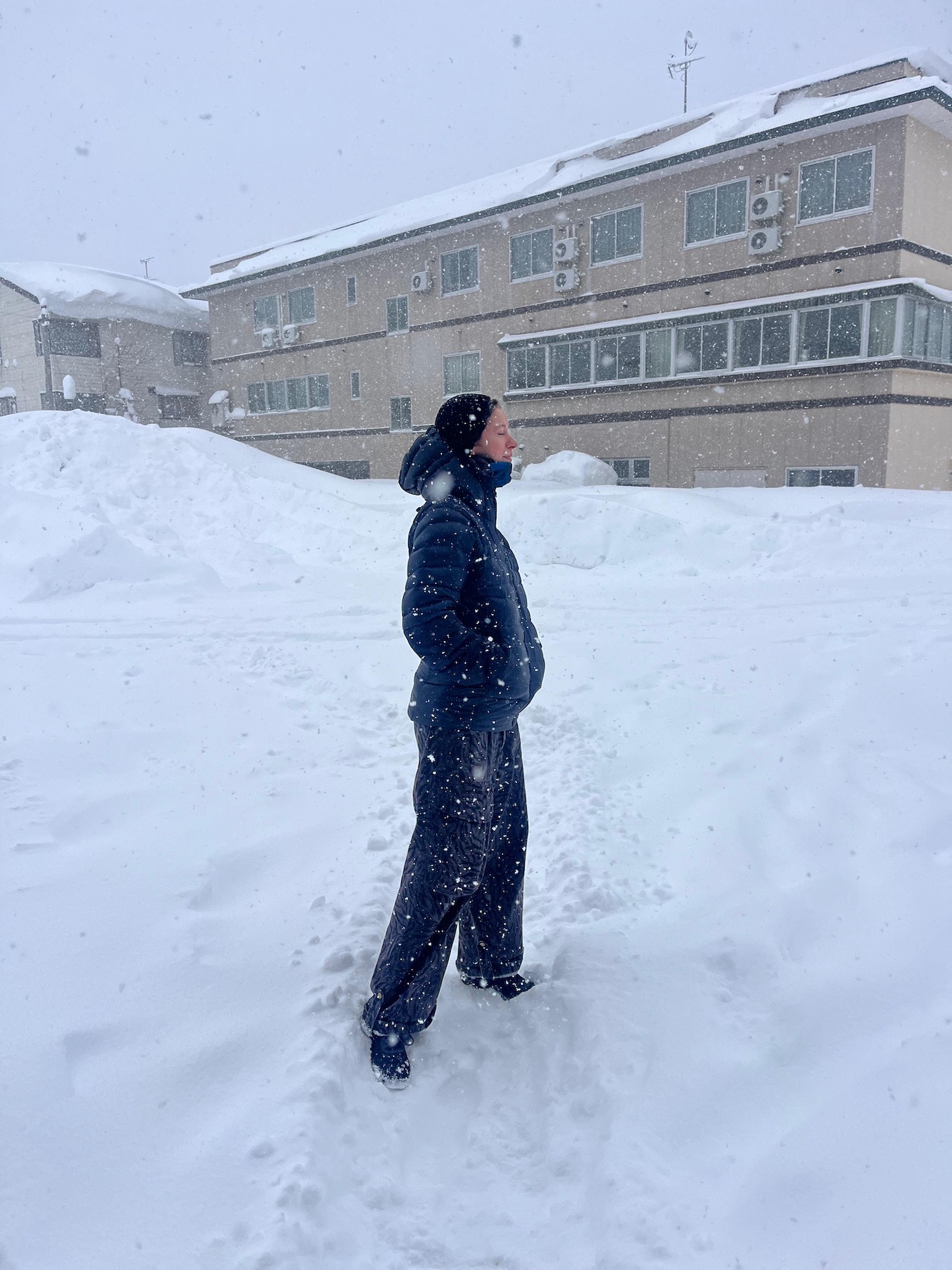
Amelia Holt (Photo courtesy of Amelia Holt)
Amelia Holt: Mansions is the “new Bossa.” It’s so nice. That one actually has great sound and great vibes. Mansions is currently closed for repairs—they’re fixing it and making it nice, I assume. That place is the “unicorn in the wall.” It’s a very cool little spot that everyone wants to go to, but you can’t fit everybody in there because it’s tiny. I’ve only played there three times. It’s a wine bar, if you didn’t know. The floor is carpeted, so it’s bouncy and you can dance. The DJ booth is close to perfect—perfect height and sound. Everything is how it should be. It’s an evolved Bossa Nova. It’s the same size, it’s just better. A lot of people go there now. Depending on the night, it attracts a different crowd. Bossa attracts a very young crowd on the weekends because it’s in Bushwick and close to the train. A lot of younger people in that area go to Bossa Nova and Paragon, which are sister clubs with the same owner.
Mansions is more of an adventure. You have to get off the train and it’s about a ten-minute walk. It feels isolated. I don’t know how you got there, but normally you have to walk through a bit of a sketchy vibe. It’s a little scary, there are only cars driving, and you feel like it’s gentrified, but at the same time, it’s not. It’s what’s left of the warehouses in that neighborhood. But yeah, it’s a little hole-in-the-wall and everyone loves it. Everyone wants to play there, but there are only so many weekends in a year. I prefer small clubs.
There’s something about being able to see people up close. It creates a better energy where I can really feel a connection. When a place is too big, I can feel a bit disconnected, though it’s still nice if my friends are in the front. New York is definitely gravitating toward smaller, more secret things. People are perhaps tired of the standard club experience where you spend hundreds of dollars. Between the car ride, a $30 ticket, and a couple of drinks, you’ve spent $100 by the time you get home.
We have arrived at the core of the ‘Insolvenz und Pop’ theme, the kapute fave of talking straight about the hussle that an artisti life means most of the time–and the joy, depending on the hour of day or night you ask.
In a city where a cocktail can cost $15 before the tip, and the rent for a tiny flat next to a subway track is astronomical, how does subculture survive? Amelia’s voice takes on a practical, almost revolutionary tone when she discusses her new party concept—a reaction against the hyper-commercialization of the “big” night out.
Amelia Holt: The cool thing about smaller places is the accessibility. I’m actually working on a party for March in a small space. The concept is: we won’t sell alcohol—you bring your own—and we won’t tell you who’s playing. We’ll only tell you where it is the night of the party. If you want to find out, come; if not, don’t. I want to charge $15 before midnight and $20 after—just a simple, cash-only, old-fashioned structure. I think people just want to feel close. Big clubs can be intimidating. In a small club, you have a chance of meeting someone new. For me, Night Moves is the top-tier small club. They’ve perfected the formula where it’s dark and fun but also classy. The design is beautiful; it feels a little sleazy but very high-end, with that disco dance floor and the lights. It’s very kitschy. There are things where you think, “I would never think of decorating a club with this,” but it really works.
But there is the economics. Being at Bossa last year, I saw the bar dry out fast. People can afford the $10 door charge and one drink, but then they switch to the free water. You can’t pay international and local DJs on a $10 door charge alone.
Amelia Holt: It’s so hard. I don’t know how clubs in Germany survive, but this is definitely a crisis here. People aren’t buying as much alcohol because it’s expensive. Personally, I’ve slowed down my drinking, too. It’s a struggle as a promoter because you want the club to do well, but success isn’t always based on attendance—it’s based on bar sales. It’s a double-edged sword: you want the right crowd there, but sometimes the “right” crowd doesn’t have the money for drinks, while the people who *do* buy drinks might not be your crowd. That’s why I’m trying this new approach based just on covering the space. I have an agreement with the performers: “Hey, at the end of the night, if we succeed, we split the money evenly.”
Usually, there are set DJ fees, but I’ve reached a point where I want it to be equal across the board. The structure is more about: “Are you interested in being part of something special, or are you here for the money?” I don’t judge anyone who is here for the money—you have to pay bills—and that’s what the big clubs are for. This is a fun project to filter the noise and remember why we go out: to listen to good music and be near friends. I’m quite confused by New York at the moment because people are opening clubs left and right. At least five or six new clubs have opened in the past three years. I thought everyone was struggling. Public Records just announced a second spot.
I wonder how it’s possible? I need to research this, but I think the second spot is a non-profit club and cultural space. I wonder if announcing yourself as a non-profit helps a club survive?
Well, “non-profit” is often just a calculation that ends at zero at the end of the year. The directors can still have six-figure salaries.
Amelia Holt: I wonder if that’s the route clubs should take. I feel like a lot of clubs lose money. It’s a very hard business. You can feel the tension even when throwing a Thursday night at Nowadays or Signal. I’ve thrown a few, and whenever I ask how the sales were, they say they “barely broke even.” It’s a difficult thought because you put so much work into the promotion—the flyers, the videos, the bios—only for the club to barely scrape by. I want it to go beyond that. But as you said, the city is expensive and if people have to wake up early for work, it’s challenging. Things have to change. Maybe they should offer food? How can a business survive if it’s based entirely on alcohol?
The conversation drifts into the specifics of club behavior. We talk about the “yapping”—the relentless talking that plagues modern dancefloors—and the high cost of entry. In Berlin, a night at Berghain now costs 28 Euros. A Gin Tonic is 12 Euros. Amelia notes that in New York, a $15 cocktail plus tip becomes a $20 drink. We both confess to the occasional use of a flask to bypass the price of bad club whiskey.
Amelia Holt: I had the worst whiskey a couple of weeks ago and the hangover was terrible. That’s the thing about getting older—you need quality. You have to find Japanese whiskey. When I went to Japan, I was so intrigued by the whiskey and the soundbars. I came back thinking whiskey was my new drink of choice. I was DJing with my best friend and said, “I’m just having whiskey on the rocks all night.” But it wasn’t the good stuff; it was Jameson or
You mentioned weekdays earlier. I was listening to your “Wednesday Alternative Mix” while preparing for this, and I really liked it because it had that semi-private, semi-public space feeling with the chatter and atmosphere. Do you have a favorite weekday for going out or playing?
Amelia Holt: I like Thursdays and Sundays. Those are my nights to go out. I don’t go out on the weekends unless I’m working or a close friend is playing. Thursdays are “industry night” in New York. All the “heads” come out, which filters out the tourists or people who don’t know the etiquette of clubbing.
What is that etiquette for you?
Amelia Holt: To start: no yapping on the dance floor. Second: no phones on the dance floor. And just having a polite energy toward your peers—not shoving people when you move through the crowd. When you go out on the weekends, you find people who don’t know how to behave; they’re talking or filming, and you can’t get in the zone. You can’t connect with the music because of the distractions. The etiquette is silence on the dance floor, please. How do you tell them to shut up in Berlin?
I have a trick where I start dancing really weirdly with my ass out. It annoys people. If you do that a few times, the people who are just there to talk usually move away because they think it’s weird. You feel a bit ashamed, but I don’t know these people, so why should I care?
Amelia Holt: [Laughs] Oh my god, I need to do that! Now I know the secret. I’m going to test it out. Some men might not engage because they think, “This girl is dancing so weirdly.” I’ll try it. Regarding etiquette, I was going to make rules for my party, but my friends said it was embarrassing to have to tell people what to expect. We might just send an email saying, “Hey, be mindful.” Even at Nowadays, they explain the rules before you enter the club. Even if you tell them, they often do it anyway. It’s very human, for sure. But that’s nightlife—people are happy to be with others and they start talking. Just don’t do it on the floor.
Do you know John Cage’s famous “Ten Rules” for his students? I don’t think it’s wrong. Sometimes you have to speak out about things you think everyone should know by heart, but they don’t.
Amelia Holt: They don’t. Even at Nowadays, they explain the rules before you enter the club.

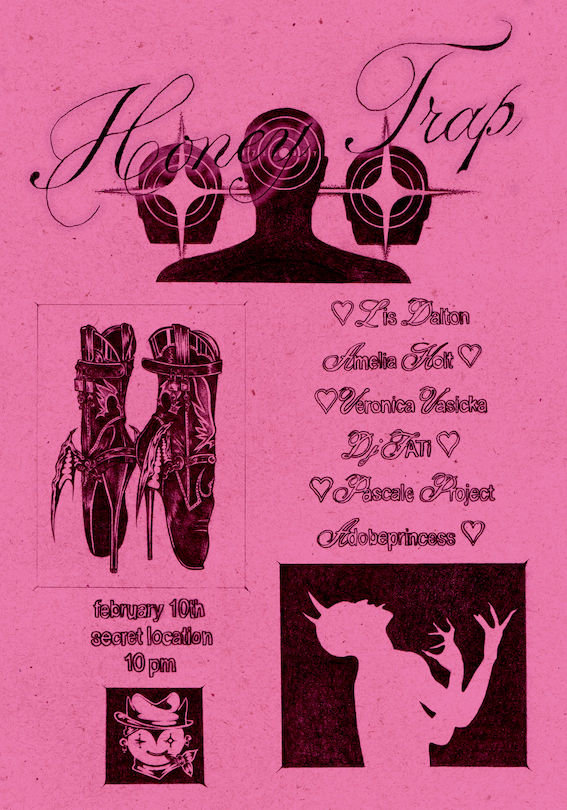
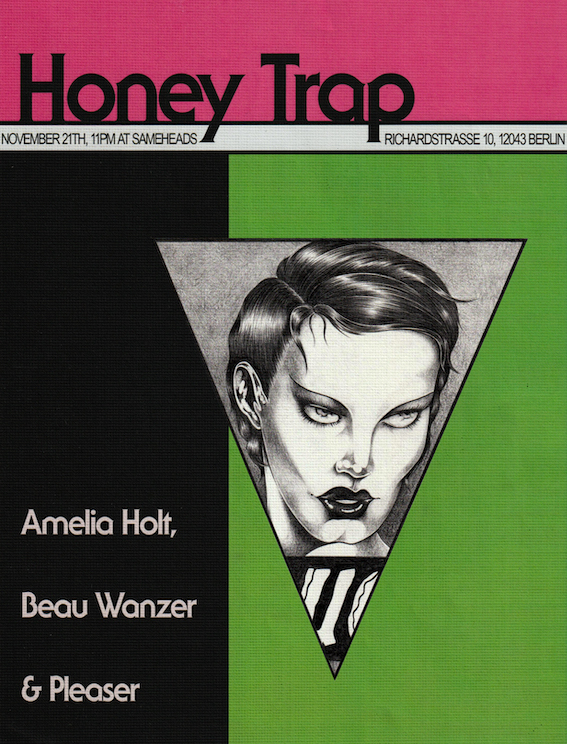
Is your nightlife closely connected to your community? Do you see yourself as a community DJ or artist?
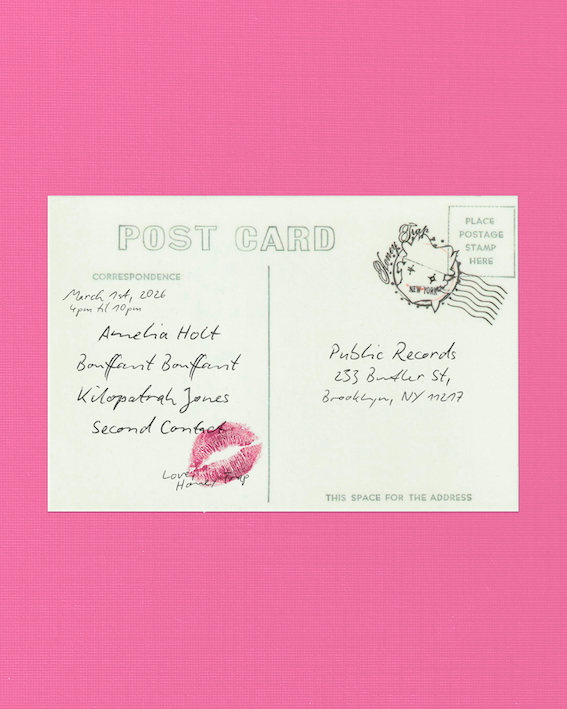
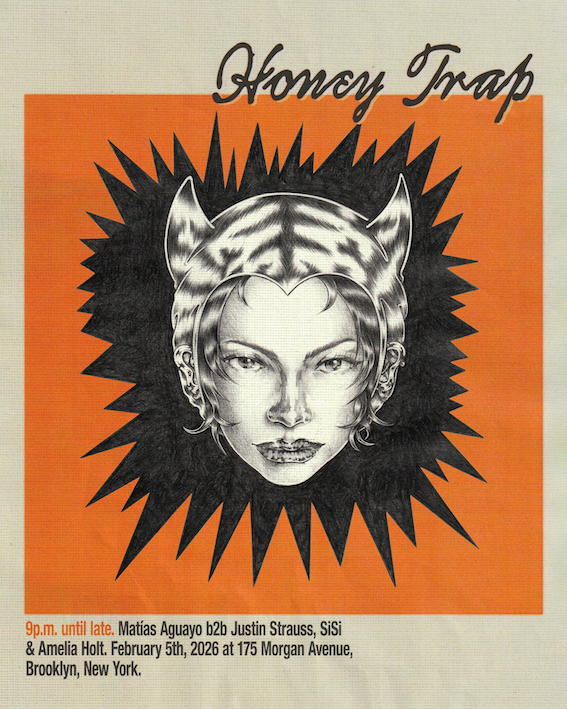
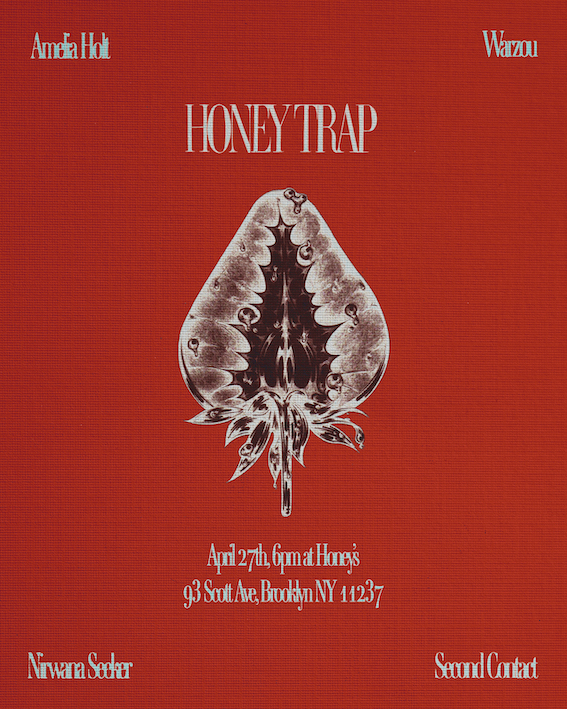
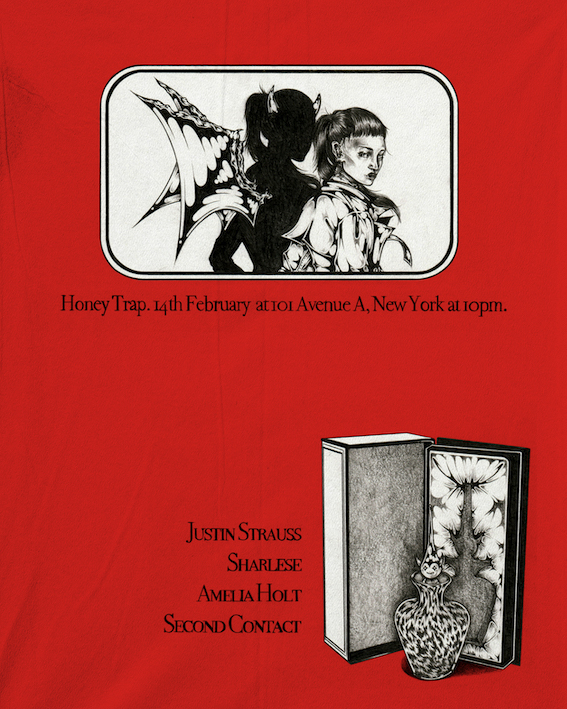
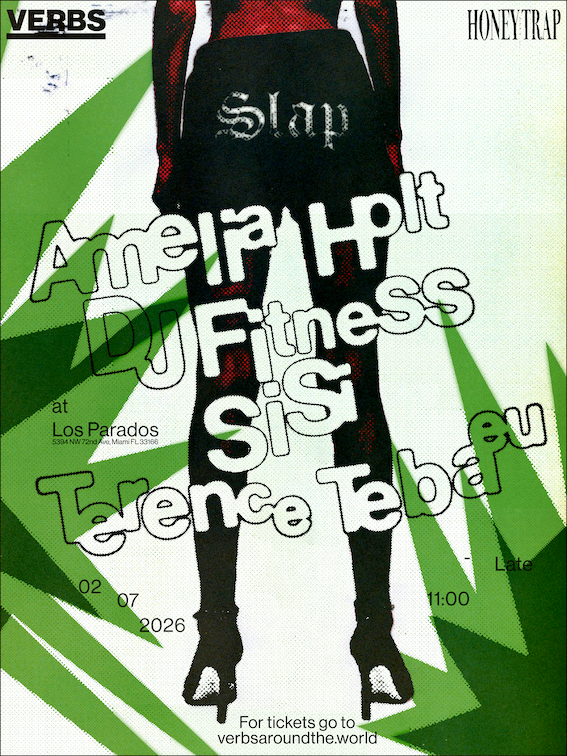
Amelia Holt: Definitely. Especially with the Honeytrap parties. Every time I throw one, I see the same friends. You feel like a host. You’re saying hi to everyone—it’s a bit like being the “Godfather,” where everyone comes to talk to you. It feels like being Al Pacino. It’s nice to see friends out; that’s the point. If only random people were coming, I’d have to reassess why my friends weren’t showing up. The community brings that “juicy ribeye” to the experience.
On Saturday morning for my birthday, I went to see Elena play at a party run by a great DJ named Lido. They are a queer Filipino DJ here in New York and they bring a beautiful queer and music-nerd crowd together. The space was a new after-hours location—I’ll take you when you visit. I went around 5:30 AM. But at some point, a lot of “interesting” men in dark sunglasses came through the door. The first thing they did was start talking to me: “What’s your name? What are you doing here?” I didn’t have time for that. At least three men came up to me with that “what brings you to New York?” routine. The original crowd had thinned out by then. Crowd is so important; you can really feel it as a dancer when the wrong energy enters your sphere. Those men were harmless, just annoying. I don’t want to talk while I’m dancing!
That’s the risk with after-hours.
Amelia Holt: It’s the hours, not the fault of the promoter.

Night vibes (Photo courtesy of Amelia Holt)
We move from the dancefloor to the autobiography. Amelia’s roots are far from the audiophile wine bars of Brooklyn. She was born in Rio Bravo, Mexico, a small town on the border that sounds like the setting of a Western but carries the heavy, modern reality of the cartel wars.
Amelia Holt: Rio Bravo is a very small town. I was last there in December. My parents are from there, but we migrated to Texas when I was eight. If you look at a map, Rio Bravo is touching Texas. It’s good that we moved because the area is quite dangerous now. Being on the border, there are a lot of issues with the cartels. It’s one of the most tense areas because of immigration and cartel activity. But I’m thankful I was born there, and I still go back occasionally to have a good taco.
Are the tacos really better there?
Amelia Holt: The closer you are to the border—even on the US side—the better the food is. Mexican food in Texas is amazing. My parents live on the US side now, but we go to Mexico for other family members and to buy ingredients like *queso fresco*, Oaxacan cheese, or fresh tortillas. The quality of the products is just way better.
What did (or still do) your parents do for work?
Amelia Holt: My mom worked in economics and government politics for a while, but she stopped to become a full-time mother. My dad works in the drainage industry, piping farms for irrigation in that part of Mexico because water is scarce. He still does a little bit of it, but he’s 80 now.
I recently saw a documentary about Sonic Youth where Thurston Moore said he gets embarrassed when his parents come to his concerts. Do your parents ever come to see you play?
Amelia Holt: My dad doesn’t go to any of my sets. They’re in Texas, so the distance is an issue, but my mom came to one of my parties at Roberta’s Pizza—a daytime wine party called Beverages. She really liked it, though she got tired pretty quickly! My dad listens to some of my mixes, which is as close as he gets to understanding it.
Do you talk to them about making a living through music? Especially when you were on your way up?
Amelia Holt: I have so many jobs, all music-connected, but they don’t quite understand it because they grew up with “proper” jobs in offices or banks. Working in music feels like working in art to them, which doesn’t feel safe. They want me to have a secure job. But I think they see now that I’m happy and grinding every day to make it meaningful and sustainable.
I run a small US based agency for international artists on my own. It’s a lot of work. Selling yourself as an artist while being the booker has many levels. But there’s a market for everyone in New York, so I don’t feel like I’m competing with the artists I represent. Promoters have their own “flavor”—if they want to book Elena or Noistrip, they will. I just email them to let them know we’re here. Video and social media get people booked now. That one-minute clip is what does it.

Her work is tied together by “Honeytrap,” a project that spans parties, a radio presence, and a label. It is a world where house and disco meet the darker, jagged edges of 80s new wave and EBM.
Amelia Holt: Everything comes down to Honeytrap. With the radio shows, I try to have an intention. Kiosk Radio is more of a listening style. I tell guests, “This is music you like but don’t necessarily dance to. Just play the songs; don’t even worry about mixing.” It’s nice to just hear someone’s taste through full songs. Lot Radio is harder because it’s become like a “Boiler Room” where you feel pressured to play dance music. For Honeytrap, we love house, disco, and dark EBM/gothic 80s new wave. I want the parties to lean toward that sound. Someone like Justin Strauss *is* Honeytrap. I want to be like him—so prolific and confident in his sound. My audience wants the whole journey. They know how a night works.
They know that when you walk through the door, it’s like a movie starting. Most movies start gently, build character, and show you the landscape. Honeytrap feels like a gentle experience in the beginning that progresses like a graph. People like to chill at first, sitting and talking. I built the set to allow for that—gradually adding a beat until people were dancing. I love the beginning of the night. It’s misty and quiet, the sound is perfect, and the staff is checking in on you. Sometimes they put out incense, which creates a nice atmosphere. The lighting is soft—purply-pink with the fog machine so it feels blurry. It’s a gentle welcome. Like in those cartoons where a little hand beckons you into the room.
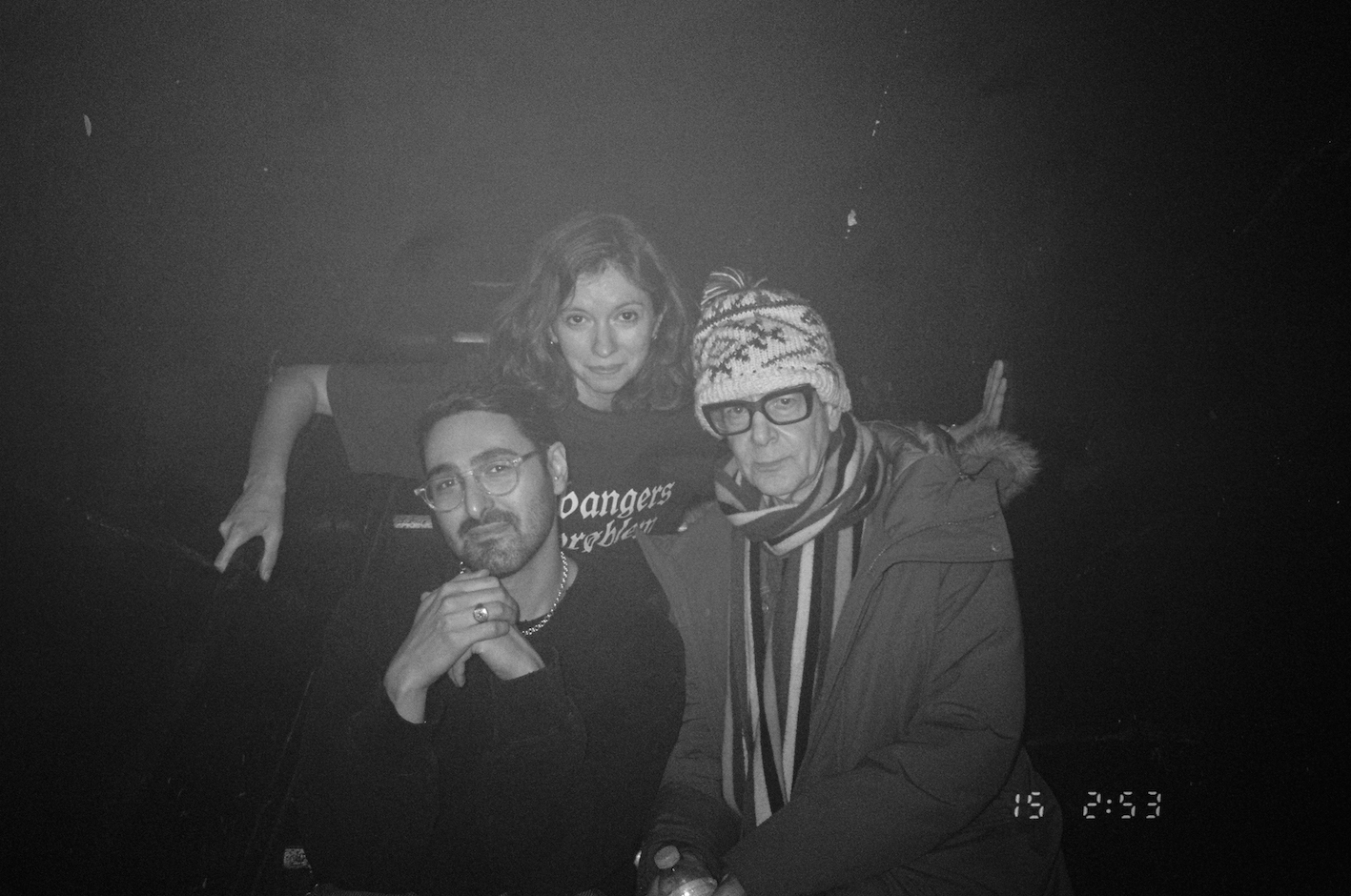
Night moves: Amelia Holt, Justin Strauss and friend (Photo courtesy of Amelia Holt)
Justin Strauss seems to be a common thread here. He’s been through so many eras of the city.
Amelia Holt: Justin is New York’s father of nightlife. Those who know, know. He was the first person I met at my job when I moved here. He invited me to a party and put me on the guest list when I had no friends in the city. After seeing him a few times, I knew I wanted to do what he was doing. Beyond Justin, I look up to people who give back to the community, not just take from it. There are a lot of “takers” who just pick up their bag and go. You should leave people thinking about your set. You have to nurture nightlife and inspire people, not gatekeep it. You won’t be there forever; you have to pass the baton to the younger people. I try to inspire that curiosity so they go deep into the music rather than just sticking to the mainstream.
We talk about the fantasy of time travel. For Amelia, the destination is clear: Manhattan in the early 1980s. The Mudd Club. The Paradise Garage. A time before the internet, when the club was the only place to find your collaborators.

Japan night life (Photo courtesy of Amelia Holt)
Amelia Holt: I want to be in New York in the ’80s. I want to experience Paradise Garage and the Mudd Club to understand the magic of Manhattan back then. Manhattan isn’t like that anymore. I have a book that covers ’81 to ’83, and it’s overstimulating—Keith Haring and Andy Warhol were just *there*. People didn’t have the internet, so they had to meet at the club to build projects, design clothing, or plan murals. The club was the meeting point of culture. Some places don’t have regular nights. This past weekend we went to Miami for a friend’s party that only happens four times a year. Everyone goes because it’s not a typical, chaotic Miami night. It feels DIY, classy, and detailed. I think that’s what people want: DIY adventures, not just another club night. People are attracted to the “risky business” of a secret location or a passcode. There’s a drive to do something that feels a bit “illegal,” or at least outside the norm.
That spirit seems to bleed into your “In Your Dirty Ears” newsletter. Why “dirty”?
Amelia Holt: [Laughs] Too much music! You have to clean them out. I started that letter during the pandemic to share new music with friends. Now I use it for my party announcements, but I’m trying to make it more of a travelogue with personality. I want to share what I found in Miami, or what I ate or heard. I want to be more of a storyteller. I keep it light. I don’t want to say something that offends someone. I keep it music-oriented—promoting local businesses and record stores. I should be an ambassador for Japan because I talked about it so much; they need to sponsor me!
Tokyo is massive; New York is nothing compared to it. There are so many layers in one building—a soundbar in the basement and a club upstairs. I played in Tokyo for a week and then in a ski resort town I believe was called Nagano (at DJ Bar Steam). I played at a club that used to be an active Onsen. The dance floor was actually the pool. Everyone was dancing in the pool, and it was snowing like crazy outside. I had ramen and sat under heating blankets; it was such a vibe.
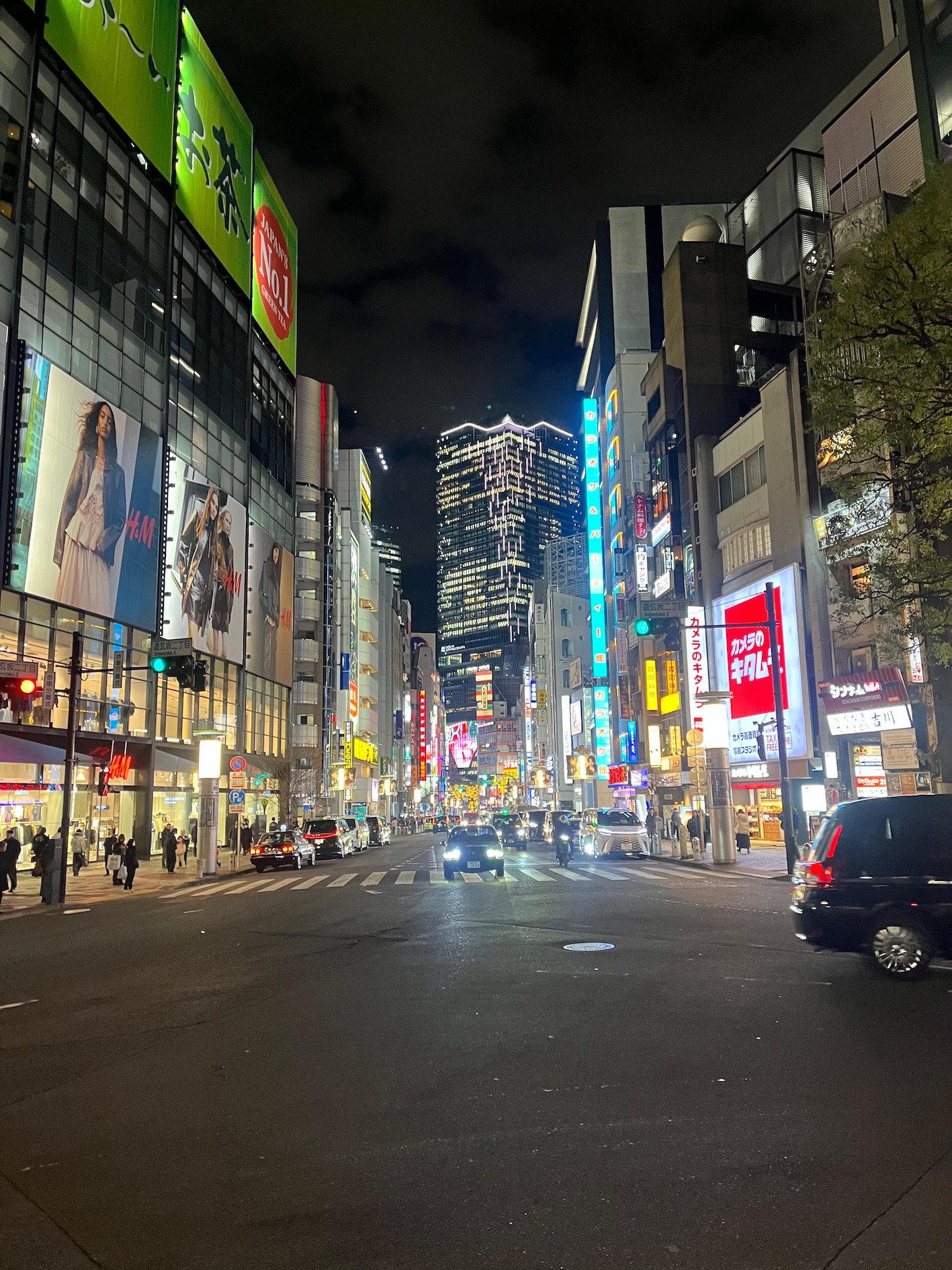
Japan (Photo courtesy of Amelia Holt)
As the interview winds down, the focus returns to the music itself—the tangible output of a life spent in the booths and warehouses.
You’ve been releasing music through Honeytrap as well. What’s the current focus?
Amelia Holt: I don’t make music myself, but I am releasing other people’s music. Through Honeytrap, I’ve already released two cassettes of industrial, sludgy dance music. The third one is more “dance,” and that should be out by April. I’m just taking my time with releases that make sense. There are so many releases out there; you have to love it to share it.
Last question: do you have a “happy track”? A record you always come back to when you need to feel good?
Amelia Holt: If you ask about a “happy track,” a record I always come back to when I need to feel good, I’d say Bryan Ferry, the “Boys and Girls” record. One year, my Spotify statistics were 100% Bryan Ferry. I love it because the production quality is insane—you can hear every instrument and the saxop”hone. It’s sexy and high-quality. Also, Tears for Fears, “Songs from the Big Chair. That’s a perfect, emotional record with all the classics like “Everybody Wants to Rule the World”. A classic. Brave to play, but I love it.
I had a great New Year’s Eve on the island of Curaçao. Dave P played that song in the early morning with James Ford. I can see the memory clearly in front of me dropping “Everybody Wants to Rule the World”.
Amelia Holt: A classic. Brave to play for a DJ set, but I love it.
Thanks so much, Amelia. This was great. I have a lot to work with here.
Amelia Holt: Thank you! We’ll talk soon.

More snow in Japan (Photo courtesy of Amelia Holt)