

Tomoko Sauvage: “Working as an independent musician, with independent festivals and labels, and with people who are passionate about art, is precious”
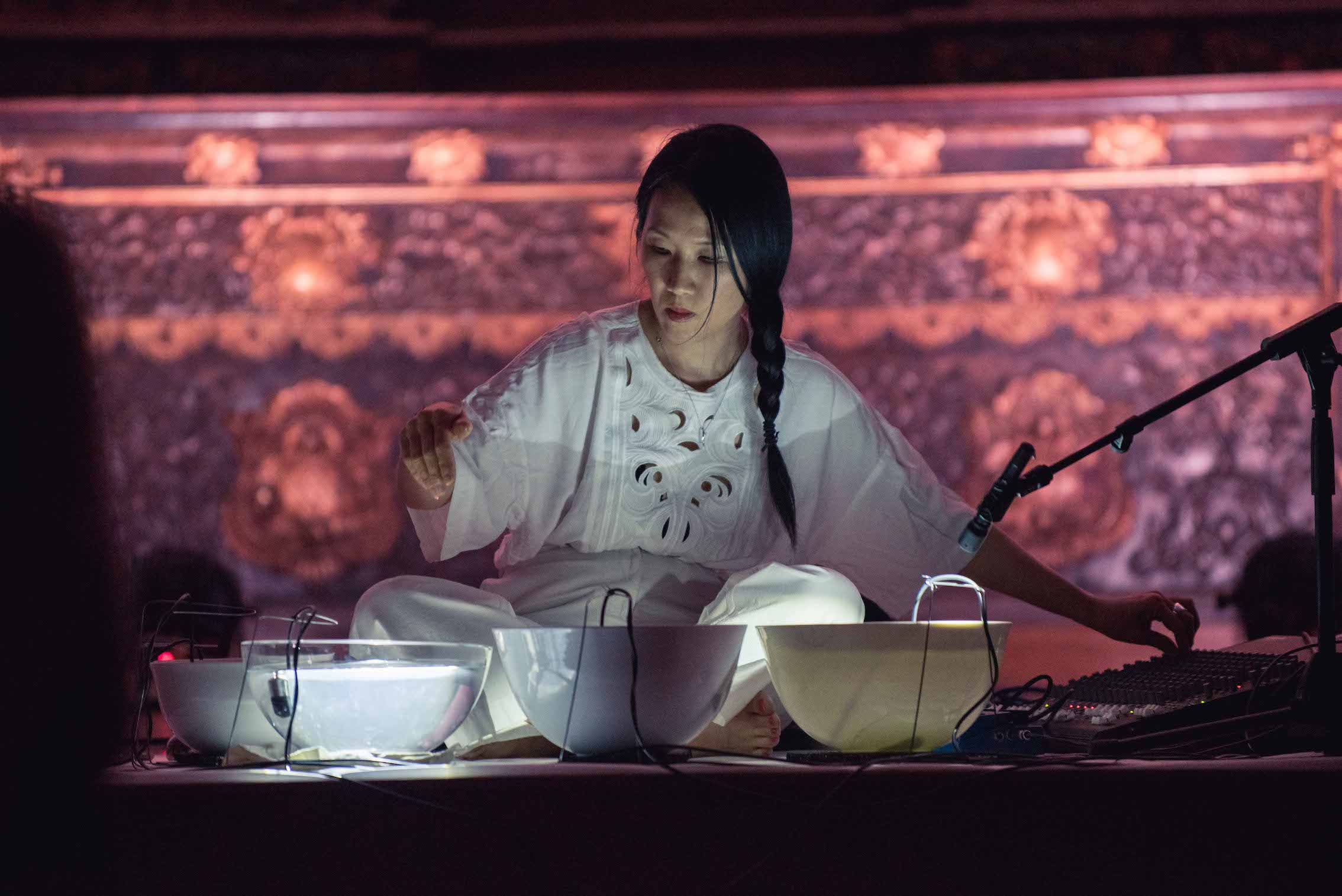
Tomoko Sauvage (Photo: Leo Lopez)
The work of the Japanese sound artist Tomoko Sauvage begins where many listeners usually stop paying attention: in water, air, resonance, micro-bubbles, fragile feedback, and the almost invisible movements of matter. Her installations and performances do not treat sound as something to be controlled from the outside, but as something negotiated with the elements and space as well as with the own presence.
A few weeks before her performance at Heroines of Sound Festival in Berlin, Sauvage speaks to Thomas Venker about the Jalatharangam, Japanese listening traditions, the politics of bubbles, her collaboration with the Palestinian architects Youssef and Elias Anastas – and explains to kaput why the physical birth of sound still matters in the age of AI.
Tomoko, your work often starts from materials that are almost invisible: water, air, bubbles, resonance. What attracted you to these unstable elements in the first place?
Tomoko Sauvage: The very first encounter was with an Indian instrument called the Jalatharangam. That was in Paris in 2006, when I was trying to find my own voice after studying jazz.
I was trying to do something on the piano, but I wasn’t satisfied with what I was doing. I was looking for something else, and at the time I was studying Indian music after being influenced by American musicians like Alice Coltrane and Terry Riley, who themselves had been deeply influenced by Indian music.
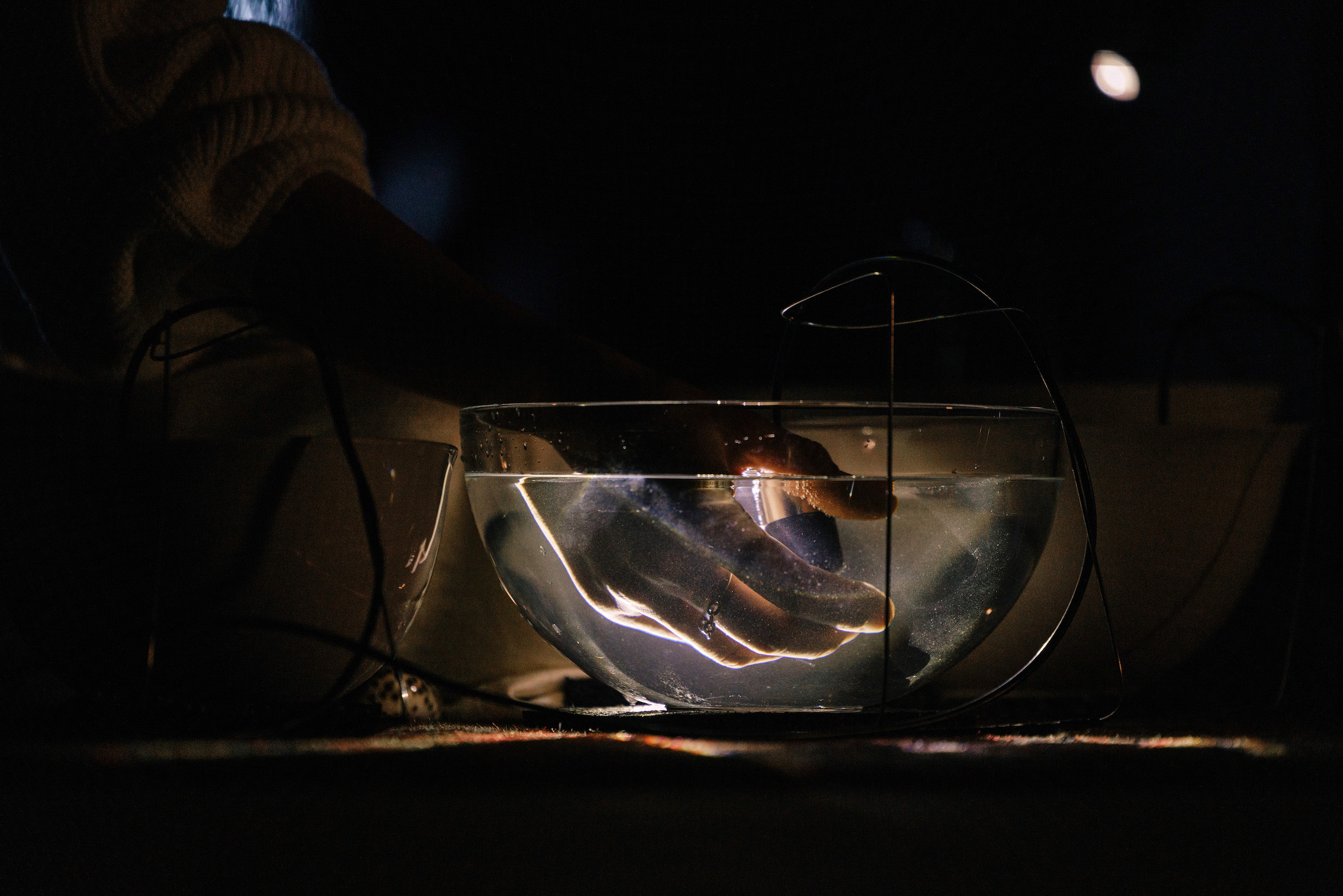
In Paris I attended a concert by Anayampatti Ganesan, who played the Jalatharangam. The instrument consisted of bowls of water, very primitive in a way: bowls tuned by the quantity of water inside them and struck with sticks. He played notes with glissando-like ornaments by stirring the water inside the bowls. That struck me very deeply. It was this moving sound, constantly moving in a unique way.
That was the starting point. I wanted to pursue that quality of sound: a timbre that is unstable, moving, irregular. I started by imitating the instrument, hitting bowls of water in my kitchen and doing Hindustani music improvisation exercises. Slowly I began to experiment with electro-acoustics and hydrophones. The elements–porcelain bowls and water–remained at the core. Little by little I explored sensitive microphones, feedback, and the relationship to space. But the beginning was this moving water.
When did the sound you were chasing become something encountered rather than something composed?
Tomoko Sauvage: In a way, it is still composed. But perhaps the setup itself is the composition. The instrument defines certain things: the scale, for example, because the notes are limited. If I play with feedback, the room and the environment define the frequencies. That is also composition. The definition of the ingredients is the composition.
But when I play, it goes beyond composition because of the nature of the instrument. Maybe it is composed 60 percent, and then there is an improvisational process that exceeds it. When I release an album, that is another story again. I record what is played on the instrument in certain spaces and situations, then I compose at home on the computer by editing and recomposing. It becomes a kind of double composition. For me, the setup is the composition: the device, the ingredients, amplified sounds and electronic effects. Their combination is the composition.
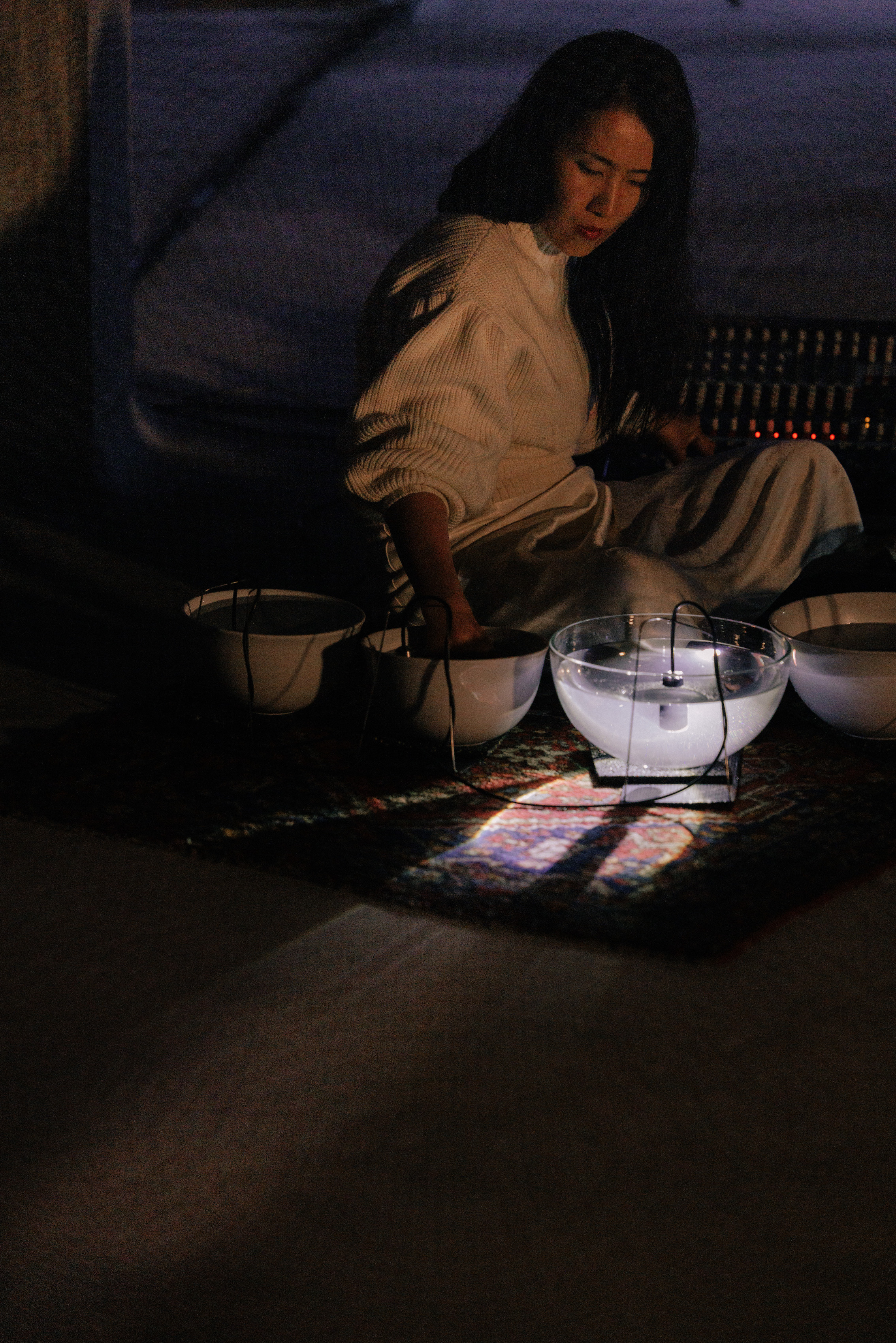
Tomoko Sauvage (Photo: Johannes Berger)
You have lived and worked in Japan and France, and you have also, as just explained, been influenced by Indian culture. Are there forms of listening or relationships to nature that you associate with these places?
Tomoko Sauvage: I certainly come from a culture that listens to nature differently. Today, of course, everything is changing, and East and West are merging and influencing each other. But there might still be differences. For example, in Japan there is a tradition of listening to insect sounds as music. It is a very old tradition, already present in medieval literature. People would keep beautifully-singing crickets in a little cage and listen to it during an autumn ceremony or gathering. There is surely something of that in my music.
More and more, I also think of some sounds in my work in relation to the concept of mitate. It is a Japanese word meaning “looking-as”, a visual allusion. . In a Zen stone garden, for instance, stones are seen as a landscape: mountains, rivers, forests. You find similar ideas in miniature gardens or bonsai.
That relates to my way of listening, especially when I play with bubbles. I work with micro-bubbles coming from porous terracotta, which absorbs water and sings underwater. I amplify it with microphones, and it sounds different every time. That is why I called one piece Fortune Biscuit: biscuit is the French word for porous terracotta. Like a fortune cookie, it shows you some kind of prophecy with different atmospheres or landscapes. Sometimes it sounds like a rainforest with singing insects, sometimes like motors, sometimes like a sea storm. It is also a bit like foley sound in cinema, where a sound is produced with something that has nothing to do with the apparent source. The word is mainly used for visual interpretations but I think of this concept for aural allusions and metaphorical listening as well. This kind of microcosm-macrocosm analogy is traditionally seen in China but also in whole Asia and in Greek philosophy.
Many artists speak about controlling sound. Your work seems more about negotiating with matter. Does authorship mean something different to you now than it did in the beginning of your sound journey?
Tomoko Sauvage: The balance between control and alea, between control and chance, is central to my work. I don’t try to control everything, because in my case that would be impossible. My instrument is fragile. You have to let it go. It is a dialogue between myself and the elements: the bowls, the water, electricity, the space, and the people who are there. I have to listen to them and wait for the moment when something becomes possible.
The best moments are when it happens naturally. I almost don’t have to do anything; I become one element among the others. If I can become selfless, that is the best state, though it is not always possible. Sometimes, when it is really good, everything feels like one. I feel the energy and concentration of the people. Somehow all the elements in the room become one. Then this magical feeling arrives, and I don’t have to force anything. My hands become like water, or like part of the instrument. It is beyond control, because you do not even have to think about it. It just goes by itself.
Does that also change how you think about everyday life? In daily life we often try to control the world, whereas your work enters something more fluid.
Tomoko Sauvage: I think it can be the same in everyday life. Of course, we have to force ourselves to get up, clean the room, and be on time. But when something difficult happens, or when there is tension between people, you try to solve it, and at some point you also have to let it go. Life is a flow that you do not really control. It is good to have a state of mind that accepts things and does not force them. That is a very Buddhist way of thinking: finding peace inside yourself so it can reverberate in others.
Tomoko Sauvage (Photo: Naoki-Takehisa)
Let’s talk about bubbles. They are usually associated with ephemerality; they disappear as soon as they appear. You have spent years returning to them. What keeps revealing itself through this material?
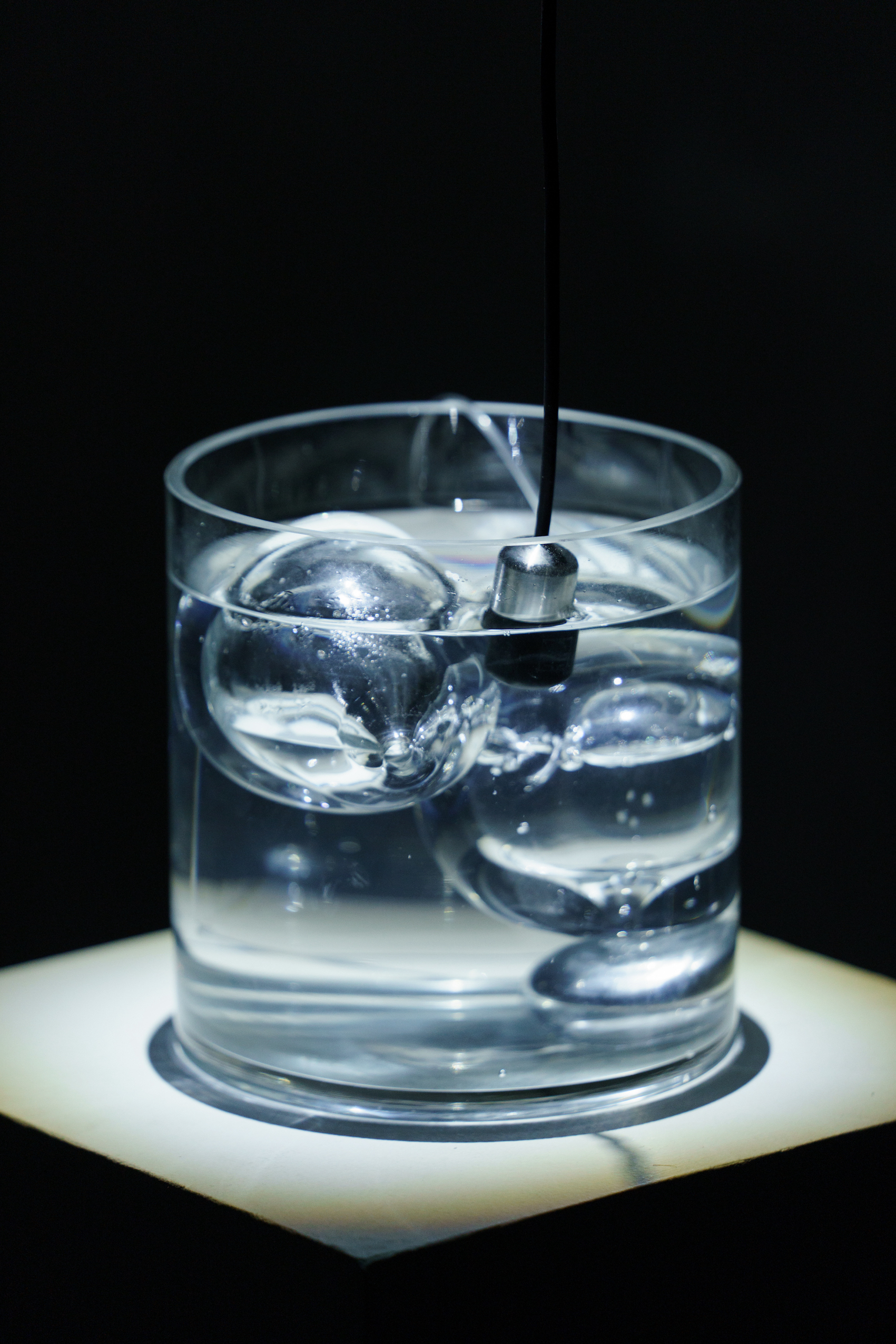
Tomoko Sauvage: Bubbles are so lively. It feels like the beginning of life. Every time I listen to them, they have a certain irregularity and surprises. I made an installation piece with underwater glass sculptures called Buloklok because I wanted to watch how bubbles are made inside a hollow space, how they travel in the water, and how they vanish. I wanted to visualize that process. Before that I had already been playing with the cavity of a cowrie shell, which looks a little like a pregnant mother’s belly, but I could not see inside it.
The sound was very intriguing. I am actually finishing an album about bubbles now. The sound is very simple, changing its pitch according to the size of the cavity and volume of the air inside – but this round, swirling note is fascinating.
The micro-bubbles I play using porous ceramics also have lively sound. The sculpture I made is transparent glass, so I can see inside the hollow space. It is an underwater sculpture made of blown glass. I send air into it with an electric pump, and as the air fills the cavity inside the sculpture, it exhales bubbles one by one. It makes a “ploop” sound. Depending on the size of the cavity, it produces different notes, like a wind instrument–an ocarina or a flute. The installation comes from my sound practice. I am quite obsessed with it; everything I do is probably a little obsessional.
Are you more interested in the sound the bubbles produce, or in the conditions that allow them to emerge?
Tomoko Sauvage: The whole thing. They travel in water; they are ephemeral but visible. And they are shiny, they are beautiful. I simply like to watch them and hear them. It is the simple pleasure of watching a tiny, shiny thing that flows and goes somewhere else.
A bubble exists through a delicate balance between air and water. Does that fragility carry philosophical or political meaning for you?
Tomoko Sauvage: I don’t try to interpret bubbles as anything philosophical or political though b ubbles have many connotations. Peter Sloterdijk wrote Bubbles, the first volume of his Spheres trilogy. I haven’t finished it; it is a very big book. But he talks about bubbles as a “breathed commune .” An archeology of the intimate.
My sculpture is made of blown glass, so a glassblower blew into it to create the form. Blown glass itself is like a bubble containing human breath.
When I look at the sculpture, there is an illusory visual effect. You do not really know what is glass, what is water, what is air. I enjoy watching those triple layers. The only “real” bubble is the air pocket that leaves the sculpture, travels through the water, and then reaches the air. It changes form during its very short journey. Watching that movement, that life that moves like water, fascinates me. Maybe I am like a child who likes playing with water endlessly.
Do you impose meaning on that movement, or should the audience think through it freely?
Tomoko Sauvage: People can think about it freely. I don’t impose a specific meaning. Maybe our life is like a bubble. Art is in a bubble, like an air pocket.
And we are bubbles too, our bodies are filled with water and air, we live in (sub)cultural community-bubbles….
Tomoko Sauvage: Exactly. We also have bubbles in our body, organs like a lung or a womb – our primordial archetypal bubble according to Sloterdijk. Our lives are bubbles. A family is a bubble, a community is a bubble. But when I play music, I never think about those things.
In our world there are “good” bubbles and “bad” bubbles–social bubbles, financial bubbles, filter bubbles. Do good and bad bubbles exist in your work?
Tomoko Sauvage: No, they are just bubbles. The sound is always different, but there are no “bad-sounding” bubbles. It is a simple material. There is nothing good or bad.
Bubbles also represent an alternative temporality. They are not about efficiency or permanence. You cannot keep them.
Tomoko Sauvage: True. You cannot collect bubbles. You cannot capitalize on bubbles. They are the symbol of ephemerality.
At a time when people talk about AI-generated immortality and digital abstraction, your process is physical, vulnerable, and imperfect. Does the discussion around AI affect you?
Tomoko Sauvage: Performance and installation are still quite far from what AI can do today. I am attracted to presence: the presence of the sound and its materiality . I am attached to the moment when the sound is born, the very origin of the sound. Whether it is bubbles, water dripping, or the resonance of bowls, I am attached to that origin. AI is maybe still far from that.
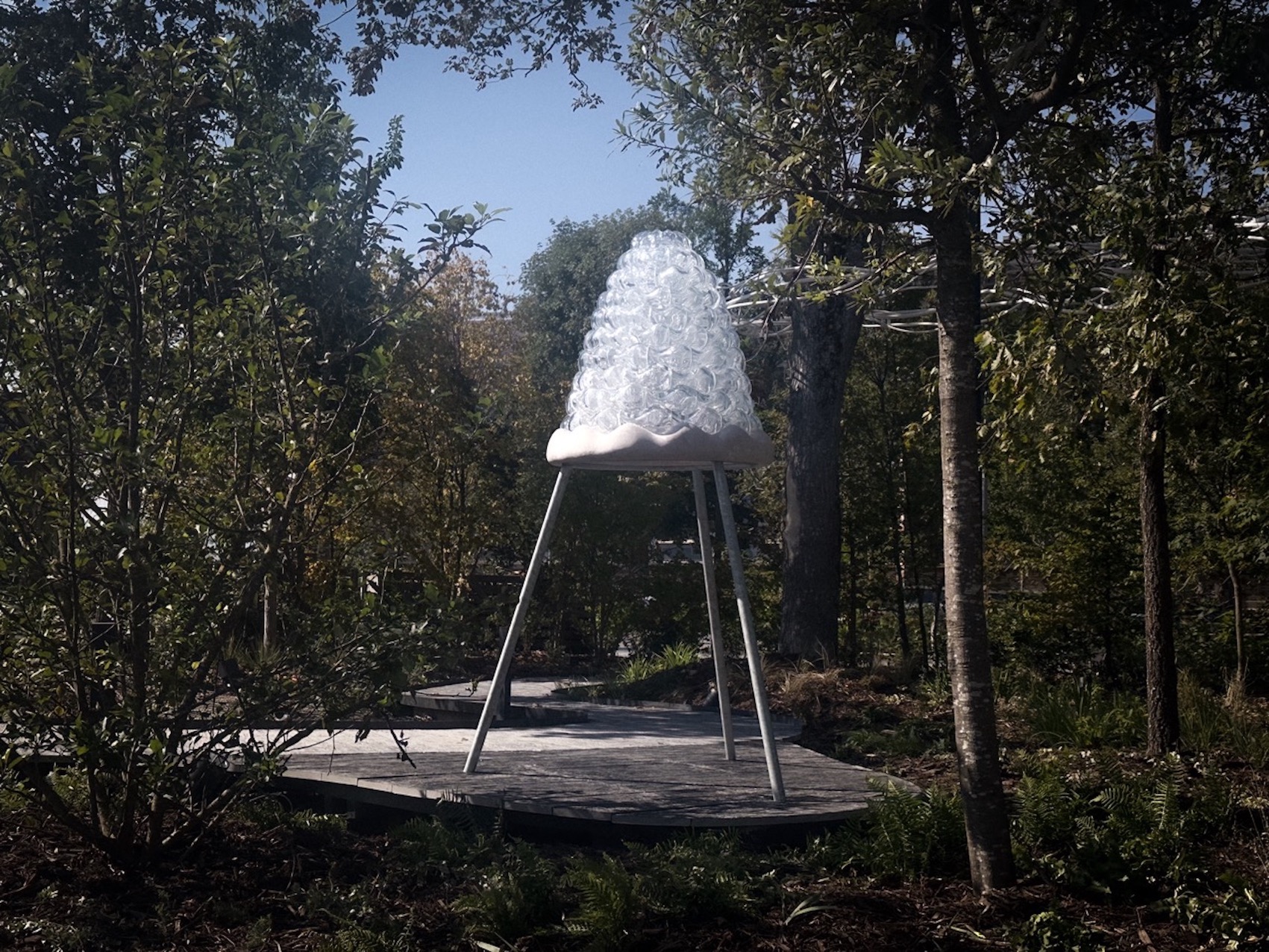
Photo: Makoto C. Ökubo
That leads us to “Serpentine Bell”, your collaboration with Youssef Anastas and Elias Anastas. How did you encounter their work?
Tomoko Sauvage: To tell you the truth, I wanted to talk about this piece because I wanted to talk about Palestine, especially for a German magazine. I know it is a sensitive topic in Germany, more so than in other parts of Europe.
I welcome any opportunity to discuss this topic openly and in a spirit of dialogue. I teach at several German universities, and unlike many of my colleagues, I don’t avoid the topic out of fear of controversial discussions; instead, I always actively address it. We need to learn once again to talk to one another instead of shunning or even attacking each other. But back to your collaboration.
Tomoko Sauvage: I met Youssef and Elias through their activity in Bethlehem. They are architects, but they also run Radio Alhara, which has become very important for building a community because Palestinians often feel isolated. They also opened an art center in Bethlehem called Wonder Cabinet. I was invited to its inauguration in 2023. They do amazing things, connecting the world, and I saw that art can really change things.
Their architectural projects are often based on stone, but they carve stone in a very fluid way. That fluidity touched me, and I wanted to collaborate with them. They have exhibited at the Venice Biennale and in many other places. My idea was to replace the stone with glass and make a sculpture that acts as a listening space under a bell-shaped cone.
Where was the work realized?
Tomoko Sauvage: It was a work commissioned by a champagne brand named Ruinart, situated in Reims, for their new garden.
The work itself made sense for the site. Their production site is in a huge ancient limestone quarry. The chalk stone from the quarry is very porous and it keeps the perfect humidity and temperature to keep the wine bottle – eight kilometers of tunnels used as cellars !. Millions of years ago, that area was an ocean, so the stone contains sediments of sea animals. I took these stones, dried them, and recorded the sound of bubbles coming from them as they absorbed water. The recorded sound comes from underneath and somehow resonates reflecting on the vault made of glass where people can enter and have a private listening session. It feels like a cocoon with a view of the surrounding landscapes deformed by the glass bricks, a bit like being in the water. The sculpture is made of 103 blown-glass structural voussoirs built following the principles proper to stone stereotomy, the speciality of Elias and Youssef. They have been developing the techniques for long years on stones, the material that has deep political meanings in Palestine. Adapting this technique within the glass material was very challenging thus the project was highly experimental.
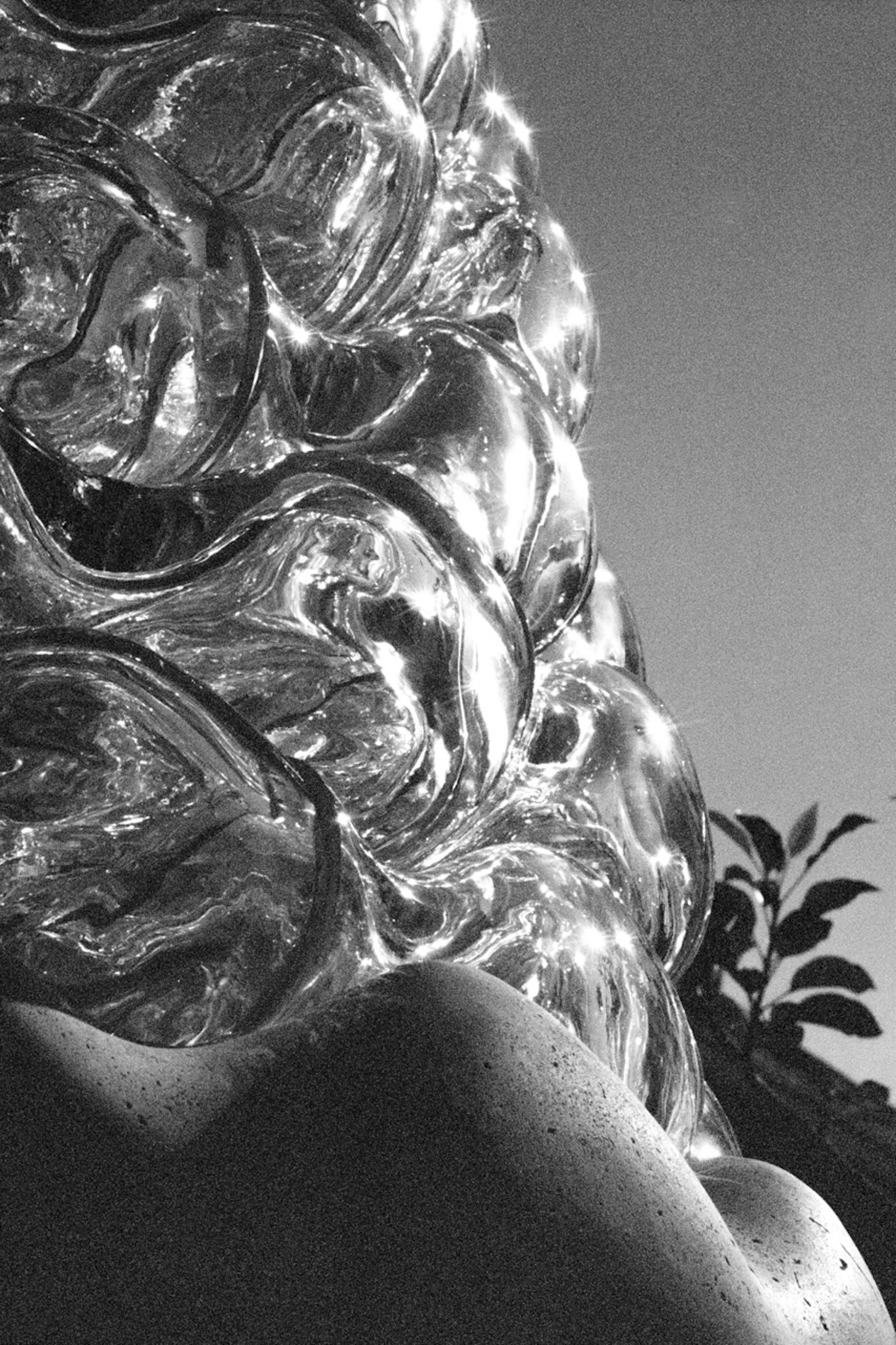
Photo: Youssef and Elias Anastas
The discourse about Palestine is often dominated by destruction. This project seems to allow another form of presence and memory.
Tomoko Sauvage: We managed to realize something dreamy in a time of harsh reality. I don’t know what it means to the world, but it was an interesting project.
What is your relationship to silence? Has silence become more difficult to access because your ears are trained to hear things others do not?
Tomoko Sauvage: I don’t think my ears are trained to distinguish different types of silence in that way. Silence is relative. As John Cage said, there is no such thing as real silence; even in your body, you hear sound. Silence is more like Ma, the space in between. In music and architecture, that empty space makes other things interesting.
I am trying to use silence more effectively. Because my music is quiet, people tend to listen to environmental sounds: cars outside, someone coughing. Their sensitivity grows.
Which artists outside or around the sound field remain important to you?
Tomoko Sauvage: Akio Suzuki is someone I highly regard. His attitude and the presence of his music are very interesting. Alvin Lucier is definitely very important to me, especially his use of microphones as instruments. And Knud Viktor, a Danish artist who worked a lot with water.
What do you think it the core part of your musical activity in terms of network?
Tomoko Sauvage: Working as an independent musician, with independent festivals and labels, and with people who are passionate about art, is precious. At concerts, people get dressed, go out, and spend 50 minutes concentrating together. That is incredible today. For me, that is political.
What can we expect from your performance at Heroines of Sound in Berlin?
Tomoko Sauvage: I will try to do something new for Berlin. I grew up in the Berlin music community, and the first time I made an installation was there, so I feel I have to bring something new. There will be bubbles, of course, but I hope to renew them.
Is it difficult to present your work in a festival context rather than in your own show?
Tomoko Sauvage: No, it is the same. My instrument is a bit complicated to move once it is installed, but otherwise I love sharing the evening with friends like Miki Yui.
Last question: what was the last sound that surprised you?
Tomoko Sauvage: Recently I recorded sound with another piece of chalk stone from Reims. I did it in my bathtub at home. I was happy to obtain the sound of singing birds with it. It wasn’t super surprising as I’d already heard this kind of sound from one of my bubble plays during a concert but this thing is very random so I was happy to capture it on a recording. I looked into prehistoric geology and found that the stone comes from the Cretaceous period. The time when one of the first birds appeared on earth. So I’m naming it as Cretaceous seabirds.
Tomoko Sauvage (Photo: Johannes Berger)