

Anne Imhof „Wish You Were Gay“
Anne Imhof
„Wish You Were Gay“
(PAN)
The reception of “Wish You Were Gay,” Anne Imhof’s new third album, which—like her debut “Faust” and its follow-up “Sex” is released on the Berlin avant-garde imprint PAN, begins with the opulent booklet. In it, Imhof presents herself as a subcultural protagonist; The style and setting of the images are reminiscent of the Lower East Side aesthetics of the 1980s, influenced by directors and photographers such as Nick Zedd and Richard Hell and performatively charged by Lydia Lunch—that artistic powerhouse at the intersection of music, poetry, performance, and self-empowered porn. Lunch was always in complete control—of contexts as well as male characters. She was and is the epitome of coolness.
Looking at the images and sounds shared by Imhof (for the first time no longer together with Billy Bultheel and Eliza Douglas, who played a key role in the previous two albums), one feels more like an observer of a staged production than a witness to lived reality. And this despite the fact that the exhibition “Wish You Were Gay” at the Kunsthaus Bregenz, to which the release refers, actually intended the opposite: a kind of coming-of-age documentary in the form of a retrospective, consisting of new sculptures, paintings, sound works, and a series of six video works for which Imhof processed material from the years 2001 to 2021.
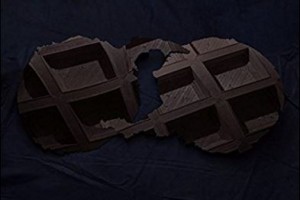
But neither her visual art nor the musical extension of this position is anywhere near as profound, imbued with desire or passion as, say, the Lunch universe. There would have been opportunities to leave behind, at least for a moment, the unspeakable Balenciaga biotope that, for me, characterizes the Imhof principle and—in a very realpolitik way—to musically process the experiences of one’s own (certainly not always easy) queer socialization as well as the queer hostility experienced in the context of the exhibition. On the night of July 23, 2024, the large billboards displaying the exhibition title were vandalized; unknown perpetrators cut out the word “gay” from each one.
Instead, “Wish You Were Gay” seems as shallow as the pun in the title suggests. You hear artificial lo-fi-sounding melanges of industrial, lo-fi grunge folk, and 80s nihilism—okay enough for video sounds and exhibition soundscapes. But an album?
Thomas Venker