

Zeynep Schilling: “I can’t imagine making art only for art’s sake. I’ve always been political, starting in high school.”

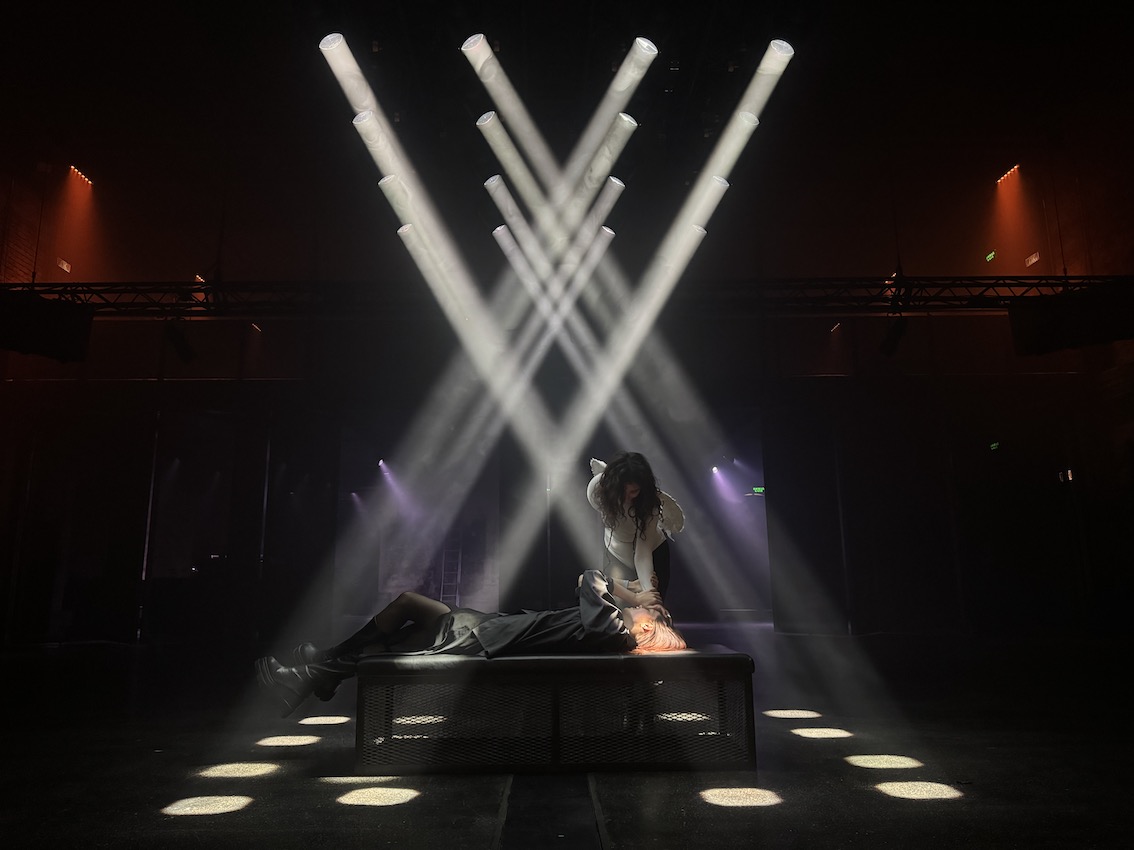
“Heavy Waters” at Radialsystem, CTM 2026 (Photo: Camille Blake: – https://www.instagram.com/camille_blake/ )
Sometimes it happens at the very end. CTM Festival was almost over. My energy level had sunk to that familiar, faintly decadent point where the hotel room begins to feel like the most attractive space in the city. But then the Calvinist me chimed in: NEW STUFF, THOMAS! NEW STUFF! So I dragged myself back into the night and over to Radialsystem — and arrived, just in time, at the one performance that would recalibrate everything: “Heavy Waters” by Zeynep Schilling, undo despot, alen hast, Myk Rudyk and lights by zeroday.
I had known Zeynep before through her work with our shared friends at LABOUR — a context that already hinted at her interest in collective processes, in bodies as archives and manifestations of resistance. Still, nothing quite prepared me for the density of “Heavy Waters”, a performance shaped in close collaboration with Kyiv-based artists, unfolding as a choreography of exhaustion, resistance, sound, submerged memory and Ukrainian history and mystery.
You rather watch it for yourself than listen to me falling in my memory again and again in this positively charged black hole, somehow an impossible mix of storytelling, ritual and kind of all body acupuncture. The piece carried within it the pressure of lived history — air-raid shelters, interrupted electricity, the murderous abstraction of drone warfare — and yet it refused the flattening optics of spectacle.
Chatting Zeynep up after the show was easy enough. What surprised me was the vulnerability. Instead of adopting the cool detachment so often expected in post-performance small talk by an artists, she spoke openly about her doubts — about whether the piece had held, whether the emotional exposure had been too much, whether the balance between research and immediacy had tipped too far in one direction. Doubts that felt almost surreal to me. Because what I had just witnessed was one of the most precise yet emotionally porous works I’d encountered in a long time: meticulously researched, carefully structured, yet utterly alive in the moment. A true document what artists are able to create even in the worst of all possible circumstances.
As much as I would have loved to gather the entire team — whose members remain primarily based in Kyiv (the man are not allowed to leave the country), working under conditions that recalibrate the very idea of production — it made sense to focus on Zeynep as the Berlin-based spokesperson of the group, the only one currently living outside Ukraine, not only as she was here and they are there, also as concentrating on one person helped me coming closer to the core of what they created together as a collective. That geographic split is not incidental; it is inscribed into the dramaturgy of “Heavy Waters” as she will lay out.
When we met again to talk like two weeks after the performance, it did not take much prompting to enter what one might call trauma territory. We spoke about basements turned into air-raid shelters, about the acoustics of sirens, about rehearsals interrupted by blackouts. About how to create art when the power fails — literally — and when the world seems to freeze around you. But also about the stubborn insistence on form. On rehearsal. On care. On continuing.
“Heavy Waters” is not a metaphor in search of gravity; it is gravity. It asks what it means to move — physically, emotionally, politically — under immense pressure and the circumstances of war. And it is a deep reminder that even in the worst hours of destruction we are able to connect with our shared stories of heritage, our collectively connection with the earth, water and air, and why shouldn’t we say it with all the pathos we carry in our hearts: the love that unites us all?
And perhaps that was the quiet lesson at the end of CTM: that sometimes the most rewarding experiences in life wait for us when we are the most exhausted.
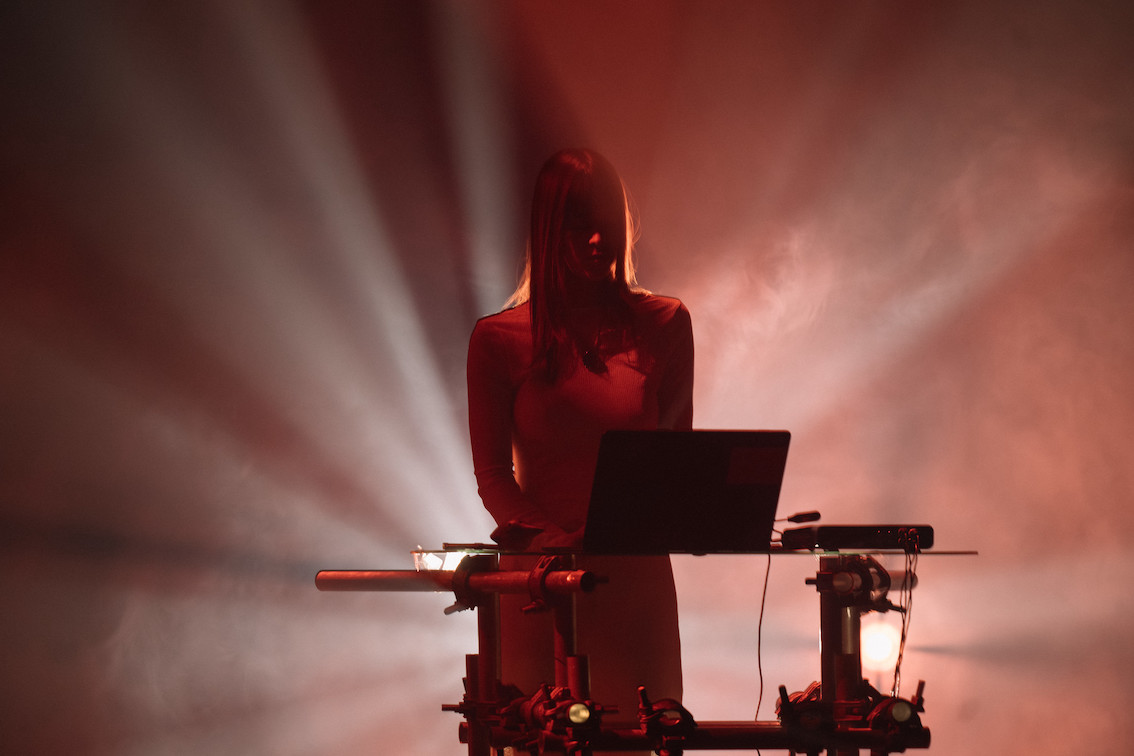
“Heavy Waters” at Radialsystem, CTM 2026 (Photo: Camille Blake: – https://www.instagram.com/camille_blake/ )
After your stunning performance I’ve looked closely at all the CTM material and other stuff I found on you guys, but I still have so many questions. I was at the festival with a class of students, and when they wrote about it, I realized how difficult it is for outsiders to understand exactly who does goes on in this wild, and deeply touching performance and how the dramaturgy works together in the magic way it does. It’s such an emotional piece that one as an audience member absorbs it. But then again, what did we experience there?
Zeynep Schilling: It was a carefully built process, starting with Google Meet calls back in March 2025. At first, they were just classic online meetings. The impulse mostly came from my longtime friend and neighbor, Mariana Berezovska, who co-curated the collaboration and knew my previous performance and video work at Trauma, Kindl, and Kraftwerk, as well as my collaborations with LABOUR. That’s how the team came together.
I oversaw the art and creative vision, ensuring every idea translated into the final performance. The group is multidisciplinary, and that mix made the piece feel alive and unpredictable. Every element — visual, sonic, and performative — came together to create the immersive, emotional experience you saw. It’s messy, powerful, and, yes, magical.
Did you know the others beforehand?
Zeynep Schilling: No, I didn’t know the artists before. But Mariana Berezovska kept telling me, “I have the perfect match for you.” She meant Alice — Undo Despot — who created the music, worked on the visuals, and performed on stage. When we met, it felt like we had known each other for years. We even look alike. She became like my Ukrainian sister.
Originally, the collaboration was meant to be just the two of us. But during the residency in Kyiv, when we met Alen Hast, Myk Rudik, and Zeroday, it became clear they were essential to the project.
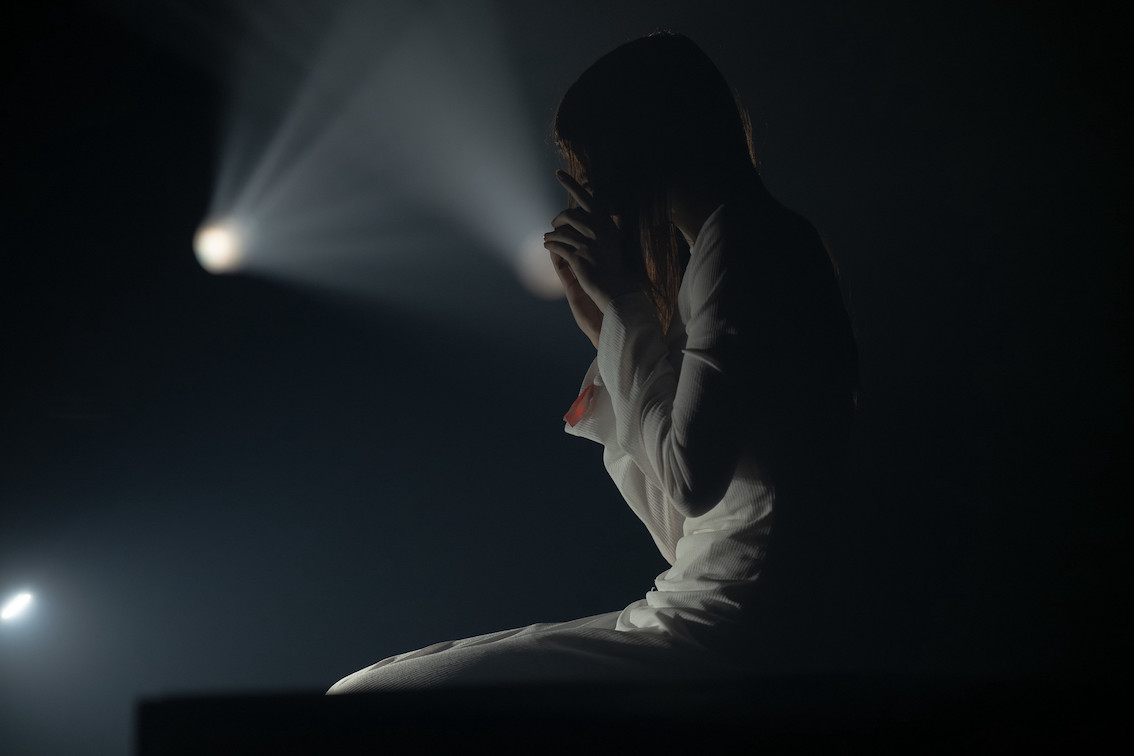
“Heavy Waters” at Radialsystem, CTM 2026 (Photo: Camille Blake: – https://www.instagram.com/camille_blake/ )
She was the one on stage playing the flute?
Zeynep Schilling: Exactly. And maybe I should explain the flute situation later, first the timeline: We started working in March with weekly online meetings. In June, I traveled to Kyiv for a residency at K41 with the CTM team — that’s where our first performance took place. The collaboration lasted a year, continuing online and later in my Berlin studio, leading up to the CTM 2026 performance.
Was the performance in Kyiv already “Heavy Waters”? Was it a work-in-progress?
Zeynep Schilling: Yes, it was “Heavy Waters”, but still in fragments. We usually had only a week or two before each show, mostly dedicated to research. For me, especially as a non-Ukrainian, that meant trying to deeply understand what is happening there. I stayed nine days in Kyiv — which felt incredibly long, because it was my first time being in a country at war.
Zeynep pauses for a moment. Her voice drops as she describes the atmosphere in Kyiv. It is the moment where abstract art meets naked, violent reality.
Zeynep Schilling: It was a life-changing experience. In the summer, everyone around me was flying to Mallorca or wherever, and I was in the middle of Kyiv. At first, I didn’t take it that seriously. From the outside, it’s easy to imagine the clubs and theaters operating as usual, as if culture could somehow exist separately from everything else. But it isn’t. It really isn’t. On my second night, I was on the phone with a friend because everyone was super worried—my family and friends didn’t want me to go. I had to check in constantly.
That night I thought, “Let’s see what happens if I stay in my room today.” I thought it would be okay. But then I literally saw a drone attack from my window. I said into the phone, “Wait a second, I think it’s happening right outside my hotel.” I had to go immediately. My friend was flipping out, and I just said, “I’m going to the shelter.” The whole time there is so brutal. You can’t sleep; you have these strange Telegram channels reporting how many drones are approaching. Everyone stays awake all night.

“Heavy Waters” at Radialsystem, CTM 2026 (Photo: Camille Blake: – https://www.instagram.com/camille_blake/ )
That leads to one of my central questions: How do you create an artwork about something that most people in the room haven’t experienced? Even if I follow the war closely: as long as you haven’t lived it yourself, it feels surreal.
Zeynep Schilling: Absolutely. I didn’t see everything, but a lot, at least for me, it was already a lot. During my residency in the summer, they showed me the places that had been occupied by Russia. We stood in places where people had been killed or tortured, where unimaginable violence had taken place. They gave me the full story.
Did you also go out of the city to the landscapes and rivers that are part of the story?
Zeynep Schilling: Yes, we traveled around the city and to the rivers, moving closer to the danger zones. There was one place where I felt “safe”—though it felt almost toxic to say that—near the Saint Sophia Cathedral. Its historic and religious significance seemed to offer some protection, and the city center felt safer for the same reason. But it’s all changing; I don’t know if they care anymore. They do whatever they want. Lately, they’ve been doing double-tap strikes—they wait for the first responders to arrive to cause even more damage. It’s very ugly.
Zeynep describes these atrocities with a matter-of-fact hardness that only comes from personal observation. In “Heavy Waters,” however, this trauma is not treated as a documentary. It is translated into a mythical, almost spiritual level. The team consists as mentioned of five people, with Zeynep, Alen, and Alice (aka Undo Despot,driving the conceptual development. Since Zeynep was the only outsider, she looked for a universal symbol to link the local tragedy with global responsibility. She found it in water.
Zeynep Schilling: Since I’m the only non-Ukrainian, I looked for a way to connect everything. I suggested water as a theme — like the veins of the world, carrying what happens in one place to another. The project, titled Disturbed Ground, focuses on war and its environmental impact, and water felt like the strongest entry point.
But it didn’t stay abstract. Alice shared her connection to the sea in Odesa, which became mined and inaccessible during the war. Alen, from Donetsk near the Oskil River, sees water as deeply personal. The Oskil, now part of the battlefield, carries years of damage and pollution. Studying maps of the shifting frontline, we realized water wasn’t just a metaphor — it’s a lived ecological and human reality.
Did you define specific territories that each person was responsible for?
Zeynep Schilling: Yes. Alen Hast and Myk Rudyk come from u2203, which mainly handled the CGI production of the visuals. I was more on the show side, overseeing how everything flowed together. I was responsible for where light met video, sound, and dramaturgy. Alice, who does visuals and also sound, for example, came to Berlin to compose the music together. Marianna was always with us, too. Unfortunately, Alen and Myk couldn’t leave Ukraine due to the current martial law restrictions. But for the performance at Kantine, Alen was eventually allowed out.
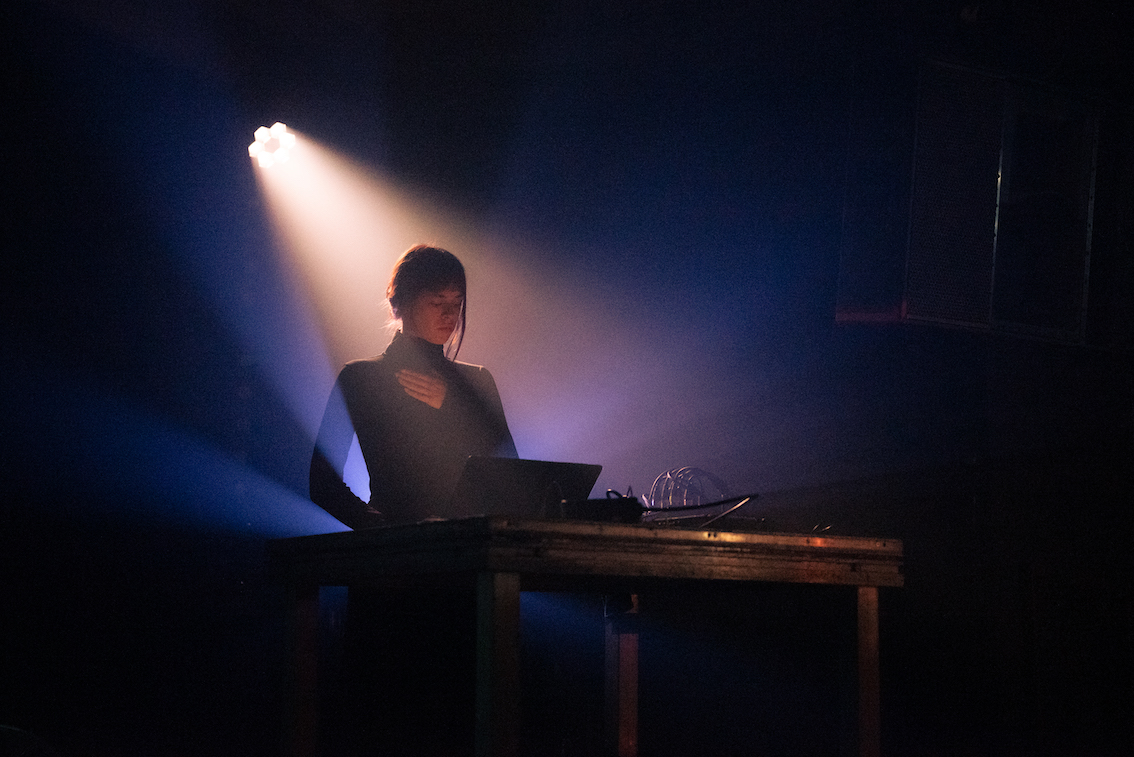
“Heavy Waters” at Berghain (Photo: courtesy of for artists)
How did the performance in the Berghain Kantine differ from the earlier fragments?
Zeynep Schilling: It took place right after I returned from Kyiv, and it was still very much a work in progress. Creating CGI visuals involves enormous render times, so for the first two shows, we simply weren’t finished.
That’s why I suggested bringing in a performer—another Ukrainian artist—who became part of the stage landscape. We were exploring the depth of water in a folkloric and spiritual sense. We began researching female figures and protective heroines from Ukrainian folklore connected to water, and that research shaped her presence on stage.
We also revealed a glimpse of the angry creature Alice created. The rest consisted of evolving fragments from Alen and Myk—visual progress pieces, and a live light concept from zeroday.
The final performance at CTM then felt like the finished work.
Zeynep Schilling: Yes but it came together under extreme conditions. Alice spent a week at my studio so we could finalize everything. At the same time, the blackouts in Ukraine had already begun — right when we needed to render the show.
All the rendering was done there, and it’s a delicate process — if the power cuts out, you’re often forced to start over. Even under normal conditions, it’s demanding.
We had originally planned to end with a fifteen-minute documentary film, but that became impossible. I called Alen to ask how things were progressing, and they told me they couldn’t even make coffee. The heating system had frozen — it was bitterly cold, and there was no electricity, no heat. Under those conditions, finishing a film simply wasn’t realistic.
As a non-Ukrainian in this project, it must be overwhelming to have the war as the main theme but to treat it so poetically. Was it your role to bring in this sensitivity—to think about myths and folklore—because in a war zone, one is usually just focused on the naked reality?
Zeynep Schilling: Exactly. Alice and Awlust – the performer we worked with at K41 and Berghain Kantine in 2025 are much younger than I am. I didn’t want the project to be only “war, war, war.” Of course, they live that reality every day. But I felt they also needed a space for something else—imagination, connection, even small moments of lightness.
In a way, I became a kind of steady presence for the group. The one saying, “We’ll get through this together.”
It’s only this week that I’ve started to feel like myself again. Being with them means entering a reality very different from Berlin. While my friends are out enjoying normal city life, I was constantly checking the news, hearing their stories, absorbing their experiences. It changes how you see everything. So we tried, wherever possible, to weave lightness into the work—not to ignore its weight, but to help us all endure it.
Zeynep laughs briefly, a dry, almost weary laugh. It is the absurdity of the cultural industry: in Berlin, people discuss curation while in Kyiv, workstations freeze. Yet it was precisely this friction that produced the depth of “Heavy Waters.” Well, on the other hand, it is all connected and without knowing why and how keeps connecting. In her research, Zeynep found the figure of the “Mavka,” a spirit of the forest and the water, kindly putting the magic in the water.
Zeynep Schilling: I wondered what could spark everyone’s imagination and realized the group is really drawn to the mystical. CTM wanted the environmental impact to be clear, so I tried weaving that together with mythology. It became a cycle: poisoned water flows, transforms, and rises back into the ecosystem. We even had a folklore spirit whose peace is shattered by tanks, drones, and pollution. Somehow, the science and the story fit together.
That’s an interesting point. In past conflicts, in past wars, like in Vietnam, we think of landscape damage from mines and bombs. You rarely hear anything about the water. They say “the earth is bleeding,” but the water is poisened by the ones who , who had once innocently thrown themselves into it.
Zeynep Schilling: It’s crazy how interconnected everything is. Some regions in eastern Ukraine are already heavily affected, and the impact feels very close. We focused on a specific river, the Oskil River, from which Alen is from that region. It flows from Russia into eastern Ukraine and is part of a larger system connecting to the Black Sea, reaching Turkey, where I am originally from, via the Siverskyi Donets and the Don River. I told the guys, “That’s the connection!”
We were struck by how some areas of the river take on a visibly rusty color — metal contamination that circulates back through rain and soil. Undo despot researched rising metal levels in Ukrainian rivers, integrated this data into sound, making ecological damage part of the work’s sonic language.
We also drew on Oleksandra Shumilova’s studies on the destruction of the Kakhovka Dam, showing how attacks on water infrastructure accelerate pollution, expose toxic sediments, and threaten long-term ecosystem recovery. This gave our artistic work a grounding in ecological reality, highlighting the quiet yet persistent impact of war on water systems.

“Heavy Waters” at Radialsystem, CTM 2026 (Photo: Camille Blake: – https://www.instagram.com/camille_blake/ )
Your work generally often has socio-political implications; it’s about surveillance or political systems. Do you sometimes wish you could make art that isn’t so politically charged?
Zeynep Schilling: I’ve just always been political. I was very punk when I was younger — that’s part of why I moved to Germany. Starting in high-school I was openly critical of people like Erdoğan. So for me, art and politics were never separate. I can’t really imagine making art just for art’s sake. Even when I try to do something fun or more playful in a party context, I still feel like I have something to say. It’s just part of who I am.
Do you think the audience could reflect on this message? Or do you see it more as small “acupunctures” that trigger a process? The topic is, after all, extremely traumatic.
Zeynep Schilling: People are often clueless. We mostly work at festivals like Atonal or CTM. Last year, Atonal emphasized the situation in Palestine, and I overheard conversations; at first, the meaning didn’t fully land. But I realized I’m not here to teach or explain. Even leaving a small question mark in someone’s mind—a subtle “What just happened?”—can be enough to spark curiosity. I can’t hand people answers; the work has to speak for itself.
You communicate a morality that we all share—and a wish for freedom and good living conditions for everybody. You try to stimulate that. Maybe I’m interpreting too much into it, but the moment when “To be continued” appeared on the screen at the end felt very Hollywood, but totally broken. Usually, that means a sequel is coming, but here it felt heavy, connected with darkness and death.
Zeynep Schilling: Exactly, it’s not over. It continues. I’m glad you felt that. People often say my work has humor, even a touch of kitsch. I didn’t want to leave the audience trapped in fear. But “To be continued” also carries another layer: the story keeps escalating; things keep getting worse and worse.

“Heavy Waters” at Radialsystem, CTM 2026 (Photo: Camille Blake: – https://www.instagram.com/camille_blake/ )
This “worse and worse” was made palpable in the performance through the dramaturgy. There was an enormous intensity that felt in moments way too much, then a break when Alice came to the front of the stage with the flute. Many thought it was the end, but they built the piece up again from there.
Zeynep Schilling: The inspiration for that was the blackouts. I wanted everything to go black, even the emergency exit signs, which is technically impossible. Radial system team built us small boxes so that four people could manually cover the signs. I wanted it to feel like the power outages in Ukraine. Alice came into my studio with her flute and played it. As an electronic musician, she needs her tools, but when there’s no power, she returns to the basics. I told the team, “Let’s pick up on that.” We built the show around this cut to imitate the loss of power.
You weren’t allowed to do a complete blackout?
Zeynep Schilling: No, for safety reasons. But the boxes worked. I wanted everyone to feel like everything was gone. And then the power comes back, because that’s how life goes on there. It’s a timeframe of uncertainty. You don’t know when it will return. Ukraine is crazy in that regard—everyone is sleepless because of the war, but at 9:00 AM people go to work and do normal things as if nothing happened.
That’s a sci-fi movie reality. How do people maintain this energy over years?
Zeynep Schilling: I feel like they are fighters living with an extremely high cortisol level. I was exhausted after nine days there. After the performance at K41—a magical club, basically the Berghain of Kyiv—I told everyone I had to sleep. I’ve never been so sleepless. It’s the most beautiful club I’ve ever seen. Kyiv is a beautiful city; it’s so sad what’s happening there. After the show, we wanted to go out for food, but there’s a curfew starting at 11:00 PM. Everything closes.
But are there still illegal parties?
Zeynep Schilling: Everything has to end by eleven. Even the parties start at 4:00 PM. When the air alarm goes off, you run. At eleven, you have to be home. There are some gatherings, like house parties, that I just heard about, but not many, and people stay sober.
Well, You don’t want to be intoxicated when something happens; you have to maintain control over your body.
Zeynep Schilling: Yes, compared to Berlin, that was very interesting.
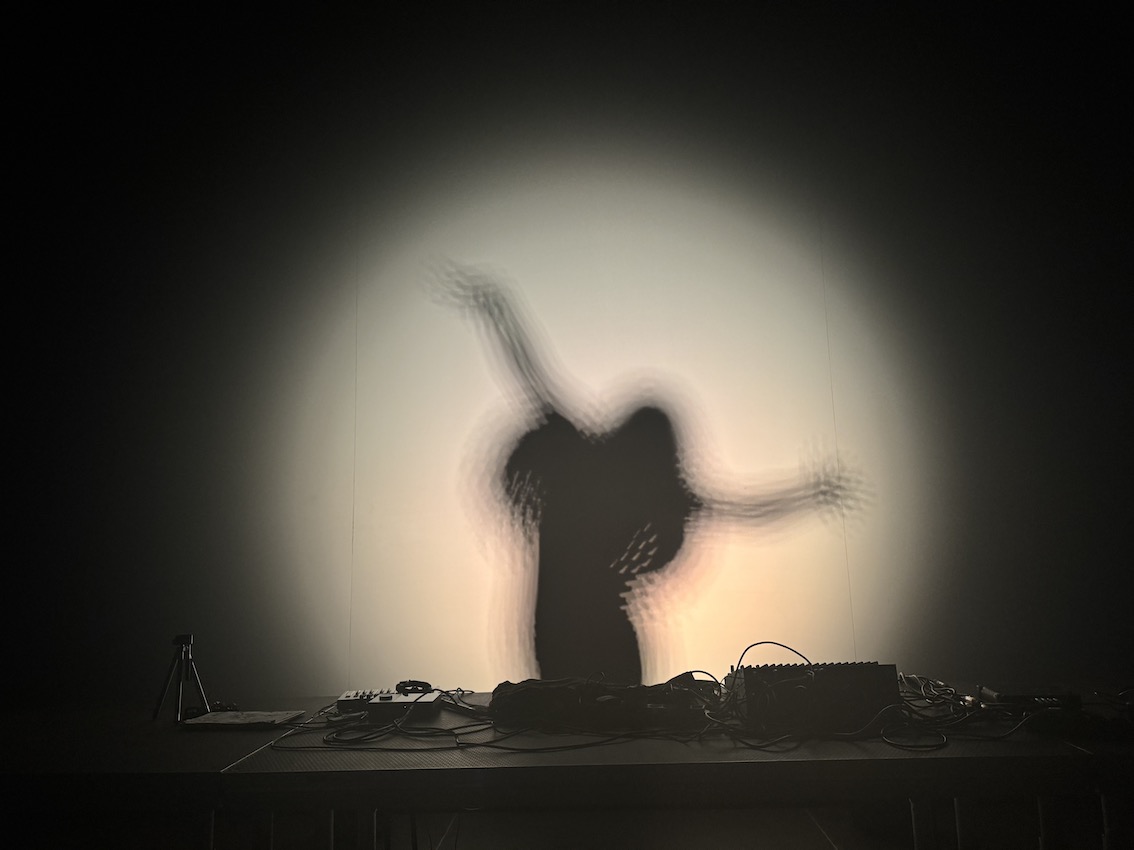
“Heavy Waters” from K41 residency/rehearsal process (Photo: courtesy of for artists)
“Heavy Waters” from K41 residency/rehearsal process (Photo: courtesy of for artists)
How did it feel to leave again after nine days, while the others had to stay?
Zeynep Schilling: I wanted to check on them every night after I was back. I had to leave all the Telegram groups because they spam you all night with “drones approaching.”
After the performance at K41, I went to my hotel, showered, and wrapped myself in blankets to sleep before the attacks started around midnight. I was in a deep sleep. Mark, Jan, and Taica were in the same hotel. Mark was practically hammering on my door. In my dream, I was trying to find a meaning for the knocking sound so I wouldn’t have to wake up. Then I realized: “Wait, you’re in Kyiv, get up.” It was like in a video game where your vision blurs when you’re wounded. I opened the door, and he said, “Zey, you have to come to the shelter, it’s crazy out there.” I spent the last night in the bunker. I don’t know how they’ve survived this for years.
It must be brutal for them to know that you are experiencing the feedback and the joy of the show here, while they are cut off from that aspect of the work.
Zeynep Schilling: Yes, there is no celebration.
At this point we take a break as it feels just too overwhelming. Zeynep shows me CTM performance videos on her phone. We see light that moves almost fluidly through the room. It is an aesthetic that combines – as weird as it may sound now after all that talk about things beyond our western imagination – craftsmanship and digital precision. The light artist, Zero Day, now lives in Warsaw but was there for the shows in Berghain Halle and Radialsystem. Zeynep emphasizes that while the Halle in Berghain is impressive, it by no means offers the technical possibilities of K41.
I was sitting next to another critic at Berghain and said to him: “Tonight is not about the music.” Of all the performances I saw at CTM, this one touched me the most because of the music even tho it wasn’t a traditional composition, but it was poignant. Did you discuss the musical narration internally?
Zeynep Schilling: Alice and I worked on it together. Everything was live. We rehearsed the whole thing twice to see what fit where. Our approach was more audio-visual than most CTM sets. It was a fusion. We wanted to tell a story. It wasn’t just a video show. We built tension. The light and colors were meditative at first—water and spirits—then the tension rose as you saw tanks and weapons in the water. The spirit gets angry, there’s the cut, and then it builds up again. At the end, there was a multi-layered creature and an egg. “To be continued,” because like in the “Alien” movies, you think it’s over, but the evil continues.
At the risk of repeating myself: “Heavy Waters” deeply connected with me, touched me, lead me into a territory of unknown angst experience but also a warmth that was surprising, even incomprehensible, to me at that moment, and a feeling of deep connection.
The main axiom was “How does nature feel?”. It’s an “eco-emotional” theme. You made the invisible visible. All the elements together opened a door.
Zeynep Schilling: I had the best team. We trust each other and managed everything under crazy conditions. I’m glad you felt that. Two days before, I was still on the floor thinking we didn’t have enough material.
How often did you rehearse? I can only imagine how many night shifts there were.
Zeynep Schilling: We mostly did the rehearsals at my studio. Having worked with the light artist zeroday before, there was already a shared understanding — he brought his own kind of precise magic to the space. I structured the dramaturgy in a detailed script, mapping the piece second by second, often standing there counting it down aloud so we could align timing across sound, light, and image. We had no full stage rehearsal; instead, the work was shaped through concentrated studio sessions and constant calls across distance. I was the only one physically on site — Alen couldn’t travel, as I said earlier — so I moved constantly between set-up, video checks, and lighting cues, even designing the metal DJ booth as a kind of throne-like object within the scenography. It was intense, a constant calibration. More than anything, I needed to feel that what we had built together was holding.
What is the future bringing up? Are there further performances?
Zeynep Schilling: With CTM, this chapter is closing—for now. We aim to complete the visuals as a fifteen-minute film to keep everyone motivated and give the project a clear form.
Two festivals have approached us, which is exciting. But it’s a living work—I can’t carry my metal desk from city to city, so each presentation requires adaptation.
We want to finish the film as a cohesive piece of research. For example, Alice even used water pollution data in the sound design, and there’s still more to reveal from our process and real research.

“Heavy Waters” from K41 residency/rehearsal process (Photo: courtesy of for artists)
It’s constantly changing because you feel responsible for updating it when things change in Ukraine. How many working days have you put into this project?
Zeynep Schilling: I can’t even count them—I’d probably go crazy. It’s a project of the heart. CTM first approached Alice and me, and the team really formed itself along the way.
When I was at K41 in Kyiv, we started thinking, “Okay, we need a performer.” Awlust immediately jumped in. Then: “We need styling.” And someone goes, “I have wings.” Actual wings?! [laughs]
The whole club and everyone were incredibly open and generous. Everyone was happy I was there—apparently, not many people are flying into Kyiv just to brainstorm.
It might be a weird question, but how did you travel there?
Zeynep Schilling: It took us a full day by train—Jan Rohlf and Taïca Replansky from CTM Festival came with me. They also guided us through the project with their wisdom.
The night train from Poland to Kyiv was intense. Lying there in the dark, crossing the border, I felt strangely like an immigrant sneaking a glimpse into another world—half traveler, half spy.
It’s must be a strange feeling to travel in a direction from which most people are trying to flee.
Zeynep Schilling: Exactly. You’re in a box. People told me it was dangerous because they might attack trains.
Could you sleep?
Zeynep Schilling: I slept.
Because you knew you wouldn’t sleep once you arrived.
Zeynep Schilling: Yes. We were in a tiny compartment with four bunk beds stacked on top of each other. Have you ever traveled on a night train? Those compartments feel almost like small prison cells—you’re crouched close together. It’s intensely intimate.
The train was full. I love the work of Julie Poly, a Ukrainian photographer who documented these trains and stations. Everyone traveling carries a weight of sadness—it’s a war tragedy. People are returning home to see their families under impossible circumstances.
Zeynep leans back. The conversation comes to an end. It feels sad not to be able to share a date with you when and where you can experience “Heavy Waters” by yourself. This manifestation in time and space is art that does not just want to be observed, but that occupies a physical and emotinal space most members of the audience will hopefully never have to experience by first hand themselves.
Thank you Zeynep for your time and your openness and generosity to share all these deep memories with me. I can only repeat it here to make it clear once again: It’s rare to see a performance and be so overwhelmed with all kind of different, contradictory but also embracing feelings
Zeynep Schilling: Thank you for that.

“Heavy Waters” at Radialsystem, CTM 2026 (Photo: Camille Blake: – https://www.instagram.com/camille_blake/ )