

“It concerns the relationship between human presence, physicality, and perception on the one hand, and algorithmically driven systems on the other”
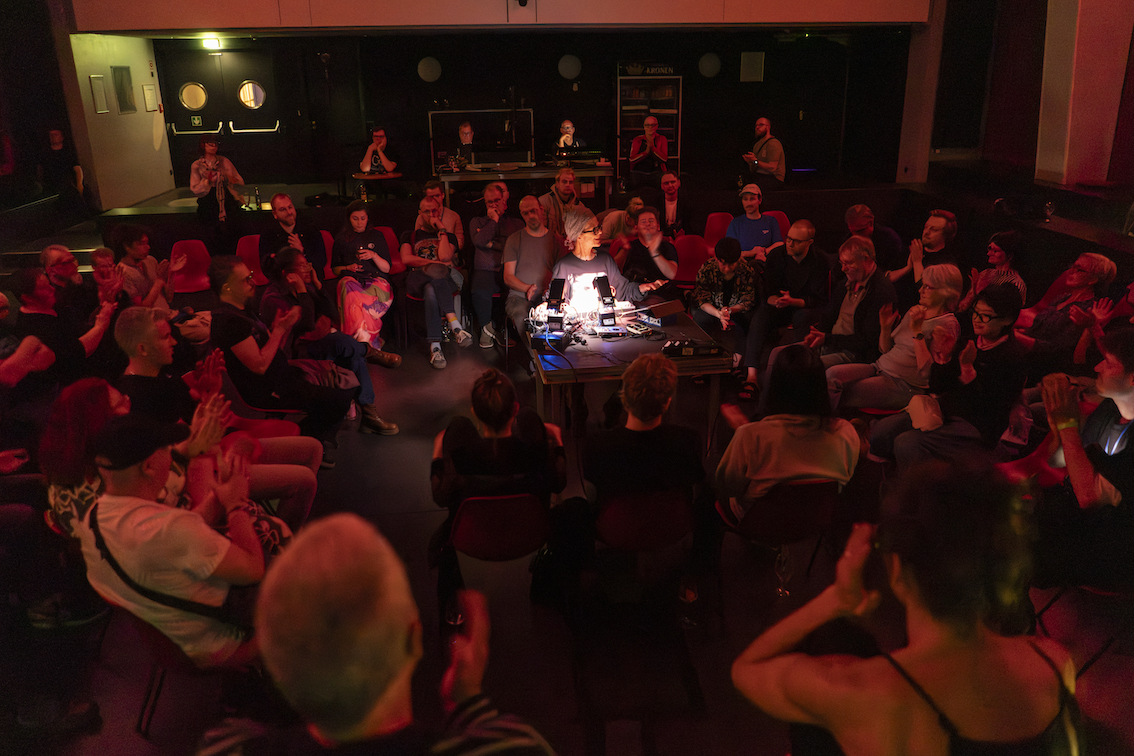
Kaffe Matthews (Photo: Etta Gerdes)
Blaues Rauschen is a festival dedicated to contemporary sound, performance, and discursive practice. It bridges sound art, club culture, and interdisciplinary forms, bringing visibility to spaces that often exist outside large budgets and established institutional structures. In this sense, Blaues Rauschen exemplifies cultural production under conditions of scarcity.
Thomas Venker spoke with artistic director Karl-Heinz Blomann in the lead-up to the festival.
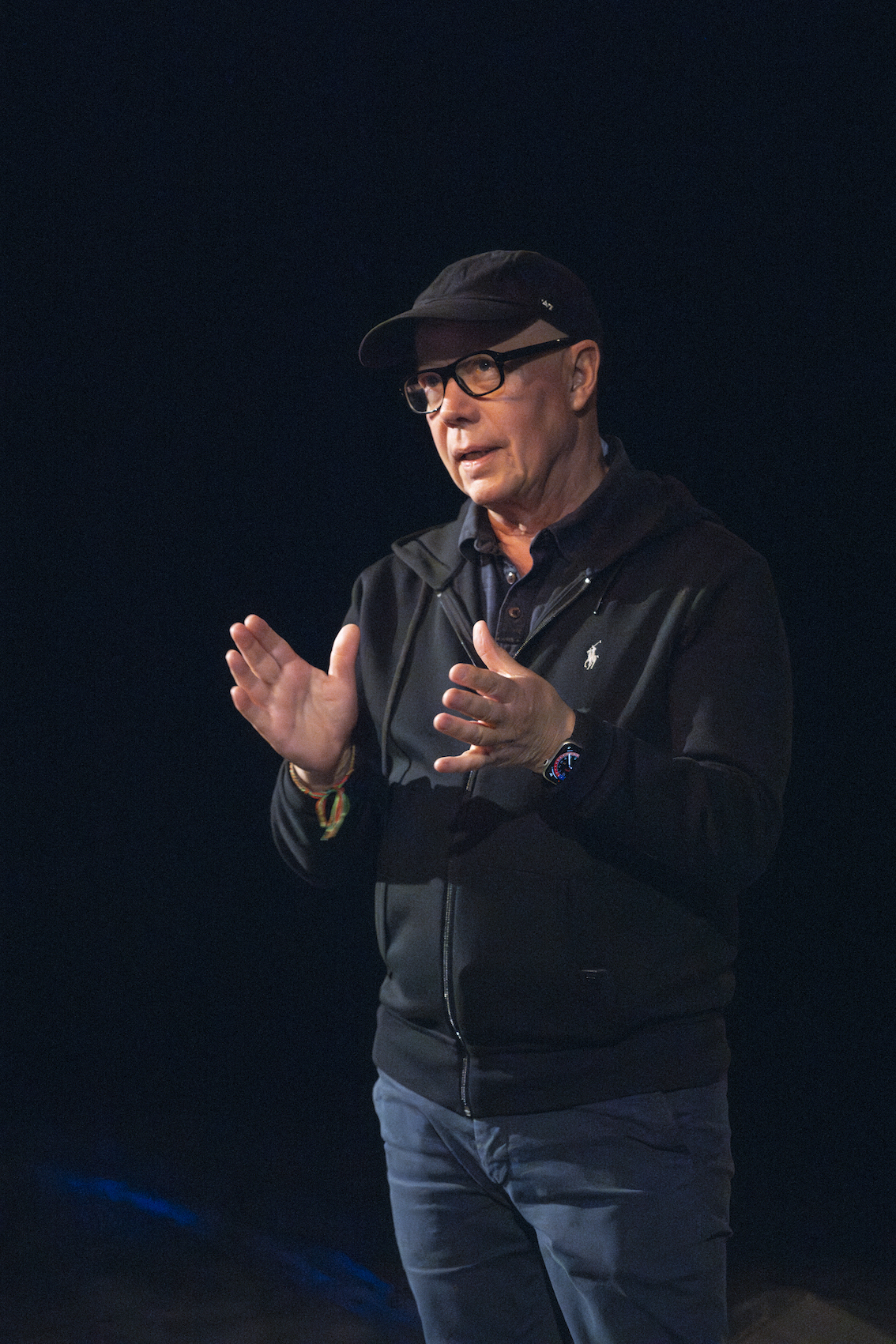
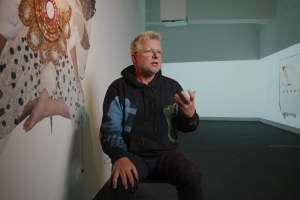
Karl-Heinz Bloman (Photo: Etta Gerdes)
Karl-Heinz Blomann: Blaues Rauschen has evolved considerably since then, both artistically and structurally. The festival is now present across eight cities and twelve venues throughout the Ruhr region. This regional expansion has naturally changed both how the festival operates and how it is perceived.
At the same time, many processes have become more professionalized and stable. Collaboration and communication with the individual venues are now far more structured than they were a few years ago. This has also strengthened local connections between the venues, the organizing association Open System e.V., the artists, and audiences.
Artistically, the festival has opened itself even further to hybrid formats that combine sound art, performance, AI, audiovisual works, and experimental music. International networking has also become increasingly important, particularly through new collaborations and emerging opportunities within a broader European context.
At the same time, I would like to see the festival assume a different kind of significance within the region’s political and cultural landscape. I would be very happy if, at some point, this also led to a shared conference format or stronger cultural-political cooperation between the participating cities.
It was mentioned at the press conference for Blaues Rauschen 2026 that the festival’s international profile continues to grow—not only through invitations for you to participate in festivals worldwide, but also through increasing interest from international artists and industry professionals. Are there specific aspects of your programming or festival practice that you associate with this development?
Karl-Heinz Blomann: I think that over the years Blaues Rauschen has developed a very distinct structure and identity of its own. Although the festival is centrally organized from Essen, it deliberately moves across different cities, venues, and cultural contexts throughout the Ruhr region. In doing so, we collaborate closely with local producers and cultural actors on site, and the venues themselves are often actively involved in these processes.
It is precisely this combination of centralized organization and decentralized structure that is often perceived internationally as something distinctive.
In addition, we began early on to organically connect sound art, experimental music, performance, media art, lecture formats, and technological developments without being overly constrained by genre boundaries. Many international artists and festival directors today are especially interested in precisely these kinds of open formats—festivals that not only discuss social and technological questions theoretically, but also make them tangible through spatial and artistic experience.
We are also particularly pleased about our long-standing collaboration with Westdeutscher Rundfunk. Blaues Rauschenis one of the few festivals that is recorded almost in its entirety and later broadcast extensively. Especially notable are the two three-hour programs on WDR 3 shortly after the festival. For such an experimental program, this is truly exceptional and naturally also contributes to the festival’s international visibility. The next broadcast will air on June 21, 2026.
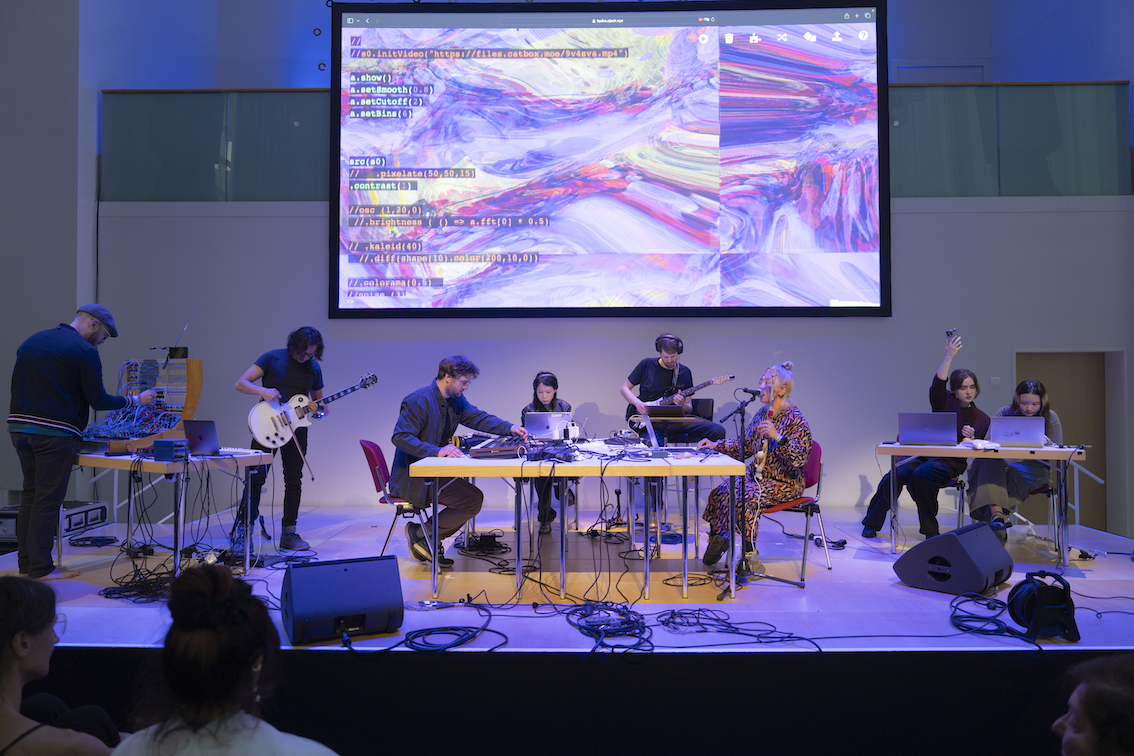
Workshop Ensemble (Photo: Etta Gerdes)
Which international festivals impress you most? Which ones do you see as kindred spirits?
Karl-Heinz Blomann: I’m especially impressed by Rewire Festival and Ars Electronica. Both operate under entirely different conditions than we do—not least because they are deeply rooted in a single city and have significantly greater financial and institutional resources. Blaues Rauschen, by contrast, currently takes place across eight cities in the Ruhr region and continues to operate under difficult financial conditions, with funding needing to be secured anew every year.
What particularly impresses me about Ars Electronica is that the city of Linz recognized the potential of digital art and its broader social implications as early as the 1970s. Over the decades, this developed into an international platform that continuously brings together art, technology, and social discourse.
What impresses me about Rewire, on the other hand, is above all its curatorial openness. Experimental music, sound art, performance, club culture, and discourse are interwoven there in a remarkably seamless way.
I also feel an affinity with smaller festivals such as Sonic Territories and SONICA, both of which explore experimental music, media art, sound art, and social commentary.
In general, I feel close to festivals that do more than simply present concerts—festivals that create new ways of listening and thinking, and that reflect technological developments through cultural and social perspectives as well. That, for me, is what connects these festivals to Blaues Rauschen.
Let’s talk about the 2026 program. Is there an overarching theme?
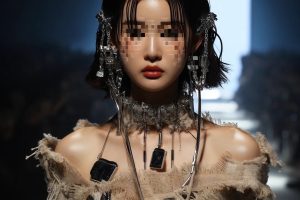
Karl-Heinz Blomann: There isn’t a single overarching theme to which everything else is subordinated. But with the title “Resonance in the Open Space Between Breath and Algorithm,” we wanted to describe a field of tension that connects many of the festival’s works.
It concerns the relationship between human presence, physicality, and perception on the one hand, and algorithmically driven systems on the other. We’re interested in how resonances emerge between organic processes and technological structures, and in how artists make these perceptible.
The “open space” deliberately does not describe a fixed theoretical framework, but rather an open in-between space for diverse artistic positions spanning sound art, experimental music, performance, and AI. In that sense, it is less a conventional festival motto than an artistic framework or horizon.
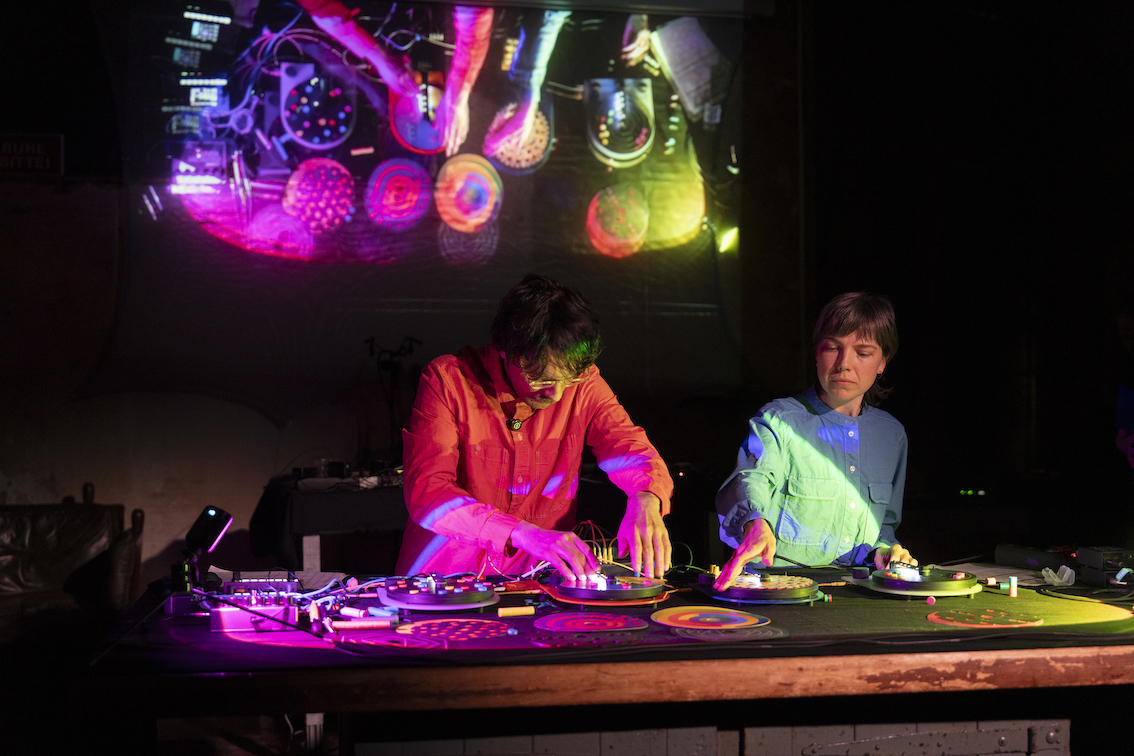
Playtronica (Photo: Etta Gerdes)
What distinguishes the “Class of Blaues Rauschen 2026”?
Karl-Heinz Blomann: “Class of 2026” is actually a somewhat unusual term for a festival. But if it refers to a shared artistic sensibility, then I would say this year’s edition of Blaues Rauschen is characterized by a certain ease in dealing with technology while simultaneously maintaining a strong focus on perception, physicality, and space.
It’s also interesting to observe how these perspectives unfold specifically within the Ruhr region—a region that has been shaped by transformation for decades. Perhaps a festival like Blaues Rauschen can create a particular atmosphere of change there.
After the festival is before the festival—so what comes next?
Karl-Heinz Blomann: We would like to organize another workshop next year. At the same time, we plan to place greater emphasis on live coding, residencies, and initial collaborations within a broader EU context, which may also open up new funding opportunities.
And of course, even in our ninth year, the hope for long-term, multi-year funding remains very strong.